
Regions, Census and Elections: Nigeria's Road to Crisis, 1945-1965
By Princewill Ubani · Published
Research ID: PA-NBW-nigeria-road-to-crisis-1945-1965
Between 1945 and the end of 1965, Nigeria's leaders built a federation from three unequal regions and then held elections whose results large parts of the country refused to accept.
Nigeria’s First Republic did not fall in a single afternoon. Between the end of the Second World War and the end of 1965, a generation of Nigerian leaders built a federation out of three very unequal regions, fought three times over how many people lived in each, and then held elections whose results large parts of the country refused to accept. By December 1965 the Western Region was in open rebellion against a government it believed had returned itself by fraud, and the census on which its parliamentary seats rested was itself under challenge in the courts. The army settled the argument a few weeks later, in January 1966.1 That coup, and the war that followed it, belong to the rest of this series. This piece follows the road that led to the point where the argument outgrew the institutions meant to contain it.
Three regions, one federation
The three-region design was set out before the war was over. In a despatch of December 1944, the Governor of Nigeria, Sir Arthur Richards, proposed a new constitution that began from a phrase which would shape the next twenty years. “Nigeria falls naturally into three regions, the North, the West and the East,” Richards wrote, and he tied the design to a practical problem of the existing system: the central Legislative Council did not legislate for the Northern Provinces, “so that more than half the population is outside its range.” The regional councils he proposed were to do more than administer their areas. They would, in his words, “act as electoral colleges for the Legislative Council apart from their other functions,”2 giving the regions an indirect grip on the centre from the outset.
The Richards constitution came into force on 1 January 1947. It legislated for the North through a central council for the first time, but it was a cautious instrument: the council held sixteen officials against twenty-eight unofficials, and of those unofficials only four were elected.3 Nwabueze notes that Richards himself described the aim as securing participation in the discussion rather than the management of Nigerian affairs. Martin Lynn, editing the British documents on the end of empire, reads the design less neutrally: “implicit in Richards’s approach was an acceptance of the North as the dominant part of Nigeria.”4
The shape of the conflict appeared at the next stage. When the regional and central legislatures met to agree a new constitution at Ibadan in January 1950, the Northern delegates demanded seats in the proposed central house equal to the two southern regions combined. Lynn’s headnote records that they “insisted on parity of representation with the Eastern and Western Regions combined,” and the North formally reserved its position: if it were denied half the seats, it would, in the words of the Governor’s report, “be considered to disassociate themselves.”5 The South read parity as a northern veto on its ambitions for self-government.6
The Macpherson constitution of 1951 settled the point in the North’s favour. It introduced elected majorities in both the central legislature and the regional houses of assembly.7 In the central House of Representatives, the North took 68 of the 136 representative seats, with the remaining 68 divided equally between the East and the West.8 Because the regional houses chose the central members, power at the centre now depended on power in the regions, and that, Lynn argues, “encouraged regional ethnic solidarity.”9 The constitution that had taken nearly three years to devise “was to last for a mere 15 months or so.”10 Richard Sklar reached a similar verdict: the Macpherson constitution, he wrote, “was the kind that invites trouble and is virtually made to collapse.”11
It collapsed over self-government and the North’s place in it. On 31 March 1953 a private member’s motion in Lagos called for self-government in 1956, and the subsequent clash between southern and northern politicians helped set off four days of rioting in Kano in May.12 In the same month, the Northern House of Assembly passed an eight-point motion, carried without dissent and endorsed by the House of Chiefs, which asked for regional autonomy in everything except defence, external affairs, customs and West African research, and declared that “there shall be no central legislative body and no central executive or policy making body for the whole of Nigeria.”13 The Colonial Secretary, Oliver Lyttelton, told the House of Commons on 21 May 1953 that “it is not possible for the three Regions of Nigeria to work together effectively in a federation so closely knit,” and that the constitution “will have to be redrawn to provide for greater Regional autonomy and for the removal of powers of intervention by the Centre.”14
The redrawing produced the Lyttelton constitution of 1954. The London conference agreed that Nigeria would become, in Lynn’s phrase, “a formal federation with all residual powers allocated to the regions,”15 an arrangement confirmed in a Colonial Office brief of August 1953: “all subjects not specifically allotted to the Centre or placed on a concurrent list will in future be within Regional competence.”16 The new constitution gave the regions responsible government with premiers, made the House of Representatives directly elected, and came into operation in October 1954 with Obafemi Awolowo, Nnamdi Azikiwe and the Sardauna of Sokoto as premiers of the West, the East and the North respectively, each of the three main parties controlling one region.17 Sklar’s reading of the change is blunt: the Lyttelton constitution “determined that for the time being political power would lie primarily in the regions.”18
The North’s built-in majority
In 1954, federalism meant that the region with the most people would hold the most seats, and everyone in the negotiations knew it. A Colonial Office brief prepared for the Cabinet in August 1953 put the arithmetic plainly: on a strict population basis, “the Northern Region would be entitled to approximately 55% of the seats,” but the North had agreed to accept only half, “thus maintaining the present parity between the North and the South.”19
That temporary bargain hardened into the structure of the First Republic. The results of the 1952-53 census, which showed most Nigerians living in the Northern Region, were used to justify giving the North half the seats in the federal legislature at the constitutional talks,20 with southern politicians alleging that the figures had been inflated to keep power in northern hands.21 When the federal house was fixed at 312 members on a ratio of roughly one representative to 100,000 people, the North was allocated 174 seats, the East 73, the West 62 and Lagos 3,22 a share of about 56 per cent of the chamber for a region the official census placed at just under 54 per cent of the population. The Northern People’s Congress won 148 of the 312 seats at the 1959 federal election,23 and from that point on no government could be formed, and no government could be brought down, without it.
Two readings of how the North’s majority came about sit side by side in the literature. Lynn and Whitaker present the parity formula as a bargain won by northern population weight and northern threats to withdraw.24 Nwabueze takes the harder view that the retention of the North’s borders was “a deliberate design to foist Northern domination upon the country.”25 The two accounts are compatible; they differ over how deliberately the outcome was engineered. What is not in dispute is the effect. The North was larger than the rest of the country put together, and its size set the terms of every federal calculation that followed.26
The minorities and the Willink Commission
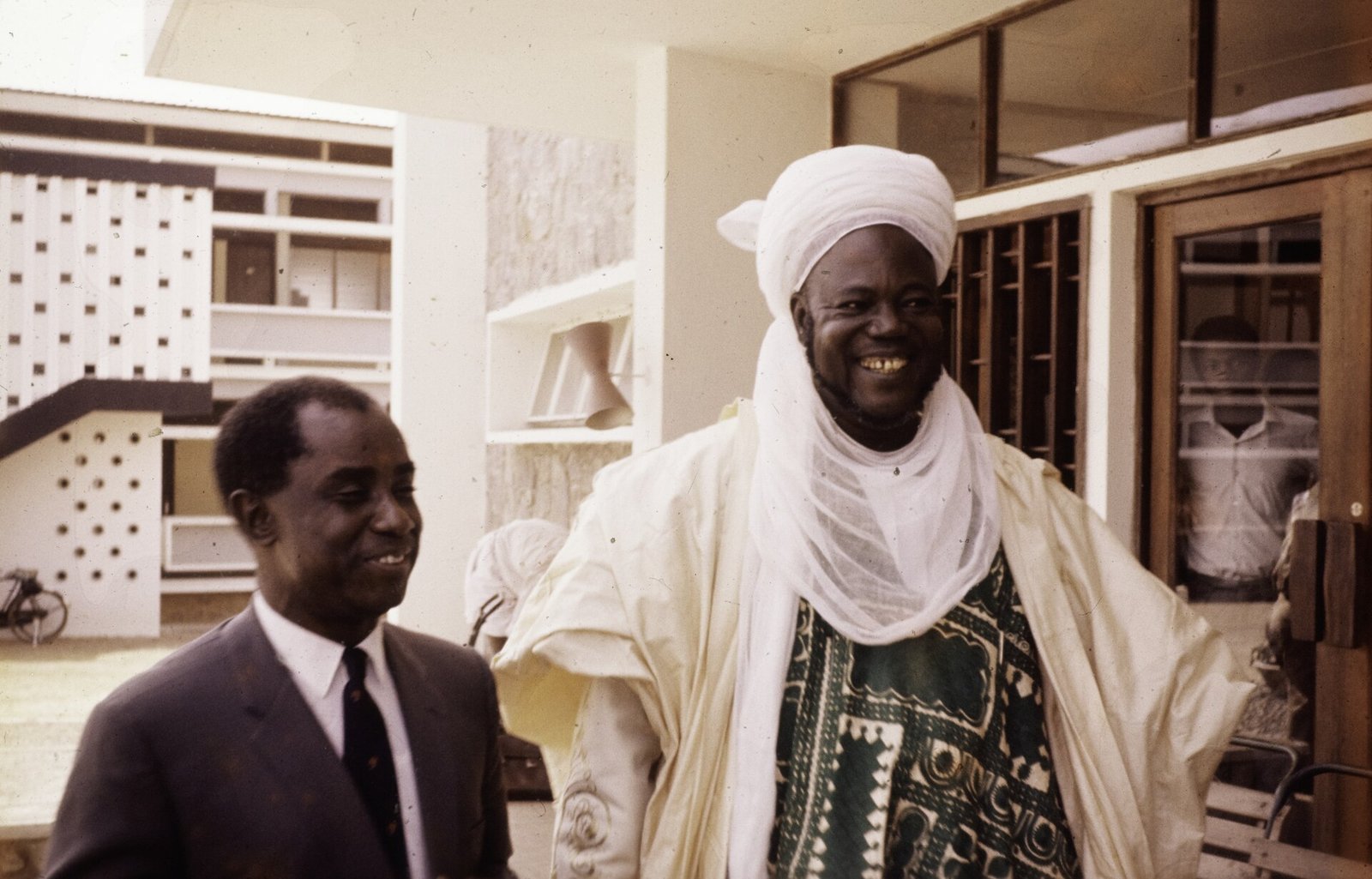
The 1953 decision to build a federation of three regions left each region with a majority group of about two-thirds of its people and minority groups amounting to about one-third. The Commission appointed to enquire into the resulting fears, chaired by Henry Willink, opened its report by noting the unusual composition that had resulted: one of the three constituent elements was “slightly larger in population than the other two put together.”27 Its language was careful on one point that mattered politically: “No minority expressed fears of the Federal Government.”28 The fears it was asked to examine were fears of the regional governments.
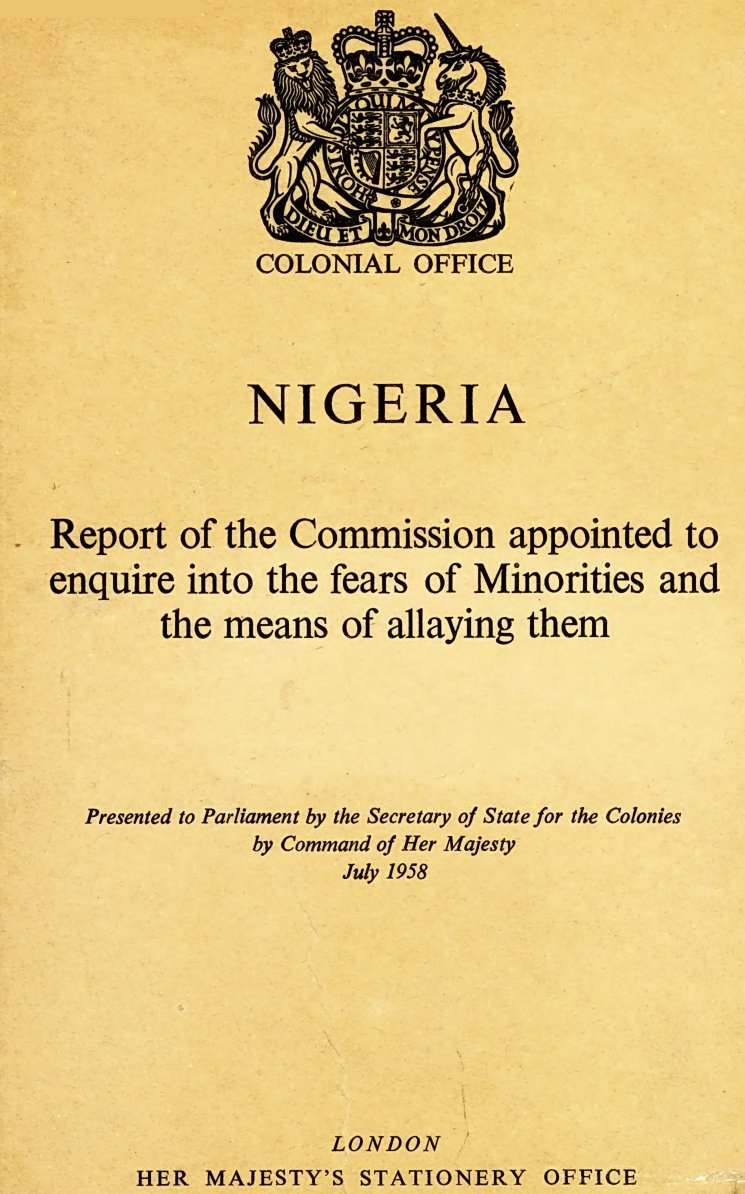
By the resumed constitutional conference of 1957, the Commission recorded, “a considerable number of claims by minorities for separate states were presented.” The Secretary of State appointed the Commission on 26 September 1957 with three terms of reference: to ascertain the facts about the fears of minorities and propose means of allaying them, “whether well or ill founded”; to advise what constitutional safeguards should be included; and, “if, but only if, no other solution seems to the Commission to meet the case, then as a last resort,” to recommend the creation of new states.29 That final clause, as Anifowose put it, had the effect of “curtailing its terms of reference.”30
Between November 1957 and April 1958 the Commission held sixty-one public sittings across the regions, Lagos and the Southern Cameroons, and 819 people came forward to give evidence.31 It ruled that “minorities” meant “ethnic or religious minorities of a permanent nature,” not political parties, though it allowed that a group could be a majority in a region and a minority within the area claimed for a new state. In the West, witnesses argued that “the people of the Mid-West would always be ‘dominated’ by the Yoruba majority”; in the East, minorities “expressed a fear of ‘domination’ by the Ibo majority in the Region, which they identified with the NCNC Party”; in the North, witnesses spoke of “fears of Fulani-Hausa domination.”32 Almost everyone who appeared wanted a state. As the report itself put it, “almost all the witnesses who came before us were insistent that nothing but a separate state could meet their problems.”33
Four rival state schemes were argued for the East, for Ogoja, the Cross River, a combined Calabar-Ogoja-Rivers state and the Rivers; the Mid-West State Movement claimed a large area of the West; and the United Middle Belt Congress, with Action Group support, pressed for a Middle Belt state in the North.34 The Commission heard them all and then declined to recommend any of them. “In each Region,” it concluded, “we came to the conclusion that on its own merits a separate state would not provide a remedy for the fears expressed.” Its reasons were set out in a short, dense passage that repays reading in full: it is “seldom possible to draw a clean boundary which does not create a fresh minority”; a state pared down to a willing area had “in each case become very small”; a new state would have to compete with the existing regions and “the cost in overheads … would be high.” Above all, the Commission judged that tribal feeling was hardening rather than softening as independence approached. “With the approach of independence,” it wrote, “the tendency has been reversed and there has been a sharp recrudescence of tribal feeling,” and it would “be a pity if … separate states had been created which enshrined tribal separation in a political form that was designed to be permanent.” It therefore refused “the principle of ethnic grouping” outright.35
What the Commission recommended instead was a package of safeguards: a single Nigeria Police Force under federal control, with no regional force, placed “in the forefront” of its recommendations; a Special Area in the Niger Delta under a federal board; designated Minority Areas for the Edo and Calabar peoples; entrenched fundamental rights; and a plebiscite, requiring a supermajority of 60 per cent, before any boundary such as the Ilorin and Kabba proposal could be transferred.36 Diamond’s summary of the outcome is pointed: the Commission “flatly opposed creation of any new states, as the colonial administration had explicitly hoped it would.”37 That last clause is Diamond’s inference about colonial intent, not something the report itself states. What the Commission put its faith in instead was the pull of the centre. The Federation’s importance, it argued, was bound to grow after independence, and that would “reinforce the ideals of tolerance expressed by the Northern People’s Congress, because it will become to their interest to obtain every seat they can in the Federal as well as the Regional Legislature; to do this they must contrive not to alienate their own outlying areas.” That, the report concluded, “will constitute a far better safeguard for the position of minorities than the creation of a separate state.”38
The report was broadly accepted, and the issue deferred. Anifowose records that “all major parties accepted the Commission’s report” and that the minorities problem was left until after independence, by which time only the Mid-West had won a state of its own.39 Kirk-Greene’s later verdict was that the safeguards the Commission had counted on did not survive the pressures of the 1960s; he wrote of the “creeping Regional control of the Nigeria police” as one of the “unscheduled inroads on the safeguards that the Minorities Commission had been satisfied with.”40 Whether the report was wise or merely convenient is still argued. What is not is its central finding: the fears were real, and the federal answer was to manage them rather than to redraw the map.
How many Nigerians? The censuses of 1962 and 1963
In a federation where seats and revenue both followed population, the census was never a technical exercise. Counting was a concurrent responsibility: the federal government found the money, but each region ran its own enumeration and sent the results to the central census office.41 The 1952-53 count, the first real house-to-house census of the whole country, was taken region by region over more than two years, which made precise comparison between regions impossible from the start.42 By the early 1960s, Aluko observed, politicians had come to regard the returns “as an instrument of political power,”43 and the more the results were seen to matter, the harder they were to trust.
The 1962 census was intended to break the pattern. Taken simultaneously across the country over two weeks in May, in contrast to the staggered count of the early 1950s, it was meant to serve twice over: as an accurate national count and as the basis of a fresh electoral register, since each person counted would receive a voter’s card.44 What made it explosive, Serra and Jerven write, was that “for the first time in Nigeria’s statistical history, the North had less than 50 per cent of the total population of the country, which could have implied the loss of an absolute majority in the House of Representatives.”45 A census that threatened to end the North’s majority was never going to be a quiet administrative matter.
It did not stay administrative. The federal chief census officer reported that “the figures recorded throughout the greater part of Eastern Nigeria during the present census are false and have been inflated,” singling out five divisions whose numbers had risen by more than 100 per cent; of the West he noted that provisional totals were ready for only five of 62 districts.46 He made, as Aluko records, “no adverse comment of any kind in respect of Northern Nigeria.”47 The Eastern premier, Michael Okpara, broke the secrecy of the count and announced that the East’s figure was 12.3 million, and that his government would stick to it.48 Two contradictory sets of national figures then circulated, neither of them officially published: a federal information pamphlet in December 1962 gave 42 million (North 22 million, East 12 million, West 8 million), while the Daily Times reported in January 1963 that the figures submitted to Cabinet totalled 52 million (North 30 million, East 12 million, West 10 million).49 A northern “verification” count then discovered 8.5 million people who had been missed, raising the northern figure to 31 million and the increase on 1952 to about 84 per cent,50 at which point the count lost what credibility it had left. On 19 February 1963 the Prime Minister, Abubakar Tafawa Balewa, cancelled the census for “loss of confidence for the figures in the various regions.”51
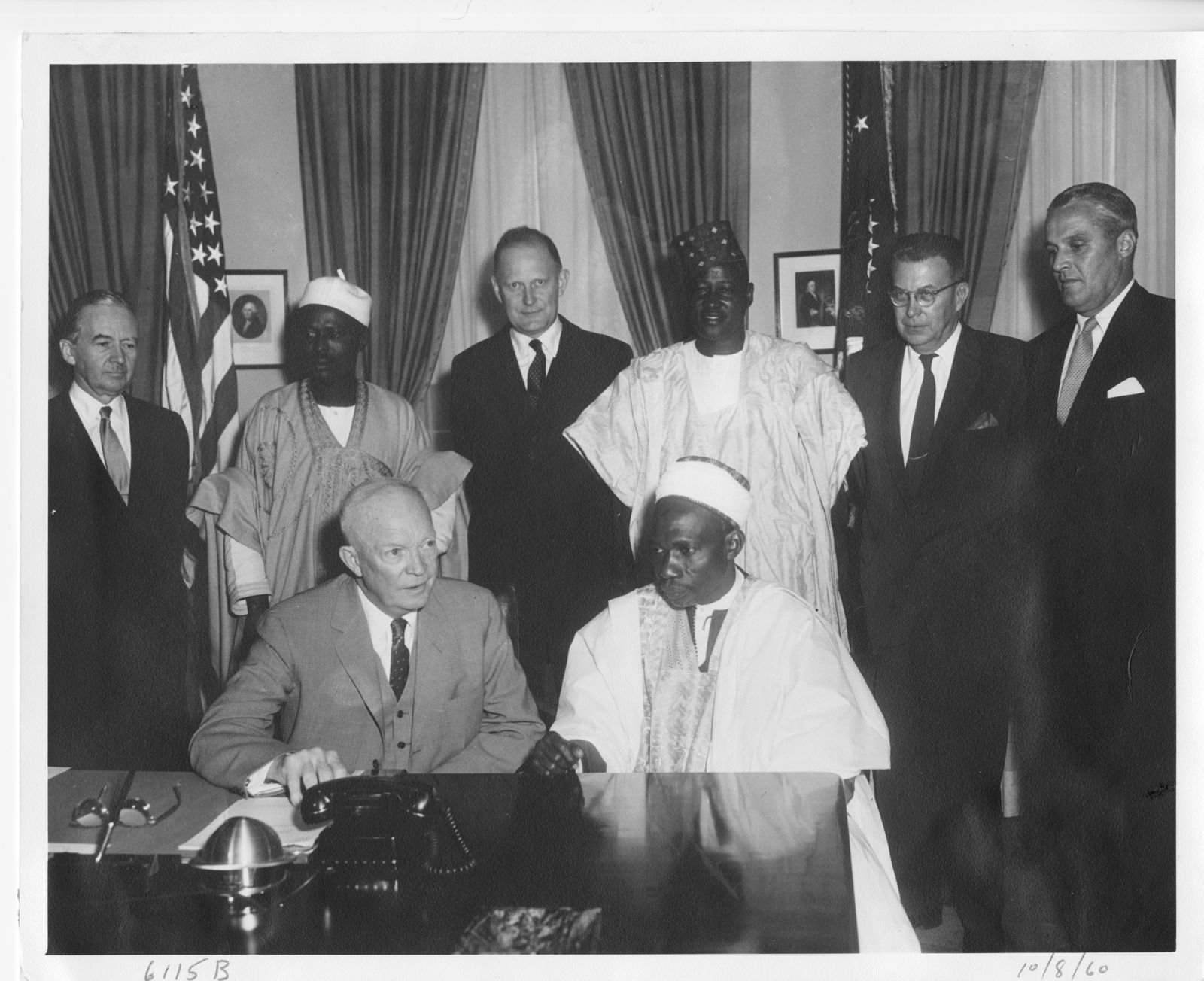
The 1963 census was designed to be fraud-proof. It was taken over four days in November rather than seventeen, with the number of enumerators roughly quadrupled, from 45,000 to 180,000,52 inspectors drawn from other regions, counting by sight rather than by report, and demographic tests applied to the results before they were released. It cost about £2.5 million against roughly £1.5 million the year before.53 The result, announced in February 1964 and accepted that May, was a national total of 55.66 million, with the North at 29.78 million, the East at 12.39 million, the West at 10.28 million, the Mid-West at 2.53 million and Lagos at 675,000.54 The North’s share of the population was restored to about 54 per cent, and the East’s fell to about 22 per cent from the 27 per cent its own figures would have given it.55
The East rejected the result outright. Okpara called the figures “worse than useless,”56 objecting that sample enumeration areas had been disclosed in advance, that people had been counted in markets and on the move, and that counting by sight was impossible inside purdah; the Ahmadu Bello government answered him point by point, turning some of the charges back on the East.57 On 18 May 1964 the Eastern Region sued in the Federal Supreme Court, asking that the census be declared “null and void,” the first time a regional government had taken the federal government to court.58 It lost: the Court held, in Post and Vickers’ account, that no legal right of the Eastern Regional Government had been infringed.59 Aluko’s own judgement was that even the official total could not be accepted as precise: “the writer doubts the authenticity of the figures, even though they have to be used for lack of any alternative.”60 His arithmetic made the scepticism concrete. The 1963 figures implied a national increase of about 83 per cent since 1952-53, or some 5.7 per cent a year, against a United Nations estimate of 1.9 per cent a year for the same period.61 Alternative reconstructions by the journalist Walter Schwarz and by Diamond, assuming growth rates of 4 and 3.5 per cent, put the true total somewhere between 42.6 and 47.3 million.62 Even the figures the country decided to use, in other words, were the high end of a contested range.
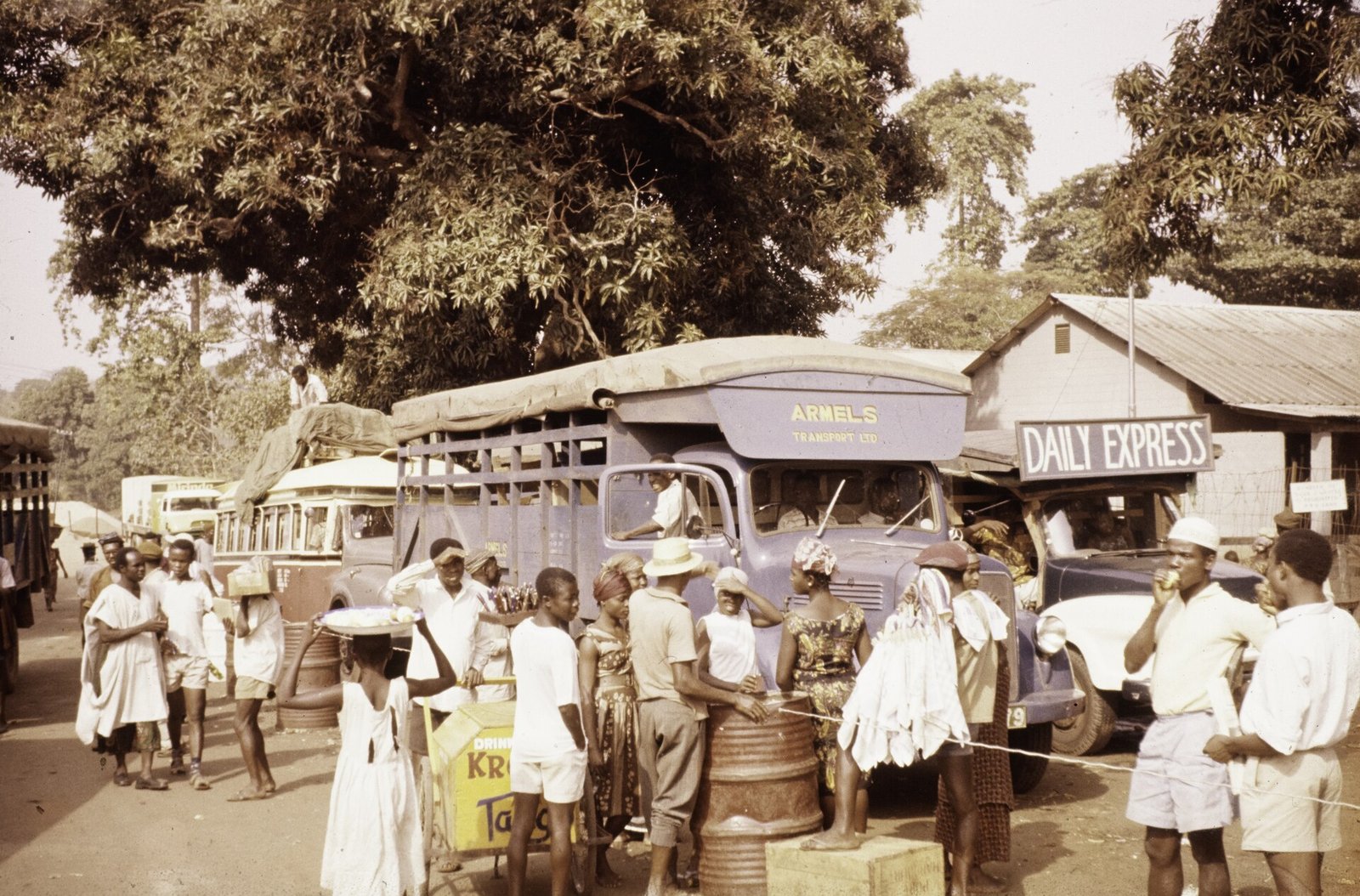
The figures mattered because they set the seats. The delimitation commission, sitting under the 1963 constitution, divided the accepted population by 312 to reach a nominal quota of 178,270 people per constituency, though in practice it kept to existing administrative boundaries and produced constituencies ranging from about 80,000 people to nearly 297,000.63 Its final report of 22 September 1964 allocated the North 167 seats, the East 70, the West 57, the Mid-West 14 and Lagos 4.64 The North came out with 53.5 per cent of the chamber, the East with about 23 per cent, and the West, which had gained ten seats, with a fifth more than before.65 Post and Vickers put it as an open question: the West benefited most from the re-allocation, but “whether this was justified, in view of the doubtful nature of its census returns, it is impossible to say.”66 The federal election of December 1964 was then fought on those numbers, which is to say it was fought on a figure that a whole region had sued to overturn. As Falola and Heaton put it, the southern governments understood that if they “could manipulate the census numbers in 1962, they could reverse the northern population majority and gain more seats for the southern regions.”67 They failed, and the attempt itself did lasting damage. Aluko’s summary of the whole episode has worn well: “no census of Nigeria has really enjoyed widespread acceptance, right back to 1901, and the question, ‘How many Nigerians?’ still remains unanswered.”68
The Western Region in crisis, 1962
The census crisis ran alongside a political crisis in the West that tore the Action Group apart. The party had been shaken by its defeat in the 1959 federal election, and the split between Obafemi Awolowo and the Western premier, Samuel Akintola, turned on strategy as much as on personality. Diamond frames it as a class and strategy dispute, with Akintola deciding that the pursuit of national power was hopeless and settling for regional consolidation; Mackintosh traces the same fault line through the party’s machinery. The quarrel became public at the Action Group congress that opened at Jos on 2 February 1962, when Akintola and his allies walked out.69
It moved quickly to the point of no return. On 19 May 1962 the party’s joint meeting voted, by 81 votes to 29, that Akintola should resign as premier,70 and on the evening of 21 May the Governor of the Western Region dismissed him and swore in Alhaji Adegbenro in his place.71 Akintola forced his way back into the premier’s office the next day. When the House of Assembly met on 25 May, the sitting degenerated into a physical brawl in which a member seized the mace, tried to strike the Speaker with it, and broke it on the table; a second attempt to meet was broken up with tear gas.72 Diamond reads the disorder as “carefully orchestrated by the Akintola faction” to prevent Adegbenro’s confirmation and to invite the emergency that followed.73 That reading is contested by Akintola’s supporters, and Diamond presents it as a matter of the balance of evidence rather than of proof.
On 29 May 1962 the federal parliament declared a state of emergency in the West, by 209 votes to 36 in the House of Representatives and 32 to 7 in the Senate, and appointed a federal administrator, Dr Majekodunmi, with sweeping powers to restrict movement, ban meetings and detain persons.74 Both Diamond and Post and Vickers conclude that the emergency was applied asymmetrically: almost all restricted Akintola supporters were freed while Awolowo’s organisers stayed restricted. Post and Vickers put it directly: “the move was directed solely against Chief Awolowo and was intended to aid Chief Akintola to gain control of the West.”75
The emergency was followed by the Coker Commission of Inquiry, which sat for 92 days between July and November 1962,76 and by the arrest of Awolowo himself. A cache of arms was found in Lagos in September 1962, and Awolowo was placed under house arrest on 22 September; charges of treasonable felony followed in November against him and thirty others. The trial ran for eight months, and in 1963 Awolowo was sentenced to ten years’ imprisonment and Anthony Enahoro to fifteen.77 The conviction is genuinely disputed in the literature: Diamond reports that the appeal rejected the finding of a coup conspiracy while upholding the arms-related conviction, and concludes that Awolowo’s political enemies had “seized a timely opportunity to destroy him,” while Mackintosh took the arms and training charges as proved.78 There is no reading of the episode on which the West emerged intact. Its premier had been sacked, its leading opposition figure imprisoned, its assembly made ridiculous, and its finances exposed.
The elections of 1964 and 1965
The 1964 federal election was fought by two blocs rather than many parties. On 3 June 1964 the NCNC and what remained of the Action Group announced an alliance, which on 1 September was named the United Progressive Grand Alliance, bringing in the northern opposition parties as well. Against it stood the Nigerian National Alliance, announced on 20 August, of the Northern People’s Congress and Akintola’s new Nigerian National Democratic Party.79
The campaign broke down before polling. By 21 December, 61 NPC candidates, including the Prime Minister, had already been returned unopposed,80 and opposition candidates in the North reported being arrested, kidnapped, or made to sign withdrawal letters under duress. Okpara called the whole exercise a “colossal farce” and declared there would be no election at all;81 the UPGA reaffirmed on 29 December that it would boycott.82 Polling went ahead on 30 December with the boycott holding in most of the country but not everywhere, since the Mid-West premier, Osadebay, reversed it in his own region. The partial results gave the NPC 162 seats, the NNDP 36, the NCNC 33, the Action Group 15, the Northern Progressive Front 4 and independents 3, with 59 of the 312 seats left vacant.83 Diamond’s summary is that the NNA took 198 of the 253 seats awarded, and that the UPGA won only four of 167 seats in the North, all of them in Tiv Division.84 The complete returns were never published by the Federal Electoral Commission.85
For a moment the result was in doubt. President Azikiwe refused at first to reappoint Balewa, and the two men negotiated a six-point plan under which a government would be formed and the Western Region’s own disputed government would be dissolved so its people could express their will. Balewa objected to that clause in particular, and in the end only the first part was carried out: Azikiwe summoned Balewa to form a government on 4 January 1965,86 and the cabinet he named a few days later was fifteen NPC men and two from the NCNC, with no constitutional revision attached.87 The federal crisis was patched, not resolved.
The Western Region election that autumn turned the patch into a rupture. The regional House was dissolved in September and polling set for 11 October, with a blanket ban on meetings and processions that fell hardest on the opposition. The NNDP ran an openly communal campaign against “Ibo empire,” and the government held the cocoa price artificially high through the campaign before cutting it from £120 to £65 a ton afterwards. By 30 September, fifteen NNDP candidates had already been returned unopposed.88 On polling day, nearly half the federal police force, some 7,000 officers, was deployed in the region, and results were ordered to be reported to the premier’s office for broadcast rather than announced in the constituencies, so that they could be altered on the way. The final official returns gave the NNDP 73 seats, the Action Group 15 and the NCNC 2, with four seats undeclared.89 Post and Vickers’ verdict on those figures is unusually flat: “widespread and blatant rigging there had undoubtedly been, so that it is impossible to say what might really have been the result of the election.” Adegbenro released a rival set of returns showing the opposition winning 68 of the 94 seats90 and briefly attempted to form an “interim government,” for which he and several of his would-be ministers were arrested the next day.
The violence that followed became known, in the language of the period, as “wetting”: property, and sometimes people, drenched with petrol and set alight, often using the flit guns that cocoa farmers used to spray their trees.91 The violence began alongside the count. “Within a month of the election, some eighty persons were reported killed in Ondo Province alone,”92 a figure carried in newspaper reports rather than a count. A “new and larger wave of riots and arson,” as Diamond calls it, “sparked in part by the murder of two popular Action Group organisers in Ijebu,” began at the end of November.93 None of the contemporary scholarship uses the later label “Operation Wetie”; that phrase is a retrospective name for a violence the sources describe simply as “wetting.” In November the federal electoral chairman, E. E. Esua, wrote to the Governor of the West that the country “may as well say farewell to parliamentary democracy and the rule of law in Nigeria,” and resigned.94 Diamond describes what was happening in the region in plain terms: the people of the West were “already rising up in rebellion against the government they believed had returned itself by fraud.”9596
Earlier violence: Jos, Kano and the Tiv
The crises of the early 1960s are sometimes traced back to earlier outbreaks of violence, and the sources disagree about how far that line can honestly be drawn. The clearest warning against overdrawing it comes from Leonard Plotnicov’s study of the 1945 riot in Jos, when, in his words, “the Hausa and the Ibo in the city of Jos fought one another for two days.” His casualty figure is far below the one later circulated: “at least two people were killed,” and “only two homicides can be attributed with certainty to these events.”97 He quotes the 1966 Biafran pamphlet that claimed “the bodies of Eastern men, women and children littered the streets” precisely in order to dispute it, and he rejects the later habit of reading the riot as a rehearsal for 1966: “the parallels between the riots in Jos and Kano are stronger than between these two and the events of 1966.”98 Plotnicov’s point is that the 1945 and 1953 riots pitted Hausa against Igbo alone, whereas in 1966 several northern peoples joined the attack.
The 1953 Kano riots are better documented and no more straightforward. Anifowose records “four days of rioting in the Kano Sabon gari” that produced “277 casualties, including thirty-six deaths”99 and that followed the arrival of southern politicians campaigning for self-government in 1956. He is careful about what kind of conflict it was: “some observers believed that the violence was not an inter-ethnic conflict between the Hausa and the Ibo communities in Kano,” he writes, and his own account treats political partisanship as the more fundamental cause; he draws no line forward from 1953 to 1966.100 Kirk-Greene, by contrast, records the East and later Biafra treating 1953 as “a point of no return,” while himself judging the genocide inference drawn from it “quite unproven,” even as he makes his own case that 1953 was “a watershed in the relationships of the new-found political parties.”101 Anifowose and Kirk-Greene are not contradicting each other so much as describing different things, one the character of the riot, the other the way it was remembered.
The Tiv riots of 1960 and 1964 followed the same contested pattern. The 1960 disturbances began at Yandev in August over a market and native-authority dispute and spread across Tivland, producing an official count of sixteen confirmed deaths, against twenty-five in Dent’s estimate and about fifty in a senior police officer’s, plus about 30,000 houses burnt,102 and organised attacks on the property of NPC supporters rather than on schools or hospitals. In the second, larger riot, of February 1964, reliable official figures for civilian deaths were not available: the Northern Region Ministry of Information estimated forty-seven killed, nineteen of them by the police, while unofficial estimates ran between 2,000 and 4,000, and the Sardauna of Sokoto told the regional legislature that “over 300” had been “slaughtered” like animals.103103 Anifowose is explicit that, unlike the Western Region’s breakdown, “the situation in Tiv Division was not directly related to the coup,”104 and he treats the army’s use against the Tiv as one of the grievances the coup-makers later cited rather than as its cause. Kirk-Greene, weighing the whole sequence, puts the “supreme crisis” not in the riots but in “the census controversy of 1962/63 and its immediate electoral aftermath of 1964/65.”105 On that much the sources converge: the road to 1966 runs through the census and the elections, and the earlier violence is better read as the setting than as the spark.
The army before 1966
The army that would end the argument in January 1966 was small, and its ethnic shape was more complicated than either side assumed. Before the Second World War, Miners records, “almost all the soldiers were recruited in the Northern Region,” and the pattern persisted after 1945 even as southerners entered through the trades and clerical branches. Of army recruits between 1946 and 1958, the North supplied 62.5 per cent, the East 25 per cent and the West 11 per cent.106 But the northern rank and file came disproportionately from the Middle Belt’s smaller, largely non-Muslim peoples rather than from the Muslim emirates, so that the infantry’s apparent regional uniformity concealed a religious and ethnic mix that the officer corps did not share. In the ranks, Luckham put “some sixty to sixty-five per cent of the NCOs” as northern, and “seventy-five per cent or so of the infantry.”107108
The officer corps was the sharper problem. At independence only 14 per cent of the Nigerian officers, eight out of fifty-seven, were northerners.109 The northern political class pressed for redress, and in 1961 a regional quota reserved half of all officer cadetships for the North.110 The quota worked, and it worked unevenly, so that by the eve of the coup the officer corps was layered by ethnicity and rank rather than simply divided: of 482 male officers, 157 were northerners, 128 came from the West and Mid-West, and 195 from the East and Ika-Ibo.111 Luckham’s figures show the same pattern from the other direction, with the Igbo heavily over-represented in the middle ranks and the North over-represented at the bottom: of the thirty-two substantive majors in January 1966, at least twenty were Igbo.112 Luckham’s own conclusion was that cleavages which reinforce each other “lead to the polarisation and intensification of conflict,” and the officer corps of 1966 was built on exactly that kind of overlap. The eastern complaints about the 1961 quota and the northern fears of Igbo promotion under the Ironsi regime would each feed the coups of 1966, but in the years before them the army’s shape was already a political fact waiting to be used.
The federation at the end of 1965
By December 1965 the First Republic had spent its authority. The federal election of 1964 had left a government most of the South did not accept, and the Western election of 1965 had left a regional government that “everybody knew,” in Diamond’s words, quoting the historian Osuntokun, “had been rigged and that there was no shred of truth in the official results.”113 The region was in rebellion, the census that had set the seats was under legal challenge, the main opposition leader in the South was in prison, and the parties had organised themselves along regional and ethnic lines until those lines were the real constitution. The institutions that were supposed to resolve such disputes, the courts, the electoral commission and the federal parliament, had each been used, and each had been discredited in the attempt.
The sources disagree about where exactly the point of no return fell. Kirk-Greene places it in the census controversy and the elections that followed it. Diamond locates it in a longer failure of class and institution, arguing that the federal structure “heavily contributed to the polarisation of political conflict by generating the coincidence of ethnic, regional and party cleavage.”114 De St. Jorre, writing soon after the war, warns that no single event explains what came next, and that the minority peoples caught between the three big groups were themselves roughly as numerous as those groups combined.115 It would be too much to say that any of them treats January 1966 as inevitable from 1945. The federation they describe had, by the end of 1965, lost agreement on its two most fundamental numbers: who counted as a Nigerian, and who had won the last election. That is the state into which the army stepped. The coup itself is the subject of the next piece in this series.
Notes
-
Post and Vickers 1973, p. 232. ↩
-
Lynn 2001, BDEEP Nigeria, part I, doc. 7, p. 36. ↩
-
Nwabueze 1982, pp. 42-44. ↩
-
Lynn 2001, BDEEP Nigeria, p. xlix. ↩
-
Lynn 2001, BDEEP Nigeria, part I, doc. 90, p. 250. ↩
-
Lynn 2001, BDEEP Nigeria, p. lviii. ↩
-
Nwabueze 1982, p. 46. ↩
-
Lynn 2001, BDEEP Nigeria, p. lx; Nwabueze 1982, p. 48. ↩
-
Lynn 2001, BDEEP Nigeria, p. lxi. ↩
-
Lynn 2001, BDEEP Nigeria, p. lxi. ↩
-
Sklar 1963, p. 118. ↩
-
Anifowose 1982, p. 48. ↩
-
Lynn 2001, BDEEP Nigeria, part I, doc. 207, p. 585. ↩
-
Lynn 2001, BDEEP Nigeria, part I, doc. 206, p. 584. ↩
-
Lynn 2001, BDEEP Nigeria, p. lxx. ↩
-
Lynn 2001, BDEEP Nigeria, part II, doc. 238, p. 31. ↩
-
Lynn 2001, BDEEP Nigeria, p. lxxi. ↩
-
Sklar 1963, p. 143. ↩
-
Lynn 2001, BDEEP Nigeria, part II, doc. 238, p. 31. ↩
-
Diamond 1988, p. 131. ↩
-
Serra and Jerven 2021, p. 237. ↩
-
Dudley 1982, p. 58; Diamond 1988, p. 24. ↩
-
Post and Vickers 1973, p. 2. ↩
-
Whitaker 1970, p. 29. ↩
-
Nwabueze 1982, p. 155. ↩
-
Nwabueze 1982, pp. 153-154; Willink Commission report, Cmnd 505, p. 1. ↩
-
Willink Commission report, Cmnd 505, p. 1. ↩
-
Willink Commission report, Cmnd 505, p. 2. ↩
-
Willink Commission report, Cmnd 505, pp. 1-2. ↩
-
Anifowose 1982, p. 52. ↩
-
Willink Commission report, Cmnd 505, p. 111. ↩
-
Willink Commission report, Cmnd 505, pp. 13, 38, 66. ↩
-
Willink Commission report, Cmnd 505, p. 97. ↩
-
Willink Commission report, Cmnd 505, pp. 47, 71. ↩
-
Willink Commission report, Cmnd 505, pp. 87-88. ↩
-
Willink Commission report, Cmnd 505, pp. 87, 104-105. ↩
-
Diamond 1988, p. 54. ↩
-
Willink Commission report, Cmnd 505, p. 73. ↩
-
Anifowose 1982, p. 52. ↩
-
Kirk-Greene 1975, p. 10. ↩
-
Aluko 1965, p. 377. ↩
-
Aluko 1965, pp. 376, 381. ↩
-
Aluko 1965, p. 377. ↩
-
Serra and Jerven 2021, p. 242. ↩
-
Serra and Jerven 2021, p. 242. ↩
-
Aluko 1965, p. 381. ↩
-
Aluko 1965, p. 381. ↩
-
Diamond 1988, p. 134. ↩
-
Aluko 1965, pp. 383-384. ↩
-
Diamond 1988, p. 136; Post and Vickers 1973, p. 81. ↩
-
Aluko 1965, p. 384. ↩
-
Diamond 1988, p. 137. ↩
-
Aluko 1965, p. 384. ↩
-
Aluko 1965, pp. 384-385. ↩
-
Diamond 1988, p. 139. ↩
-
Serra and Jerven 2021, pp. 244-246. ↩
-
Serra and Jerven 2021, p. 252. ↩
-
Post and Vickers 1973, pp. 126-127. ↩
-
Aluko 1965, p. 385. ↩
-
Aluko 1965, pp. 385-386. ↩
-
Diamond 1988, p. 154. ↩
-
Post and Vickers 1973, pp. 127-128. ↩
-
Post and Vickers 1973, p. 128. ↩
-
Post and Vickers 1973, p. 127. ↩
-
Falola and Heaton 2008, p. 168. ↩
-
Aluko 1965, p. 385. ↩
-
Diamond 1988, pp. 93, 98; Mackintosh 1963, p. 141. ↩
-
Diamond 1988, p. 100. ↩
-
Mackintosh 1963, p. 143. ↩
-
Mackintosh 1963, pp. 143-144; Diamond 1988, p. 102. ↩
-
Diamond 1988, p. 101. ↩
-
Diamond 1988, p. 103. ↩
-
Post and Vickers 1973, p. 78. ↩
-
Diamond 1988, pp. 104-105. ↩
-
Diamond 1988, pp. 109, 111-112. ↩
-
Mackintosh 1963, pp. 146-147. ↩
-
Diamond 1988, pp. 194-195. ↩
-
Diamond 1988, p. 214. ↩
-
Diamond 1988, p. 215. ↩
-
Post and Vickers 1973, p. 181. ↩
-
Post and Vickers 1973, p. 183. ↩
-
Diamond 1988, p. 219. ↩
-
Post and Vickers 1973, p. 183. ↩
-
Post and Vickers 1973, p. 193; Diamond 1988, pp. 222-223. ↩
-
Diamond 1988, p. 224. ↩
-
Post and Vickers 1973, pp. 221-222; Diamond 1988, pp. 259-263. ↩
-
Post and Vickers 1973, p. 228. ↩
-
Diamond 1988, p. 265. ↩
-
Post and Vickers 1973, p. 230; Diamond 1988, p. 269. ↩
-
Diamond 1988, p. 267. ↩
-
Diamond 1988, p. 269. ↩
-
Diamond 1988, p. 268. ↩
-
Diamond 1988, p. 266. ↩
-
Diamond 1988, p. 266. ↩
-
Plotnicov 1971, pp. 298, 302-303. ↩
-
Plotnicov 1971, p. 298. ↩
-
Anifowose 1982, p. 48. ↩
-
Anifowose 1982, pp. 47-48. ↩
-
Kirk-Greene 1971, vol. 1, p. 10. ↩
-
Anifowose 1982, pp. 114, 122, 124. ↩
-
Anifowose 1982, pp. 297-298. ↩
-
Kirk-Greene 1975, p. 17. ↩
-
Miners 1971, pp. 24-26. ↩
-
Luckham 1971, p. 189. ↩
-
Miners 1971, p. 26. ↩
-
Miners 1971, p. 115. ↩
-
Miners 1971, p. 116. ↩
-
Miners 1971, p. 119. ↩
-
Luckham 1971, pp. 47, 190. ↩
-
Diamond 1988, p. 266. ↩
-
Diamond 1988, p. 321. ↩
-
de St Jorre 1972, p. 15. ↩
Where the estimates differ
| Estimate | Who holds it | Source |
|---|---|---|
| 42m (North 22m, East 12m, West 8m) | Federal Ministry of Information pamphlet, December 1962 | Aluko 1965, p. 383 |
| 52m (North 30m, East 12m, West 10m) | figures reported as submitted to Cabinet, Daily Times, 30 January 1963 | Aluko 1965, pp. 383-384 |
| 45.6m (North 22.5m, East 12.4m, West 7.8m) | Diamond, from Aluko and Schwarz | Diamond 1988, p. 133 |
| Estimate | Who holds it | Source |
|---|---|---|
| 55.66m | Federal Government, accepted in 1964 | Aluko 1965, p. 384 |
| 55.67m | Serra and Jerven, from Iro's published figures | Serra and Jerven 2021, Table 1, p. 245 |
| 47.25m | Diamond, assuming 3.5 per cent annual growth | Diamond 1988, Table 5.3, p. 154 |
| 42.62m | Walter Schwarz, assuming 4 per cent annual growth | Diamond 1988, Table 5.3, p. 154 |
| Estimate | Who holds it | Source |
|---|---|---|
| 29.78m | Federal Government | Aluko 1965, p. 384 |
| 25.81m | Diamond, assuming 3.5 per cent annual growth | Diamond 1988, Table 5.3, p. 154 |
| 23.20m | Walter Schwarz, assuming 4 per cent annual growth | Diamond 1988, Table 5.3, p. 154 |
| Estimate | Who holds it | Source |
|---|---|---|
| 16 | Official government source, as reported by Anifowose | Anifowose 1982, p. 124 |
| 25 | Dent's estimate | Anifowose 1982, p. 124 |
| about 50, with 200 injured | A senior police officer's estimate | Anifowose 1982, p. 124 |
| Estimate | Who holds it | Source |
|---|---|---|
| 47, nineteen of them by police | Northern Region Ministry of Information, as reported by Anifowose | Anifowose 1982, p. 132 |
| between 2,000 and 4,000 | Unofficial estimates | Anifowose 1982, p. 132 |
| 'over 300', including 11 policemen | Ahmadu Bello, Premier of the Northern Region, 2 March 1965 | Anifowose 1982, p. 132 |
Timeline
- January 1, 1947 The Richards constitution comes into force, legislating for the North through a central council for the first time
- 1950 At the Ibadan conference the North demands seats equal to the two southern regions combined
- May 21, 1953 Lyttelton tells the House of Commons the three Regions cannot work a federation so closely knit
- October 1954 The Lyttelton constitution comes into operation, with regional premiers holding responsible government
- September 26, 1957 The Willink Commission is appointed to enquire into the fears of minorities
- May 5 to 21, 1962 The 1962 census is taken; its regional figures are never published
- February 19, 1963 Balewa cancels the 1962 census for loss of confidence in the figures
- November 5 to 8, 1963 The 1963 census is taken over four days with a new anti-fraud machinery
- September 22, 1964 The delimitation report fixes the federal house at 312 seats on the new population figures
- December 30, 1964 The federal election is held; the United Progressive Grand Alliance boycotts it in most of the country
- October 11, 1965 The Western Region election is held and its result is widely rejected as rigged
- November 15, 1965 The federal electoral chairman writes that Nigeria may as well say farewell to parliamentary democracy
Sources
Every date, figure and quotation in this piece was checked against the page cited in the notes.
- S. A. Aluko. “How Many Nigerians? An Analysis of Nigeria's Census Problems, 1901-63”, The Journal of Modern African Studies 3(3), 371-392, 1965.
- Gerardo Serra and Morten Jerven. “Contested Numbers: Census Controversies and the Press in 1960s Nigeria”, The Journal of African History 62(2), 235-253, 2021.
- John P. Mackintosh. “Politics in Nigeria: The Action Group Crisis of 1962”, Political Studies 11(2), 126-155, 1963.
- Leonard Plotnicov. “An Early Nigerian Civil Disturbance: The 1945 Hausa-Ibo Riot in Jos”, The Journal of Modern African Studies 9(2), 297-305, 1971.
- Great Britain, Commission Appointed to Enquire into the Fears of Minorities. “Nigeria: Report of the Commission Appointed to Enquire into the Fears of Minorities and the Means of Allaying Them (Cmnd 505)”, HMSO, 1958.
- Larry Diamond. “Class, Ethnicity and Democracy in Nigeria: The Failure of the First Republic”, Macmillan and Syracuse University Press, 1988.
- Kenneth Post and Michael Vickers. “Structure and Conflict in Nigeria, 1960-1966”, Heinemann Educational and University of Wisconsin Press, 1973.
- N. J. Miners. “The Nigerian Army 1956-1966”, Methuen, 1971.
- Robin Luckham. “The Nigerian Military: A Sociological Analysis of Authority and Revolt, 1960-67”, Cambridge University Press, 1971.
- A. H. M. Kirk-Greene (ed.). “Crisis and Conflict in Nigeria: A Documentary Sourcebook, 1966-1970, vol. 1”, Oxford University Press, 1971.
- A. H. M. Kirk-Greene. “The Genesis of the Nigerian Civil War and the Theory of Fear”, Scandinavian Institute of African Studies, 1975.
- John de St. Jorre. “The Brothers' War: Biafra and Nigeria”, Houghton Mifflin, 1972.
- R. A. Anifowose. “Violence and Politics in Nigeria: The Tiv and Yoruba Experience”, Nok Publishers, 1982.
- Richard L. Sklar. “Nigerian Political Parties: Power in an Emergent African Nation”, Princeton University Press, 1963.
- B. O. Nwabueze. “A Constitutional History of Nigeria”, C. Hurst, 1982.
- C. S. Whitaker Jr.. “The Politics of Tradition: Continuity and Change in Northern Nigeria, 1946-1966”, Princeton University Press, 1970.
- Martin Lynn (ed.). “Nigeria: British Documents on the End of Empire, Series B, vol. 7, parts I and II”, The Stationery Office, 2001.
- Billy J. Dudley. “An Introduction to Nigerian Government and Politics”, Macmillan, 1982.
- Toyin Falola and Matthew M. Heaton. “A History of Nigeria”, Cambridge University Press, 2008.
Further Reading
The sources above support the specific claims on this page. The works below are the scholarship behind them. Citations are given in full so readers can find them through a library or database; some are paywalled.
Peer-reviewed articles
- Serra, Gerardo; Jerven, Morten (2021). "Contested Numbers: Census Controversies and the Press in 1960s Nigeria." The Journal of African History 62(2): 235-253. DOI: 10.1017/S0021853721000438.
- Aluko, S. A. (1965). "How Many Nigerians? An Analysis of Nigeria's Census Problems, 1901-63." The Journal of Modern African Studies 3(3): 371-392. DOI: 10.1017/S0022278X00006170.
- Mackintosh, John P. (1963). "Politics in Nigeria: The Action Group Crisis of 1962." Political Studies 11(2): 126-155. DOI: 10.1111/j.1467-9248.1963.tb01055.x.
- Plotnicov, Leonard (1971). "An Early Nigerian Civil Disturbance: The 1945 Hausa-Ibo Riot in Jos." The Journal of Modern African Studies 9(2): 297-305. DOI: 10.1017/S0022278X00024976.
- Suberu, Rotimi T. (2022). "Federalism and the First Republic of Nigeria, 1960-1966." The Oxford Handbook of Nigerian History : 377-398. DOI: 10.1093/oxfordhb/9780190050092.013.25.
Books
- Diamond, Larry (1988). Class, Ethnicity and Democracy in Nigeria: The Failure of the First Republic. Macmillan; Syracuse University Press.
- Post, Kenneth; Vickers, Michael (1973). Structure and Conflict in Nigeria, 1960-1966. Heinemann Educational; University of Wisconsin Press.
- Miners, N. J. (1971). The Nigerian Army 1956-1966. Methuen.
- Luckham, Robin (1971). The Nigerian Military: A Sociological Analysis of Authority and Revolt, 1960-67. Cambridge University Press.
- Kirk-Greene, A. H. M. (1975). The Genesis of the Nigerian Civil War and the Theory of Fear. Scandinavian Institute of African Studies.
- Kirk-Greene, A. H. M. (1971). Crisis and Conflict in Nigeria: A Documentary Sourcebook, 1966-1970, vol. 1. Oxford University Press.
- Anifowose, R. A. (1982). Violence and Politics in Nigeria: The Tiv and Yoruba Experience. Nok Publishers.
- Nwabueze, B. O. (1982). A Constitutional History of Nigeria. C. Hurst.
- Whitaker, C. S. (1970). The Politics of Tradition: Continuity and Change in Northern Nigeria, 1946-1966. Princeton University Press.
- de St. Jorre, John (1972). The Brothers' War: Biafra and Nigeria. Houghton Mifflin.