Stella Sigcau, prime minister of the South African Bantustan of Transkei, was ousted in a bloodless military coup led by General Bantu Holomisa.
Sources: South African History Online ; The New York Times ; Mail & Guardian
Politics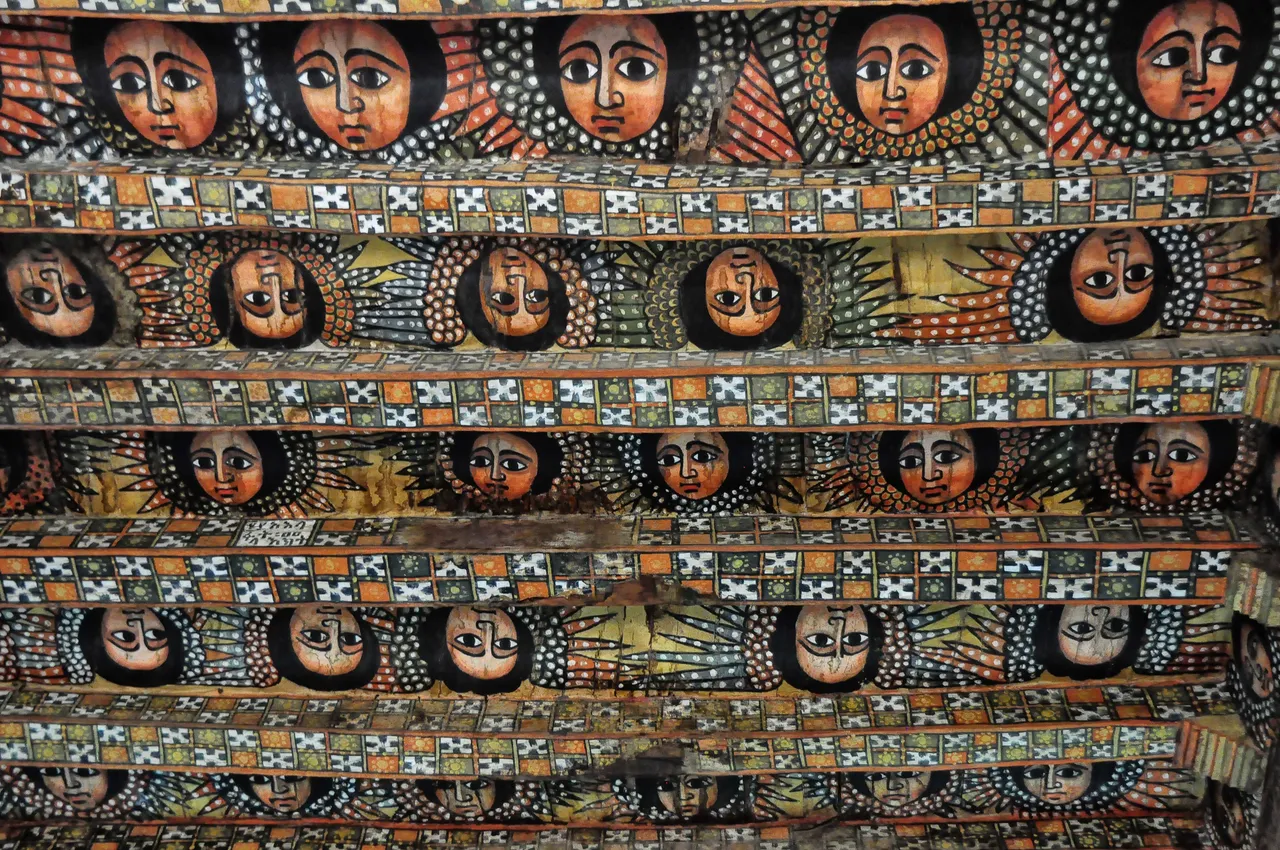
Ceiling of Debre Birhan Selassie church, Gondar, Ethiopia. Photo: Rod Waddington, CC BY-SA 2.0, via Wikimedia Commons. Licence · Source
Real events, births and milestones from Africa and the diaspora.
Stella Sigcau, prime minister of the South African Bantustan of Transkei, was ousted in a bloodless military coup led by General Bantu Holomisa.
Sources: South African History Online ; The New York Times ; Mail & Guardian
PoliticsArmed men killed hundreds of villagers in Kherarba, Ouled Sahnine and Ouled Tayeb, three villages a few kilometres from Relizane, on the first day of Ramadan. Hospital estimates put the dead at 386 and the press reported 412, with more than 120 wounded. The same region was attacked again on 4 January 1998, when more than 300 people were killed in three other villages. The attackers were not identified.
Sources: Justice Commission for Algeria ; Human Rights Watch
Corrected in September 2026 · see what changed
TragedyFollowers of the preacher Paul Joseph Mukungubila attacked the state television studios, the airport and a military base in Kinshasa. Soldiers killed about 54 of them in the capital and 47 more in clashes at Lubumbashi and Kolwezi, and around a hundred people were arrested.
Sources: CBC News ; ABC News (Australia)
Corrected in September 2026 · see what changed
Politics European Union / European Parliament, Attribution, Wikimedia Commons 1935
Omar Bongo, who ruled Gabon as president for more than four decades, was born.
Sources: The Guardian ; BBC News
Birth Koffi.noel, CC BY-SA 4.0, Wikimedia Commons 1933
Timité Bassori, the pioneering Ivorian filmmaker, actor and writer regarded as one of the fathers of Ivorian cinema, was born in Aboisso.
Sources: Societe des Producteurs et Professionnels de Cinema (SPLA / Africultures) ; Luxor African Film Festival
Corrected in September 2026 · see what changed
CultureNigeria held a federal election that the United Progressive Grand Alliance boycotted in most of the country. Afterward President Nnamdi Azikiwe said he would resign rather than ask the prime minister, Abubakar Tafawa Balewa, to form a new government.
Sources: Internet Archive ; Office of the Historian, U.S. Department of State
Read the full article: Regions, Census and Elections: Nigeria's Road to Crisis, 1945-1965
Politics