About Provenance Africa
Provenance Africa is an independent archive of African and diaspora history, which I run on my own. The core of the site is its researched articles, written from academic monographs, archival records and reported journalism, with the sources listed at the foot of each piece. The long-form histories cover larger subjects, such as the kingdoms and empires of precolonial Africa, and On This Day keeps a date-by-date record of events across the continent and its diaspora.
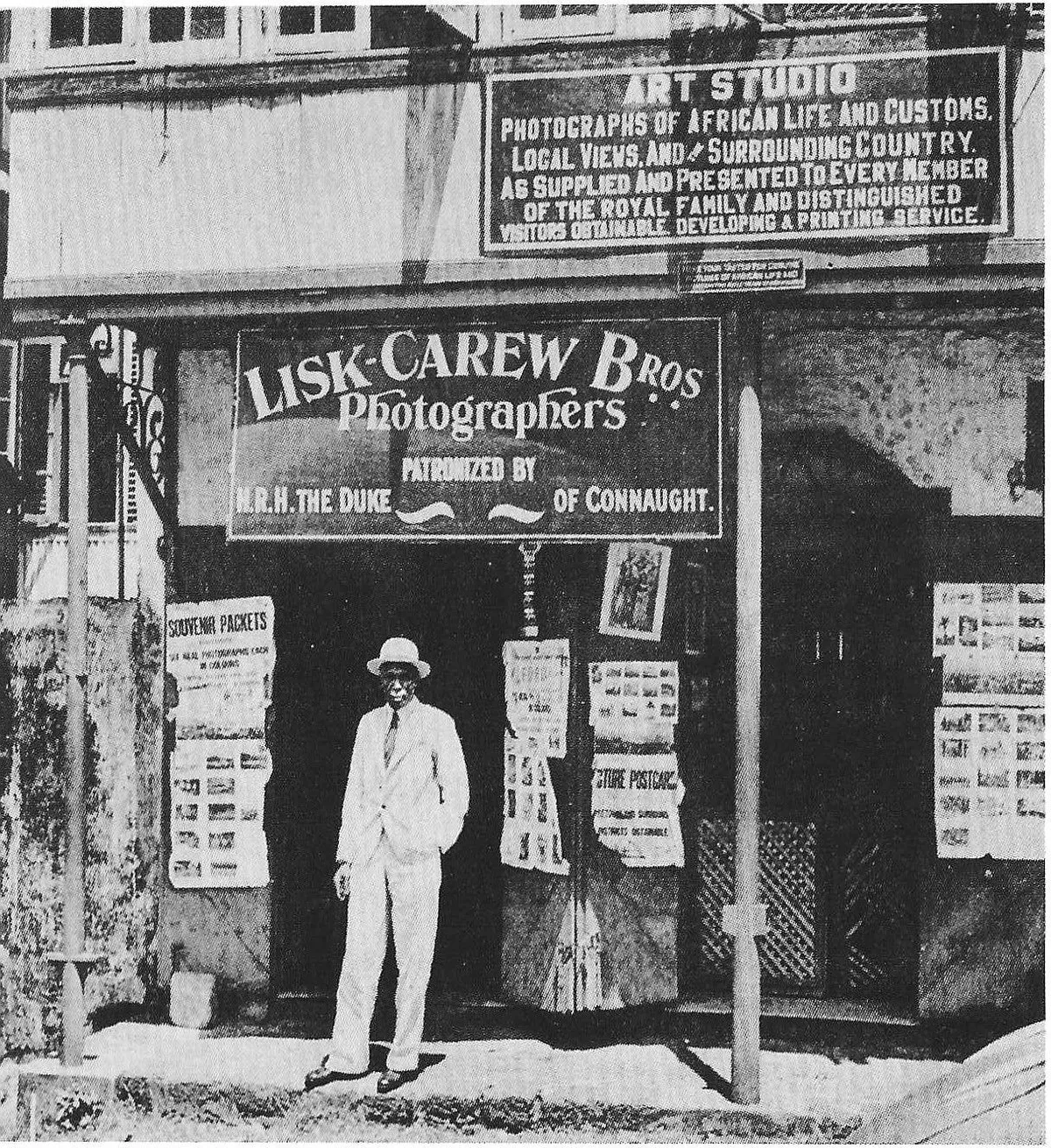
The Lisk-Carew Brothers' studio, Freetown
Image: Photographer unknown, public domain, via Wikimedia Commons. Licence · Source
The standard for an article is at least two independent sources, with academic and archival references preferred where they exist. A small number of early articles still fall short of that and are being brought up to it. Where historians disagree about a fact or a figure, the article says so and names who holds each view instead of picking a side. The methodology page sets out the checks an article goes through before it is published, and errors that get through are fixed and recorded in the corrections log.
On This Day is researched separately. Its entries are cross-referenced against sources including Wikimedia Commons, South African History Online, the U.S. State Department's historical document archive, the UK National Archives' Cabinet Papers, British Pathé and AP Archive newsreel footage, and the Smithsonian's National Museum of African Art.
Images on the site come from Wikimedia Commons and from the open-access collections of museums such as the Cleveland Museum of Art and the Art Institute of Chicago, under public-domain or Creative Commons licences. Museum objects carry the licence recorded by the museum that holds them. The artworks on the front page and the section pages each have a label giving what the holding museum records about how the object reached it, gaps included. On a few photographs of objects the studio backdrop has been removed; nothing else in those images has been changed. Video is embedded from YouTube. Each image and video is checked before it goes up and credited to its creator or rights holder where known.
The faint letters in the margins of wide screens come from African writing systems (Ge'ez, Tifinagh, Meroitic, Vai, Bamum, West African Ajami and Egyptian hieroglyphs), set in Google's Noto fonts.
Who owns this site. I do. Provenance Africa (provenanceafrica.com) is owned and run by me, Princewill Ubani, from the United Kingdom. It is not owned by, funded by, or affiliated with any government, political party, campaign group, NGO, or media company.
How it's funded. The site is entirely self-funded. It carries no advertising, no sponsored content, no affiliate links, and no paid placements of any kind. If that ever changes, this page will say so before it changes, and any sponsored or paid content will be labelled as such on the page it appears on.
What I do with your data. The daily email is run through Buttondown. I don't sell or share the subscriber list. See the privacy policy.
Editorial independence. No source, publisher, institution, or individual has any right of review over what appears here before publication, and none has been offered.
If you spot an error, have a correction, or want to get in touch for any other reason, see the contact page.