
Tunisian street vendor Mohamed Bouazizi set himself on fire in protest, an act that became the catalyst for the Tunisian Revolution and the wider Arab Spring.
Sources: Al Jazeera ; The National
Politics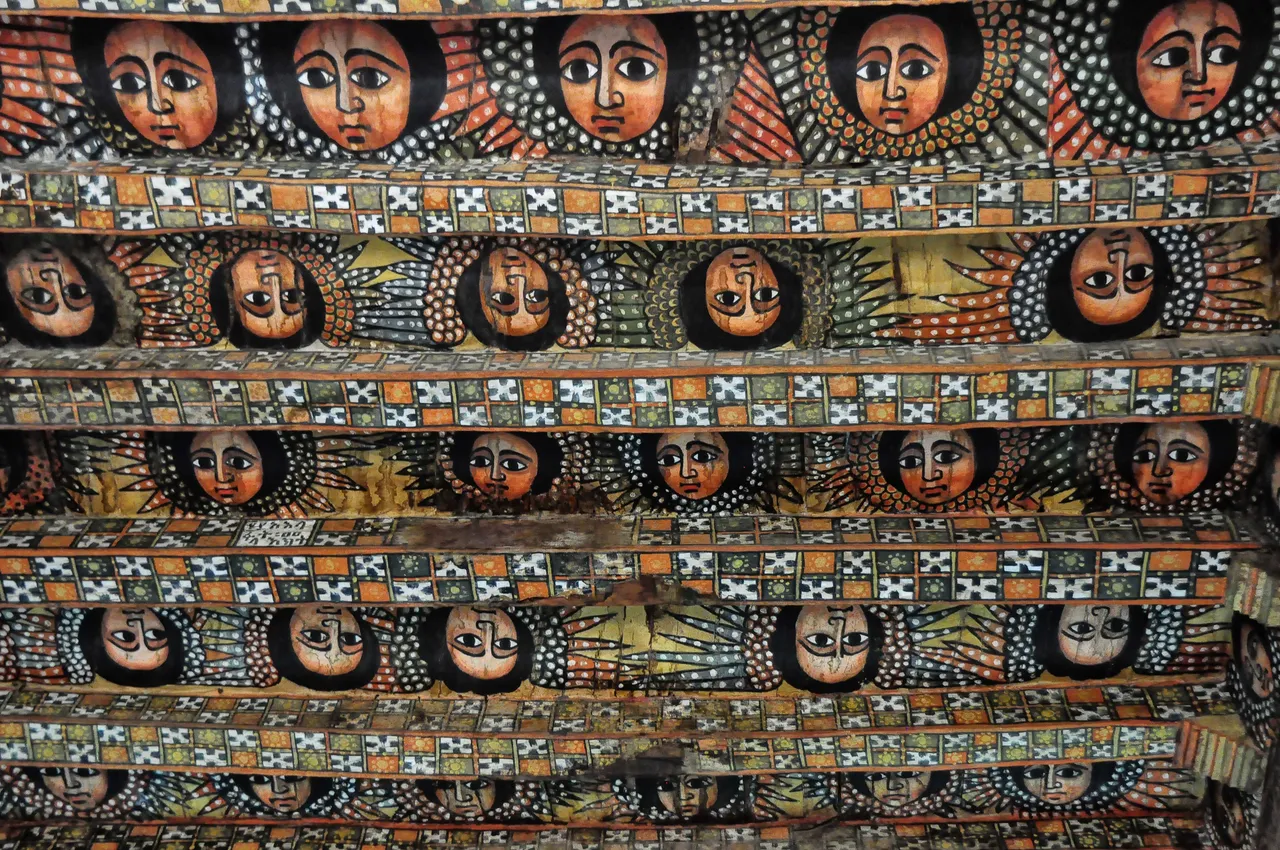
Ceiling of Debre Birhan Selassie church, Gondar, Ethiopia. Photo: Rod Waddington, CC BY-SA 2.0, via Wikimedia Commons. Licence · Source
Events, births and deaths from Africa and the diaspora, by date.
Tunisian street vendor Mohamed Bouazizi set himself on fire in protest, an act that became the catalyst for the Tunisian Revolution and the wider Arab Spring.
Sources: Al Jazeera ; The National
Politics Public Domain, Wikimedia Commons 1960
Army and air force units loyal to Haile Selassie retook Addis Ababa from the Imperial Bodyguard, whose commander Mengistu Neway and his brother Germame had seized the capital four days earlier while the emperor was in Brazil. Counts of the dead in the fighting run from 300 to 2,000. The conspirators had shot their hostages, ministers and officials, before the end. Germame killed himself rather than be taken; Mengistu was hanged the following March.
Sources: Ethiopia Observer ; Haile Selassie archive
PoliticsCongolese parties in the Second Congo War signed a peace accord providing for transitional governance and future elections.
Sources: United Nations (Office of the Spokesperson for the Secretary-General) ; Peace Research Institute Frankfurt (PRIF) ; Human Rights Watch
Politics Portrait by Robert Sivell, CC BY-SA 3.0, Wikimedia Commons 1917
Kenneth Dike, the pioneering Nigerian historian who transformed the study of African history, was born.
Sources: University of Aberdeen ; Encyclopedia.com (Gale) ; King's College London
Birth Bayo Omoboriowo, CC BY-SA 4.0, Wikimedia Commons 1942
Muhammadu Buhari, who served as both a military and civilian President of Nigeria, was born.
Sources: Deutsche Welle ; BBC News
Birth