Painting by Frank Dadd, 1898 — Public Domain, Wikimedia Commons 1898
 At the Battle of Omdurman in Sudan, an Anglo-Egyptian army under Herbert Kitchener decisively defeated Mahdist forces, ending the Mahdist State and establishing British dominance over Sudan.
Sources: National Army Museum ; World History Encyclopedia ; BritishBattles.com
History  Photo by Farid Amadou Bahleman — CC BY-SA 4.0, Wikimedia Commons 1933
 Mathieu Kérékou, who later ruled Benin for nearly three decades and oversaw Africa's first successful transition from dictatorship to multiparty democracy, was born in Kouarfa, French Dahomey.
Sources: BBC Afrique ; The Globe and Mail ; Freedom House
Birth  CC BY-SA 3.0, Wikimedia Commons 1998
 The International Criminal Tribunal for Rwanda convicted Jean-Paul Akayesu, former bourgmestre of Taba, on nine counts including genocide, incitement to genocide and crimes against humanity. It was the first judgment by an international court for genocide and the first international reading of the 1948 Genocide Convention, and it was the first time a tribunal held that rape could constitute an act of genocide.
Sources: United Nations ICTR ; United States Holocaust Memorial Museum
Justice 2024 At least 129 people died during a mass escape attempt at Makala prison in Kinshasa, the Democratic Republic of Congo's largest. The interior minister said 24 of them were shot and that most of the rest died in a crush, while a prison rights campaigner put the toll above 200. Human Rights Watch documented rapes of women held at the prison that night, one detainee describing watching several women attacked. Makala was built in 1957 for 1,500 people and held between 12,000 and 14,000.
Sources: Human Rights Watch ; France 24
Tragedy 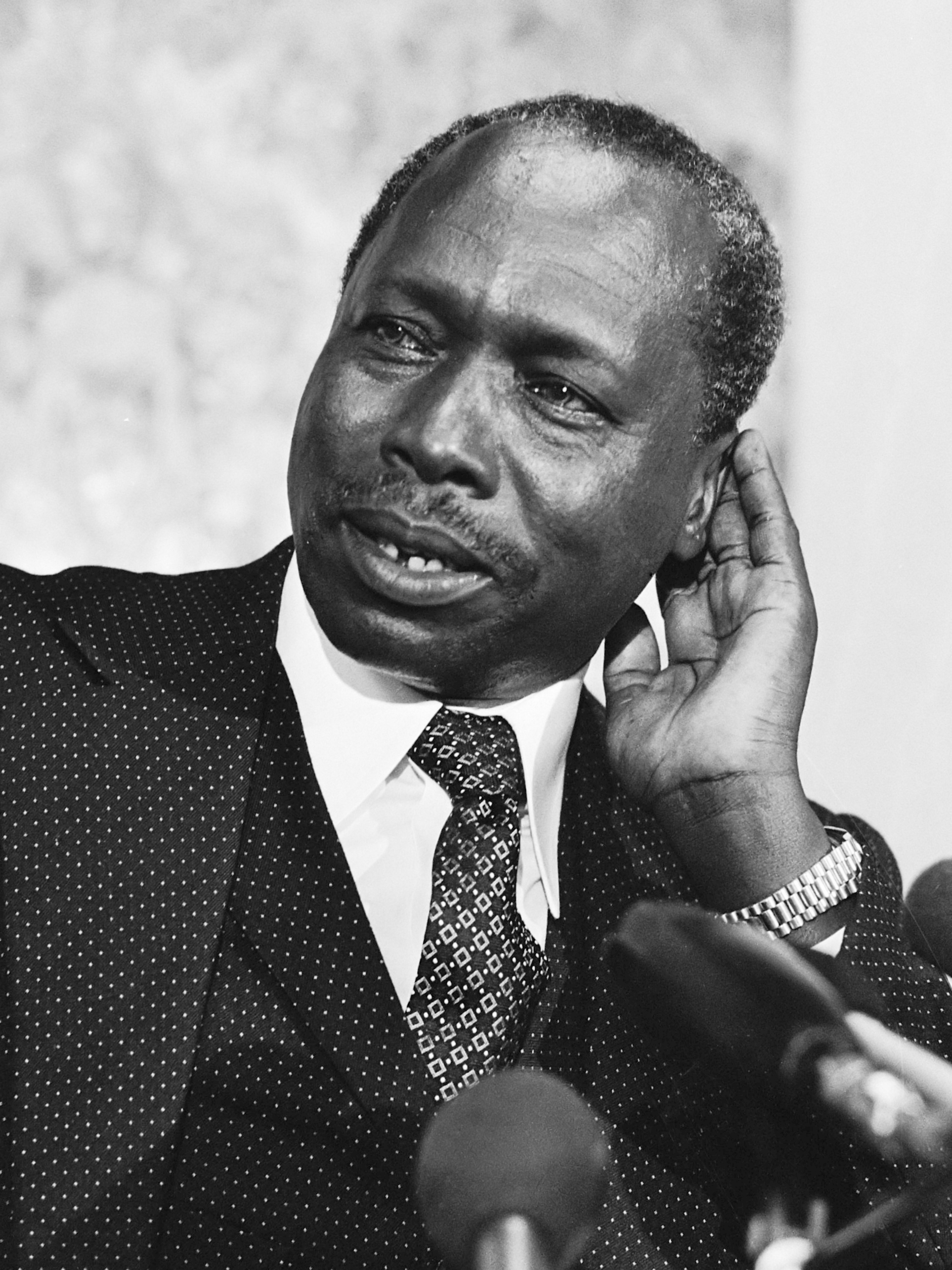 Photo by Rob C. Croes / Anefo (1979) — CC BY-SA 3.0 NL, Wikimedia Commons 1924
 Daniel arap Moi, who later served as Kenya's second president for 24 years, was born in Kuriengwo, Baringo District, Kenya Colony.
Sources: Kenya Presidential Library ; The Standard (Kenya)
Birth 1968 Nigerian federal forces launched Operation OAU, an offensive named after its objectives Owerri, Aba and Umuahia, during the Nigerian Civil War.
Sources: Historical Research Letter (International Institute for Science, Technology and Education) ; Vanguard (Nigeria)
History