
By Princewill Ubani · Published · Updated
Research ID: PA-ART-1974-ethiopian-revolution-fall-haile-selassie
The 1974 Ethiopian Revolution and the Fall of Haile Selassie
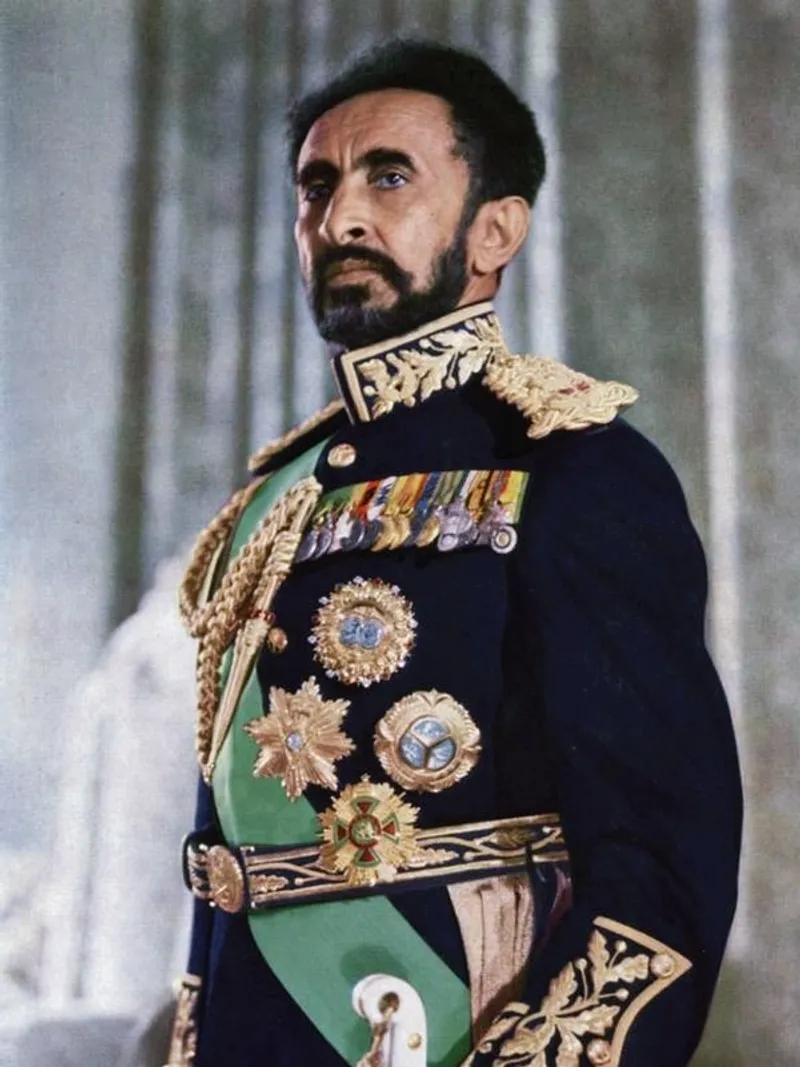
On Sept. 12, 1974, the Derg, a committee of Ethiopia’s armed forces, deposed Emperor Haile Selassie, who had been crowned in 1930 after 14 years as regent. He was 82. He was driven from his office at the Jubilee Palace in a Volkswagen Beetle, so that, the journalist John Ryle writes, “he would not be recognised as he passed through the streets,” and he was kept under house arrest in the palace for the rest of his life.
The crisis had been building for more than a year. The historian Harold Marcus traces it to the oil price rise that followed the 1973 Arab-Israeli war and to drought and famine in northern Shewa, Wollo and Tigray; the government, an American diplomat in Addis Ababa recalled, “was covering it up.” Unrest in the army began, another diplomat remembered, when soldiers at an outpost in the Ogaden mutinied over their water ration and broadcast what they had done on the military radio network, and other units followed. Over the following months the armed forces took power piece by piece while the emperor stayed nominally in place, a period the American embassy called in its reports a “creeping coup.”
In March 1975 the Derg proclaimed a republic, which, the scholars Maxine Molyneux and Fred Halliday wrote, “brought the many centuries of monarchy to an end.” The military government, which came to be dominated by Mengistu Haile Mariam, ruled until 1991, when Mengistu fled the country as rebel armies closed on Addis Ababa. Its years included the violence remembered as the Red Terror, covered in “Mengistu Haile Mariam and Ethiopia’s Red Terror”.
Haile Selassie died in custody on Aug. 27, 1975. The government newspaper announced his death in a single paragraph, Ryle writes, and gave the cause as “circulatory failure.” His doctor said later that the emperor had been in excellent health despite a prostate operation a few months earlier, and few believed the official account; in Tigray, Marcus notes, the death was widely considered murder. Evidence that emerged later suggests that he was strangled on the orders of the military government, and one of his servants believed he had been smothered with an ether-soaked pillow. How exactly he died has never been established.
In February 1992, after the Derg’s defeat, his remains were found in the grounds of the palace where he had been held, sealed in concrete beneath a latrine. They lay for another eight years in a case in the crypt of Ba’ata Mariam church, near the tomb of Menelik II. On Nov. 5, 2000, they were carried in procession to Holy Trinity Cathedral in Addis Ababa, the church he had built as his own resting place, and buried there. The government refused the occasion the status of a state burial.
The revolution is often said to have ended 3,000 years of monarchy. That figure comes from the tradition set down in the Kebra Nagast, a 14th-century Ge’ez text that traces the imperial line to Menelik I, said to be the son of King Solomon and the queen of Sheba; historians treat the genealogy as legend. The dynasty Haile Selassie belonged to took the throne in 1270, when Yekuno Amlak displaced the Zagwe kings, so it had lasted just over 700 years. Its later emperors had rebuilt its claim to Solomonic descent in the 19th century, and when the army deposed the last of them, the historian Donald Crummey observes, it met little resistance. The dynasty’s history is told in full on our Solomonic Ethiopia page.
Correction
Our two articles on the 1974 revolution have been merged, and they had the emperor's death and burial wrong.The article at /history/articles/haile-selassie-overthrown-derg-1974/ now redirects to this one. One article said the Derg attributed Haile Selassie's death to complications after a prostate operation; the announcement gave "circulatory failure," and the operation had taken place months earlier (Ryle 2001). The other said his remains were found beneath an office floor; they were found sealed in concrete beneath a latrine in the palace grounds (Ryle 2001; Pitt Rivers Museum). They gave the end of the monarchy as March 27, 1975, and as March 1975; we could confirm only the month (Molyneux and Halliday 1982). Both said the famine of 1973 had killed an estimated 100,000 people, a figure we could not trace to a source, and one called the dynasty one of the longest-running monarchies in world history, which no source we used supports.Corrected in September 2026. See the log entry.
Sources
- “John Ryle, 'Burying the Emperor' (2001)”, Granta (republished by the author).
- “Haile Selassie I”, Britannica.
- “Maxine Molyneux and Fred Halliday, 'Ethiopia's Revolution from Above' (1982)”, Middle East Research and Information Project (MERIP).
- “Anatomy of an Overthrow: How an African Leader was Toppled, on the famine, mutinies, and the Derg's 'creeping coup'”, Association for Diplomatic Studies & Training.
- “The Burial of Emperor Haile Selassie: Photographs by Peter Marlow (exhibition leaflet)”, Pitt Rivers Museum, University of Oxford.
- “Harold G. Marcus, A History of Ethiopia (updated edition, 2002), pp. 180, 217, 223”, University of California Press.
- “Bahru Zewde, A History of Modern Ethiopia, 1855-1991 (second edition, 2002), pp. 129, 203, 209”, James Currey, Ohio University Press and Addis Ababa University Press.
- “Donald Crummey, 'Imperial Legitimacy and the Creation of Neo-Solomonic Ideology in 19th-Century Ethiopia' (1988), p. 38”, Cahiers d'études africaines 28, no. 109.
Books & Further Reading
Bereket Habte Selassie, Emperor Haile Selassie (Ohio Short Histories of Africa, Ohio University Press, ISBN 9780821421277)