Solomonic Ethiopia, the Christian Kingdom of the Highlands, 1270-1974
By Princewill Ubani · Published
Research ID: PA-POL-solomonic-ethiopia
The Christian kingdom whose kings claimed descent from Solomon and the queen of Sheba, from Yekuno Amlak's seizure of the throne in 1270 to the army's deposition of Haile Selassie in 1974.

In 1270 a scribe recorded a land grant to the monastery of Dabra Libanos of Shimazana, in what is now Eritrea, in the name of a king he wrote as Yikwinat, and every office in the grant’s list was held by a new man. Two years earlier another grant to the same monastery had been made under a king named Dilanda, crowned by the old ruling house. On those two documents rests the date historians give for the start of the Solomonic dynasty.1 It ruled the Christian kingdom of Ethiopia, with interruptions, until a committee of the armed forces deposed Emperor Haile Selassie on Sept. 12, 1974.2
The dynasty took its name from its claim. Its kings said they descended from King Solomon and the queen of Sheba through their son Menelik, and so from the ancient kings of Aksum, and they cast the kings who had ruled before 1270 as usurpers.3 The label itself is modern. Historians call the lineage “Solomonic,” the historian Samantha Kelly notes, “though the appellation is a modern one and was not employed as such in the Middle Ages.”4
The kingdom changed shape several times in seven centuries. Its medieval kings ruled from a moving camp and pushed their frontier south and east against Muslim sultanates. In the 16th century an army from the sultanate of Adal occupied the Christian highlands for more than a decade. From the 1630s the kings sat at Gondar, north of Lake Tana, and from 1769 regional lords held the real power for 86 years. In the late 19th century Menelik II conquered the lands to the south, pushing the frontier, the historian Bahru Zewde writes, beyond the reach of any medieval king.5
The Zagwe kings before 1270
The Christian kingdom was older than the dynasty. In the 12th century it came under kings later called the Zagwe, who drew much of their support from the province of Lasta and had their seat near the churches of Lalibela.6 When they took power is uncertain. Taddesse Tamrat, following the Italian scholar Carlo Conti Rossini, put it around 1150; Stuart Munro-Hay about 1137, which he calls “another long-disputed date”; David Phillipson the 11th century or earlier; and the traditions give the dynasty anywhere from 133 to 333 years. The estimates are set out below.7
Even their name is a later one. The historian Marie-Laure Derat points out that “the term ‘Zagwe’ was never used in documents of the time,” and she finds no evidence that these kings spoke Agaw, the language long attributed to them.8 King Lalibala, whose name the churches carry, was on the throne between 1205 and 1225, the only span Taddesse could fix.9
Yekuno Amlak and the break of 1270
The man who ended Zagwe rule, Yekuno Amlak, came from Amhara, south of Lasta. Before the fall, Taddesse writes, he had built what was in effect a kingdom of his own in Amhara and the Christian communities of Shawa, with military help from Shawa and a pact with the monastery of Dabra Hayq, and he became king after killing the Zagwe ruler.10 The Mamluk chancery in Cairo addressed him as lord of the land of Amhara.11
How sharp a break 1270 was is debated. Taddesse read the two land grants as the founding of a new dynasty, and David Phillipson calls the end of Zagwe rule “securely dated around 1270.” Derat, rereading the same grants, sees Yekuno Amlak reasserting royal authority more than replacing it. He gave back land that Lalibala had granted, founded a church near Lalibala’s own, and in 1274 wrote to the Mamluk sultan Baybars as though the change of king had been an ordinary succession. Read without knowing that he founded a dynasty, she writes, the documents do not show one.12
The charge that the Zagwe had been usurpers came later. According to Derat, it is only from the 14th century that texts accused Yekuno Amlak’s predecessors of seizing a throne that was not theirs.13
The Kebra Nagast
The fullest statement of the claim is the Kebra Nagast, the “Glory of the Kings.” In its story the queen of Ethiopia, called Makeda, visits Solomon and bears him a son, Menelik. Raised in Ethiopia, he returns to Jerusalem, is recognized and anointed by his father, and chooses to rule Ethiopia rather than Israel. From him descends the line chosen by God to rule Ethiopia forever, and with him the Ark of the Covenant passes from Jerusalem to Aksum.14
Its colophon says it was put into Ge’ez from Arabic by Yeshaq, the senior churchman of Aksum, in the days of a governor named Yaebika Egzi, which places the Ge’ez version between 1314 and about 1322, early in the reign of Amda Seyon. The colophon also says the Arabic version had been made from Coptic in 1225, under Lalibala, but was not translated into Ge’ez then, because the book says that kings who are not Israelites break the law.15
Scholars disagree about its age and its purpose. Its English translator, E. A. Wallis Budge, dated its earliest form to the sixth century. Pierluigi Piovanelli, who examined the oldest known manuscript and dates that copy to about 1450-1500, treats the book as a 14th-century work that presented the rise of southern, Amharic-speaking military leaders “not as a revolution but as a timely restoration after centuries of trouble and usurpation.”16 Other scholars, reported by Derat, argue it was written for a rival northern house, that of the governor Yaebika Egzi, and Deresse Ayenachew allows that its translation “may have originally been sponsored to fuel the pretensions of a rival ruling house” before the kings adopted it.17
The ingredients were older than the dynasty. Egyptian church writers identified Ethiopia with the queen of Sheba’s kingdom by the early 11th century, and a Coptic work of about 1100 adds the Ark. One Zagwe king, Hanawedem, had himself taken the throne name Solomon. Derat suggests the new dynasty turned the Zagwe’s own ideas against them.18
A kingdom without a capital
For more than three centuries the kings had no fixed capital. The court generally stayed in one place through the rainy season and moved across the kingdom in the long dry season, from September to June. It was the king’s main instrument of rule, Deresse Ayenachew writes: it let him show himself, hand down justice and put down revolts, and it spread the cost of feeding the court across the provinces. In the late 15th and 16th centuries some 30,000 to 40,000 people took part in the New Year banquet that gathered it together.19 “The Court itself appears to have been continuously moving from one province to another,” Taddesse wrote, and he saw it as a school for provincial officers, where the sons of conquered rulers were brought up, at first as hostages.20
The kingdom lived on tribute. Most farming families held their land by rist, an inherited right to farm the land their parents had farmed, held equally by men and women. Over it the king granted gult, the right to collect the tribute those farmers owed, in cloth, grain, honey, salt bars and livestock, to officials and to churches and monasteries.21 Historians disagree about how gult began and how long it lasted. Taddesse saw grants as personal and revocable at first: “Gults were a medieval substitute for salaries.” Donald Crummey, working from later church documents, doubts that gult began with conquest and finds that in a significant share of cases the grants were meant to be permanent.22
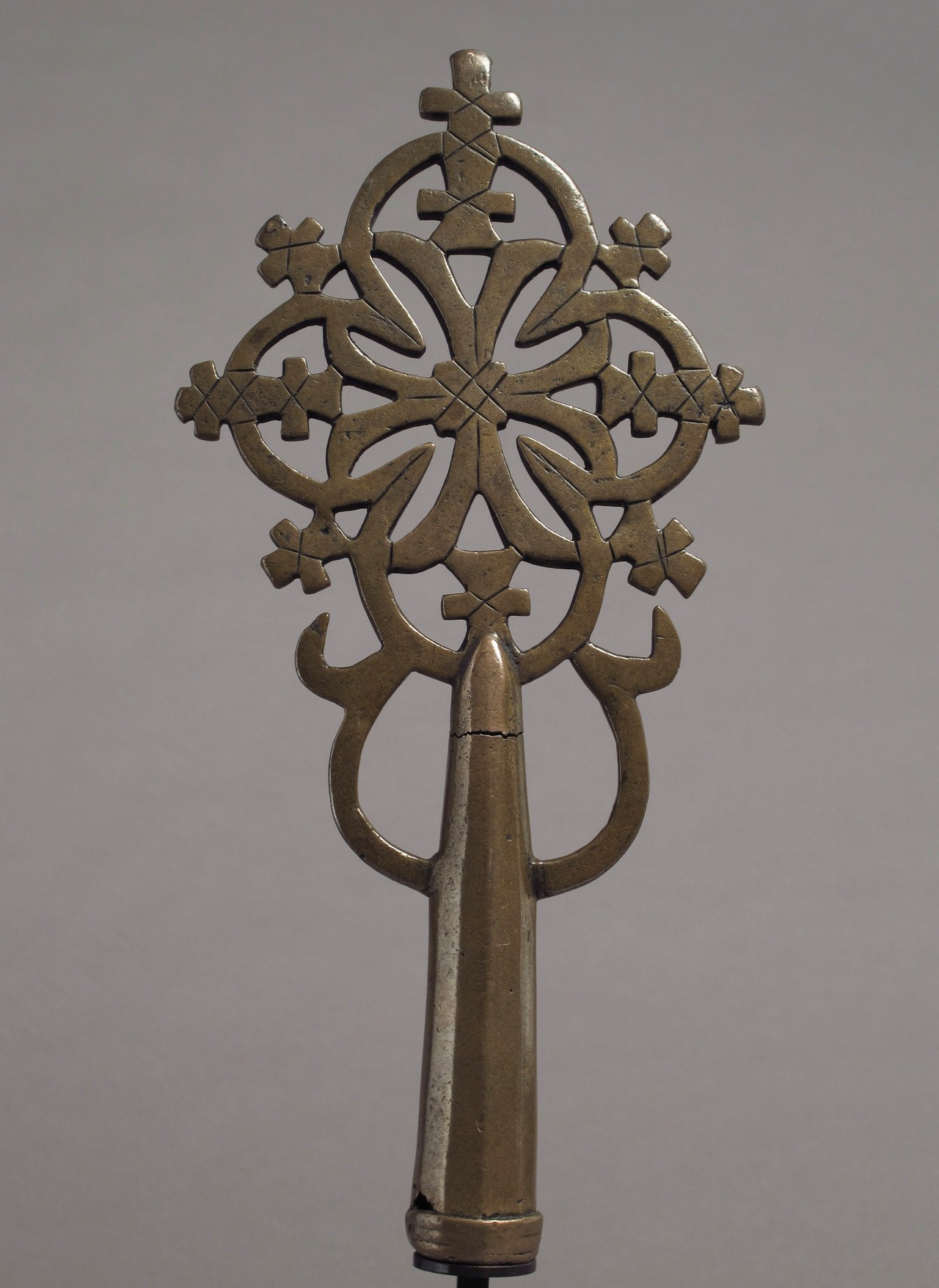
The church was the kingdom’s other arm. Wherever military colonies were planted, Taddesse wrote, the church followed, and the royal foundations clustered in Amhara, Shawa and the lands newly taken from Muslim rulers. Derat counts 34 churches and monasteries founded by kings between the 13th and 16th centuries.23 Its bishop, though, was an Egyptian Copt sent from Egypt, so the kings leaned on Ethiopian monks. The most important of them at court was the aqqabe saat, whom Deresse Ayenachew describes as the only representative of the great monasteries in the royal administration. When Zara Yaqob died in 1468, it was the aqqabe saat who announced which of his sons would succeed him.24
Amda Seyon and the Muslim states
Amda Seyon, who reigned from 1314 to 1344, turned the kingdom’s weight east and south. The sultanate of Ifat, ruled by the Walasma family, sat across the routes to the Red Sea, and the Christians depended on Muslim merchants for long-distance trade. Taddesse saw that dependence as a main cause of the wars. When Ifat’s ruler arrested one of Amda Seyon’s agents, probably bound for the coast, the king invaded.25
The chronicle of his reign describes the campaign of 1329, a year its translator, G. W. B. Huntingford, fixed from an Easter date in the text. By 1332, Mohammed Hassen writes, the conquest of the Muslim states to the east was complete.26 The sultanates became tributaries. The Christian king confirmed their rulers and took tribute, but their ruling families sometimes kept their places and their people kept their faith.27 Taddesse judged that the settlement “changed the balance of power in the Horn of Africa in favour of the Christians, for more than two centuries.” The map on this page shows the kingdom in these years as he drew it.28
To the south and west lived peoples who were neither Christian nor Muslim. Archaeologists have described one of their cultures, called Shay, dated from the 10th to the 14th century, with collective burials in underground and megalithic tombs. François-Xavier Fauvelle and Bertrand Poissonnier argue that such peoples were competitors and trading partners of their neighbors, not simply people waiting to be converted.29 In the northwest the kings fought the Beta Israel, whose descendants later emigrated to Israel. Their tradition remembers the campaign of King Yeshaq, who reigned from about 1413 to 1430, as the end of their independence, though, as the historian Bar Kribus notes, their autonomy was finally ended only by Susenyos around 1626.30
Zara Yaqob
Zara Yaqob, who reigned from 1434 to 1468, was crowned at Aksum in 1436 and set out to reshape the church.31 He wrote that “Our country Ethiopia” was surrounded by “pagans and Muslims in the east as well as in the west,” and Taddesse wrote that the idea haunted him throughout his reign.32 He campaigned against diviners, whom he regarded as sorcerers.33
The longest dispute of his time was over the Sabbath. Monks of the house of Ewostatewos kept Saturday as well as Sunday, against the Egyptian bishops. In 1450, at a council he held at his new church of Dabra Mitmaq in Shawa, the two Egyptian bishops agreed to the observance of both Sabbaths, which settled, in Taddesse’s words, “the most important controversy that had divided the Ethiopian Church for over a century.”34 Zara Yaqob also gave the leading monasteries land and whole regions to teach, and appointed new officials from his court in place of local chiefs, a system his son Baeda Maryam is said to have reversed.35
The war with Adal
In the 1520s the sultanate of Adal, led by the imam Ahmad ibn Ibrahim, known in Ethiopia as Gragn, “the left-handed,” turned raids on the kingdom into conquest.36 When the war began is disputed. Historians long dated it to 1527; the imam’s army won at Sembera Kure in 1529; and Amélie Chekroun and Bertrand Hirsch argue that a campaign of conquest began only in 1531. Taddesse wrote that the Muslim occupation of the Christian highlands lasted “a little more than ten years, between 1531 and 1543.”37 The fullest account from the Adal side, the Futuh al-Habasha of Arab Faqih, stops in 1537.38
King Lebna Dengel had appealed to Portugal for help. It came after his death: in 1541 a company of 400 Portuguese under Cristóvão da Gama, the son of Vasco da Gama, landed at Massawa. Ahmad, reinforced, Harold Marcus writes, with 900 musketeers and 10 cannon from Ottoman officials in the region, defeated the Portuguese in August 1542 and had da Gama killed. Chekroun and Hirsch see that help from Arabia as an extension of old trading ties rather than an Ottoman intervention.39 In February or March 1543, east of Lake Tana, Ahmad was killed in battle against the army of the new king, Galawdewos; “the precise date is unknown, as each source gives a different one.” Galawdewos’s chronicle has him retake the kingdom in less than two years, but Ahmad’s successor, the emir Nur, killed him in battle in 1559.40
The Oromo
While the war went on, Oromo pastoralists moved north into the kingdom’s southern provinces, and over the following century they settled large parts of the highlands. How to explain the movement is one of the sharpest disputes in the field. The older view, built on a short work written in 1593 by the cleric Abba Bahrey, had the Oromo arrive from outside the country in the 1520s. Mohammed Hassen argues that they were native to what is now Ethiopia, that the medieval kingdom covered only about a third of the modern country, and that their movement began before the war and took advantage of it.41 Chekroun and Hirsch, who follow Bahrey’s chronology, call Hassen’s account “not convincing, due to an insufficiently critical reading of the sources coming from the Christian kingdom.”42
The Jesuits and Gondar
Portugal’s alliance came with a hope of conversion. The first Jesuits reached Ethiopia in 1557, and in 1603 a Spanish Jesuit, Pedro Páez, arrived.43 Emperor Susenyos, who reigned from 1607 to 1632 and had lived as a young man among the Oromo, adopted by a Borana clan, converted to Catholicism privately in 1612 and publicly in 1622. After 1625 the new Catholic bishop, Afonso Mendes, ordered churches reconsecrated, people rebaptized and the Sabbath given up, and rebellions followed. Susenyos abdicated in favor of Fasiladas, who expelled the Jesuits.44
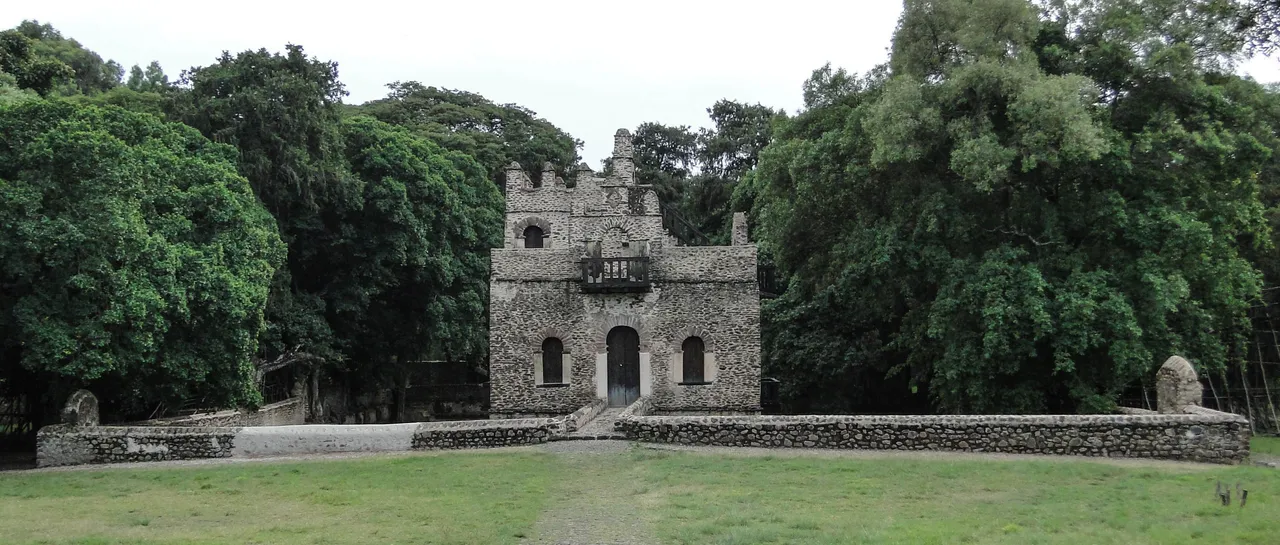
Fasiladas settled the court at Gondar, north of Lake Tana, in the mid-1630s. Crummey calls it “the country’s first fixed capital since the emergence of the Solomonids.”45 Its kings built palaces and more than 40 churches, and Marcus estimates that Gondar “may have had a population of seventy thousand” around 1700.46 Crummey cautions that “Gondar was above all a winter residence” and that the kings kept their annual travels well into the 18th century.47
The kingdom that Fasiladas ruled was smaller than Amda Seyon’s. By moving north, Habtamu Tegegne and Wendy Laura Belcher write, the government gave up the southern highlands, and Marcus reads the break with Rome as a decision to confine the state to Abyssinia, the Christian north.48
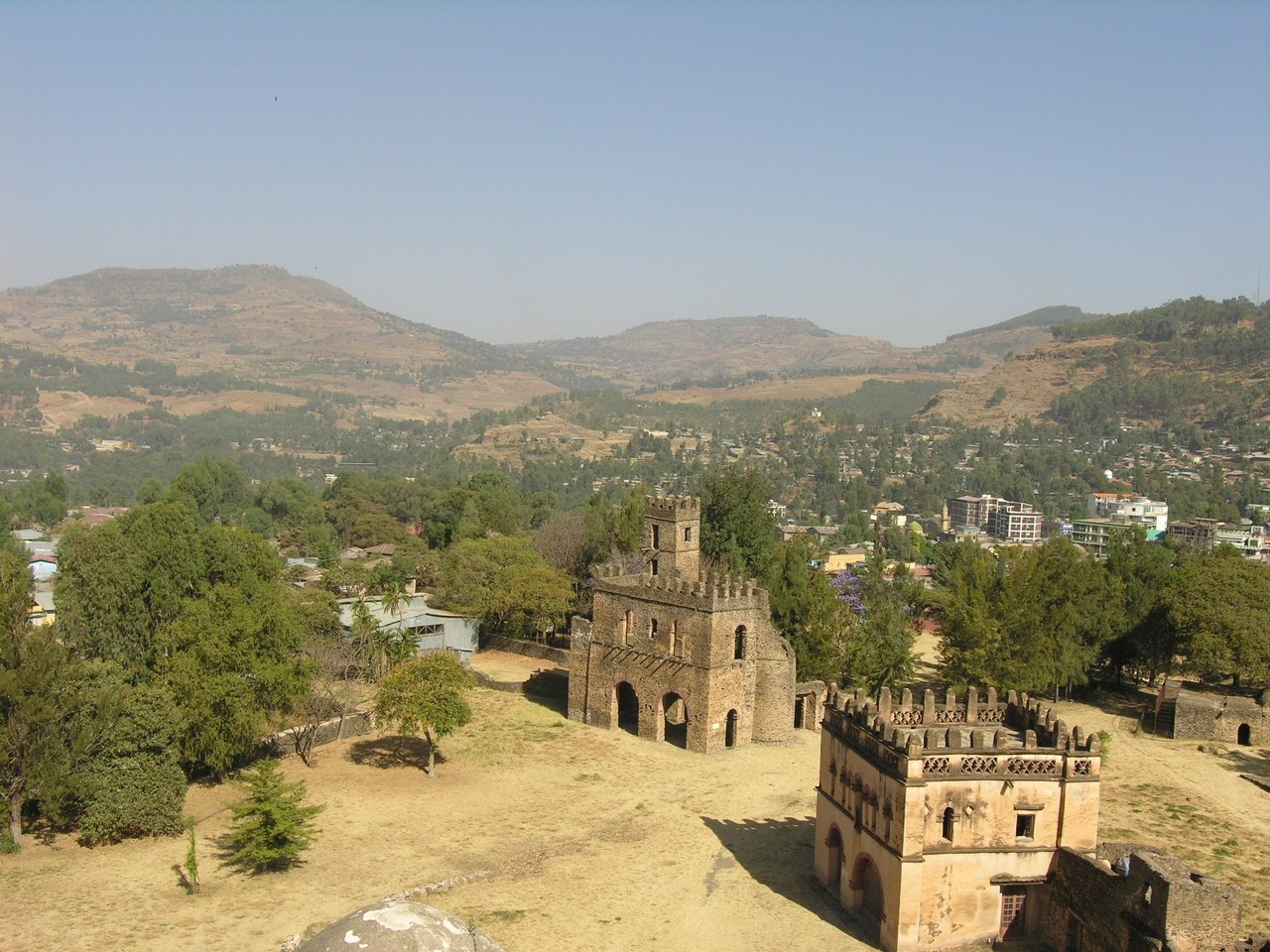
The Era of the Princes
In January 1769 Ras Mikael Sehul, governor of Tigray, killed Emperor Iyoas.49 For the next 86 years the emperors at Gondar were puppets of regional lords, who from the 1780s were chiefly a family of Yejju Oromo regents. One emperor, Tekle Giyorgis I, held office six separate times between 1779 and 1800.50 Ethiopians call the period the Zemene Mesafint, which the historian Mordechai Abir renders as “the era of the princes” and which, he notes, many understand as the era of the judges in the biblical sense.51 In Crummey’s words, the Solomonids were “reduced to impotence and poverty.”52
How to judge the era is disputed. Abir and Marcus describe armies living off the land, a declining economy and a shrinking population. Tegegne and Belcher call it “a period of some dynamism and a greater degree of continuity than hitherto thought,” and Crummey notes that the great lords kept the forms of Solomonic kingship even as they treated the kings with contempt.53
Tewodros and Yohannes
The era ended when one of the lords, Kasa Haylu, defeated the last of his rivals and was crowned Tewodros II in February 1855.54 His army had once numbered about 60,000 before desertions shrank it. He made the mountain fortress of Maqdala the center of his government. His reign ended in April 1868, when a British and Indian force of 32,000 defeated his army at Aroge and he killed himself as British troops rushed in to capture him.55 His rise, Bahru writes, made military strength “as legitimate a ground for claiming the throne as Solomonic descent, if not a better entitlement.”56
After a short reign by Tekle Giyorgis II, Kasa Mercha of Tigray defeated him near Adwa in July 1871 and was crowned Yohannes IV at Aksum on Jan. 21, 1872. He fought Egyptian invasions in 1875 and 1876, and on March 9, 1889, at Matamma on the Sudanese border, he was fatally wounded fighting the Mahdist state of Sudan.57
Menelik and the southern conquests
Menelik, king of Shawa since 1865, had spent the 1870s and 1880s expanding south: into the Gurage country from 1875, Arsi by 1886, Harar in January 1887. On Yohannes’s death he claimed the imperial title, and the conquests went on: Walayta in 1894, in what Bahru calls “one of the bloodiest campaigns of the whole process of expansion,” and Kafa in 1897.58 They pushed the frontier beyond the reach even of Amda Seyon, and “in the process, the Ethiopia of today was born.”59 Chekroun and Hirsch note that the subjection of the Oromo after these conquests is one reason their earlier history was long neglected.60 Menelik’s new capital, Addis Ababa, was begun in November 1886.61
Adwa followed from a dispute with Italy, which held the coast at Eritrea, over the Treaty of Wichale of May 2, 1889; Menelik repudiated it in February 1893.62 In late 1895 he marched north with about 100,000 men, outnumbering the Italians by more than four to one, and on March 1, 1896, at Adwa, his army defeated an Italian force of 14,500. Marcus counts 4,000 European and 2,000 Eritrean dead on the Italian side, and puts Ethiopian losses at 4,000 to 7,000 killed.63 A treaty signed in Addis Ababa on Oct. 26, 1896, ended the war and accepted the Mareb River as the border with Eritrea. Treaties with the neighboring colonial powers between 1900 and 1908 fixed most of the empire’s frontiers.64
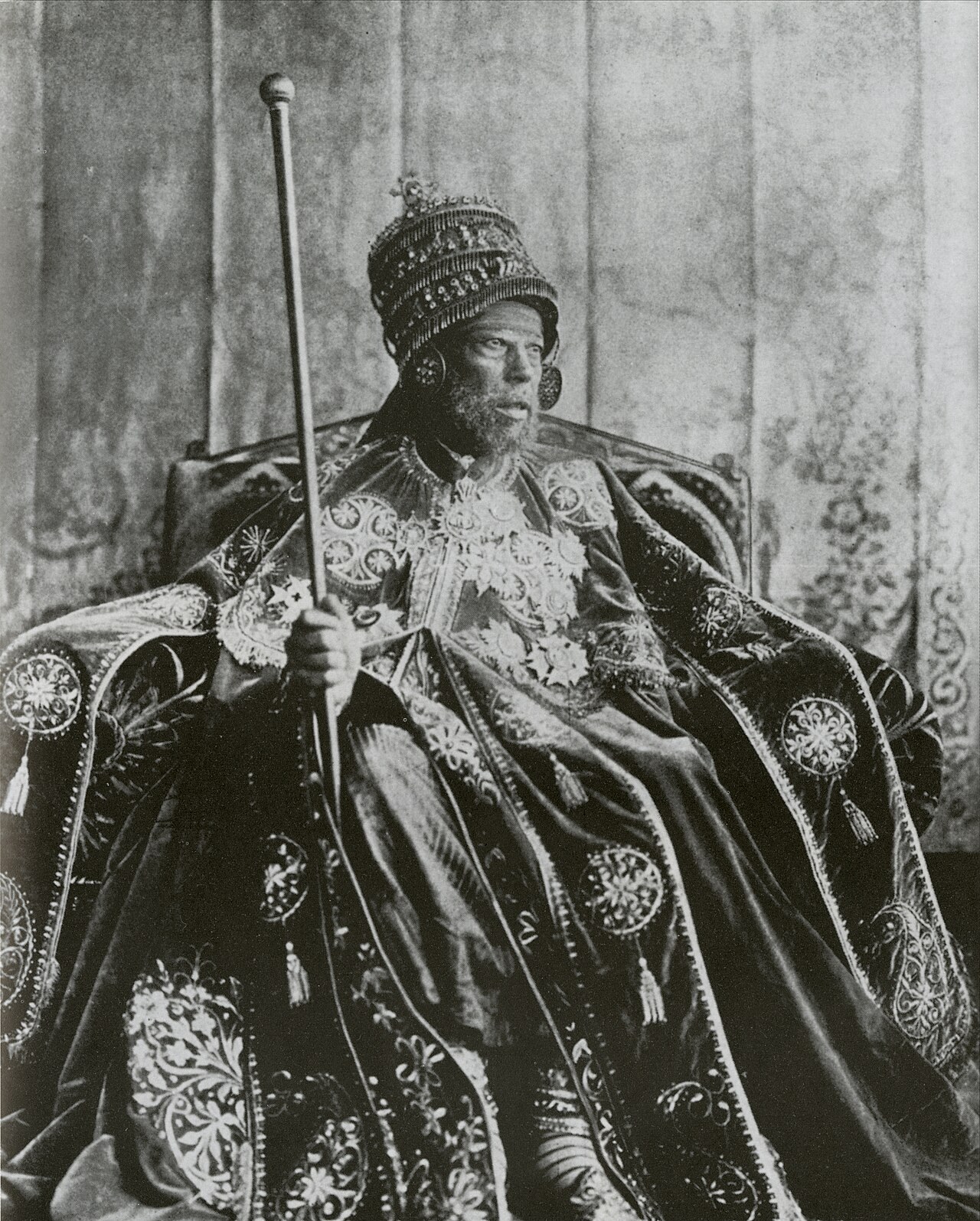
The last emperors
Menelik died in 1913. His grandson and heir, Lij Iyasu, was deposed on Sept. 27, 1916, and Menelik’s daughter Zewditu became empress, with Ras Tafari Makonnen as heir and regent. Tafari was crowned Emperor Haile Selassie on Nov. 2, 1930.65 On July 16, 1931, he promulgated a written constitution, strongly inspired by Japan’s Meiji constitution of 1889, which Bahru calls “the juridical framework of emergent absolutism.”66
Italy invaded on Oct. 3, 1935, and entered Addis Ababa on May 5, 1936. The emperor went into exile, and Italy joined Ethiopia with Eritrea and Italian Somaliland as Italian East Africa. Britain launched the campaign of liberation in January 1941, and Haile Selassie returned to Addis Ababa on May 5, 1941.67 Bahru writes that the occupation’s brevity and precariousness make it “more in the nature of an interlude in the course of modern Ethiopian history.”68
In 1955, for the silver jubilee of his coronation, Haile Selassie issued a revised constitution whose Article 4 declared that “the person of the Emperor is sacred, His dignity is inviolable and His power indisputable.” It also introduced universal adult suffrage and an elected Chamber of Deputies, though, Bahru judges, their practical significance was slight.69 The end came after the oil crisis of 1973 and a drought and famine in the north, and after urban protests early in 1974. On Sept. 12, 1974, the Derg, a committee of the armed forces, deposed Haile Selassie. The revolution, Bahru writes, “terminated not only one of the longest reigns in Ethiopian history” but also “the so-called Solomonic dynasty.”70
An unbroken line?
The dynasty’s claim was continuity, and Tegegne and Belcher still describe “a charismatic monarchy that has existed without interruption over the last two millennia.”71 The record is more broken than that. Taddesse’s list of kings leaves the years 1294 to 1299 unaccounted for, and five rulers held the throne in the four years after Yeshaq’s death in 1430.72 From 1769 to 1855 the kings reigned without ruling. From 1855 the throne was won by force as much as by descent. The Kebra Nagast required descent from Solomon in the male line, and Donald Crummey shows that the genealogies made for Yohannes IV ran through women; the new emperors built instead what he calls a “neo-Solomonic ideology,” which lasted until 1974 and met little resistance when it fell. And from 1936 to 1941 Italy ruled the country.73 What lasted from 1270 to 1974 was a throne and a claim to it, held with interruptions.
How we know
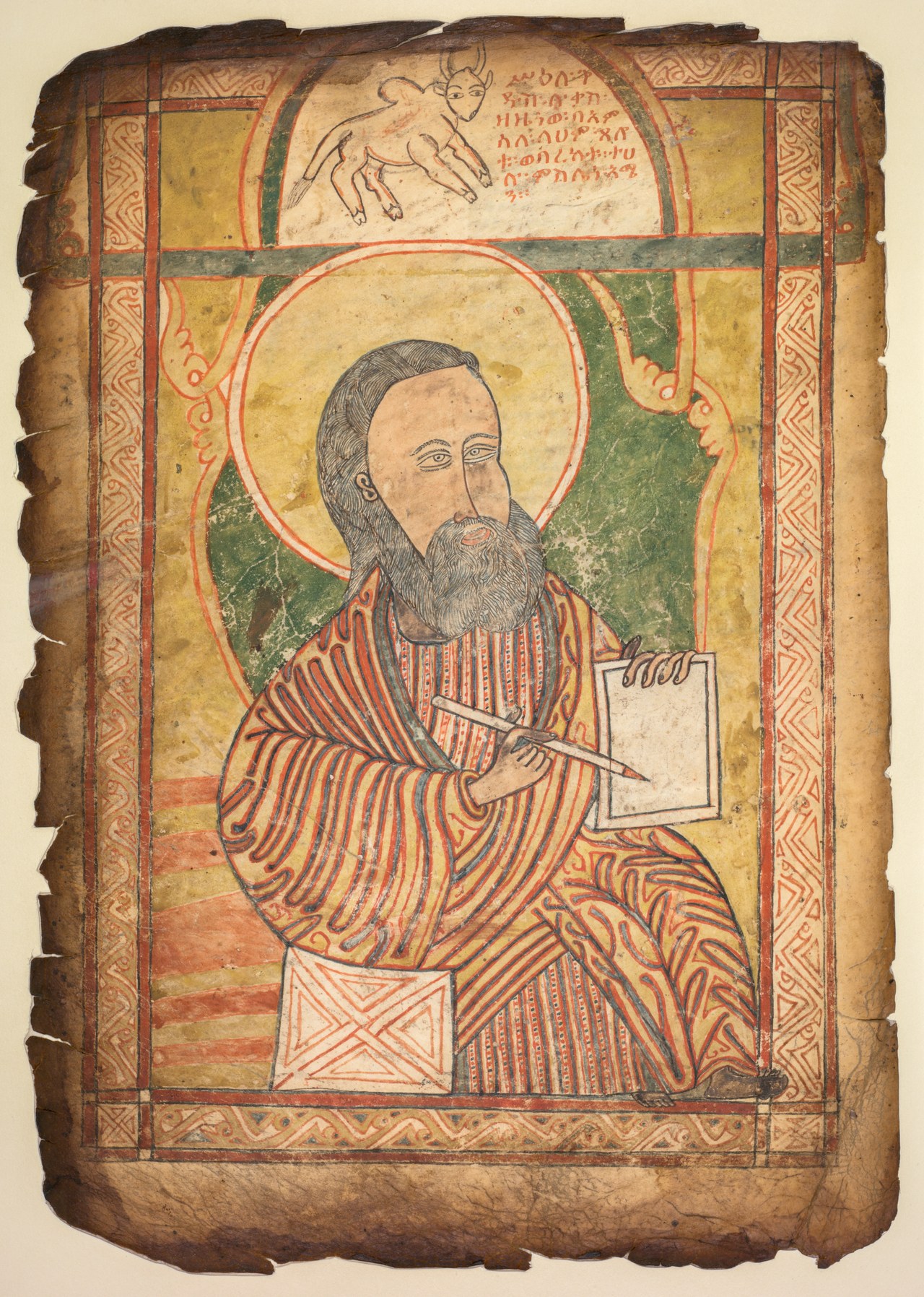
The kingdom’s own writings are the core of the evidence. Royal chronicles survive for Amda Seyon and several later kings; the account of the 1329 campaign is part of a chronicle manuscript now in the British Museum.74 Kings’ land grants were copied into Gospel books kept by churches, and the lists of officials in them date the grants; the historian Anaïs Wion warns against calling those officials witnesses.75 Saints’ lives, the gadlat, are full of detail about kings and monks, but Steven Kaplan warns that they were rewritten for centuries and that their authors “felt free to shape and supplement” their material; Taddesse used them for the fact of monastic opposition, not for dates.76
Foreign witnesses fill in the rest: Arabic writers such as al-Umari, who counted six Muslim sultanates in the 1330s; the Portuguese priest Francisco Álvares, who came to the court with a Portuguese embassy in the 1520s; Arab Faqih on the Adal side of the war; and the Jesuits, whose accounts underlie European maps such as the one at the top of this page.77 For the 19th and 20th centuries there are also European travelers’ and consular accounts, and photographs.78
Numbers are the weak point. No source read for this page gives the kingdom’s population or area at any date, and the medieval figures that do exist, such as the 30,000 to 40,000 at the New Year banquet, count something narrower than they seem.79 The Kebra Nagast is evidence of what the kings claimed, not of where they came from.80
Notes
-
Taddesse Tamrat 1972, p. 68; Derat 2018, pp. 196-197; Derat 2020, p. 32. ↩
-
Bahru Zewde 2002, p. 203; Marcus 2002, p. 180. ↩
-
Deresse Ayenachew 2020, p. 59; Kelly 2020, p. 5. ↩
-
Kelly 2020, p. 4. ↩
-
Deresse Ayenachew 2020, pp. 61-62; Taddesse Tamrat 1972, p. 301; Crummey 2000, pp. 73-74, 144; Bahru Zewde 2002, p. 60. ↩
-
Taddesse Tamrat 1972, pp. 54, 59. ↩
-
Taddesse Tamrat 1972, pp. 54-55 and p. 55 n. 3; Munro-Hay 1991, p. 94; Phillipson 2012, p. 228. ↩
-
Derat 2020, pp. 47, 50. ↩
-
Taddesse Tamrat 1972, p. 59 n. 4. ↩
-
Taddesse Tamrat 1972, pp. 67-68; Derat 2003, introduction. ↩
-
Derat 2018, p. 198. ↩
-
Taddesse Tamrat 1972, p. 68; Phillipson 2012, p. 228; Derat 2018, pp. 197-200. ↩
-
Derat 2020, p. 54. ↩
-
Deresse Ayenachew 2020, p. 59; Derat 2020, p. 54; Piovanelli 2013, p. 9; Budge 1922, p. vii. ↩
-
Piovanelli 2013, p. 9; Derat 2018, pp. 201, 203; Taddesse Tamrat 1972, p. 64. ↩
-
Budge 1922, p. viii; Piovanelli 2013, pp. 9 n. 11, 10, 44. ↩
-
Derat 2018, p. 204; Deresse Ayenachew 2020, p. 59. ↩
-
Derat 2020, pp. 52, 55-56. ↩
-
Deresse Ayenachew 2020, p. 61; Derat 2003, introduction. ↩
-
Taddesse Tamrat 1972, pp. 105-106. ↩
-
Crummey 2000, pp. 9-12; Deresse Ayenachew 2020, pp. 61-62; Taddesse Tamrat 1972, p. 101. ↩
-
Taddesse Tamrat 1972, pp. 100-103; Crummey 2000, pp. 10-12. ↩
-
Taddesse Tamrat 1972, p. 231; Derat 2003, ch. 6. ↩
-
Taddesse Tamrat 1972, pp. 226, 228; Deresse Ayenachew 2020, pp. 83-84. ↩
-
Taddesse Tamrat 1972, pp. 132, 134. ↩
-
Huntingford 1965, pp. 4, 53 n. 2; Mohammed Hassen 2015, p. xix. ↩
-
Kelly 2020, p. 5; Taddesse Tamrat 1972, p. 106 n. 1. ↩
-
Taddesse Tamrat 1972, p. 133. ↩
-
Fauvelle and Poissonnier 2016, abstract. ↩
-
Kribus 2023, pp. 62-63; Taddesse Tamrat 1972, p. 326. ↩
-
Taddesse Tamrat 1972, p. 229; Deresse Ayenachew 2020, p. 60. ↩
-
Taddesse Tamrat 1972, p. 231. ↩
-
Taddesse Tamrat 1972, p. 235. ↩
-
Taddesse Tamrat 1972, pp. 222, 228, 230. ↩
-
Taddesse Tamrat 1972, pp. 236-237; Deresse Ayenachew 2011, p. 45. ↩
-
Marcus 2002, p. 31; Chekroun and Hirsch 2020, pp. 458-460. ↩
-
Chekroun and Hirsch 2020, pp. 458-460; Taddesse Tamrat 1972, p. 301. ↩
-
Futuh al-Habasa 2003, p. xix. ↩
-
Chekroun and Hirsch 2020, pp. 461-463; Marcus 2002, pp. 33-34; Futuh al-Habasa 2003, p. xvii. ↩
-
Chekroun and Hirsch 2020, pp. 463-464. ↩
-
Mohammed Hassen 2015, pp. x, 140, 144. ↩
-
Chekroun and Hirsch 2020, pp. 471 n. 68, 474. ↩
-
Chekroun and Hirsch 2020, pp. 467-468. ↩
-
Marcus 2002, pp. 39-40; Mohammed Hassen 2015, pp. xx, 33. ↩
-
Crummey 2000, pp. 73-74, 77; Marcus 2002, p. 41; Tegegne and Belcher 2023, ch. 3. ↩
-
Tegegne and Belcher 2023, ch. 3; Marcus 2002, p. 41. ↩
-
Crummey 2000, p. 74. ↩
-
Tegegne and Belcher 2023, ch. 3; Marcus 2002, p. 40. ↩
-
Marcus 2002, pp. 47, 51; Abir 1968, p. 30. ↩
-
Abir 1968, p. 30; Marcus 2002, p. 52. ↩
-
Abir 1968, p. xxiii. ↩
-
Crummey 2000, p. 144. ↩
-
Abir 1968, p. 30; Marcus 2002, p. 52; Tegegne and Belcher 2023, ch. 3; Crummey 2000, p. 144. ↩
-
Bahru Zewde 2002, pp. 28, 30; Marcus 2002, p. 64. ↩
-
Bahru Zewde 2002, pp. 30, 40-41; Marcus 2002, p. 70. ↩
-
Bahru Zewde 2002, p. 42. ↩
-
Bahru Zewde 2002, pp. 42-43, 52-53, 59; Marcus 2002, p. 72. ↩
-
Bahru Zewde 2002, pp. 61-64; Jonas 2011, pp. 72-73; Tegegne and Belcher 2023, ch. 3. ↩
-
Bahru Zewde 2002, p. 60. ↩
-
Chekroun and Hirsch 2020, pp. 470-471. ↩
-
Bahru Zewde 2002, p. 68. ↩
-
Jonas 2011, p. 73; Bahru Zewde 2002, p. 75. ↩
-
Bahru Zewde 2002, pp. 77-79; Jonas 2011, pp. 118-119; Marcus 2002, p. 99. ↩
-
Marcus 2002, p. 99; Bahru Zewde 2002, pp. 84, 113. ↩
-
Bahru Zewde 2002, pp. 84, 120, 128, 140; Marcus 2002, pp. 116, 132. ↩
-
Marcus 2002, p. 134; Bahru Zewde 2002, p. 140. ↩
-
Bahru Zewde 2002, pp. 152, 157, 162, 172-173; Marcus 2002, pp. 145-147, 152. ↩
-
Bahru Zewde 2002, p. 166. ↩
-
Bahru Zewde 2002, pp. 206-207; Marcus 2002, pp. 165-166. ↩
-
Marcus 2002, p. 180; Bahru Zewde 2002, pp. 203, 209, 228-229. ↩
-
Tegegne and Belcher 2023, ch. 3. ↩
-
Taddesse Tamrat 1972, pp. 280, 326. ↩
-
Crummey 2000, pp. 144-145; Bahru Zewde 2002, pp. 42, 166; Crummey 1988, pp. 15, 20, 31-32, 38. ↩
-
Taddesse Tamrat 1972, p. 4; Huntingford 1965, p. 4. ↩
-
Wion 2011, pp. 60, 63; Derat 2020, pp. 32-33. ↩
-
Kaplan 1981, pp. 108-111; Taddesse Tamrat 1972, pp. 2-3. ↩
-
Kelly 2020, p. 5; Taddesse Tamrat 1972, p. 134; Wion 2011, p. 59; Futuh al-Habasa 2003, pp. xix-xxii; Mohammed Hassen 2015, p. 111. ↩
-
Abir 1968, pp. 30-31; Pankhurst 1989, p. 379. ↩
-
Deresse Ayenachew 2020, p. 61; Marcus 2002, p. 41. ↩
-
Kelly 2020, p. 5; Derat 2020, pp. 54-56. ↩
Where the estimates differ
| Estimate | Who holds it | Source |
|---|---|---|
| About 1150 | Taddesse Tamrat, following Carlo Conti Rossini's reading of an Egyptian church record | Taddesse Tamrat 1972, pp. 54-55 |
| In or shortly before the 11th century | David W. Phillipson, who puts the end of Aksum as a capital earlier than Taddesse did | Phillipson 2012, p. 228 |
| About 1137 | Stuart Munro-Hay, who notes the date is long disputed; also given, without a basis, by Gianfranco Lusini | Munro-Hay 1991, pp. 61, 94, 102; Lusini 2020, p. 204 |
| Anywhere from 133 to 333 years before 1270 | Ethiopian traditions of the dynasty's length, as reported by Taddesse | Taddesse Tamrat 1972, p. 55 n. 3 |
| Estimate | Who holds it | Source |
|---|---|---|
| Its earliest form in the sixth century | E. A. Wallis Budge (1922), on earlier scholars and "the probabilities of the matter" | Budge 1922, p. viii |
| Put into Ge'ez between 1314 and about 1322; the oldest known manuscript copied about 1450-1500 | Pierluigi Piovanelli, from the colophon and his own study of the Paris manuscript | Piovanelli 2013, p. 9 and n. 11 |
| Its current form in the early 14th century, with material some 700 years older | David W. Phillipson | Phillipson 2012, p. 66 |
| Its final form in the 14th century, because the last king it names is Amda Seyon | Marie-Laure Derat | Derat 2018, p. 203 |
| Estimate | Who holds it | Source |
|---|---|---|
| About one-third of modern Ethiopia | Mohammed Hassen, with no measurement given | Mohammed Hassen 2015, p. x |
| At its greatest extent, most of modern Ethiopia and Eritrea | Habtamu Tegegne and Wendy Laura Belcher | Tegegne and Belcher 2023, ch. 3 |
| Estimate | Who holds it | Source |
|---|---|---|
| 1527 | Harold G. Marcus; long the accepted date, though Chekroun and Hirsch find no source that gives it | Marcus 2002, p. 32; Chekroun and Hirsch 2020, p. 458 |
| 1529, with the battle of Sembera Kure | Mohammed Hassen; the chronicle of Sarsa Dengel | Mohammed Hassen 2015, p. xix; Chekroun and Hirsch 2020, p. 459 |
| 1531, when raids gave way to a campaign of conquest | Amélie Chekroun and Bertrand Hirsch; Taddesse Tamrat | Chekroun and Hirsch 2020, pp. 459-460; Taddesse Tamrat 1972, p. 301 |
| Estimate | Who holds it | Source |
|---|---|---|
| Around 1635 | Harold G. Marcus | Marcus 2002, p. 41 |
| 1636 | Habtamu Tegegne and Wendy Laura Belcher | Tegegne and Belcher 2023, ch. 3 |
| The later 1630s, by the fourth year of Fasiladas's reign | Donald Crummey | Crummey 2000, pp. 74, 77 |
| Estimate | Who holds it | Source |
|---|---|---|
| 1769, when Ras Mikael Sehul killed Emperor Iyoas | Mordechai Abir; Donald Crummey; Harold G. Marcus | Abir 1968, p. xxiii; Crummey 2000, p. 144; Marcus 2002, p. 47 |
| From about 1700 | Eike Haberland | Haberland 1992, p. 703 |
| Estimate | Who holds it | Source |
|---|---|---|
| 1,800 | Harold G. Marcus | Marcus 2002, p. 99 |
| Nearly 1,900 | Raymond Jonas | Jonas 2011, p. 239 |
Rulers of Solomonic Ethiopia
| Ruler | Reign | Note |
|---|---|---|
| Yekuno Amlak | 1270 to 1285 | Took the throne from the Zagwe. The first dated land grant in his name is of 1270. |
| Amda Seyon | 1314 to 1344 | Conquered Ifat and the Muslim states to the east. G. W. B. Huntingford gives 1312-1342. |
| Dawit | 1380 to 1412 | Sources differ by a year or more at each end of his reign. |
| Yeshaq | 1413 to 1430 | His campaign against the Beta Israel is remembered in their tradition as the end of their independence. |
| Zara Yaqob | 1434 to 1468 | Crowned at Aksum in 1436; settled the Sabbath dispute at the council of Dabra Mitmaq in 1450. |
| Lebna Dengel | 1508 to 1540 | Reigned when Ahmad ibn Ibrahim's armies overran the highlands. |
| Galawdewos | 1540 to 1559 | Defeated Ahmad ibn Ibrahim in 1543; killed in battle by the emir Nur in 1559. |
| Susenyos | 1607 to 1632 | Converted to Catholicism; abdicated in favor of Fasiladas. |
| Fasiladas | 1632 to 1667 | Expelled the Jesuits and founded Gondar. |
| Tewodros II | 1855 to 1868 | Ended the Era of the Princes; died at Maqdala. |
| Yohannes IV | 1872 to 1889 | Crowned at Aksum; killed fighting the Mahdists at Matamma. |
| Menelik II | 1889 to 1913 | King of Shawa from 1865; conquered the south and defeated Italy at Adwa. |
| Lij Iyasu | 1913 to 1916 | Menelik's grandson; never crowned, and deposed in 1916. |
| Zewditu | 1916 to 1930 | Menelik's daughter, empress with Ras Tafari as regent and heir. |
| Haile Selassie | 1930 to 1974 | Crowned Nov. 2, 1930, after 14 years as regent; deposed Sept. 12, 1974. |
Timeline
- 1270 Solomonic Ethiopia emerges
- c. 1270 Capital at A moving royal camp, with no fixed capital
- 1270 Yekuno Amlak begins to rule
- 1314 Amda Seyon begins to rule
- 1380 Dawit begins to rule
- 1413 Yeshaq begins to rule
- 1434 Zara Yaqob begins to rule
- 1508 Lebna Dengel begins to rule
- 1540 Galawdewos begins to rule
- 1607 Susenyos begins to rule
- 1632 Fasiladas begins to rule
- c. 1636 Capital at Gondar
- 1855 Tewodros II begins to rule
- 1872 Yohannes IV begins to rule
- 1886 Capital at Addis Ababa
- 1889 Menelik II begins to rule
- 1913 Lij Iyasu begins to rule
- 1916 Zewditu begins to rule
- 1930 Haile Selassie begins to rule
- 1974 The army deposes Haile Selassie on Sept. 12, 1974, ending the Solomonic dynasty
Correction
Our Ethiopian Empire overview has moved into the new Solomonic Ethiopia page, and it called the dynasty's 700 years unbroken.The overview at /history/articles/ethiopian-empire-solomonic-dynasty/ now redirects to the new state page. Its title spoke of 700 years of unbroken rule, and it said the line was never permanently broken by outside conquest or a change of dynasty. From 1769 to 1855 the emperors were puppets of regional lords, and Donald Crummey writes that the Solomonids were "reduced to impotence and poverty" (Crummey 2000, p. 144); Italy ruled the country from 1936 to 1941; and the revolution of 1974 ended the dynasty (Bahru Zewde 2002, pp. 166, 209). The overview also said the dynasty had claimed the throne longer than most of the world's ruling houses have existed at all, which we could not trace to any source. The new page sets out the interruptions.Corrected in September 2026. See the log entry.
Sources
- Taddesse Tamrat. “Church and State in Ethiopia, 1270-1527”, Clarendon Press, 1972.
- Samantha Kelly (ed.). “A Companion to Medieval Ethiopia and Eritrea”, Brill, 2020.
- Samantha Kelly. “Introduction”, in Samantha Kelly (ed.), A Companion to Medieval Ethiopia and Eritrea, Brill, pp. 1-30, 2020.
- Marie-Laure Derat. “Before the Solomonids: Crisis, Renaissance and the Emergence of the Zagwe Dynasty (Seventh-Thirteenth Centuries)”, in Samantha Kelly (ed.), A Companion to Medieval Ethiopia and Eritrea, Brill, pp. 31-56, 2020.
- Deresse Ayenachew. “Territorial Expansion and Administrative Evolution under the 'Solomonic' Dynasty”, in Samantha Kelly (ed.), A Companion to Medieval Ethiopia and Eritrea, Brill, pp. 57-85, 2020.
- Gianfranco Lusini. “The Ancient and Medieval History of Eritrean and Ethiopian Monasticism: An Outline”, in Samantha Kelly (ed.), A Companion to Medieval Ethiopia and Eritrea, Brill, pp. 194-216, 2020.
- Amélie Chekroun and Bertrand Hirsch. “The Muslim-Christian Wars and the Oromo Expansion: Transformations at the End of the Middle Ages (ca. 1500-ca. 1560)”, in Samantha Kelly (ed.), A Companion to Medieval Ethiopia and Eritrea, Brill, pp. 454-476, 2020.
- Eike Haberland. “The Horn of Africa”, in B. A. Ogot (ed.), General History of Africa, vol. V: Africa from the Sixteenth to the Eighteenth Century, UNESCO and Heinemann, pp. 703-749, 1992.
- Richard Pankhurst. “Ethiopia and Somalia”, in J. F. Ade Ajayi (ed.), General History of Africa, vol. VI: Africa in the Nineteenth Century until the 1880s, UNESCO and Heinemann, pp. 376-411, 1989.
- Marie-Laure Derat. “L'énigme d'une dynastie sainte et usurpatrice dans le royaume chrétien d'Éthiopie du XIe au XIIIe siècle”, Brepols, 2018.
- Marie-Laure Derat. “Le domaine des rois éthiopiens (1270-1527): Espace, pouvoir et monachisme”, Publications de la Sorbonne, 2003.
- Pierluigi Piovanelli. “The Apocryphal Legitimation of a 'Solomonic' Dynasty in the Kəbrä nägäśt: A Reappraisal”, Aethiopica 16, pp. 7-44, 2013.
- G. W. B. Huntingford (trans. and ed.). “The Glorious Victories of 'Amda Seyon, King of Ethiopia”, Clarendon Press, 1965.
- Donald Crummey. “Land and Society in the Christian Kingdom of Ethiopia, from the Thirteenth to the Twentieth Century”, University of Illinois Press, 2000.
- Donald Crummey. “Imperial Legitimacy and the Creation of Neo-Solomonic Ideology in 19th-Century Ethiopia”, Cahiers d'études africaines 28, no. 109, pp. 13-43, 1988.
- Mohammed Hassen. “The Oromo and the Christian Kingdom of Ethiopia, 1300-1700”, James Currey, 2015.
- Harold G. Marcus. “A History of Ethiopia (updated edition)”, University of California Press, 2002.
- Mordechai Abir. “Ethiopia: The Era of the Princes”, Longmans, 1968.
- Bahru Zewde. “A History of Modern Ethiopia, 1855-1991 (second edition)”, James Currey, Ohio University Press and Addis Ababa University Press, 2002.
- Raymond Jonas. “The Battle of Adwa: African Victory in the Age of Empire”, Belknap Press of Harvard University Press, 2011.
- Habtamu Tegegne and Wendy Laura Belcher. “The Solomonic Christian Kingdom of Ethiopia”, in John Parker (ed.), Great Kingdoms of Africa, Thames & Hudson / University of California Press, 2023.
- Sihab ad-Din Ahmad bin 'Abd al-Qader ('Arab Faqih), trans. Paul Lester Stenhouse, annot. Richard Pankhurst. “Futuh al-Habasa: The Conquest of Abyssinia”, Tsehai Publishers, 2003.
- E. A. Wallis Budge (trans.). “The Queen of Sheba and Her Only Son Menyelek (Kebra Nagast)”, The Medici Society, 1922.
- Benjamin Hendrickx. “Political Theory and Ideology in the Kebra Nagast”, Journal of Early Christian History 2, no. 2, pp. 22-35, 2012.
- Steven Kaplan. “Hagiographies and the History of Medieval Ethiopia”, History in Africa 8, pp. 107-123, 1981.
- Anaïs Wion. “Promulgation and Registration of Royal Ethiopian Acts in Behalf of Political and Religious Institutions”, Northeast African Studies 11, no. 2, pp. 59-84, 2011.
- Deresse Ayenachew. “The Southern Interests of the Royal Court of Ethiopia in the Light of Bərbər Maryam's Ge'ez and Amharic Manuscripts”, Northeast African Studies 11, no. 2, pp. 43-57, 2011.
- Bar Kribus. “The Campaign of the Solomonic Monarch Yǝsḥaq (r. 1414-1429/30) as a Turning Point in Betä Ǝsraʾel History”, Aethiopica 26, 2023.
- François-Xavier Fauvelle and Bertrand Poissonnier. “The Shay Culture of Ethiopia (Tenth to Fourteenth Century AD): 'Pagans' in the Time of Christians and Muslims”, African Archaeological Review 33, 2016.
- Stuart Munro-Hay. “Aksum: An African Civilisation of Late Antiquity”, Edinburgh University Press, 1991.
- David W. Phillipson. “Foundations of an African Civilisation: Aksum and the Northern Horn, 1000 BC-AD 1300”, James Currey, 2012.
Further Reading
The sources above support the specific claims on this page. The works below are the scholarship behind them. Citations are given in full so readers can find them through a library or database; some are paywalled.
Peer-reviewed articles
- Derat, Marie-Laure (2020). "Before the Solomonids: Crisis, Renaissance and the Emergence of the Zagwe Dynasty (Seventh–Thirteenth Centuries)." A Companion to Medieval Ethiopia and Eritrea (BRILL), pp. 31-56 null: 31-56. DOI: 10.1163/9789004419582_003.
- Ayenachew, Deresse (2020). "Territorial Expansion and Administrative Evolution under the “Solomonic” Dynasty." A Companion to Medieval Ethiopia and Eritrea (BRILL), pp. 57-85 null: 57-85. DOI: 10.1163/9789004419582_004.
- Chekroun, Amélie; Hirsch, Bertrand (2020). "The Sultanates of Medieval Ethiopia." A Companion to Medieval Ethiopia and Eritrea (BRILL), pp. 86-112 null: 86-112. DOI: 10.1163/9789004419582_005.
- Chekroun, Amélie; Hirsch, Bertrand (2020). "The Muslim-Christian Wars and the Oromo Expansion: Transformations at the End of the Middle Ages (ca. 1500–ca. 1560)." A Companion to Medieval Ethiopia and Eritrea (BRILL), pp. 454-476 null: 454-476. DOI: 10.1163/9789004419582_017.
- Wion, Anaïs (2020). "Medieval Ethiopian Economies: Subsistence, Global Trade and the Administration of Wealth." A Companion to Medieval Ethiopia and Eritrea (BRILL), pp. 395-424 null: 395-424. DOI: 10.1163/9789004419582_015.
- Piovanelli, Pierluigi (2013). "The Apocryphal Legitimation of a “Solomonic” Dynasty in the Kǝbrä nägäśt – A Reappraisal." Aethiopica 16: 7-44. DOI: 10.15460/aethiopica.16.1.698.
- Munro-Hay, Stuart (2001). "A Sixth Century Kebra Nagast ?." Annales d'Ethiopie 17(1): 43-58. DOI: 10.3406/ethio.2001.990.
- Hendrickx, Benjamin (2012). "Political Theory and Ideology in the Kebra Nagast: Old Testament Judaism, Roman-Byzantine Politics and Ethiopian Orthodoxy." Journal of Early Christian History 2(2): 22-35. DOI: 10.1080/2222582x.2012.11877263.
- Kaplan, Steven (1981). "Hagiographies and the History of Medieval Ethiopia." History in Africa 8: 107-123. DOI: 10.2307/3171511.
- Wion, Anaïs (2011). "Promulgation and Registration of Royal Ethiopian Acts in Behalf of Political and Religious Institutions (Northern Ethiopia, Sixteenth Century)." Northeast African Studies 11(2): 59-83. DOI: 10.1353/nas.2011.0003.
- Ayenachew, Deresse (2011). "The Southern Interests of the Royal Court of Ethiopia in the Light of Bərbər Maryam’s Ge’ez and Amharic Manuscripts." Northeast African Studies 11(2): 43-57. DOI: 10.1353/nas.2011.0007.
- Tariku, Ayele (2022). "The Christian Military Colonies in Medieval Ethiopia: The Chewa System." The Medieval History Journal 25(2): 201-230. DOI: 10.1177/09719458211003380.abstract free
- Vô Vân, David (2001). "À propos du Ğihâd dans le Futuh al-Habasha. De la lecture d'Alfred Morabia à la relecture d'Arab-Faqih." Annales d'Ethiopie 17(1): 127-139. DOI: 10.3406/ethio.2001.994.
- Ahmed, Mohammed Jemal (2025). "Who was the King of Ethiopia, 1529–1543? Ahmäd ibn Ibrahim al-Ġazi or Ləbnä Dinəgəl: the Hidden History of Late Medieval Ethiopia." The Court Historian 30(3): 177-195. DOI: 10.1080/14629712.2025.2574822.abstract free
- Kribus, Bar (2023). "The Campaign of the Solomonic Monarch Yǝsḥaq (r. 1414–1429/30) as a Turning Point in Betä Ǝsraʾel History: Its Commemoration in Solomonic and Betä Ǝsraʾʾel Sources and Holy Sites." Aethiopica 26. DOI: 10.15460/aethiopica.26.1994.
- d’Alòs-Moner, Andreu Martínez (2015). "Jesuit Missionaries in Ethiopia, 1555–1632." Envoys of a Human God (BRILL), pp. 351-354 null: 351-354. DOI: 10.1163/9789004289154_013.abstract free
- Crummey, Donald (2004). "Ethiopia in the Early Modern Period: Solomonic Monarchy and Christianity." Journal of Early Modern History 8(3): 191-209. DOI: 10.1163/1570065043123940.abstract free
- Toubkis, Dimitri; Pennec, Hervé (2004). "Reflections on the Notions of "Empire" and "Kingdom" in Seventeenth-Century Ethiopia: Royal power and Local Power." Journal of Early Modern History 8(3): 229-258. DOI: 10.1163/1570065043123931.abstract free
- Ficquet, Eloi (2000). "L'intervention des Oromo-Wällo dans la dynastie éthiopienne salomonide sous les règnes de Bäkaffa, Iyasu et Iyo'as, 1721 à 1769." Annales d'Ethiopie 16(1): 135-146. DOI: 10.3406/ethio.2000.969.
- Asfaw, Kassa Mekonnen (2025). "The military campaigns of the Gondarine monarchs, Ethiopia (1632–1769): power, resistance, and the limits of centralized authority." Small Wars & Insurgencies null: 1-26. DOI: 10.1080/09592318.2025.2523384.abstract free
- Pankhurst, Richard (1979). "An eighteenth century Ethiopian dynastic marriage contract between Empress Mentewwab of Gondar and Ras Mika'el Sehul of Tegre." Bulletin of the School of Oriental and African Studies 42(3): 457-466. DOI: 10.1017/s0041977x00135748.abstract free
- Crummey, Donald (1981). "Women and Landed Property in Gondarine Ethiopia." The International Journal of African Historical Studies 14(3): 444. DOI: 10.2307/217699.abstract free
- Beyene, Sisay Sahile (2023). "A Critical Edition and Annotated Translation of the Late Nineteenth and Early Twentieth Century Treatise: Tārik Zamǝdra Gondar (The History of the Land of Gondar)." Aethiopica 25. DOI: 10.15460/aethiopica.25.0.1911.
- Crummey, Donald (1988). "Imperial Legitimacy and the Creation of Neo-Solomonic Ideology in 19th-Century Ethiopia." Cahiers d'études africaines 28(109): 13-43. DOI: 10.3406/cea.1988.2150.
- Crummey, Donald (1969). "Tēwodros as Reformer and Modernizer." The Journal of African History 10(3): 457-469. DOI: 10.1017/s0021853700036380.abstract free
- Caulk, R. A. (1972). "Firearms and Princely Power in Ethiopia in the Nineteenth Century." The Journal of African History 13(4): 609-630. DOI: 10.1017/s0021853700011968.abstract free
- Crummey, Donald (1980). "ABYSSINIAN FEUDALISM." Past and Present 89(1): 115-138. DOI: 10.1093/past/89.1.115.abstract free
- Gnisci, Jacopo (2020). "Constructing Kingship in Early Solomonic Ethiopia: The David and Solomon Portraits in the Juel-Jensen Psalter." The Art Bulletin 102(4): 7-36. DOI: 10.1080/00043079.2020.1765629.abstract free
- Tegegne, Habtamu Mengistie (2015). "Recordmaking, Recordkeeping and Landholding – Chanceries and Archives in Ethiopia (1700–1974)." History in Africa 42: 433-461. DOI: 10.1017/hia.2015.23.abstract free
- Gnamo, Abbas H. (2014). "The Arsi Oromo Resistance against Ethiopian Imperial Conquest (1880–1900)." Conquest and Resistance in the Ethiopian Empire, 1880 - 1974 (BRILL), pp. 138-164 null: 138-164. DOI: 10.1163/9789004265486_006.abstract free
- Fernyhough, Timothy (1988). "Slavery and the Slave Trade in Southern Ethiopia in the 19th Century." Slavery & Abolition 9(3): 103-130. DOI: 10.1080/01440398808574965.abstract free
- Reta, Bosha Bombe (2024). "A Historical Anthropology of Slavery and the Gäbbar Servitude System in Wälaytta of Southern Ethiopia, 1894–1975." Aethiopica 26. DOI: 10.15460/aethiopica.26.2061.
- Kefale, Asnake; Kamusella, Tomasz; Van der Beken, Christophe (2021). "The 1931 Constitution." Eurasian Empires as Blueprints for Ethiopia (Routledge), pp. 23-34 null: 23-34. DOI: 10.4324/9781003158097-2.abstract free
- von Keussler, Klaus M. (1971). "Die äthiopische Verfassung (Revised Constitution) von 1955. Ein Beitrag zur verfassungsgeschichtlichen Entwicklung in Äthiopien." Verfassung in Recht und Übersee 4(3): 319-332. DOI: 10.5771/0506-7286-1971-3-319.abstract free
- COHEN, JOHN M. (1973). "ETHIOPIA AFTER HAILE SELASSIE THE GOVERNMENT LAND FACTOR." African Affairs 72(289): 365-382. DOI: 10.1093/oxfordjournals.afraf.a096409.abstract free
- Fentie Derso, Tesfamichael (2026). "Fascist Italian occupation and its impact on Ethiopia: the case of Gondar, 1936 to 1941." National Identities 28(4): 641-663. DOI: 10.1080/14608944.2025.2556950.abstract free
- Erlich, Haggai (1983). "The Ethiopian Army and the 1974 Revolution." Armed Forces & Society 9(3): 455-481. DOI: 10.1177/0095327x8300900305.abstract free
- Bellucci, Stefano (2016). "The 1974 Ethiopian Revolution at 40: Social, Economic, and Political Legacies." Northeast African Studies 16(1): 1-14. DOI: 10.14321/nortafristud.16.1.0001.abstract free
- Bausi, Alessandro; Gnisci, Jacopo (2024). "“Medieval” Ethiopia." Oxford Research Encyclopedia of African History null. DOI: 10.1093/acrefore/9780190277734.013.1082.abstract free
- Dombrowski, Franz Amadeus (1985). "From the Restoration of the Solomonic Dynasty to the Reign of Neguś Fāsiladas (1270–1632)." Ethiopia's access to the sea (BRILL), pp. 11-28 null: 11-28. DOI: 10.1163/9789004618626_006.abstract free
Books
- Kelly, Samantha (2020). A Companion to Medieval Ethiopia and Eritrea. Leiden and Boston: Brill.
- Taddesse Tamrat (1972). Church and State in Ethiopia, 1270-1527. Oxford: Clarendon Press (Oxford Studies in African Affairs).
- Kaplan, Steven (1984). The Monastic Holy Man and the Christianization of Early Solomonic Ethiopia. Wiesbaden: Franz Steiner Verlag (Studien zur Kulturkunde 73).
- Crummey, Donald (2000). Land and Society in the Christian Kingdom of Ethiopia: From the Thirteenth to the Twentieth Century. Urbana and Chicago: University of Illinois Press; Oxford: James Currey.
- Abir, Mordechai (1968). Ethiopia: The Era of the Princes - The Challenge of Islam and the Re-unification of the Christian Empire, 1769-1855. London: Longmans, Green and Co Ltd.
- Bahru Zewde (2002). A History of Modern Ethiopia, 1855-1991 (second edition). Athens: Ohio University Press; Addis Ababa: Addis Ababa University Press; Oxford: James Currey.
- Hassen, Mohammed (2015). The Oromo and the Christian Kingdom of Ethiopia, 1300-1700. Woodbridge: James Currey (Boydell and Brewer).
- Gnamo, Abbas (2014). Conquest and Resistance in the Ethiopian Empire, 1880 - 1974. Leiden: Brill. abstract free
- Jonas, Raymond (2011). The Battle of Adwa. Cambridge, MA: The Belknap Press of Harvard University Press.
- Derat, Marie-Laure (2003). Le domaine des rois ethiopiens (1270-1527): Espace, pouvoir et monachisme. Paris: Publications de la Sorbonne.
- Derat, Marie-Laure (2018). L'enigme d'une dynastie sainte et usurpatrice dans le royaume chretien d'Ethiopie du XIe au XIIIe siecle. Turnhout: Brepols (Hagiologia).
- Huntingford, G. W. B. (trans. and ed.) (1965). The Glorious Victories of 'Amda Seyon, King of Ethiopia. Oxford: Clarendon Press (Oxford Library of African Literature).
- Pankhurst, Richard (ed.) (1967). The Ethiopian Royal Chronicles. Addis Ababa and London: Oxford University Press.
- Budge, E. A. Wallis (trans.) (1922). The Queen of Sheba and Her Only Son Menyelek (Kebra Nagast). London: The Medici Society.
- Alvares, Francisco (1961). The Prester John of the Indies: A True Relation of the Lands of the Prester John (2 vols). Cambridge: Cambridge University Press, for the Hakluyt Society (Hakluyt Society, Second Series, 114-115).
- Parker, John (ed.) (2023). Great Kingdoms of Africa. Oakland: University of California Press.
- Marcus, Harold G. (2002). A History of Ethiopia (updated edition). Berkeley: University of California Press.
More on Solomonic Ethiopia
- The Queen of Sheba, King Solomon, and the Ethiopian Legend of Menelik I
- Emperor Fasiladas Expelled the Jesuits, and Historians Credit It With Keeping Ethiopia Free
- The Battle of Adwa: How Ethiopia Defeated Italy in 1896
- The 1930 Coronation of Emperor Haile Selassie I
- Haile Selassie's 1936 Appeal to the League of Nations
- The Liberation of Ethiopia and Haile Selassie's 1941 Return to Addis Ababa
- The 1974 Ethiopian Revolution and the Fall of Haile Selassie
Solomonic Ethiopia: 1270 to 1974.