
By Princewill Ubani · Published · Updated
Research ID: PA-ART-fasiladas-ethiopia-expels-jesuits
Emperor Fasiladas Expelled the Jesuits, and Historians Credit It With Keeping Ethiopia Free
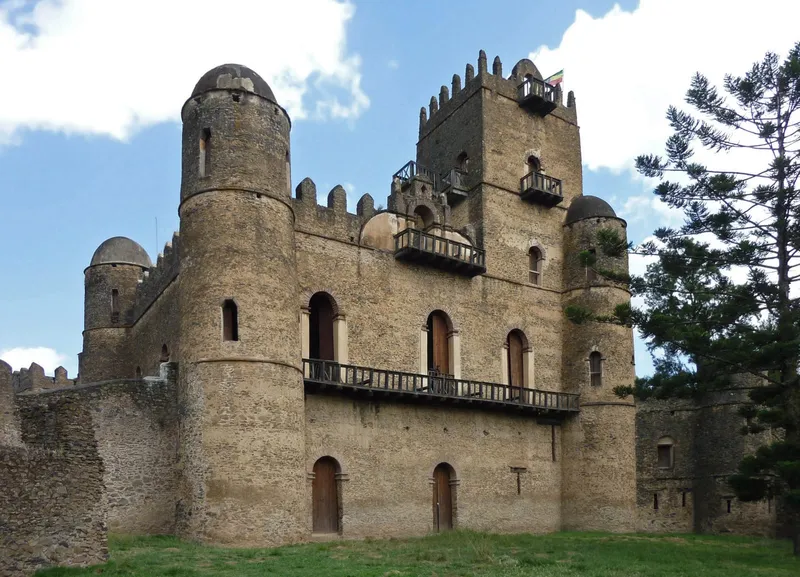
Fasiladas became emperor of Ethiopia in 1632 inheriting a country that had spent nearly a decade tearing itself apart over religion. His father, Susenyos, had converted from Ethiopian Orthodox Christianity to Roman Catholicism in 1622 under the influence of Jesuit missionaries who had been working in the region since the mid-16th century, and then tried to impose that conversion on the empire by decree. The result was years of open civil war, as Ethiopian nobility, clergy, and much of the general population rejected both the new faith and the Portuguese-aligned foreign priests pushing it. By 1631, with the country exhausted, Susenyos reversed course and issued a proclamation restoring freedom of religious practice before abdicating in favor of his son.
Fasiladas moved decisively once he held power. He confiscated Jesuit landholdings, including their base at Dankaz, and had the remaining missionaries rounded up and exiled to a settlement at Fremona, a step that fell short of outright execution but effectively ended the Jesuit mission’s decades-long presence at the Ethiopian court. When Portuguese naval forces later bombarded the East African port of Mombasa, Fasiladas concluded, whether accurately or not, that the Catholic prelate Afonso Mendes was behind the attack, and used it as justification to expel the last remaining Jesuits from Ethiopian territory entirely. Some of the missionaries who stayed rather than leave were later hunted down and executed, according to accounts compiled from Jesuit correspondence of the period.
The expulsion didn’t just end one religious controversy. It closed Ethiopia to sustained European missionary and diplomatic presence for roughly two centuries, a period sometimes described as Ethiopia’s deliberate isolation, during which the empire’s foreign relations shifted toward regional Muslim powers rather than European Catholic ones. Fasiladas founded a new capital at Gondar in 1636, building the walled royal enclosure and castle complex, Fasil Ghebbi, one of Ethiopia’s most recognizable architectural landmarks today, out of a state now turned deliberately inward after his father’s failed experiment with foreign religious alignment.
Ethiopian and international historians have since drawn a direct line from Fasiladas’s expulsion of the Jesuits to Ethiopia’s later, celebrated status as one of only two African states, alongside Liberia, to successfully resist European colonization during the Scramble for Africa, the empire behind that resistance covered in full on our Solomonic Ethiopia page. The argument holds that Fasiladas’s closure of the country to European religious and political influence in the 1630s established a pattern of wariness toward foreign entanglement that later Ethiopian rulers, including Menelik II at the 1896 Battle of Adwa, drew on directly, treating the 17th-century Jesuit episode as an early, formative lesson in resisting exactly the kind of foreign intervention that reshaped nearly every other part of the continent.
Sources
- “"Catholic Counter-Reformation: A History of the Jesuits' Mission to Ethiopia, 1557-1635," Studia Historiae Ecclesiasticae (SciELO South Africa)”.
- “Fasiladas”, Dictionary of African Christian Biography.
Books & Further Reading
The Jesuits in Ethiopia (1609-1641): Latin Letters in Translation (JSTOR)