
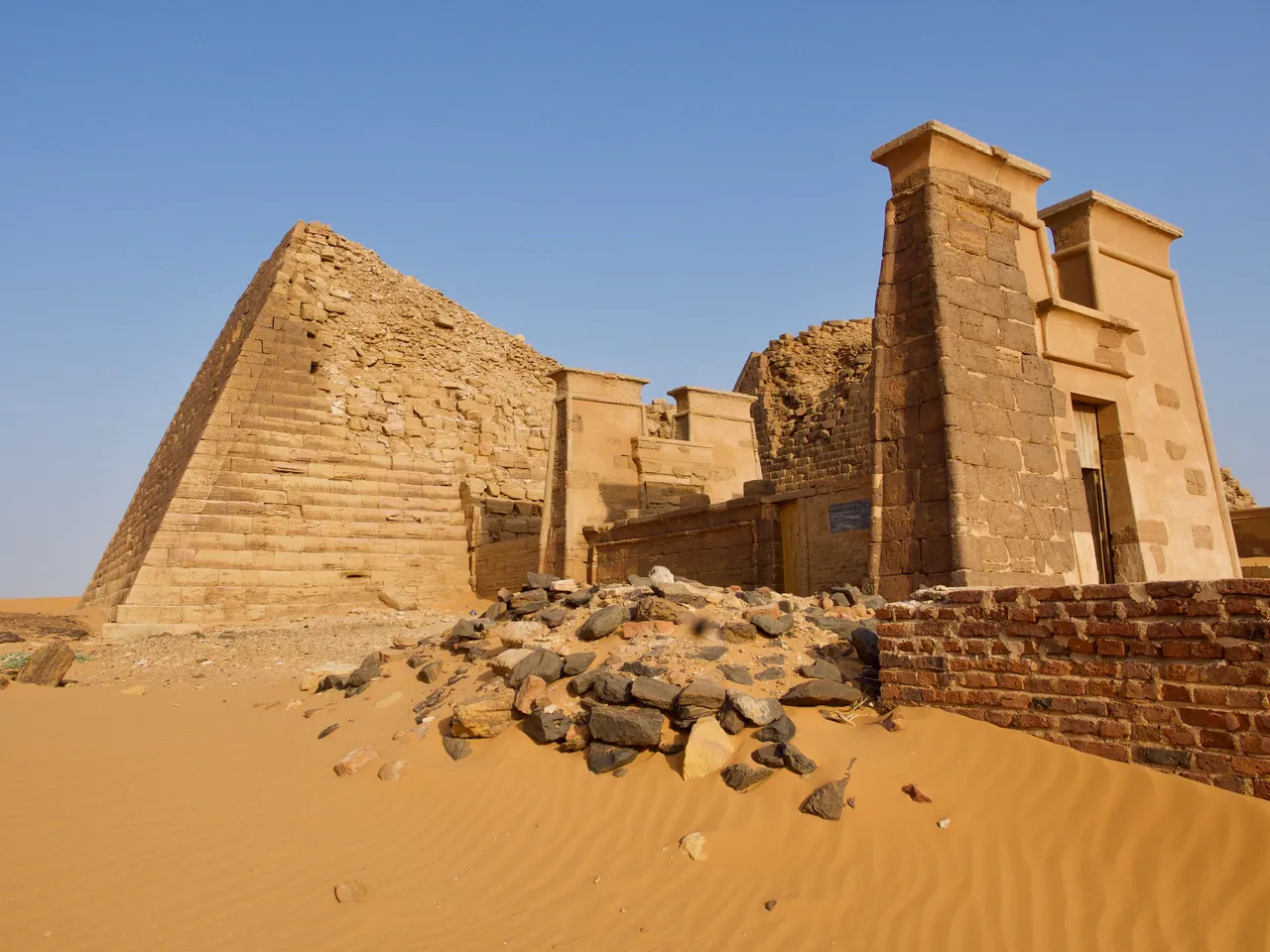
The Kingdom of Kush, from Napata to Meroe
By Princewill Ubani · Published · Updated
Research ID: PA-POL-kush
A Nile kingdom in what is now Sudan that ruled Egypt as its 25th Dynasty, outlasted Assyria, Persia and the Ptolemies, and wrote in a language scholars can read but still only partly understand.
Kush was a kingdom on the middle Nile, in what is now Sudan, whose kings ruled for about a thousand years, from before 750 BC until the middle of the fourth century AD.1 For roughly a century they were also pharaohs of Egypt.
Its later center, Meroe, lies about 200 kilometers north of Khartoum on the east bank of the Nile.2 Its script was deciphered in 1911, but the language behind it is still only partly understood.3
The second kingdom of Kush
“Kush” is not an Egyptian word. Egyptian scribes first wrote it as Kas, then Kash.4 The earliest known historical use is on a stela of Senusret I from Buhen, around 1950 BC, and the name stayed in use in Egyptian and in Kush’s own language until the end of antiquity.5
That first Kush was the kingdom centered at Kerma, above the Third Cataract. Egypt destroyed it early in the 18th Dynasty and pushed its frontier as far as Kurgus, near the Fifth Cataract, where Thutmose I and Thutmose III left inscriptions.6 Egyptian viceroys governed Nubia through the New Kingdom. Thutmose III built the first shrine to Amun at Jebel Barkal, a mountain beside the Nile at Napata that Egyptians came to regard as a home of the Theban god.7
Egyptian rule in Nubia faded after the New Kingdom ended in 1077 BC. The viceroy Panehesy, whose name means “the Nubian,” withdrew south after a dispute at Thebes and was buried at Aniba. Later viceroys held the title but left no sign of real authority south of Aswan.8 The temple of Amun at Jebel Barkal fell into ruin; when Kushite builders later took it over, at least one room had lost its roof.9
Historians call the state that grew up in this gap the second kingdom of Kush, or the Neo-Kushite state.10 Its people called themselves Kushites. Kashta, one of its first kings, took a throne name that meant “the Kushite.”11
Katimala and the kings of el-Kurru
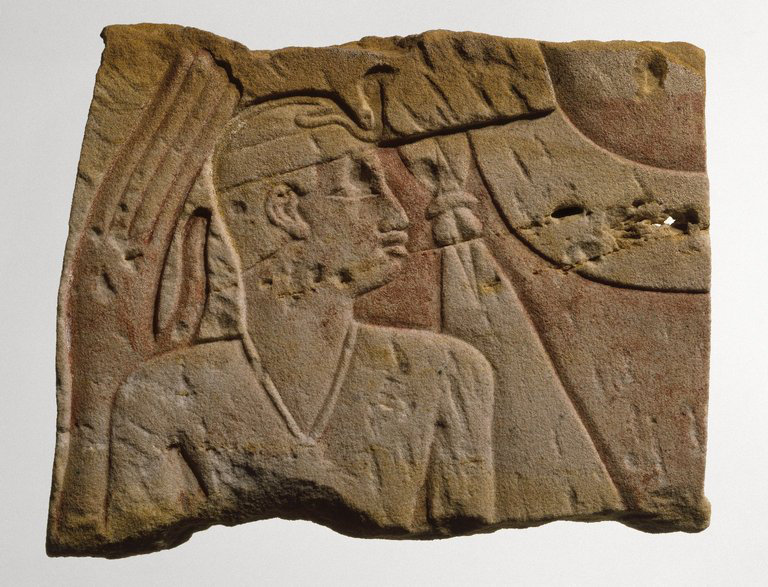
The first ruler of the new era who left a readable record was a woman. On the facade of a New Kingdom temple at Semna, a panel shows Queen Katimala before the goddess Isis, with a long inscription beside it. It is dated to the 10th or ninth century BC. Katimala carried the royal title nesu-bity, “king,” and acted as a queen regnant: she called a council of 30 chiefs and fought a recurring enemy named Makaresh, who lived near the “Mountain of Gold” in the Eastern Desert, stole gold and silver and slaughtered Amun’s offering cattle.12
The royal line that would conquer Egypt was buried at el-Kurru, 12 kilometers downstream from Jebel Barkal. George Reisner began excavating the cemetery in 1918.13 The oldest royal grave there, Ku. Tum. 1, was a tumulus, a burial mound of the kind the kings of Kerma had used. Over the following generations the royal tombs changed from tumuli to pyramids of the narrow, tall type used for private tombs in New Kingdom Egypt.14 A walled settlement at el-Kurru may have been the dynasty’s first capital.15
Alara is the earliest of these kings known by name, and only from later texts. An inscription of Taharqo says Alara entrusted the safety of his family to Amun of Kawa.16 He is said to have come from Taqat, across the river from Jebel Barkal.17 Farther south, people were already living at Meroe. The oldest excavated buildings there date to the 10th and ninth centuries BC.18
Pharaohs from the south
Kashta was the first Kushite king to take control of Thebes. Before 750 BC he had his daughter Amenirdis adopted as the next God’s Wife of Amun, the high priestess of Amun at Thebes, and through her he gained authority over the Theban region.19
His successor, Piye, also written Piankhy, ruled from about 747 to 716 BC.20 In the 21st year of his reign, around 720 BC or a little earlier, Tefnakht of Sais had pushed south from the Delta to Hermopolis.21 Piye sent his army north and followed it. His troops besieged Hermopolis with a counter-wall, platforms for archers and stone-throwing machines. At Memphis, where Tefnakht had gathered 8,000 men, the Kushites attacked from ships in the harbor at high water. The rulers of Egypt submitted, and Piye left most of them in place.22
The account comes from Piye himself. In 1862 a large granite stela carved with the story of the campaign was found in the Amun temple at Jebel Barkal. Its top shows the defeated Egyptian rulers paying homage.23 Piye presented himself as a protector of Egypt’s gods and celebrated the Opet festival at Thebes on his way north.24 He then went home. He was buried at el-Kurru, with his horses buried nearby. Kushite horses had been exported to Assyria even before his conquest.25
The Kushite kings ruled as Egyptian pharaohs and built in the Egyptian manner. Archaeologist Derek Welsby found nothing distinctly Kushite in the architecture of their monuments in Egypt, and their art often copied much older Egyptian models.26 Archaeologist Stuart Tyson Smith reads the choice as deliberate: the male elite took on an Egyptian identity to support their claim to Egypt and to strengthen the crown at home. At Sanam, near Napata, the cemetery’s excavator, Francis Llewellyn Griffith, found that women kept the flexed Nubian burial position more often than men, who were laid out in the Egyptian way.27
Eltekeh, Esarhaddon and the loss of Egypt
Egypt’s later historian Manetho counted these kings as the 25th Dynasty.28 Two of Piye’s successors, Shabaqo and Shebitqo, have long been placed in that order. More recent work, summarized by Claus Jurman in 2017 and followed by archaeologist Bruce Beyer Williams, puts Shebitqo first.29 Jurman’s strongest evidence is a pair of Nile flood records carved at Karnak: the one from Shabaqo’s second year was fitted around one already there from Shebitqo’s third.30 On that reckoning, Shebitqo put down a revolt by Bakenranef of Sais, whom Manetho says was burned alive.31
Kushite rule in Egypt met the expanding Assyrian empire. In 701 BC an army sent from Egypt under the prince Taharqo joined a coalition of Phoenician, Philistine and Judean states against the Assyrian king Sennacherib. The armies met at Eltekeh. The Assyrians claimed the victory and blockaded Jerusalem, but after Taharqo returned with a fresh army, Sennacherib withdrew. Williams calls Taharqo’s victory “possibly one of the most significant in ancient history.”32 The Bible names Taharqo as Tirhakah.33
Shabaqo moved the royal seat from Napata to Memphis and appointed a son as high priest of Amun.34 A clay tablet from the Assyrian royal archives at Nineveh carries the seal impressions of both Shabaqo and Sennacherib.35
Taharqo became king in 690 BC and ruled for 26 years, the only Kushite reign whose start and length are both certain.36 In a text at Kawa he wrote that he “received the crown in Memphis after the Hawk had soared to heaven.”37 Welsby calls him the greatest Kushite builder of them all. Taharqo built the large temple of Amun at Kawa, probably the near-identical temples at Sanam and Tabo, additions at Jebel Barkal and the earliest known Kushite temple at Qasr Ibrim.38 He appears to have lived at Tanis in the Delta, close to the Asian frontier.39
Sennacherib’s son Esarhaddon invaded in 674 or 673 BC and was beaten, a defeat historians have called one of Assyria’s worst.40 He came back in 671 BC. After three battles at the frontier, Taharqo fled wounded and Memphis fell. Taharqo retook it in 669 BC, and Esarhaddon died in 669 BC on his way to drive him out again. His successor, Ashurbanipal, defeated Taharqo at Pelusium in 667 BC, and Taharqo withdrew to Kush. He died in 664 BC and was buried under a large pyramid in a new royal cemetery at Nuri.41
His successor, Tanwetamani, retook Upper Egypt and Memphis and killed the Assyrian client Necho of Sais. Ashurbanipal answered in 664 or 663 BC. Tanwetamani fled south, and the Assyrians sacked Thebes.42 Necho’s son Psamtek I then took control of Egypt. In 656 BC his daughter Nitocris was adopted as heir to the God’s Wife of Amun at Thebes, ending Kushite authority in Egypt.43 Tanwetamani was buried at el-Kurru, not beside Taharqo at Nuri.44
Chosen by Amun
Kushite kings claimed Egypt’s crowns for centuries after they lost the country. They kept the title King of Upper and Lower Egypt, and their characteristic crown, a close cap with a double uraeus, the sacred cobra, stood for the union of the two halves of Egypt, not for Egypt and Kush.45
How a king was chosen is known best from the Election Stela of Aspelta at Jebel Barkal. When the previous king died, the commanders of the army, the commanders of the fortresses, the keepers of documents and the officials of the royal treasury put the question to the army at Napata. The army said its lord was among them but did not know who he was. The officials went to the temple of Amun, where the god passed over the king’s brothers once and then accepted Aspelta. The text sets out his descent through generations of royal women.46 Welsby counts two dozen of these senior officials; Williams, reading the list differently, counts 25.47
Succession passed sometimes from brother to brother and sometimes from father to son. The system was neither simply patrilineal nor matrilineal.48 Williams argues that election by officials, priests and army together helps explain how long the state lasted, because it balanced the kingdom’s main interests.49 It did not always run smoothly. When King Talakhamani died, Irike-Amanote was at Meroe “among the king’s brethren”; desert raiders known as the Rehrehes rose at the same moment, and the army entered the palace and handed him the throne.50
Aspelta’s reign also brought an Egyptian invasion. In 593 BC the pharaoh Psamtek II sent an army south that included Greek and Carian mercenaries. His stela from Shellal claims 4,200 prisoners from a battle at a place that was probably Pnubs, near Kerma, and Greek soldiers left graffiti at Abu Simbel saying the campaign went as far as the river allowed.51 Williams argues the army reached Napata and burned Aspelta’s palace at Jebel Barkal. Welsby, writing earlier, found no good evidence that Napata was sacked.52 Psamtek II also had the names of the 25th Dynasty kings erased from monuments throughout Egypt.53 After 593 BC, Williams writes, Kush’s field of action shrank to the middle Nile and the deserts on either side.54
Napata, Meroe and the desert wars
Royal activity was already shifting south. Kushite kings are named in the town of Meroe from Senkamanisken, in the second half of the seventh century BC, onward, and Aspelta built temples there.55 By the time Herodotus wrote, around 450 to 430 BC, he could call Meroe the “capital of all the other Aithiopians.”56
Kush had no single fixed capital. A new king traveled from Meroe across the Bayuda Desert to be confirmed by Amun at Napata, then on to Kawa and Pnubs.57 Palaces stood at Meroe, Napata, Kawa, Wad ben Naga and other sites, and the court moved among them. Welsby describes the capital as wherever the court happened to be.58 Wolf and Nowotnick, following Török, argue that this “ambulatory kingship” fits the evidence better than the older picture of a capital moving once from Napata to Meroe.59
Much of what the royal inscriptions of the fifth and fourth centuries BC record is war with the people of the deserts on either side of the Nile. Under Talakhamani, the Rehrehes “carried off all the cattle, herds, and men that they could find.”60 Harsiyotef, who reigned at least 35 years, recorded campaigns from his second year to his 35th, and in his 11th year fought as far north as Aswan.61 Nastasen, whose stela is the last Napatan royal monument inscribed in Egyptian, listed his spoils from one campaign as 2,236 women, 209,659 cattle and 505,349 other livestock. Captives were given to the temple of Amun at Napata alongside the livestock.62
Kush was making iron by then. Iron was worked at Meroe by the fifth century BC at the latest, and huge slag heaps built up around the town.63 Radiocarbon dates published by Jane Humphris and Thomas Scheibner in 2017 suggest production may have started as early as the 25th Dynasty and went on for well over 1,000 years.64 One early observer called Meroe the “Birmingham of Africa.” Derek Welsby wrote in 1996 that scholars doubted both the scale of production there and the idea that Kush spread ironworking to the rest of Africa.65 The radiocarbon work has since put the largest slag mound among the earliest, a sign of heavy output in Kush’s early centuries. Humphris still judges that Meroe probably had little surplus iron to export.66
Meroe and the Ptolemies
The kings began to be buried at Meroe itself with Arkamani I, a contemporary of Ptolemy II of Egypt, who reigned from 282 to 246 BC.67 The Greek writer Agatharchides, whose account survives through Diodorus, tells a story about him. The priests at Meroe, he wrote, could send the king an order to die. Arkamani, whom the Greeks called Ergamenes, had a Greek education; he marched into the temple with soldiers, killed the priests and ended the custom.68 Welsby notes the story has been doubted, and no other evidence bears on it.69 Archaeologists Pawel Wolf and Ulrike Nowotnick suggest it may reflect the crown taking economic power away from the temples.70
Ptolemaic Egypt wanted elephants. Its rivals, the Seleucids, controlled the land routes to India, and Ptolemy II’s inherited war elephants were too old to fight.71 He campaigned in Nubia in the 270s BC, and elephant-hunting expeditions, sometimes numbering hundreds of men, followed, some traveling up the Nile and some from a port on the Red Sea.72 At Musawwarat es-Sufra, in the grasslands east of the Nile, King Arnekhamani built a temple to the lion-headed god Apedemak around 220 BC. Elephants are common in its reliefs; on one wall a file of them leads bound prisoners.73
Apedemak, a war god shown with a bow and arrows, was the most important of the gods who were not Egyptian.74 In this period he and other local gods entered the official pantheon, and the Meroitic language replaced Egyptian on royal monuments.75
Meroitic got its own script in the early third century BC. The earliest datable text is on a bronze sistrum, a rattle used in worship, from the reign of Arnekhamani, around 220 BC.76 The cursive script came first. A hieroglyphic version, built from Egyptian signs chosen to resemble the cursive letters, followed in the reign of Taneyidamani, around 150 BC.77 Each sign stands for a consonant plus the vowel a unless another vowel sign follows it. Linguists class it as an alphasyllabary, the same family of scripts as Ethiopic.78
Kush and the Ptolemies competed for Lower Nubia. Arkamani built a hall onto a Ptolemaic temple at Dakka and a temple at Philae. Ptolemy V later had Arkamani’s name defaced there.79
The kandakes and Rome
Several women ruled Kush in their own right. After Katimala, the first known is Shanakdakheto, in the late second century BC.80 Amanirenas, Amanishakheto, Nawidemak and Amanitore followed. They held the same titles as kings, built on the same scale and were buried with the same grave goods.81
Meroitic texts call such women qore, “ruler,” a word used for both kings and queens, and also kdke, pronounced kandake, meaning “Queen Mother.”82 Greek and Latin writers took the title for a personal name. The Book of Acts describes an official of “Candace, queen of the Ethiopians.”83
Rome annexed Egypt in 30 BC. In the mid-20s BC, with part of the Roman garrison away on a campaign in Arabia, Kushite forces took Syene (Aswan), Elephantine and Philae and threw down the statues of Augustus.84 The Greek geographer Strabo put their army at 30,000 men. The prefect of Egypt, Gaius Petronius, marched south with fewer than 10,000 infantry and 800 cavalry, drove them back to Pselchis, took the fortress at Primis, now Qasr Ibrim, and reached Napata, which he razed.85 Strabo described the Kushite queen, whom he called Candace, as a woman “who had lost an eye.”86 Hamadab, near Meroe, has a stela of Amanirenas and Prince Akinidad that appears to refer to this war, but its Meroitic text cannot be read in full.87
Petronius left a garrison of 400 men at Primis with supplies for two years, and the Kushites attacked it. Envoys then went to Augustus on the island of Samos. According to Strabo, the ambassadors “obtained all that they desired, and Caesar even remitted the tribute which he had imposed.”88 The peace of 21 or 20 BC left the southern frontier of Roman Egypt at Hiera Sykaminos, about 120 kilometers south of Aswan, and it held for most of the next three centuries.89
In 1910 an excavation team from the University of Liverpool found an over-life-size bronze head of Augustus buried at the threshold of a building at Meroe.90 Stanley Burstein, a historian of ancient Nubia, notes that the building’s walls showed Roman soldiers as prisoners, and that anyone entering trod on the emperor’s head.91
Natakamani and Amanitore
The mid-first century AD, under the joint rulers Natakamani and Amanitore, is usually treated as Kush’s high point.92 On the gateway of the Lion Temple at Naqa, king and queen are carved at the same size, in the same pose, striking down enemies.93 They built or rebuilt temples at Meroe, Naqa and Dangeil in the south and at Napata, Dokki Gel and Sai in the north.94 At Naqa, a small chapel to the goddess Hathor combines Roman Corinthian columns and arched windows with Egyptian cornices and winged sun disks.95
The wider site of Meroe covers about 5 by 2 kilometers. A stone wall enclosed the Royal City of palaces. Outside it stood the temple of Amun, the second largest in Kush, and to the east lay cemeteries and a temple that excavators linked to Herodotus’s “Table of the Sun.”96 Cattle herding was of major importance. Farmers grew sorghum along seasonal streams in the grasslands, where large reservoirs called hafirs held rainwater.97 Cotton was grown near Meroe by this period, and potters made a thin, painted fine ware that appears around the turn of the eras.98
Rome kept watching. Around AD 61 to 63, Nero sent a party up the Nile that reached Meroe and found it apparently ruled by a woman.99 Pliny the Elder wrote that the emperor was considering an attack. Nero’s death in AD 68, after the Jewish revolt broke out in AD 66, ended any such plan.100
A slow end
From the early second century AD, royal building slowed. The palace of Amanishakheto at Wad ben Naga fell into ruin, and a sand dune built up in Meroe’s Royal City.101 The royal pyramids grew smaller and cheaper, while some non-royal burials at Meroe grew richer.102 Welsby cites a suggestion that a rich nobility was taking a larger share of the kingdom’s wealth.103 Nubian-speaking peoples, the Noba, had lived west of the Nile since at least the third century BC, and the trade that had passed down the river increasingly went by the Red Sea, where the kingdom of Aksum became Kush’s rival.104
Contact with Rome continued. On April 10, AD 253, an envoy named Pasan, who called himself King Teqorideamani’s “Great Envoy to Rome,” left a graffito in Demotic at Philae. It is the last dated inscription that names a Meroitic ruler.105 King Yesebokheamani is named in inscriptions at Qasr Ibrim, Philae and Meroe in the late third century AD.106 Rome withdrew its frontier to Aswan in AD 298.107
In the fourth century AD, kings of Aksum claimed Kush. An early fourth-century king of Aksum listed it among his vassals, and fragments of two Aksumite victory inscriptions have been found at Meroe.108 Around the middle of the century, King Ezana recorded a campaign against the Noba and against towns north and south of the Atbara River. His text does not name a king of Meroe or describe an attack on the city, and the numbers he gives are too small to have destroyed a state. Wolf and Nowotnick conclude that Ezana was not the final blow.109
Burials in the royal pyramid cemeteries at Meroe stopped shortly after the middle of the fourth century AD, which Török takes as the end of the monarchy there.110 The kingdom broke up slowly into smaller territories. Large tumulus graves of local rulers appear at El-Hobagi, southwest of Meroe, and at Ballana and Qustul near Abu Simbel, where the dead still wore their crowns.111 A bronze bowl from El-Hobagi, from a burial radiocarbon-dated to about AD 350, carries the last known inscription in Meroitic hieroglyphs.112 Iron smelting went on at Meroe on a local scale until the middle of the sixth century AD.113
A king named Silko, writing in Greek on the temple wall at Kalabsha, called himself “King of the Nobades and all the Ethiopians.”114 By the middle of the sixth century AD three kingdoms, Nobadia, Makuria and Alodia, held the old territory of Kush. Their rulers adopted Christianity, and Nubian languages replaced Meroitic.115
How we know
Kush’s own written record comes in two parts. From Katimala to Nastasen, royal inscriptions were written in Egyptian and can be read: Piye’s Victory Stela, Taharqo’s Kawa texts, Aspelta’s Election Stela and the annals of Harsiyotef and Nastasen.116 After the third century BC, most texts are in Meroitic.
Francis Llewellyn Griffith worked out the sound values of both Meroitic scripts and published the decipherment in 1911. Scholars can read the texts aloud, sign by sign, but no long bilingual text has been found to unlock the meaning.117 In 2010 Claude Rilly placed Meroitic in the Northern East Sudanic language group, with Nubian and Nara. Specialists broadly accept the classification, and it now helps with translation, although Rilly compares the distance between Meroitic and its nearest relatives to that between English and Greek.118 About 2,000 Meroitic texts are known and 1,600 published. The formulaic funerary texts are well understood; the two dozen or so royal chronicles are still largely a puzzle.119
Greek and Latin writers fill some gaps, but they wrote from Egypt, through Egyptian and later Roman eyes. Burstein shows how their picture of Kush followed Greek theories of human development and the politics of the Ptolemies and Rome. Strabo, a friend of Petronius, stressed Kushite weakness in a war that ended with Augustus giving up most of Nubia.120 Even basic readings are contested. Burstein counts Kushite troops in the Persian army that invaded Greece in 480 BC; Williams argues Herodotus’s painted soldiers were not from Kush.121
Archaeology supplies most of the rest, and it has its own limits. Reisner’s 1923 ordering of the royal tombs is still, in Török’s phrase, “the spine” of Kushite chronology.122 But radiocarbon dating cannot separate dates between 800 and 400 BC, which all read the same after calibration. The start of the el-Kurru line rests instead on imported Egyptian objects in its tombs, and their dates are imprecise.123 Much of the fieldwork has been in Lower Nubia, ahead of the Aswan dams, leaving large parts of the kingdom farther south little explored.124
Scholars also disagree about how to divide the story. The terms “Napatan” and “Meroitic” come from Reisner, and Welsby avoided them because Kush’s history is a continuum.125 Others keep the split because Meroitic writing, local gods and new styles in royal art appear in the third century BC.126 Török’s list of rulers runs to 74 numbered entries, and he calls the dating of the reigns after the 25th Dynasty “tentative in several cases.”127
Notes
-
Williams 2021a, p. 411; Welsby 1996, p. 9. ↩
-
Grzymski 2021, p. 546. ↩
-
Rilly 2021, p. 658. ↩
-
Welsby 1996, p. 7. ↩
-
Rilly 2021, pp. 656, 667 n. 10. ↩
-
Welsby 1996, pp. 7, 10. ↩
-
Welsby 1996, p. 73. ↩
-
Williams 2021a, pp. 412-413. ↩
-
Welsby 1996, p. 16. ↩
-
Williams 2021a, p. 423 n. 1; Welsby 1996, p. 7. ↩
-
Welsby 1996, pp. 7, 190. ↩
-
Williams 2021a, pp. 413-414. ↩
-
Welsby 1996, p. 13. ↩
-
Williams 2021b, p. 442; Welsby 1996, p. 202. ↩
-
Welsby 1996, pp. 13-14. ↩
-
Welsby 1996, p. 16. ↩
-
Williams 2021a, p. 425 n. 34, citing Pope 2014. ↩
-
Grzymski 2021, p. 552; Wolf and Nowotnick 2021, p. 516. ↩
-
Williams 2021a, pp. 412, 418. ↩
-
Török 1997, p. 200. ↩
-
Williams 2021a, pp. 418-419. ↩
-
Williams 2021a, p. 420. ↩
-
Welsby 1996, p. 63. ↩
-
Welsby 1996, p. 63. ↩
-
Williams 2021a, p. 418. ↩
-
Welsby 1996, p. 17. ↩
-
Smith 2003, pp. 198-199. ↩
-
Welsby 1996, p. 64. ↩
-
Williams 2021a, pp. 420, 426 n. 40; Jurman 2017, pp. 124, 145. ↩
-
Jurman 2017, pp. 139-145. ↩
-
Williams 2021a, p. 420. ↩
-
Williams 2021a, pp. 420-421. ↩
-
Welsby 1996, p. 62. ↩
-
Williams 2021a, p. 421. ↩
-
Welsby 1996, p. 64. ↩
-
Welsby 1996, p. 20. ↩
-
Welsby 1996, p. 27. ↩
-
Welsby 1996, pp. 17, 19, 33. ↩
-
Welsby 1996, p. 64. ↩
-
Welsby 1996, p. 43, gives 674 BC; Williams 2021a, p. 421, gives 673 BC and cites Török, Eph’al and Kahn on the scale of the defeat. ↩
-
Williams 2021a, pp. 421-422; Welsby 1996, pp. 17, 22, 64. ↩
-
Williams 2021a, p. 422. ↩
-
Williams 2021a, p. 422. ↩
-
Welsby 1996, p. 22. ↩
-
Welsby 1996, pp. 7, 31. ↩
-
Williams 2021b, p. 439; Welsby 1996, pp. 26-27. ↩
-
Welsby 1996, pp. 27, 35; Williams 2021b, pp. 439, 442. ↩
-
Welsby 1996, p. 26; Williams 2021b, p. 440. ↩
-
Williams 2021b, p. 440. ↩
-
Welsby 1996, p. 27; Williams 2021b, p. 437. ↩
-
Williams 2021a, pp. 423, 427-428 nn. 54, 58; Burstein 2021, p. 699. ↩
-
Williams 2021a, pp. 423, 427 n. 54, 428 n. 56; Welsby 1996, p. 65. ↩
-
Welsby 1996, p. 65. ↩
-
Williams 2021a, p. 423. ↩
-
Wolf and Nowotnick 2021, p. 517; Grzymski 2021, p. 551; Welsby 1996, p. 34. ↩
-
Wolf and Nowotnick 2021, p. 517, citing Herodotus 2.29.6; Williams 2021b, p. 435. ↩
-
Welsby 1996, p. 33. ↩
-
Welsby 1996, pp. 33-34. ↩
-
Wolf and Nowotnick 2021, p. 518. ↩
-
Welsby 1996, p. 60. ↩
-
Welsby 1996, p. 51; Williams 2021b, pp. 436-437. ↩
-
Williams 2021b, pp. 436-437 (Table 23.1), 445 n. 28. ↩
-
Welsby 1996, p. 170; Humphris and Scheibner 2017, p. 386. ↩
-
Humphris and Scheibner 2017, pp. 377, 399; Humphris et al. 2018, p. 291. ↩
-
Welsby 1996, p. 170; Williams 2021b, p. 441; Trigger 1969, p. 44. ↩
-
Humphris and Scheibner 2017, pp. 386, 400; Humphris 2021, p. 979. ↩
-
Török 1997, p. 203; Wolf and Nowotnick 2021, p. 518. ↩
-
Burstein 2021, p. 705; Welsby 1996, p. 32. ↩
-
Welsby 1996, p. 32. ↩
-
Wolf and Nowotnick 2021, p. 520. ↩
-
Burstein 2021, pp. 702-703. ↩
-
Burstein 2021, pp. 702-703. ↩
-
Welsby 1996, pp. 43, 77; Wolf and Nowotnick 2021, p. 522. ↩
-
Welsby 1996, p. 77. ↩
-
Wolf and Nowotnick 2021, p. 519. ↩
-
Rilly 2021, p. 661. ↩
-
Rilly 2021, p. 662. ↩
-
Rilly 2021, p. 663. ↩
-
Welsby 1996, pp. 66-67. ↩
-
Welsby 1996, p. 26; Török 1997, p. 204; Williams 2021a, p. 413. ↩
-
Wolf and Nowotnick 2021, p. 524. ↩
-
Rilly 2021, pp. 659-660; Török 1997, p. 205. ↩
-
Welsby 1996, p. 25, quoting Acts 8:27. ↩
-
Burstein 1998, p. 60 (Strabo 17.1.54); Wolf and Nowotnick 2021, p. 524. ↩
-
Burstein 1998, pp. 60-61 (Strabo 17.1.54). ↩
-
Burstein 1998, p. 60. ↩
-
Welsby 1996, pp. 21, 68. ↩
-
Burstein 1998, p. 61. ↩
-
Wolf and Nowotnick 2021, p. 524; Welsby 1996, pp. 66, 70. ↩
-
Welsby 1996, p. 68. ↩
-
Burstein 2021, p. 706. ↩
-
Wolf and Nowotnick 2021, p. 524. ↩
-
Welsby 1996, p. 25. ↩
-
Wolf and Nowotnick 2021, p. 525. ↩
-
Wolf and Nowotnick 2021, p. 531. ↩
-
Grzymski 2021, pp. 546, 549; Welsby 1996, p. 33. ↩
-
Grzymski 2021, p. 546; Wolf and Nowotnick 2021, pp. 514, 521. ↩
-
Wolf and Nowotnick 2021, p. 527. ↩
-
Grzymski 2021, p. 548; Welsby 1996, p. 70. ↩
-
Welsby 1996, p. 70. ↩
-
Wolf and Nowotnick 2021, p. 533. ↩
-
Welsby 1996, pp. 199-200; Wolf and Nowotnick 2021, p. 533. ↩
-
Welsby 1996, p. 200. ↩
-
Wolf and Nowotnick 2021, p. 532; Welsby 1996, p. 204. ↩
-
Wolf and Nowotnick 2021, pp. 532-533. ↩
-
Wolf and Nowotnick 2021, p. 534. ↩
-
Welsby 1996, p. 71; Wolf and Nowotnick 2021, p. 534. ↩
-
Wolf and Nowotnick 2021, p. 534. ↩
-
Wolf and Nowotnick 2021, p. 535. ↩
-
Wolf and Nowotnick 2021, p. 535, citing Török 2015. ↩
-
Wolf and Nowotnick 2021, p. 536; Welsby 1996, pp. 201-202. ↩
-
Rilly 2021, p. 664. ↩
-
Wolf and Nowotnick 2021, p. 536. ↩
-
Welsby 1996, p. 205. ↩
-
Welsby 1996, p. 205; Rilly 2021, p. 657. ↩
-
Williams 2021b, p. 434. ↩
-
Rilly 2021, p. 658. ↩
-
Rilly 2021, pp. 655, 658-659. ↩
-
Rilly 2021, pp. 665-666. ↩
-
Burstein 2021, pp. 698, 704-707; Burstein 1998, p. 57. ↩
-
Burstein 2021, p. 700; Williams 2021b, p. 436. ↩
-
Wolf and Nowotnick 2021, p. 515, quoting Török 2015. ↩
-
Williams 2021a, p. 412; Welsby 1996, p. 14. ↩
-
Welsby 1996, jacket text. ↩
-
Welsby 1996, p. 8. ↩
-
Wolf and Nowotnick 2021, pp. 518-519. ↩
-
Török 1997, pp. 200-206. ↩
Where the estimates differ
| Estimate | Who holds it | Source |
|---|---|---|
| About 920 to 860 BC for the oldest royal grave, Ku. Tum. 1 (six generations before Piye) | George Reisner, the site's excavator (short chronology) | Welsby 1996, p. 14 |
| Centuries earlier, with many more of the graves belonging to rulers (long chronology) | László Török | Welsby 1996, p. 14; Williams 2021a, p. 413 |
| Rulers clustered shortly before Kashta; the long chronology is not plausible given the imported objects and the number of reigns | Bruce Beyer Williams | Williams 2021a, p. 413 |
| Estimate | Who holds it | Source |
|---|---|---|
| Shabaqo c. 716 to 702 BC, then Shebitqo c. 702 to 690 BC | László Török; Derek Welsby | Török 1997, p. 201; Welsby 1996, p. 207 |
| Shebitqo (Shabataqo) first, then Shabaqo | Claus Jurman; Bruce Beyer Williams | Jurman 2017, pp. 126, 139-145; Williams 2021a, pp. 420, 426 n. 40 |
| Estimate | Who holds it | Source |
|---|---|---|
| Not before the fourth century BC | Bruce Trigger (1969), before the slag mounds were radiocarbon dated | Trigger 1969, p. 49 |
| By the fifth century BC at the latest, continuing to AD 300-500 | Derek Welsby | Welsby 1996, p. 170 |
| Fifth century BC or earlier for the largest slag mound, possibly as early as the 25th Dynasty, and lasting well over 1,000 years | Jane Humphris and Thomas Scheibner, from 97 radiocarbon dates | Humphris and Scheibner 2017, pp. 377, 386, 399 |
| Possibly as early as the seventh century BC, lasting to the sixth century AD | Jane Humphris, Robert Bussert, Fareed Alshishani and Thomas Scheibner | Humphris et al. 2018, p. 291 |
| Estimate | Who holds it | Source |
|---|---|---|
| A new dynasty striking its predecessors from the record | Derek Welsby | Welsby 1996, p. 32 |
| Psamtek II's army, which burned Aspelta's palace in 593 BC | Bruce Beyer Williams | Williams 2021a, p. 423 |
| Estimate | Who holds it | Source |
|---|---|---|
| AD 339 | George Reisner, followed by Dows Dunham | Welsby 1996, p. 200 |
| As early as AD 320 | Fritz Hintze | Welsby 1996, p. 200 |
| Middle of the 4th century AD | László Török | Török 1997, p. 206 |
Rulers of Kush
| Ruler | Reign | Note |
|---|---|---|
| Alara | Before c. 760 BC | Earliest el-Kurru king known by name, from later texts. |
| Kashta | c. 760 BC to c. 747 BC | First Kushite king known to have taken control of Thebes. |
| Piye (Piankhy) | c. 747 BC to c. 716 BC | Conquered Egypt; Victory Stela at Jebel Barkal. |
| Shebitqo (Shabataqo) | Between c. 716 and 690 BC | Order relative to Shabaqo is disputed. |
| Shabaqo | Between c. 716 and 690 BC | Order relative to Shebitqo is disputed. |
| Taharqo | 690 BC to 664 BC | Only reign with a secure start and length. |
| Tanwetamani | c. 664 BC to c. 656 BC | Last Kushite king recognized in Thebes. |
| Aspelta | Late 7th to early 6th century BC | Election Stela; reign of Psamtek II's invasion. |
| Irike-Amanote (Amannote-erike) | Late 5th to early 4th century BC | |
| Harsiyotef | First half to middle of the 4th century BC | Reigned at least 35 years. |
| Nastasen | Last third of the 4th century BC | Last Napatan royal monument inscribed in Egyptian. |
| Arkamani I (Ergamenes) | Contemporary of Ptolemy II (282 to 246 BC) | First king buried at Meroe. |
| Arnekhamani | Late 3rd century BC | Built the Lion Temple at Musawwarat es-Sufra. |
| Shanakdakheto | Late 2nd century BC | Earliest known ruling queen of the Meroitic period. |
| Amanirenas | Last third of the 1st century BC | Ruler and kandake during the war with Rome. |
| Amanishakheto | Late 1st century BC to early 1st century AD | |
| Natakamani and Amanitore | Middle to second half of the 1st century AD | Joint rulers; largest building program of the Meroitic period. |
| Teqorideamani | AD 253 to AD 253 | Attested in AD 253, the last dated mention of a Meroitic ruler. |
| Yesebokheamani | Late 3rd to early 4th century AD | Named at Qasr Ibrim, Philae and Meroe. |
Timeline
- c. 850 BC Kush emerges
- c. 760 BC Kashta begins to rule
- c. 747 BC Piye (Piankhy) begins to rule
- 690 BC Taharqo begins to rule
- c. 664 BC Tanwetamani begins to rule
- AD 253 Teqorideamani begins to rule
- c. AD 350 End of Kush as an independent state
Sources
- Derek A. Welsby. “The Kingdom of Kush: The Napatan and Meroitic Empires”, British Museum Press, 1996.
- László Török. “The Kingdom of Kush: Handbook of the Napatan-Meroitic Civilization”, Brill, 1997.
- Bruce Beyer Williams. “The Napatan Neo-Kushite State 1: The Intermediate Period and Second Empire”, in Geoff Emberling and Bruce Beyer Williams, eds., The Oxford Handbook of Ancient Nubia, Oxford University Press, 2021a.
- Bruce Beyer Williams. “The Napatan Neo-Kushite State 2: Eclipse and Revival in the Later Napatan Period; Conditions in the State”, in Geoff Emberling and Bruce Beyer Williams, eds., The Oxford Handbook of Ancient Nubia, Oxford University Press, 2021b.
- Pawel Wolf and Ulrike Nowotnick. “The Meroitic Heartland”, in Geoff Emberling and Bruce Beyer Williams, eds., The Oxford Handbook of Ancient Nubia, Oxford University Press, 2021.
- Krzysztof Grzymski. “The City of Meroe”, in Geoff Emberling and Bruce Beyer Williams, eds., The Oxford Handbook of Ancient Nubia, Oxford University Press, 2021.
- Claude Rilly. “Language and Writing in the Kingdom of Meroe”, in Geoff Emberling and Bruce Beyer Williams, eds., The Oxford Handbook of Ancient Nubia, Oxford University Press, 2021.
- Stanley M. Burstein. “Greek and Roman Views of Ancient Nubia”, in Geoff Emberling and Bruce Beyer Williams, eds., The Oxford Handbook of Ancient Nubia, Oxford University Press, 2021.
- Stuart Tyson Smith. “Wretched Kush: Ethnic Identities and Boundaries in Egypt's Nubian Empire”, Routledge, 2003.
- Stanley M. Burstein, ed.. “Ancient African Civilizations: Kush and Axum”, Markus Wiener, 1998.
- Jane Humphris. “Iron Production at Meroe”, in Geoff Emberling and Bruce Beyer Williams, eds., The Oxford Handbook of Ancient Nubia, Oxford University Press, 2021.
- Claus Jurman. “The Order of the Kushite Kings According to Sources from the Eastern Desert and Thebes. Or: Shabataka Was Here First!”, Journal of Egyptian History 10, no. 2, pp. 124-151, 2017.
- Jane Humphris and Thomas Scheibner. “A New Radiocarbon Chronology for Ancient Iron Production in the Meroe Region of Sudan”, African Archaeological Review 34, pp. 377-413, 2017.
- Jane Humphris, Robert Bussert, Fareed Alshishani and Thomas Scheibner. “The Ancient Iron Mines of Meroe”, Azania: Archaeological Research in Africa 53, no. 3, pp. 291-311, 2018.
- Bruce G. Trigger. “The Myth of Meroe and the African Iron Age”, African Historical Studies 2, no. 1, pp. 23-50, 1969.
Further Reading
The sources above support the specific claims on this page. The works below are the scholarship behind them. Citations are given in full so readers can find them through a library or database; some are paywalled.
Peer-reviewed articles
- Jurman, Claus (2017). "The Order of the Kushite Kings According to Sources from the Eastern Desert and Thebes. Or: Shabataka Was Here First!." Journal of Egyptian History 10(2): 124-151. DOI: 10.1163/18741665-12340037.abstract free
- Humphris, Jane et al. (2018). "Iron Smelting in Sudan: Experimental Archaeology at The Royal City of Meroe." Journal of Field Archaeology 43(5): 399-416. DOI: 10.1080/00934690.2018.1479085.abstract free
- Humphris, Jane; Scheibner, Thomas (2017). "A New Radiocarbon Chronology for Ancient Iron Production in the Meroe Region of Sudan." African Archaeological Review 34: 377-413. DOI: 10.1007/s10437-017-9267-x.
- Humphris, Jane et al. (2018). "The Ancient Iron Mines of Meroe." Azania: Archaeological Research in Africa 53(3): 291-311. DOI: 10.1080/0067270X.2018.1515922.
- Trigger, Bruce G. (1969). "The Myth of Meroe and the African Iron Age." African Historical Studies 2(1): 23-50. DOI: 10.2307/216325.
Books
- Edwards, David N. (2004). The Nubian Past: An Archaeology of the Sudan. Routledge.
- Pope, Jeremy (2014). The Double Kingdom under Taharqo. Brill.
- Rilly, Claude; de Voogt, Alex (2012). The Meroitic Language and Writing System. Cambridge University Press.
- Hatke, George (2013). Aksum and Nubia: Warfare, Commerce, and Political Fictions in Ancient Northeast Africa. New York University Press.
More on Kush
- The Nubian Pyramids of Meroë and the Treasure Hunter Who Destroyed Them
- Did a Queen Candace Really Halt Alexander the Great? The Legend and the Real Kandakes of Kush
- King Ezana of Aksum's Conversion to Christianity, and How His Coins Prove It
- Herodotus on the Ethiopians and the 'Black' Indians
- Was Nubia the 'World's Oldest Civilization'? What the Nabta Playa Evidence Actually Shows
Kush: c. 850 BC to c. AD 350.