
By Princewill Ubani · Published
Research ID: PA-ART-queen-candace-alexander-great-legend-kandakes-kush
Did a Queen Candace Really Halt Alexander the Great? The Legend and the Real Kandakes of Kush
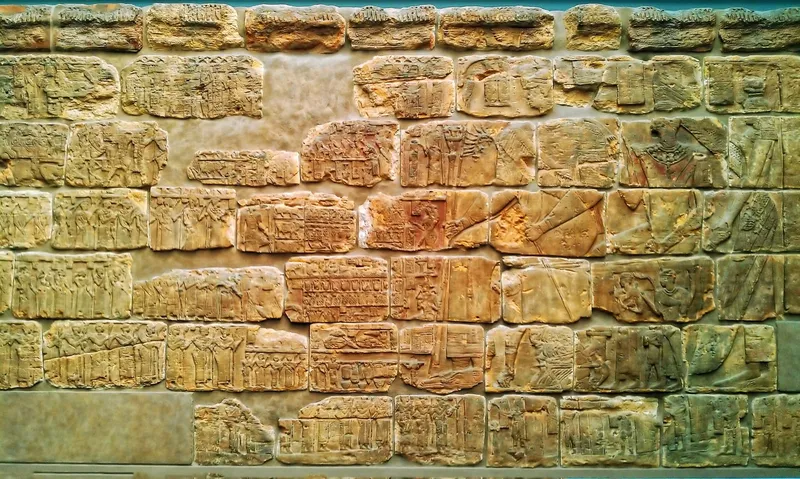
A story told about Alexander the Great holds that he marched his armies to the borders of Ethiopia, faced the prospect of battling a queen named Candace, and chose to turn away rather than risk defeat at a woman’s hands, his unbroken chain of victories too precious to gamble on that encounter. It is a vivid image, and it is not history. The tale comes from the Alexander Romance, a legendary text attributed to an author modern scholars call Pseudo-Callisthenes, compiled centuries after Alexander’s death in 323 BC and packed with fantastical embellishments, sea monsters, talking trees, and imagined conversations with Amazons among them, that ancient and medieval audiences read as adventure literature layered onto a real historical figure, not as a factual chronicle. The historical Alexander’s actual campaigns never brought him anywhere near Nubia; the furthest south he ever traveled in Africa was the Siwa Oasis in Egypt’s western desert in 332 BC, where he consulted the oracle of Amun, well over a thousand kilometers from Kush’s northern frontier.
“Candace” itself is not even a name in the story it comes from. It is a Greek and Latin rendering of Kandake, sometimes transliterated Kentake, the actual royal title carried by queens and queen mothers of the Kingdom of Kush, the Nubian civilization centered at Meroë in what is now Sudan, roughly equivalent in function to “Pharaoh” as a title rather than an individual’s given name. Multiple historical women held it across Kush’s centuries-long history, ruling in their own right or as powerful co-regents, a genuine tradition of female political authority in the ancient Nile valley that the Alexander Romance borrowed and fictionalized without describing any specific, identifiable ruler.
The real history is arguably more remarkable than the legend it inspired. Roughly three hundred years after Alexander’s death, a Kandake named Amanirenas ruled Kush and, when Rome’s new Egyptian prefect left the southern frontier lightly defended around 27 BC, led Kushite forces north to sack the Roman-garrisoned towns of Aswan, Elephantine, and Philae, carrying off a bronze head from a statue of Emperor Augustus and reportedly burying it beneath a temple threshold in Meroë, an act of ritual humiliation still visible to archaeologists today. Ancient geographer Strabo describes the queen who led this campaign as having lost an eye, likely in battle. Rome’s counterattack under the prefect Gaius Petronius pushed deep into Kushite territory and briefly took the city of Napata, but a three-year war ultimately ended not in Roman conquest but in negotiation: around 21 or 20 BC, Amanirenas secured a peace treaty from Augustus himself on notably favorable terms, fixing the frontier at Hiere Sycaminos and freeing Kush from the tribute Rome had initially imposed. No legend was required for that; it happened, and it is one of the few recorded instances of a queen leading a sovereign African kingdom to a negotiated draw against imperial Rome at the height of its power.
Sources
- “Kandake Amanirenas (?-10 B.C.E.)”, BlackPast.
- “The Nubian Queen Who Fought Back Caesar's Army”, HISTORY.
Books & Further Reading
Derek A. Welsby, The Kingdom of Kush: The Napatan and Meroitic Empires (British Museum Press, 1996, ISBN 9781558761827)