
By Princewill Ubani · Published · Updated
Research ID: PA-ART-king-ezana-aksum-christianity-conversion
King Ezana of Aksum's Conversion to Christianity, and How His Coins Prove It
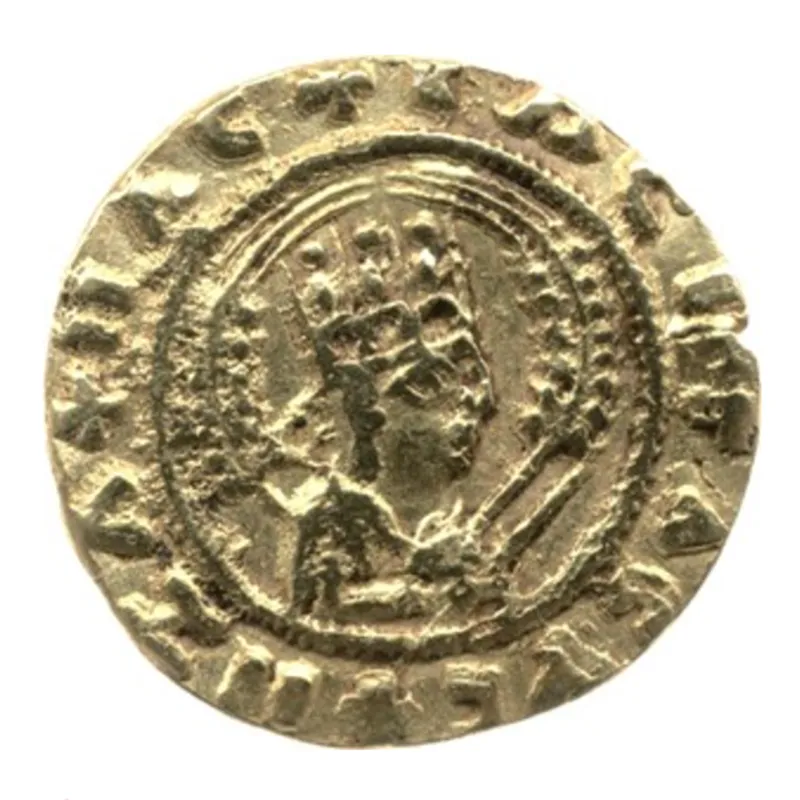
Ezana ruled the Kingdom of Aksum, a trading power centered in what is now northern Ethiopia and Eritrea, through the middle decades of the fourth century AD, and became one of the earliest heads of state anywhere in the world to convert his kingdom to Christianity, doing so within a generation of the Roman emperor Constantine’s own conversion. The claim that Ezana was history’s second monarch to convert, after Constantine, circulates widely, though the comparison is imprecise; the two conversions happened independently and roughly contemporaneously rather than one following directly from the other, and Constantine’s own conversion is itself debated by historians as more gradual and politically layered than a single conversion moment.
The conversion is commonly, and incorrectly, dated to the third century in popular retellings. The historical evidence points later. Ezana’s own inscriptions and coinage, the most reliable dating tool available since Aksum left no continuous chronicle of its kings, place the shift in the middle of his reign, though historians disagree on the year: proposals run from about 333 to after 361, and the historian Aaron Michael Butts argues that the coins and inscriptions, as they have been read, cannot date it at all. Our Aksum page sets the estimates side by side. Credit for the conversion goes to Frumentius, a Syrian Christian who, according to the traditional account preserved by the Roman church historian Rufinus, was shipwrecked on the Red Sea coast as a young man, taken into the Aksumite royal court, and eventually rose to a position of influence over the young Ezana before returning west to be consecrated as Aksum’s first bishop by Athanasius of Alexandria. Frumentius came back to found what became the Ethiopian Orthodox Tewahedo Church, still one of the world’s oldest continuously operating Christian institutions.
What makes Ezana’s conversion unusually well documented for the period is that he put it on his money. Aksumite coinage before the conversion carried a crescent-and-disc symbol tied to the South Arabian-influenced religious traditions the kingdom had followed, alongside deities associated with earlier Aksumite religious practice. Partway through Ezana’s reign, that symbol was replaced on newly minted coins with a cross, a change historians can track through the archaeological coin record with more precision than almost any other detail of his rule. It’s a rare case in ancient history where a state religious transition is dated not primarily through later chronicles or hagiography, which for Aksum are sparse and were written well after the fact, but through the physical currency the king’s own mints were producing in real time.
Ezana’s reign extended well beyond the religious shift. His inscriptions, written in Ge’ez, Sabaean, and Greek, a trilingual practice that itself signals Aksum’s position as a hub connecting the Horn of Africa, the Arabian Peninsula, and the Mediterranean world, record military campaigns inland toward the declining kingdom of Kush, and his titles claim kingdoms across the Red Sea in South Arabia, though historian Stuart Munro-Hay concludes he did not actually control any of them. Aksum’s standing was old by then: a third-century Persian writer, Mani, is said to have named it one of the world’s four great kingdoms, alongside Persia, Rome and a fourth that may have been China, well before Ezana’s reign began. The kingdom’s full history has its own page.
Corrections
Our article on King Ezana dated his conversion more precisely than the evidence allows.It said historians can date the conversion precisely from his coins, most likely to between roughly 340 and 356. Proposed dates run from about 333 (Munro-Hay 1991, pp. 76, 78, 202) to after 361 (Munro-Hay 1991, pp. 205-206; Hatke 2013, p. 91), and Aaron Michael Butts argues that the coins and inscriptions, as they have been read, cannot date it at all (Butts 2025, pp. 17-26). Our kingdoms and empires page gave the range as 333 to 350. The article, that page and the Aksum page now set out the disagreement.Corrected in September 2026. See the log entry.
Our Ezana article said his campaigns extended Aksum's control across the Red Sea into South Arabia.Ezana's titles claim Himyar and Saba, but Munro-Hay concludes that he did not actually control any Arabian kingdom (Munro-Hay 1991, p. 79). The article also called Ezana one of the ancient world's earliest Christian monarchs, a claim we could not source, and named China as the fourth of Mani's great kingdoms without noting that the identification is uncertain (Munro-Hay 1991, p. 17). All three are now corrected.Corrected in September 2026. See the log entry.
Sources
Books & Further Reading
Stuart Munro-Hay, Aksum: An African Civilisation of Late Antiquity (Edinburgh University Press, 1991, ISBN 9780748601066)