
By Princewill Ubani · Published · Updated
Research ID: PA-ART-nubia-worlds-oldest-civilization-claim
Was Nubia the 'World's Oldest Civilization'? What the Nabta Playa Evidence Actually Shows
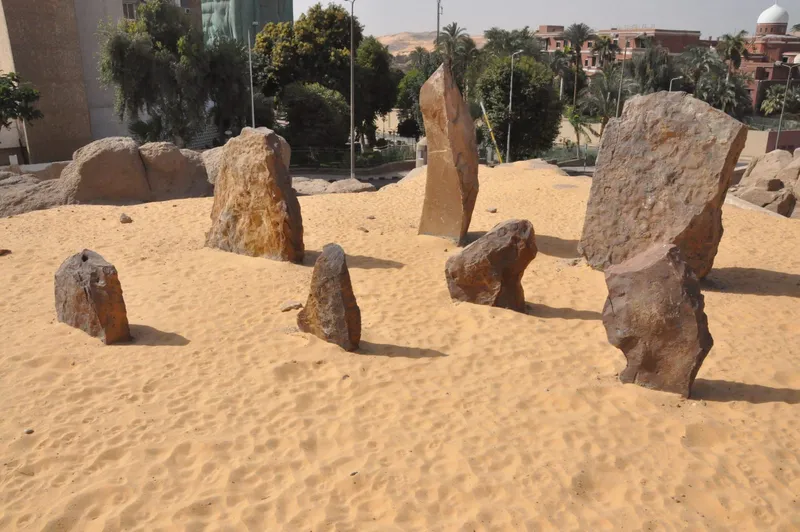
Nubia, the region along the Nile spanning modern southern Egypt and northern Sudan, is frequently described online as the “world’s oldest civilization,” a claim often paired with the assertion that Nubians settled and built in the Nile Valley by 10,000 BC and that Nubia was, in effect, the parent culture that later gave rise to ancient Egypt. Some version of this claim traces partly to a widely shared reference to a 2001 Time magazine piece describing Nubian archaeological finds, glass work, pottery, and other material culture reported to date back roughly 8,000 years. The underlying archaeology is real. The specific framing built on top of it goes further than the dated evidence supports.
The strongest, most rigorously dated archaeological evidence for early complex activity in the Nubian desert comes from Nabta Playa, a site in Egypt’s Western Desert, near the Sudanese border, first identified in 1974 by American archaeologist Fred Wendorf. Nabta Playa preserves a stone circle, alongside burial mounds and other constructed features, that archaeoastronomer J. McKim Malville and Wendorf analyzed jointly, publishing their findings in Nature and the Journal of Anthropological Archaeology in 1998. Their research dated the site’s main constructed features to roughly 4800 to 3000 BC and found the stone alignments corresponded to the position of bright stars including Sirius and Arcturus, evidence of deliberate astronomical observation by cattle-herding peoples living in the desert well before the rise of the pharaonic Egyptian state further north along the Nile.
That dating, beginning as much as 1,700 years before the unification of ancient Egypt around 3100 BC, is itself a significant and well-supported finding: it shows organized, technically sophisticated human activity in the Nubian desert predating Egypt’s emergence as a centralized state. What it doesn’t support is the more specific and more sweeping claim sometimes layered on top of it, that Nubia was building complex settlements by 10,000 BC or that it can be flatly ranked “the world’s oldest civilization” ahead of other early complex societies elsewhere in the world, a comparative claim that depends heavily on how “civilization” itself is defined and that the archaeological record doesn’t settle in one direction.
What the dated evidence does support, without needing further inflation, is that the deep archaeological relationship between Nubia and Egypt ran both directions and over a very long timescale, with distinct Nubian cultural and political traditions, including the later Kingdom of Kush, developing alongside and in constant exchange with Egypt rather than existing as a mere precursor state that Egypt simply absorbed. Nabta Playa’s real, dated significance is substantial enough on its own that it doesn’t require the “parent civilization” and “world’s oldest” framing to make the case for Nubia’s importance in early African history.
Correction
Nabta Playa's dating doesn't run 'several thousand years' before Egypt's unification.The article dated Nabta Playa's constructed features to 4800-3000 BC, then called that "several thousand years before" Egypt's unification around 3100 BC. At most it's about 1,700 years before, and the late end of that range sits at or after 3100 BC. Fixed to give the actual gap.Corrected in September 2026. See the log entry.
Sources
- “Fred Wendorf and J. McKim Malville, "Nabta Playa and Its Role in Northeastern African Prehistory," Journal of Anthropological Archaeology, Vol. 17 (1998)”.
- “J. McKim Malville, Fred Wendorf, A. A. Mazar, and Romuald Schild, "Megaliths and Neolithic Astronomy in Southern Egypt," Nature, Vol. 392, No. 6675 (1998)”.