The Kingdom of Benin, the Edo State Ruled From Benin City
By Princewill Ubani · Published · Updated
Research ID: PA-POL-kingdom-of-benin
The forest kingdom of the Edo, ruled by obas from Benin City in what is now southern Nigeria until a British force took the city in 1897 and carried off the brass and ivory of its palace.

In 1553 an English ship’s party reached Benin City, the capital of an inland kingdom in the forest west of the lower Niger. The Oba received the merchants in his audience room and spoke to them in Portuguese, which he had learned as a child. They wanted pepper. He showed them 30 or 40 hundredweight in a storehouse and promised to fill their three ships within 30 days. If their goods did not cover a full cargo, he said, they could pay on the next voyage.1
His subjects brought in 80 tuns of pepper within the 30 days. By then fever was killing the crews waiting at the river mouth, and their captain, Thomas Wyndham, died. The survivors sank one ship for lack of hands and sailed without the merchants still in the capital. Of about 140 men, barely 40 reached Plymouth.2
The Edo kingdom of Benin had been dealing with Europeans for more than 60 years by then, and it went on doing so for more than 300 more, on terms its rulers largely set. It lay in what is now southern Nigeria and is a different state from the modern Republic of Benin, a separate country farther west. In 1897 a British force took Benin City, burned much of it, deported the Oba and shipped thousands of brass and ivory objects from his palace to Europe.3
Igodomigodo and the Ogiso
The Edo call themselves, their capital and their language Edo. Linguistic evidence suggests they have lived in the region for thousands of years, and Benin never ruled all Edo speakers: less than half of them, Ryder wrote, were ever brought into the kingdom “with any degree of permanency.”4 The city did not start as a planned capital. The archaeologist Graham Connah, who excavated in the city and surveyed its earthworks in the early 1960s, read them as “an earthen record of a long process of fusion of semi-dispersed communities.”5
Edo tradition remembers a first line of rulers called the Ogiso. The chronicler Jacob Egharevba, who recorded the court’s history in the 20th century, wrote that 31 Ogisos reigned, that few of their names survive, and that two of them, Emose and Orhorho, were women.6 The ethnographer R. E. Bradbury gave no number, saying only that the names of “a number of them” are remembered.7 Tradition says the last Ogiso, Owodo, was banished, and that the country, then called Igodomigodo, was run for a time by leaders who were not kings.8 Edo historians sometimes call this interval a republic. Dmitri Bondarenko and Peter Roese read it not as a democratic alternative to monarchy but as “the temporary outcome of an explosion of political traditionalism in Benin City.”9
A prince from Ife
The present dynasty traces itself to Ife, the Yoruba city to the northwest. In Egharevba’s account, the chiefs asked the Oni of Ife for a ruler, and Oranmiyan, a son of Odudua of Ife, was sent to them. Oranmiyan married a local woman, Erinmwinde, and had a son by her. He then gave up the throne, calling the country Ile-Ibinu, “a land of vexation,” and went home, leaving the boy to rule as Eweka I.10 Not every Benin account accepts the Ife origin. Stefan Eisenhofer found published Benin versions in which Oranmiyan was no foreign prince but a native Bini returning from exile, and Uyilawa Usuanlele and Toyin Falola note that traditions collected after Egharevba “have been modified to reject any Ife dominance.”11 Egharevba adds that Oranmiyan was also the father of the first Alafin of Oyo, and that he brought the first horse to Benin.12
Dating this is hard. Ryder warned that “attempts to assign dates to events in Benin history earlier than the sixteenth century are fraught with difficulty.” Egharevba put Oranmiyan’s arrival about 1170; Bradbury would have placed it about a century later.13 Bondarenko, comparing more than a dozen scholarly datings, concluded that the dynasty probably began ruling between about 1200 and 1250.14 Ryder noted that Benin and Yoruba traditions tell substantially the same story, and that the first obas stayed under the shadow of the old Edo chiefs, the Uzama, who became hereditary kingmakers.15
The fourth Oba, Ewedo, changed that. Ryder describes his reforms as a coup: he made the chiefs stand in his presence, took away their swords of state and their right to confer titles, and built a new palace apart from their compounds. Tradition says he renamed the state Ubini, a name Ryder thought was not Edo in origin.16 He is also credited with three palace associations that ran the royal household, each in its own quarters and each a rival of the others.17
His successor Oguola, Egharevba wrote, dug trenches round the city against his enemy, the ruler of Udo, and obtained a brass-caster named Iguegha from Ife.18 Connah excavated evidence that is at least as old. At a site in the modern city he found a deep pit into which the bodies of at least 41 people, probably young women, had been dropped, probably around the middle of the 13th century. He read it as evidence of human sacrifice at an earlier date than historians had suspected.19
Ewuare
Egharevba’s next great king, Ewuare, took the throne by force. After a hard struggle that ended with Benin City stormed and burned, he killed his rival. Ryder placed the seizure around the middle of the 15th century, when new dynasties were also rising among the Oyo, Nupe and Igala to the north.20
Ewuare’s main political reform, in Ryder’s reading, was to give the town chiefs, a group that had often led resistance to the throne, an association of their own. From then on the town chiefs, led by the Iyase, sat with the palace chiefs in the council that decided state policy. Their titles were not hereditary and were in the Oba’s gift, so an able ruler could use them to reward and balance rivals. Much of Benin’s later political history, Ryder wrote, turns on men and families competing for places in these two hierarchies.21 Ewuare also recognized his heir in his own lifetime, with the title Edaiken, but the system broke down as soon as it was tested.22
Under Ewuare, Benin’s armies conquered towns beyond the Edo country, among them Owo and Akure. Ryder calls him the founder of Benin’s reputation as a military power, and says the kingdom seems to have developed a kind of militia that went out on regular yearly campaigns.23
The city wall
Ewuare is credited with the innermost of the walls and ditches around Benin City. Egharevba wrote that he buried charms at “each of the nine gateways.”24 Bradbury counted seven gates into the capital, each guarded by a titled chief whose men collected tolls.25 The archaeologist Tomos Llywelyn Evans, drawing on an unpublished excavation of one of the inner wall’s gateways, argues that the earthworks and their gates were “multifunctional thresholds, combining physical defence and regulation of people with forms of magical protection against spiritual dangers.”26
Connah’s excavations put the wall on firmer ground. The bank was made by digging a ditch and heaping the earth on its inner side, and the two sections he cut measured more than 52 and more than 57 feet from the bottom of the ditch to the top of the bank. A radiocarbon date from the ground beneath it and the traditional evidence together suggested it was built between about 1450 and 1500.27 Using figures calculated by a colleague, Connah estimated that 2,500 men could have dug the ditch in one dry season, and that even if heaping up the bank doubled the work, 5,000 men working ten-hour days could have finished it in one.28
The inner wall is the exception. Connah surveyed more than 90 miles of earthworks around the city and concluded that, apart from the innermost, they were not city walls at all but banks that marked the boundaries of farming settlements.29 Patrick Darling later surveyed the wider network of these banks, called iya in Edo, across Benin and Esan country. He estimated their total length at more than 16,000 kilometers, built over several centuries by rural communities, with more than 150 million hours of labor.30 By his own account only about 1,600 kilometers had been surveyed; the rest of the figure is an estimate.31
Warrior kings
Ewuare’s youngest son, Ozolua, remembered as Ozolua the Conqueror, kept Benin’s armies in constant action and sometimes fought two campaigns a year. His largest conquests were in Esan, and tradition credits him with a victory over Ijebu-Ode, which Ryder thought was more likely a border battle than a conquest. His own soldiers eventually killed him to end a long war against Uromi in Esan.32
His son Esigie defeated an invasion from Idah, a powerful kingdom on the Niger.33 Egharevba wrote that during the war Esigie’s mother, Idia, sent men from Uselu under her head slave, who killed the Idah army’s general.34 The next Oba, Orhogbua, pushed west along the coast. Ryder wrote that his camp at Eko grew into the state of Lagos, “ruled by a king who traced his descent from the royal line of Benin, though his subjects were of Yoruba origin.”35 Eisenhofer points out that Lagos’s own king-lists put these events around 1650, almost a century after Egharevba’s dates.36
After Ehengbuda, whom Ryder calls the last of the warrior obas, the rulers stopped leading armies in person, and their lives became more and more confined to the palace.37 Ryder cautions against the word “empire” for what Benin had built. Only the country within easy reach of the capital was ever under the Oba’s permanent supervision; farther out, he ruled through military settlements, resident officials such as the one at Akure, or junior royal relatives installed as local chiefs.38
The Portuguese
Portuguese ships reached the coast of what is now Nigeria between 1469 and 1475. At first they traded in the creeks without knowing Benin existed, since the kingdom, in Ryder’s words, “paid little or no attention to the sea.”39 In 1486 João Afonso d’Aveiro went inland by water to Ughoton, Benin’s river port, and on to the capital. Tradition says the Oba he met was Ozolua. The Oba sent the chief of Ughoton back to Lisbon with him as an envoy.40
D’Aveiro and the envoy told the Portuguese about a distant overlord, the Oghene, who sent each new Oba his insignia and was kept hidden behind a curtain. King John II took him for Prester John, the Christian king of European legend, and the report helped prompt the voyage of Bartolomeu Dias in 1487.41 Who the Oghene was is disputed. Ryder argued that the Portuguese directions ruled out Ife, and John Thornton, reading the same sources, identified him with the ruler of Igala, at the meeting of the Niger and Benue. Bondarenko holds to Ife, since the Ooni of Ife is called Oghene in Edo, and notes that no European is known to have visited Ife before the 20th century.42 The Portuguese opened a trading post at Ughoton the same year. D’Aveiro died there, and the post was closed for good in 1506 or 1507.43
The trade was in pepper, ivory, cloth and people. The Portuguese wanted a pepper to compete with Indian pepper, and Benin’s, Ryder writes, “proved an admirable substitute.” Later in the century the Oba let only his own agents sell pepper to Europeans. “Opening and closing the market,” Ryder wrote, “was to remain for centuries a standard Benin device for regulating trade with Europeans.” By 1516 the Oba had separated the markets for male and female captives, and the restriction on selling men abroad hardened into an embargo that lasted until the end of the 17th century.44
In 1514 an Oba, probably Ozolua, sent envoys to Lisbon asking for missionaries and for guns, including cannon. King Manuel sent priests but refused the weapons, writing that “the law of God forbids it,” and held them back until the Oba had shown he meant to become a Christian.45 The priests arrived in August 1515 and followed the Oba to war for a year. Back in the capital, he had one of his sons and some chiefs’ sons baptized and taught to read, but Ryder found no evidence that any church was built. The Oba died late in 1516 or early in 1517, and the mission faded.46 Because it failed, Ryder concluded, the Portuguese supplied no firearms, and Benin’s victories in the 16th century “owed nothing to the use of firearms.” Egharevba’s statement that d’Aveiro brought guns to Benin is not supported by the documents Ryder used.47
The plaques
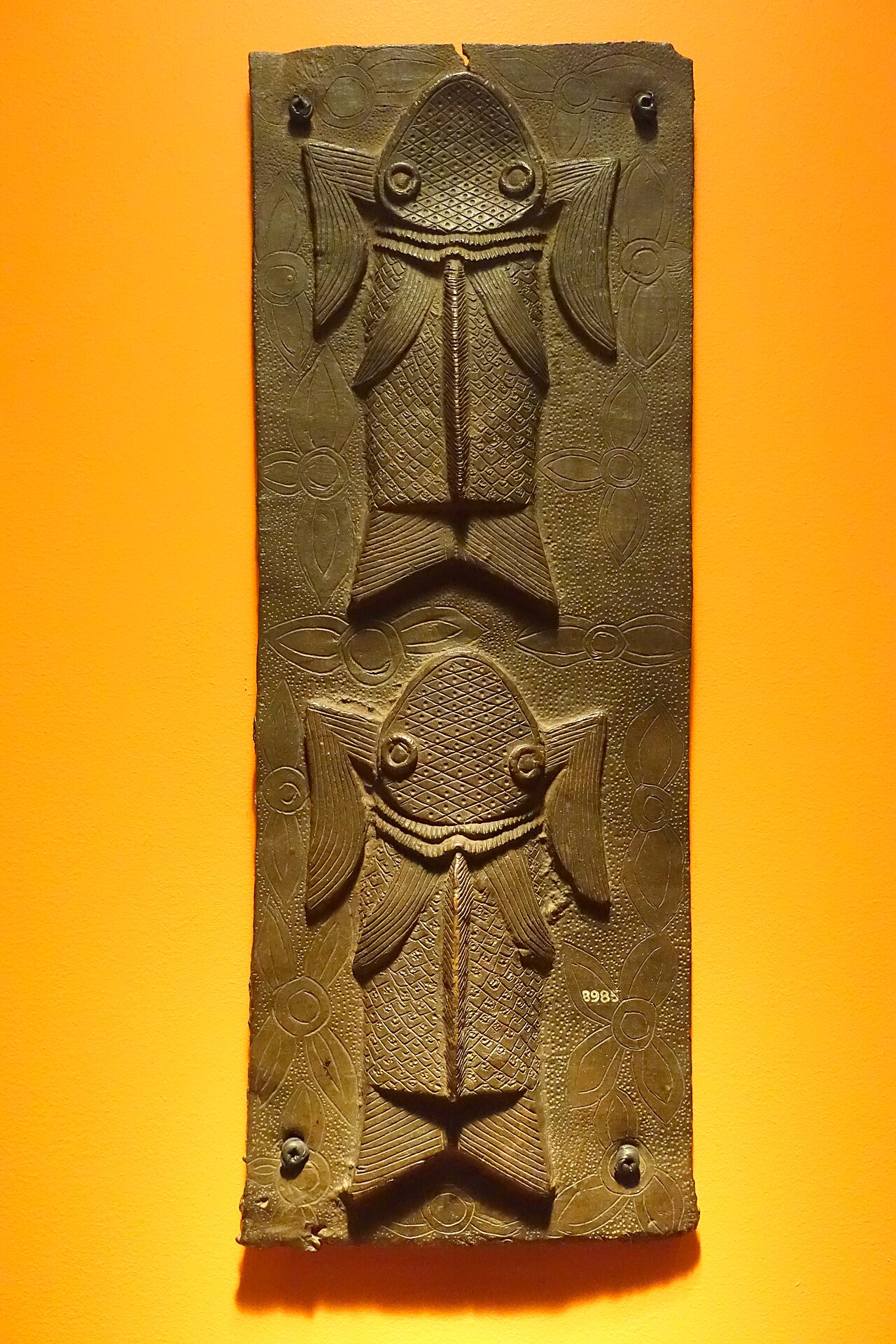
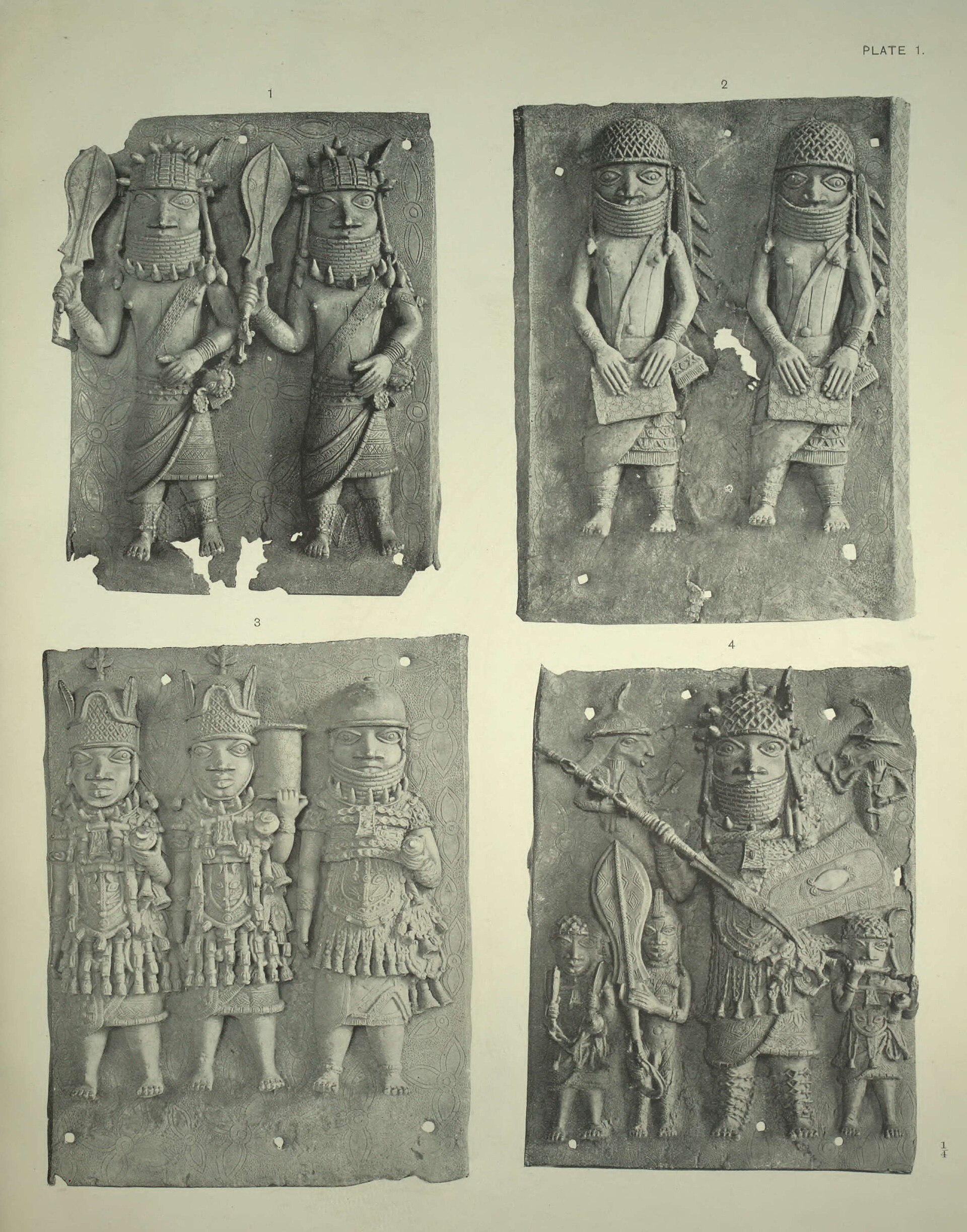
Benin’s best-known works are the cast plaques that once covered the pillars of the royal court. Kathryn Wysocki Gunsch counts at least 850 surviving. They are made of brass and bronze, though the literature calls them all bronzes, and are between 40 and 56 centimeters tall.48 The first written reference is in the Dutch writer Olfert Dapper’s 1668 account of Africa, which describes long galleries on wooden pillars “covered from top to bottom with cast copper, on which deeds of war and battle scenes are carved.”49
Who made them and when is disputed. Egharevba credited brass casting to Oguola, about 1280, but Gunsch notes that his contemporaries thought it much older, and that he recorded nothing of what Benin courtiers told a British officer, Ernest Roupell, in 1897.50 They said the plaques were commissioned by Esigie and his son. Gunsch argues the evidence supports them: Esigie ordered a first set in about 1550, near the end of his reign, and Orhogbua added a second in the 1550s.51 The metal points to the same centuries. O. Werner and F. Willett found nickel and antimony levels in the rectangular plaques “characteristic of European coppers and brasses of the fifteenth to the seventeenth centuries.”52 In 2023 a lead-isotope study led by Tobias Skowronek identified brass manillas, rings traded to West Africa by the Portuguese, from the Rhineland as the principal source of the metal, while cautioning that they need not have been the only one.53
By 1897 the plaques were no longer on display. The British found them as individual pieces arranged in a storeroom, and, Gunsch writes, “the British soldiers did not record their placement.” Benin’s court historians have no detailed record of how the plaques were once arranged.54
Palace, chiefs and captives
The obas of the 17th century were, in Ryder’s words, “obscure men, almost indistinguishable from one another.” They appeared in public only once or twice a year, and succession was opened to several branches of the royal family, which let the most powerful chiefs choose the ruler.55 Around 1690 an Oba began moving against powerful chiefs, and the town chiefs under the Iyase rebelled. A civil war followed, on and off for more than 20 years, in which the capital was sacked at least once, though the palace was spared.56 Paula Ben-Amos Girshick and John Thornton date it from 1689 to 1721 and argue that it was more than a struggle for the throne: it turned Benin “from a centrally governed to a more collectively governed kingdom.”57 In the 18th and 19th centuries, Ryder wrote, “only one Oba ascended the throne undisputed.”58
Dutch and English companies traded in the Benin River through the 17th century, and by the 1720s the Dutch West India Company kept a factor at Ughoton. By the 1730s English slave traders, most from Liverpool, had overtaken them. In 1752 five Liverpool ships sailed for Benin intending to buy 1,280 captives between them.59 Ryder cautioned that many of these cargoes were gathered outside the kingdom, from Itsekiri traders and other ports in the river.60
Sacrifice and the treaty
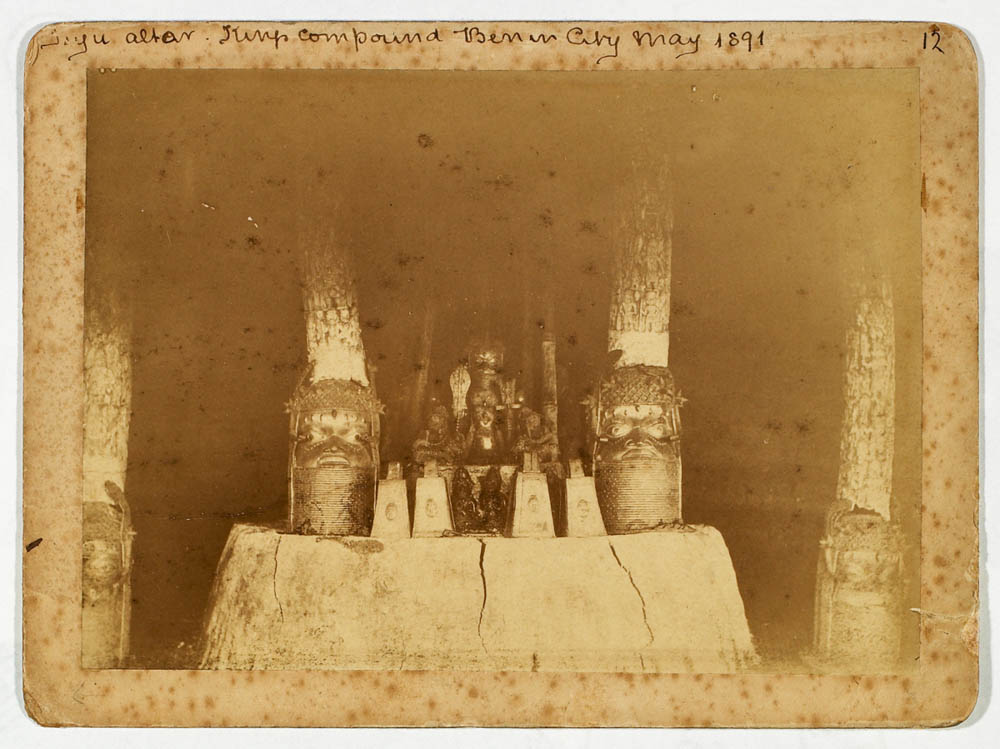
Nineteenth-century visitors wrote at length about human sacrifice in Benin City. The explorer Richard Burton, who went there in 1862, reported crucified bodies and a square strewn with bones. Ryder, who noted that Burton was hardly sympathetic to Edo civilization, still judged that later witnesses confirmed much of what he saw. Ryder concluded that the number of sacrifices appears to have grown in the 19th century, and that new forms appeared, possibly as rulers facing outside pressure and civil war leaned harder on their ritual power.61 The historians Osarhieme Benson Osadolor and Leo Enahoro Otoide argue that British imperial writers on Benin “did not aim at any accurate historical representation or reconstruction” of it, but at justifying conquest.62
British consuls wanted the Oba’s trade opened. In March 1892 the vice-consul Henry Galway reached Benin City and, after days of delay, presented a treaty in the printed form used across the protectorate. Ovonramwen, who had taken the throne in 1888, asked many times “whether it was peace or war.” He would not touch the pen himself, saying he was engaged in a ritual, so his chiefs touched it after his name was written.63 The treaty bound him to accept consular advice on internal as well as external affairs and opened the kingdom to all traders and missionaries. Ryder doubted that Ovonramwen understood what it meant.64
1897
In April 1896 Ovonramwen stopped trade with the Itsekiri middlemen. The consul-general, Ralph Moor, asked London for an expedition to remove him. In November the acting consul-general, James Phillips, asked permission to “depose and remove the King of Benin.”65 London’s reply, sent on Jan. 8, 1897, was to postpone. Before it left London, Phillips had set out for Benin City and been killed.66
Phillips’ party, seven British officials, two traders and more than 200 carriers, gathered at Ughoton early in January. The Oba asked for a delay because a royal ceremony was under way; Phillips refused. Evidence at the later trial showed that Ovonramwen tried to stop his chiefs from attacking the party, which was unarmed, and failed.67 On the road from Ughoton, Benin soldiers killed Phillips and all but two of the Europeans. The court that later tried the killers found it happened on Jan. 4.68
The British response was fast. The naval commander-in-chief, Admiral Harry Rawson, planned to land 1,200 men and cut the number to 700.69 The main column fought its way north from the Sapele area against resistance the whole way, while a second attack toward Ughoton was held off. The city fell on Feb. 18; Egharevba, following the expedition’s surgeon, F. L. Roth, gives the 17th.70 Ovonramwen left with most of his chiefs as the troops approached. Two days after the capture a fire swept through the city.71
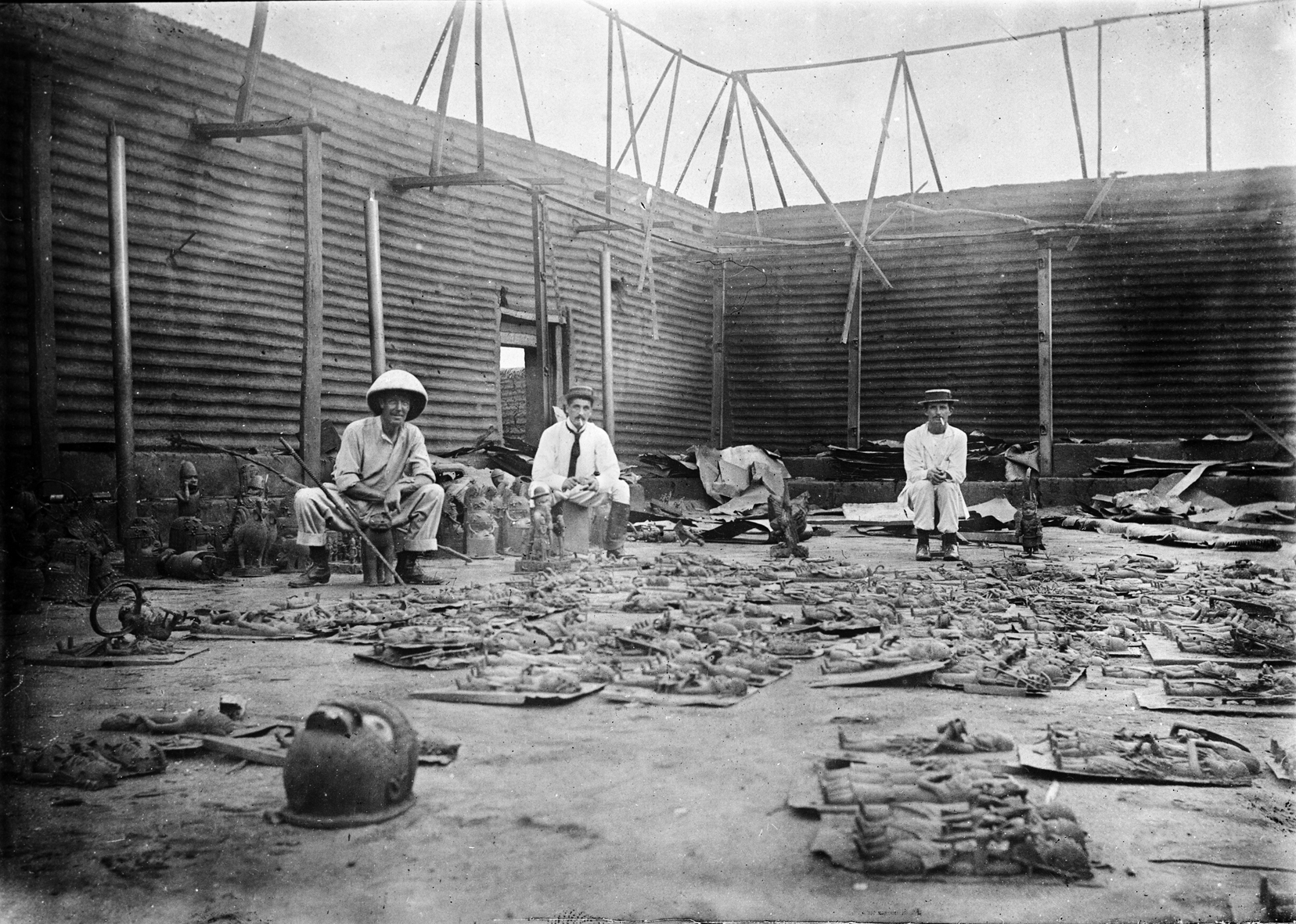
Eight men died on the British side in action. “On the Bini side,” Dan Hicks writes, “the military and civilian casualties were never estimated.”72
They did count the objects, but not agreeably. Most of the palace’s brass had been gathered in one place after the city fell, so it escaped the fire, and it was treated as spoils of war: the government deposited many pieces in the British Museum and sold the rest, and officers took others home as trophies.73 Estimates of the total run from about 2,400 to about 10,000, and none of them is a count.
Ovonramwen came in to submit on Aug. 5, 1897, with some 700 or 800 followers. At the trial in September, six chiefs were found guilty of the killings, and two were shot.74 The Oba was offered a place as a chief in the city, went into hiding instead, was caught the same day and was sentenced to exile.75 As he left, Egharevba recorded him saying: “Oh! Benin, Merciless and Wicked! Farewell, Farewell.”76
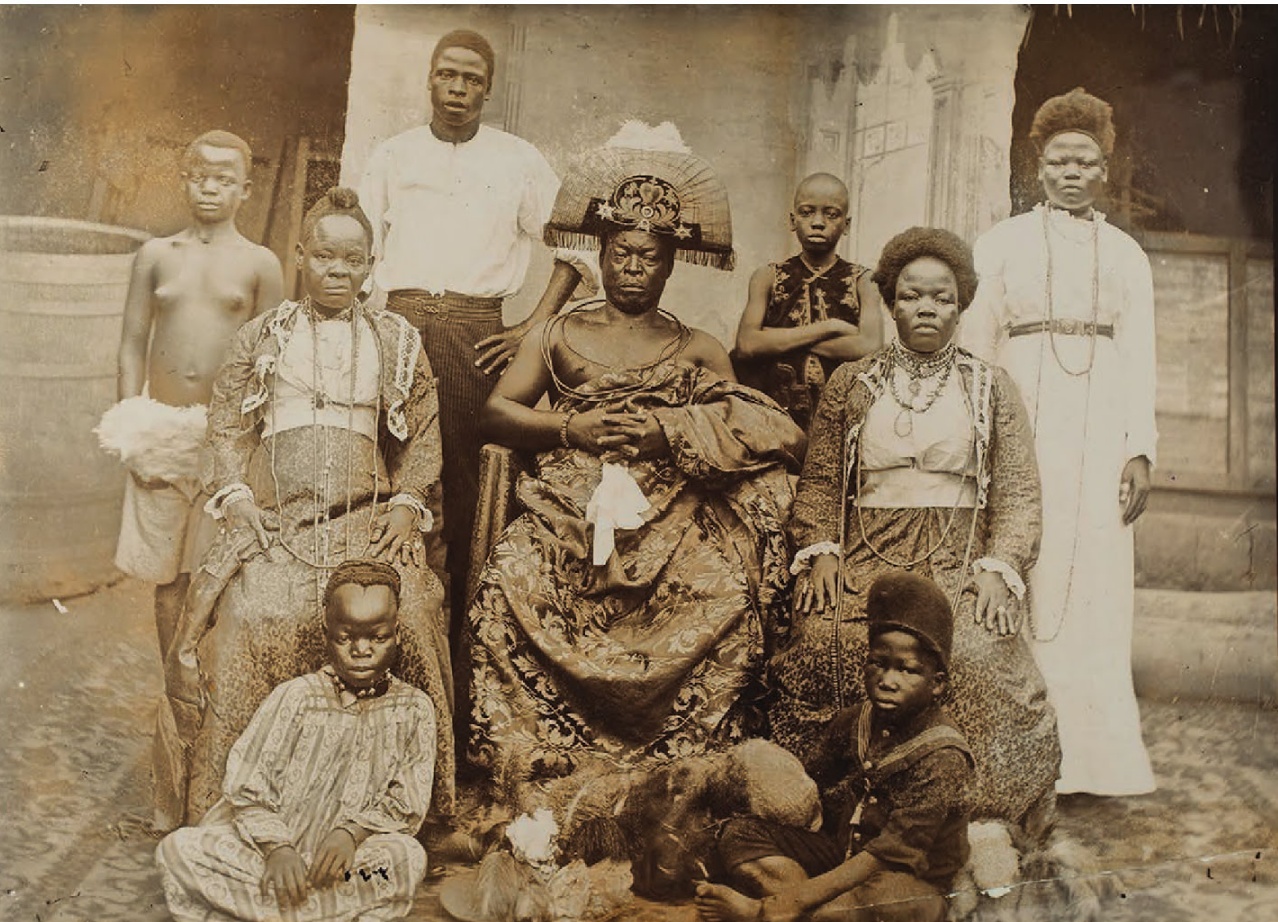
He spent the rest of his life in Calabar and died there in January 1914. His son was crowned Oba Eweka II at Usama on July 24, 1914, in an office like the one the British had offered his father, and the line continues.77
How we know
Most of what is known about Benin before 1500 comes from the court’s own traditions, and most of that reached print through one man. Egharevba, born in 1893, published his history of Benin in successive editions from 1934 and gave a date for nearly every reign. Historians use those dates with caution: Ryder dated nothing firmly before the 16th century, and even Egharevba’s own printing disagrees with itself about when Esigie reigned.78 The strongest warning is Eisenhofer’s: the king-list “cannot be corroborated by any documentation before the mid-nineteenth century,” and its time frame before the 19th century “is to be handled with extreme care.”79
European records begin in 1486. Ryder built his 1969 history on Portuguese, Dutch and British archives, including the letters of Portuguese traders and priests and the consuls’ despatches of the 1890s.80 Bradbury’s 1957 survey described Edo society and the kingdom’s reach in the 20th century.81 The objects are evidence too. Gunsch dated the plaques partly from what they show, such as the clothing of the Portuguese figures, and partly from the court’s own accounts.82
Connah was not the first to dig there. The South African archaeologist A. J. H. Goodwin led what Evans calls the first systematic excavations in Benin City, in 1954-55 and 1956-57, mostly in the ruins of the old palace, but published little; Evans has since used Goodwin’s archive at the University of Cape Town to map the old palace’s compounds and shrines. Goodwin’s finds were probably from the last two or three centuries.83 Connah excavated in Benin City from 1961 to 1964, and noted that the 16th and 17th centuries, the kingdom’s most important period, were poorly represented in what he found.84 In his report he asked that a stretch of the innermost wall, “a sample mile, or even half mile,” be kept untouched as an example of what the whole wall had been, since the law had so far failed to protect it.85
Notes
-
Ryder 1969, pp. 76-77. ↩
-
Ryder 1969, pp. 76-78. ↩
-
Ryder 1969, pp. 24, 290-294. ↩
-
Ryder 1969, pp. 1-2. ↩
-
Ryder 1969, p. 3; Connah 1975, p. 105. ↩
-
Egharevba 1968, p. 3; Ryder 1969, p. 4; Eisenhofer 1995, p. 147. ↩
-
Bradbury 1957, p. 19. ↩
-
Egharevba 1968, pp. 2-5; Bradbury 1957, p. 19. ↩
-
Bondarenko and Roese 2004, p. 113. ↩
-
Egharevba 1968, pp. 5-7. ↩
-
Eisenhofer 1995, pp. 150-152; Usuanlele and Falola 1994, p. 318 n. 40. ↩
-
Egharevba 1968, p. 7. ↩
-
Ryder 1969, p. 7 n. 3; Egharevba 1968, p. 7. ↩
-
Bondarenko 2003, pp. 74-76. ↩
-
Ryder 1969, pp. 4-5; Egharevba 1968, p. 8. ↩
-
Ryder 1969, pp. 5-6; Egharevba 1968, p. 10. ↩
-
Ryder 1969, pp. 5-6. ↩
-
Egharevba 1968, p. 11. ↩
-
Connah 1975, pp. 48, 66, 249. ↩
-
Ryder 1969, p. 8. ↩
-
Ryder 1969, pp. 8-9; Bradbury 1957, p. 36. ↩
-
Ryder 1969, pp. 10-11; Bradbury 1957, p. 35. ↩
-
Ryder 1969, p. 11. ↩
-
Egharevba 1968, pp. 13-14. ↩
-
Bradbury 1957, p. 41. ↩
-
Evans 2025, p. 309. ↩
-
Connah 1975, pp. 88, 103-105; Connah 1967, pp. 605-606. ↩
-
Connah 1975, p. 105; Connah 1967, pp. 606-608. ↩
-
Connah 1975, pp. 98, 103, 105; Connah 1967, pp. 596, 602; Ryder 1969, p. 11 n. 3. ↩
-
Darling 1984, pp. 6, 303. ↩
-
Darling 1984, p. 309. ↩
-
Ryder 1969, p. 12. ↩
-
Ryder 1969, p. 13. ↩
-
Egharevba 1968, pp. 28-29. ↩
-
Ryder 1969, p. 14; Egharevba 1968, p. 29. ↩
-
Eisenhofer 1997, p. 144. ↩
-
Ryder 1969, pp. 14-15. ↩
-
Ryder 1969, p. 21 and n. 3. ↩
-
Ryder 1969, pp. 24, 28. ↩
-
Ryder 1969, pp. 29-30. ↩
-
Ryder 1969, pp. 31-32. ↩
-
Thornton 1988, pp. 351, 353; Bondarenko 2003, pp. 72-73. ↩
-
Ryder 1969, pp. 32-33. ↩
-
Ryder 1969, pp. 31, 38, 45. ↩
-
Ryder 1969, pp. 45-47. ↩
-
Ryder 1969, pp. 49-51. ↩
-
Ryder 1969, p. 52; Egharevba 1968, p. 26. ↩
-
Gunsch 2018, pp. 1, 4. ↩
-
Gunsch 2018, p. 4. ↩
-
Gunsch 2018, p. 5; Egharevba 1968, p. 11. ↩
-
Gunsch 2018, p. 5. ↩
-
Werner and Willett 1975, p. 154. ↩
-
Skowronek et al. 2023, e0283415. ↩
-
Gunsch 2018, p. 2. ↩
-
Ryder 1969, p. 16. ↩
-
Ryder 1969, pp. 18-19; Ben-Amos Girshick and Thornton 2001, p. 370. ↩
-
Ben-Amos Girshick and Thornton 2001, pp. 353-354. ↩
-
Ryder 1969, pp. 19-20. ↩
-
Ryder 1969, pp. 124, 196-197, and app. VI. ↩
-
Ryder 1969, p. 197. ↩
-
Ryder 1969, pp. 248-249. ↩
-
Osadolor and Otoide 2008, p. 418. ↩
-
Ryder 1969, pp. 264, 269-271; Egharevba 1968, p. 48. ↩
-
Ryder 1969, p. 272. ↩
-
Ryder 1969, pp. 280-284. ↩
-
Ryder 1969, p. 285. ↩
-
Ryder 1969, pp. 286-288; Egharevba 1968, p. 49. ↩
-
Egharevba 1968, pp. 49, 56. ↩
-
Bacon 1897, p. 34; Hicks 2020, p. 81. ↩
-
Ryder 1969, pp. 290-291; Hicks 2020, p. 112; Lundén 2016, p. 128; Egharevba 1968, pp. 50, 55. ↩
-
Ryder 1969, p. 290. ↩
-
Hicks 2020, p. 115; Lundén 2016, p. 131. ↩
-
Ryder 1969, p. 290 n. 2. ↩
-
Egharevba 1968, p. 51; Ryder 1969, pp. 291-293. ↩
-
Ryder 1969, pp. 293-294. ↩
-
Egharevba 1968, pp. 58-59. ↩
-
Egharevba 1968, pp. 60-61; Ryder 1969, p. 294; Gunsch 2018, p. 3. ↩
-
Egharevba 1968, front matter and pp. 26, 29; Ryder 1969, p. 7 n. 3; Usuanlele and Falola 1994, pp. 303, 307. ↩
-
Eisenhofer 1997, pp. 139, 146. ↩
-
Ryder 1969, pp. ix, 24-54, 264-294. ↩
-
Bradbury 1957, p. 14. ↩
-
Gunsch 2018, p. 5. ↩
-
Evans 2026, pp. 1-2, 9, 11. ↩
-
Connah 1975, p. 249. ↩
-
Connah 1975, p. 252. ↩
Where the estimates differ
| Estimate | Who holds it | Source |
|---|---|---|
| Oranmiyan arrives about 1170; his son Eweka I rules from about 1200 | Jacob Egharevba, from Benin court tradition | Egharevba 1968, pp. 7-8 |
| About a century later than Egharevba's dates | R. E. Bradbury (1959), as reported by A. F. C. Ryder | Ryder 1969, p. 7 n. 3 |
| About 1300 | Kathryn Wysocki Gunsch | Gunsch 2018, p. 3 |
| Between about 1200 and about 1250 | Dmitri Bondarenko, after surveying more than a dozen published datings | Bondarenko 2003, pp. 74-76 |
| About 1450 | Patrick Darling, as reported by Bondarenko | Bondarenko 2003, p. 74 |
| No closer than the 10th to 14th centuries | N. B. Kochakova, as reported by Bondarenko | Bondarenko 2003, p. 74 |
| Estimate | Who holds it | Source |
|---|---|---|
| About 1460, under Ewuare | Jacob Egharevba (1960 edition), as cited by Graham Connah | Connah 1975, p. 88 |
| About 1450 to 1500, nearer the start of that span | Graham Connah, from tradition, written history and a radiocarbon date of AD 1340 plus or minus 105 from the ground beneath the bank | Connah 1975, p. 88 |
| Around the middle of the 15th century, when Ewuare took the throne | A. F. C. Ryder | Ryder 1969, pp. 8, 11 |
| Estimate | Who holds it | Source |
|---|---|---|
| About 2,400 | Felix von Luschan, 1919 | Lundén 2016, p. 7 |
| "Some four thousand or so, or perhaps more" | Philip Dark, 1982 | Lundén 2016, p. 7 |
| "3,000-odd pieces" of bronze and ivory | Oba Erediauwa, great-grandson of Ovonramwen | Lundén 2016, p. 142 |
| About 10,000 | Dan Hicks | Hicks 2020, pp. 234, 236 |
| Estimate | Who holds it | Source |
|---|---|---|
| 1,200 men planned, cut to 700 landed | R. H. Bacon, an officer on the expedition | Bacon 1897, p. 34 |
| About 1,200 troops and 1,400 to 2,100 carriers | Staffan Lundén | Lundén 2016, p. 128 |
| Some 1,500 sailors, marines and Protectorate troops assembled for the assault | A. F. C. Ryder | Ryder 1969, p. 290 |
| Some 1,400 soldiers, and around 5,000 people including carriers | Dan Hicks | Hicks 2020, p. 110 |
Rulers of Kingdom of Benin
| Ruler | Reign | Note |
|---|---|---|
| Eweka I | c. 1200 to unknown | Egharevba's date; Bradbury put the dynasty's start about a century later. |
| Ewedo | c. 1255 to unknown | Egharevba's date. |
| Oguola | c. 1280 to unknown | Egharevba's date. |
| Ewuare | c. 1440 to unknown | Egharevba's date; Ryder places his seizure of the throne around the middle of the 15th century. |
| Ozolua | c. 1481 to unknown | Egharevba's date; Ryder thinks he was the Oba who died late in 1516 or early in 1517. |
| Esigie | c. 1504 to unknown | Egharevba gives 1504; Gunsch gives about 1517 to the 1550s. |
| Orhogbua | c. 1550 to unknown | Egharevba's date. |
| Ehengbuda | c. 1578 to unknown | Egharevba's date; Ryder calls him the last of the warrior obas. |
| Ovonramwen | 1888 to 1897 | Deposed and exiled by the British; died in Calabar in January 1914. |
Timeline
- c. 1200 Kingdom of Benin emerges
- c. 1200 Capital at Benin City (Edo)
- c. 1200 Eweka I begins to rule
- c. 1255 Ewedo begins to rule
- c. 1280 Oguola begins to rule
- c. 1440 Ewuare begins to rule
- c. 1481 Ozolua begins to rule
- c. 1504 Esigie begins to rule
- c. 1550 Orhogbua begins to rule
- c. 1578 Ehengbuda begins to rule
- 1888 Ovonramwen begins to rule
- 1897 British forces take Benin City and deport Oba Ovonramwen; the monarchy is restored under British rule in 1914
Correction
Our Benin page said the palace was sacked in the civil war of 1689 to 1721.It said the capital and palace were sacked at least once. The account the war is known from, the Dutch trader David van Nyendael's, says the rebel leader sacked Benin City but spared the oba's palace (Ben-Amos Girshick and Thornton 2001, p. 370). The page now says so.Corrected in September 2026. See the log entry.
Sources
- A. F. C. Ryder. “Benin and the Europeans 1485-1897”, Longman, 1969.
- Jacob Egharevba. “A Short History of Benin”, Ibadan University Press, 1968.
- Graham Connah. “The Archaeology of Benin”, Clarendon Press, 1975.
- Kathryn Wysocki Gunsch. “The Benin Plaques: A 16th Century Imperial Monument”, Routledge, 2018.
- Paula Ben-Amos Girshick and John Thornton. “Civil War in the Kingdom of Benin, 1689-1721: Continuity or Political Change?”, Journal of African History 42, no. 3, pp. 353-376, 2001.
- Stefan Eisenhofer. “The Benin Kinglist/s: Some Questions of Chronology”, History in Africa 24, pp. 139-156, 1997.
- Stefan Eisenhofer. “The Origins of the Benin Kingship in the Works of Jacob Egharevba”, History in Africa 22, pp. 141-163, 1995.
- Dmitri M. Bondarenko. “Advent of the Second (Oba) Dynasty: Another Assessment of a Benin History Key Point”, History in Africa 30, pp. 63-85, 2003.
- Dmitri M. Bondarenko and Peter M. Roese. “Between the Ogiso and Oba Dynasties: An Interpretation of Interregnum in the Benin Kingdom”, History in Africa 31, pp. 103-115, 2004.
- John K. Thornton. “Traditions, Documents, and the Ife-Benin Relationship”, History in Africa 15, pp. 351-362, 1988.
- Graham Connah. “New Light on the Benin City Walls”, Journal of the Historical Society of Nigeria 3, no. 4, pp. 593-609, 1967.
- Uyilawa Usuanlele and Toyin Falola. “The Scholarship of Jacob Egharevba of Benin”, History in Africa 21, pp. 303-318, 1994.
- Osarhieme Benson Osadolor and Leo Enahoro Otoide. “The Benin Kingdom in British Imperial Historiography”, History in Africa 35, pp. 401-418, 2008.
- O. Werner and F. Willett. “The Composition of Brasses from Ife and Benin”, Archaeometry 17, no. 2, pp. 141-156, 1975.
- Tobias B. Skowronek et al.. “German Brass for Benin Bronzes: Geochemical Analysis Insights into the Early Atlantic Trade”, PLOS ONE 18, no. 4, e0283415, 2023.
- Tomos Llywelyn Evans. “The Walls of Benin Reconsidered: Interpreting West African Linear Earthworks Using A. J. H. Goodwin's Unpublished Excavation Data”, African Archaeological Review 42, pp. 309-332, 2025.
- Tomos Llywelyn Evans. “Reconstructing the Old Palace Landscape of Benin City, Nigeria: Utilizing A. J. H. Goodwin's Archive at the University of Cape Town as a Resource on Edo History and Archaeology”, History in Africa, pp. 1-28, 2026.
Further Reading
The sources above support the specific claims on this page. The works below are the scholarship behind them. Citations are given in full so readers can find them through a library or database; some are paywalled.
Peer-reviewed articles
- Evans, Tomos Llywelyn (2025). "The Walls of Benin Reconsidered: Interpreting West African Linear Earthworks Using A. J. H. Goodwin's Unpublished Excavation Data." African Archaeological Review 42(2): 309-332. DOI: 10.1007/s10437-025-09627-7.
- Ryder, A. F. C. (1965). "A Reconsideration of the Ife-Benin Relationship." The Journal of African History 6(1): 25-37. DOI: 10.1017/S0021853700005314.abstract free
- Thornton, John K. (1988). "Traditions, Documents, and the Ife-Benin Relationship." History in Africa 15: 351-362. DOI: 10.2307/3171867.abstract free
- Ochiagha, Terri (2023). "The Return of African Antiquities and the Ambiguity of the 'Romantic' Colonial: Nigeria Magazine and the Benin and Ife Bronzes." Journal of Colonialism and Colonial History 24(1). DOI: 10.1353/cch.2023.0008.abstract free
- Blackmun, Barbara Winston (1991). "Who Commissioned the Queen Mother Tusks? A Problem in the Chronology of Benin Ivories." African Arts 24(2): 54-. DOI: 10.2307/3336853.abstract free
- Kaplan, Flora Edouwaye S. (1993). "Images of the Queen Mother in Benin Court Art." African Arts 26(3): 54-. DOI: 10.2307/3337152.abstract free
- Fagg, William (1957). "The Seligman Ivory Mask from Benin: The Royal Anthropological Institute Christmas Card for 1957." Man 57: 113-. DOI: 10.2307/2794430.abstract free
- Ben-Amos, Paula (1976). "Men and Animals in Benin Art." Man 11(2): 243-. DOI: 10.2307/2800208.abstract free
- Ogene, John (2012). "The Politics of Patronage and the Igun Artworker in Benin City." African Arts 45(1): 42-49. DOI: 10.1162/afar.2012.45.1.42.abstract free
- Nevadomsky, Joseph; Inneh, Daniel E. (1983). "Kingship Succession Rituals in Benin. 1: Becoming a Crown Prince." African Arts 17(1): 47-. DOI: 10.2307/3336130.abstract free
- Nevadomsky, Joseph (1984). "Kingship Succession Rituals in Benin. 2: The Big Things." African Arts 17(2): 41-. DOI: 10.2307/3336220.abstract free
- Nevadomsky, Joseph (1984). "Kingship Succession Rituals in Benin. 3: The Coronation of the Oba." African Arts 17(3): 48-. DOI: 10.2307/3336069.abstract free
- Nevadomsky, Joseph (1997). "The Great Benin Centenary." African Arts 30(3): 1-. DOI: 10.2307/3337489.abstract free
- Willett, Frank (1976). "The Arts of the Edo-Speaking Peoples outside Benin City." African Arts 9(4): 10-. DOI: 10.2307/3335048.abstract free
- Maduka, Chukwugozie (2014). "Preserving the Benin City Moats: The Interaction of Indigenous and Urban Environmental Values and Aesthetics." Environmental Ethics 36(1): 83-106. DOI: 10.5840/enviroethics20143616.abstract free
- Bradbury, R. E. (1959). "Chronological problems in the study of Benin history." Journal of the Historical Society of Nigeria, vol. 1, no. 4 (reprinted as ch. 2 of Benin Studies, Routledge, 2018, pp. 17-43) 1(4). DOI: 10.4324/9781351031264-2.
- Bradbury, R. E. (2018). "The Kingdom of Benin." Benin Studies, Routledge, pp. 44-75 (collected papers) null: 44-75. DOI: 10.4324/9781351031264-3.
- Ben-Amos Girshick, Paula; Thornton, John (2001). "Civil War in the Kingdom of Benin, 1689-1721: Continuity or Political Change?." Journal of African History 42(3): 353-376. DOI: 10.1017/S0021853701007915.
- Eisenhofer, Stefan (1997). "The Benin Kinglist/s: Some Questions of Chronology." History in Africa 24: 139-156. DOI: 10.2307/3172022.
- Eisenhofer, Stefan (1995). "The Origins of the Benin Kingship in the Works of Jacob Egharevba." History in Africa 22: 141-163. DOI: 10.2307/3171912.
- Bondarenko, Dmitri M. (2003). "Advent of the Second (Oba) Dynasty: Another Assessment of a Benin History Key Point." History in Africa 30: 63-85. DOI: 10.1017/S0361541300003144.
- Bondarenko, Dmitri M.; Roese, Peter M. (2004). "Between the Ogiso and Oba Dynasties: An Interpretation of Interregnum in the Benin Kingdom." History in Africa 31: 103-115. DOI: 10.1017/S0361541300003417.
- Connah, Graham (1967). "New Light on the Benin City Walls." Journal of the Historical Society of Nigeria 3(4): 593-609.
- Usuanlele, Uyilawa; Falola, Toyin (1994). "The Scholarship of Jacob Egharevba of Benin." History in Africa 21: 303-318. DOI: 10.2307/3171890.
- Osadolor, Osarhieme Benson; Otoide, Leo Enahoro (2008). "The Benin Kingdom in British Imperial Historiography." History in Africa 35: 401-418. DOI: 10.1353/hia.0.0014.
- Werner, O.; Willett, F. (1975). "The Composition of Brasses from Ife and Benin." Archaeometry 17(2): 141-156. DOI: 10.1111/j.1475-4754.1975.tb00129.x.
- Skowronek, Tobias B. (2023). "German Brass for Benin Bronzes: Geochemical Analysis Insights into the Early Atlantic Trade." PLOS ONE 18(4): e0283415. DOI: 10.1371/journal.pone.0283415.
- Evans, Tomos Llywelyn (2026). "Reconstructing the Old Palace Landscape of Benin City, Nigeria: Utilizing A. J. H. Goodwin's Archive at the University of Cape Town as a Resource on Edo History and Archaeology." History in Africa undefined: 1-28. DOI: 10.1017/hia.2025.10014.
Books
- Ryder, A. F. C. (1969). Benin and the Europeans 1485-1897. Longman (Ibadan History Series).
- Egharevba, Jacob (1968). A Short History of Benin. Ibadan University Press (fourth edition).
- Bradbury, R. E. (1957). The Benin Kingdom and the Edo-Speaking Peoples of South-Western Nigeria. International African Institute (Ethnographic Survey of Africa, Western Africa Part XIII); reissued by Routledge 2017.
- Gunsch, Kathryn Wysocki (2018). The Benin Plaques: A 16th Century Imperial Monument. Routledge (Routledge Research in Art History).
- Plankensteiner, Barbara (ed.) (2007). Benin: Kings and Rituals; Court Arts from Nigeria. Snoeck / Kunsthistorisches Museum, Vienna.
- Ezra, Kate (1992). Royal Art of Benin: The Perls Collection. The Metropolitan Museum of Art / distributed by H. N. Abrams.
- Hicks, Dan (2020). The Brutish Museums: The Benin Bronzes, Colonial Violence and Cultural Restitution. Pluto Press.
- Phillips, Barnaby (2021). Loot: Britain and the Benin Bronzes. Oneworld Publications.
- Roth, H. Ling (1903). Great Benin: Its Customs, Art and Horrors. F. King & Sons, Halifax.
- Bacon, Reginald H. (1897). Benin: The City of Blood. Arnold.
- Lunden, Staffan (2016). Displaying Loot: The Benin Objects and the British Museum. University of Gothenburg (doctoral thesis).
- Connah, Graham (1975). The Archaeology of Benin: Excavations and Other Researches in and around Benin City, Nigeria. Clarendon Press, Oxford.
- Darling, Patrick J. (1984). Archaeology and History in Southern Nigeria: The Ancient Linear Earthworks of Benin and Ishan. BAR International Series 215 (Cambridge Monographs in African Archaeology 11).
- Ben-Amos, Paula (1999). Art, Innovation, and Politics in Eighteenth-Century Benin. Indiana University Press.
- Merriman, Nick (2024). Returning the Benin Bronzes: A Case Study of Institutional Responsibility. Palgrave Macmillan.
More on Kingdom of Benin
Kingdom of Benin: c. 1200 to 1897.