By Princewill Ubani · Published · Updated
Research ID: PA-ART-church-england-benin-bronzes-pledge-what
The Church of England's Benin Bronzes Pledge: What It Actually Covers
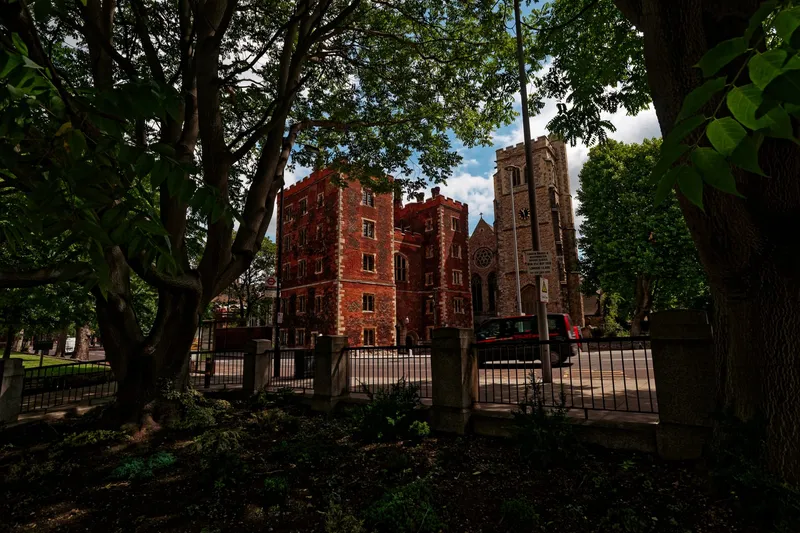
In April 2021, the Church of England announced it was in discussions to return two sculptures from Lambeth Palace, the London residence of the Archbishop of Canterbury, to Nigeria, part of a wave of restitution pledges from British institutions that followed renewed public attention to colonial-era looting after the 2020 Black Lives Matter protests. The announcement invited an obvious assumption: that the Church was giving back objects stolen from the Kingdom of Benin. The actual story is more specific, and more complicated.
The two works in question are not part of the thousands of brass, bronze, and ivory objects seized from Benin City in February 1897, when a British naval force burned the Edo capital in a punitive expedition following the killing of a British trade delegation, and looted the royal palace’s court art as spoils: the event that produced the vast majority of what the world now calls the Benin Bronzes, since dispersed to museums including the British Museum, Berlin’s Ethnological Museum, and the Metropolitan Museum of Art. Lambeth Palace’s sculptures instead were gifts: two busts presented to Archbishop Robert Runcie in 1982, one from Nigerian politician Professor Ambrose F. Alli on behalf of the former Bendel State (which covers the historic Benin region), and the other from the University of Nigeria, Nsukka. A Church of England spokesperson told reporters the pieces were “given to us by the Benin kingdom” and explicitly “were not taken from Benin in 1897.” Subsequent reporting found the sculptures were likely made in the 1980s, contemporary works rather than historic court art, with no direct link to the colonial-era looting at all.
Despite that distinction, the Church chose to offer the objects back as what Lambeth Palace called a “gesture of goodwill” after being contacted by campaigners pushing for broader Benin Bronzes restitution, entering what it described as “good faith” talks with Nigeria’s Legacy Restoration Trust. The stated plan was to include the busts in the Digital Benin documentation project and eventually transfer them to Edo State, potentially for display at the Edo Museum of West African Art (EMOWAA), a purpose-built institution in Benin City developed specifically to house returned court art.
The episode is a useful case study in how loosely the “Benin Bronzes” label gets applied in restitution coverage: pledges frequently blur together historic looted court art, modern replicas, and unrelated gifts under one heading. It also illustrates how institutions with only tangential holdings, a religious body rather than a museum with a colonial-era collection, nonetheless felt public pressure to act during the height of the restitution debate, even when their own objects fell outside the core controversy.
Correction
Our Church of England Benin Bronzes article gave 3,000 to 5,000 as the number of objects taken in 1897.No source we used supports that range. The published estimates run from about 2,400 (Felix von Luschan, 1919) to some 4,000 or more (Philip Dark, 1982) (Lundén 2016, p. 7). The article now says thousands.Corrected in September 2026. See the log entry.
Sources
- “Church of England Enters 'Discussions' for Returning Benin Bronzes”, ARTnews.
- “Benin (historical kingdom, West Africa)”, Britannica.
- “Church of England to return Benin Bronzes given to it by Ambrose Alli, UNN, with direct quotes from the Lambeth Palace spokeswoman”, The Guardian Nigeria.
- “Digital Benin project overview, the initiative that first flagged the Lambeth Palace busts”, MARKK Hamburg.
- “'Benin Bronzes' to be repatriated by Church of England are from 1980s, with Lambeth Palace and Prof. Nigel Biggar on the busts' non-colonial origin”, Yahoo News.
Books & Further Reading
Barnaby Phillips, Loot: Britain and the Benin Bronzes (Oneworld Publications, revised edition, ISBN 9780861543137)