By Princewill Ubani · Published
Research ID: PA-ART-ife-bronzes-frobenius-atlantis-theory
The Ife Bronzes: A German Explorer Couldn't Believe Africans Made Them, So He Blamed Atlantis
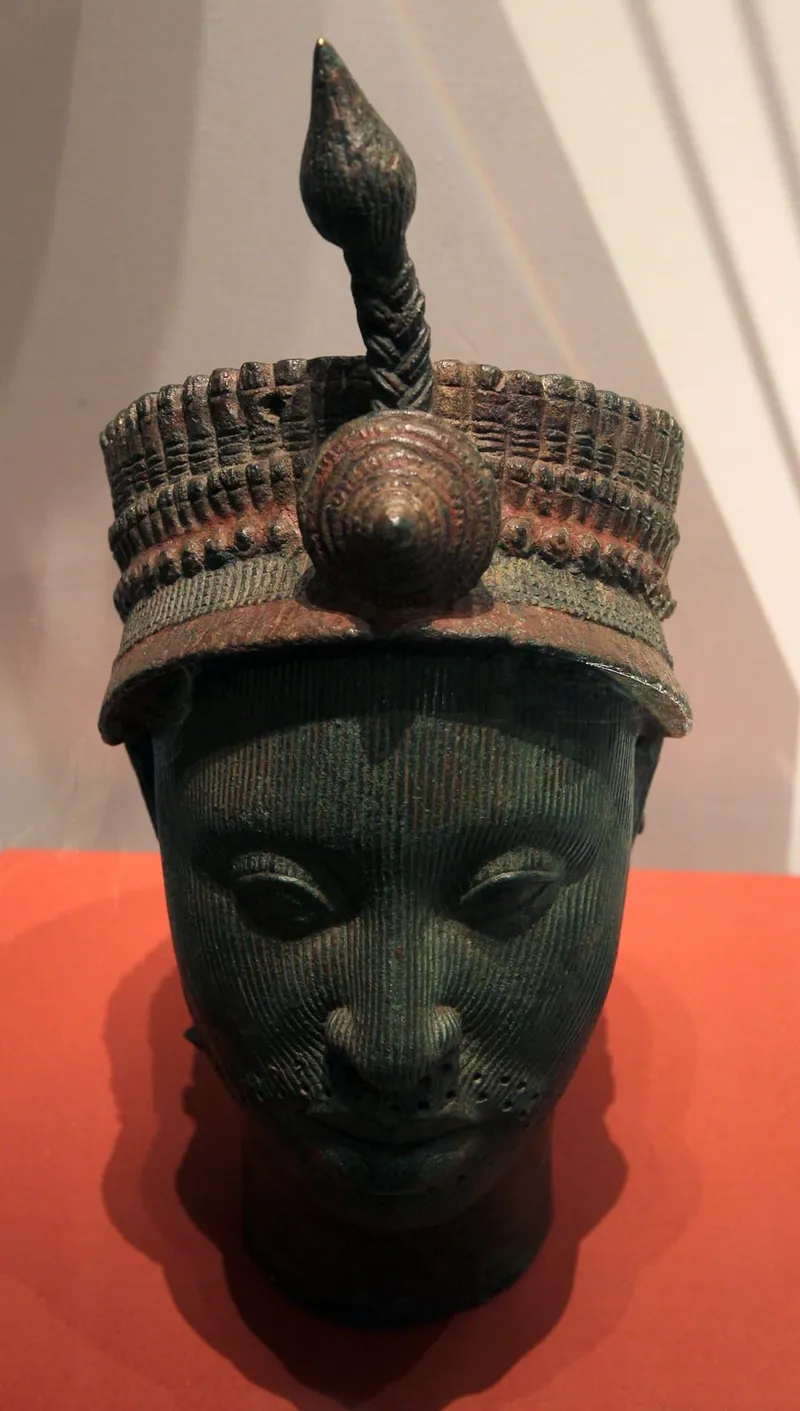
When German ethnologist Leo Frobenius arrived at Ife, the spiritual and historical center of the Yoruba people in southwestern Nigeria, during his 1910 to 1912 expedition, he found something that stopped him: life-sized bronze and terracotta heads, cast and modeled with a naturalism and technical sophistication that rivaled anything produced in Renaissance Europe. Frobenius admired the work openly. What he couldn’t accept was that the Yoruba artisans in front of him, or their ancestors, had made it.
His alternative theory, laid out without any supporting archaeological evidence, was that the sculptures were relics of a lost Greek colony, founded on the West African coast around the 13th century BC, whose existence, he further speculated, had given rise to the ancient legend of Atlantis. Frobenius wasn’t proposing this as one interpretation among several; he presented “African Atlantis” as an explanation for how such refined art could exist in a region European scholarship of the period was generally unwilling to credit with producing it on its own. The theory reflected the racial assumptions common to much of early 20th-century European ethnography more than it reflected the evidence in front of him, evidence that, examined without those assumptions, pointed clearly toward a purely local origin.
Later archaeological work dismantled the theory piece by piece. Additional bronze and terracotta heads were unearthed at Ife in 1938 during unrelated building construction, expanding the corpus of known sculptures well beyond what Frobenius had documented, and subsequent excavations tied the works firmly to the Ife kingdom’s own artistic and religious tradition, with production generally dated to roughly the 12th through 15th centuries AD. British archaeologist Frank Willett, who spent decades studying Ife’s art and archaeology directly, became the scholar most responsible for establishing the sculptures’ indigenous Yoruba origin on a rigorous evidentiary footing, work that effectively closed the door on the Atlantis theory within professional archaeology, even as the sculptures’ technical brilliance, the use of a lost-wax casting method producing remarkably lifelike detail, continued to draw the kind of outside astonishment that had first led Frobenius astray.
The episode is now cited in African archaeology and museum studies as a clear case study in how skilled cultural production by African societies was reflexively attributed to outside origins by European observers unwilling to locate that skill within Africa itself, a pattern that recurred with other sites and artifacts across the continent well beyond Ife. The Ife heads themselves, meanwhile, are now recognized internationally as among the finest achievements of pre-colonial African art, held in museum collections including the British Museum and Nigeria’s National Museum, credited without qualification to the Yoruba civilization that actually made them.
Sources
Books & Further Reading
Frank Willett, Ife in the History of West African Sculpture (Thames & Hudson, 1967, ISBN 9780500390023)