
By Princewill Ubani · Published
Research ID: PA-ART-suez-crisis-1956-egypt-canal
The 1956 Suez Crisis: Egypt, the Canal, and the End of an Empire's Illusions
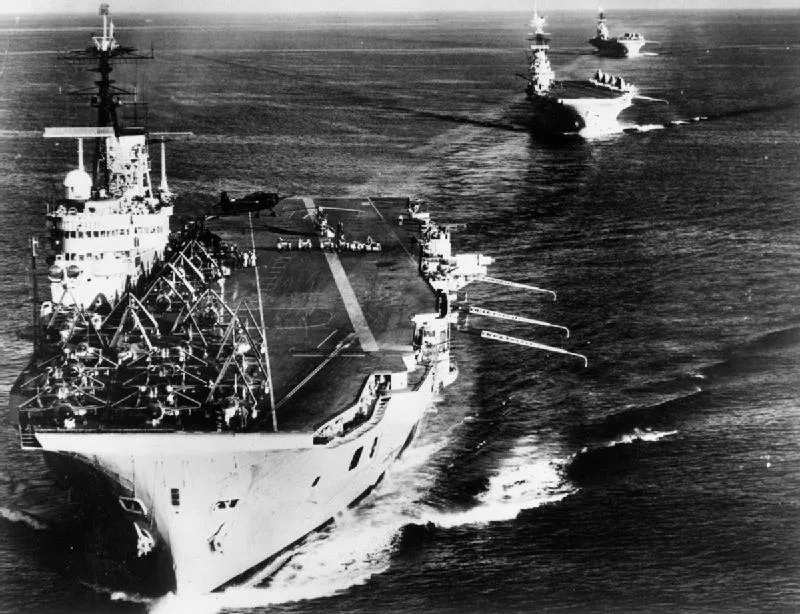
On July 26, 1956, Egyptian President Gamal Abdel Nasser stood before a crowd in Alexandria and announced he was nationalizing the Suez Canal Company, the Anglo-French firm that had operated the canal since it opened in 1869. Nasser’s stated reason was blunt: Britain and the United States had just withdrawn financing they’d promised for Egypt’s Aswan High Dam, after Nasser recognized Communist China and bought arms from the Soviet bloc, and canal revenues would replace the lost funding. For Britain and France, both major shareholders in the canal company and dependent on it for oil shipments and imperial trade routes, the move was a direct threat to interests they still treated as non-negotiable.
What followed was a plan built on subterfuge. Israel, which had its own reasons to strike Egypt after years of border raids and an Egyptian blockade of the Straits of Tiran, invaded the Sinai Peninsula on October 29, 1956. Britain and France then issued a public ultimatum calling on both Egypt and Israel to withdraw from the canal zone, a demand they knew Nasser would refuse, giving them a pretext to intervene “to protect the canal.” When Egypt rejected the ultimatum, British and French forces began bombing Egyptian airfields on October 31 and landed paratroopers days later. The collusion between the three governments, planned in secret meetings at Sèvres outside Paris, was not publicly confirmed by British officials for decades, though it was widely suspected at the time.
The military operation succeeded and the political operation failed almost immediately. Egyptian forces, though defeated on the ground, sank ships to block the canal itself, and international reaction turned overwhelmingly against the invaders. The Eisenhower administration, furious at not being consulted and worried about Soviet exploitation of the crisis amid the concurrent Hungarian uprising, threatened to sell off British government bonds and refused emergency financial support, triggering a run on the pound. The Soviet Union separately threatened to intervene militarily on Egypt’s behalf. Facing a currency crisis and no American backing, Britain agreed to a ceasefire on November 6, only a week after the invasion began. France and Israel followed. A United Nations Emergency Force, one of the first UN peacekeeping missions of its kind, moved into the Sinai to oversee the withdrawal, completed by March 1957.
The consequences reached well beyond Egypt. British Prime Minister Anthony Eden, his authority shattered by the failure and the collusion revelations that eventually emerged, resigned in January 1957. For Nasser, who had lost militarily but kept the canal and forced a colonial-era power into open retreat, the crisis was a political triumph that made him the era’s most prominent symbol of Arab and, more broadly, postcolonial defiance of European power. Historians of decolonization generally treat Suez as a watershed: it exposed that Britain and France could no longer act as unchallenged imperial powers without American backing, and it emboldened independence movements across a continent still mostly under colonial rule in 1956. Within four years, 17 African nations would declare independence in what became known as the “Year of Africa.”
Sources
- “Review of Keith Kyle's Suez: Britain's End of Empire in the Middle East, Albion, Vol. 36, Issue 1 (Cambridge Core)”.
- “Suez Crisis”, Imperial War Museums.
- “Suez Crisis”, National Army Museum.
Books & Further Reading
Keith Kyle, Suez: Britain's End of Empire in the Middle East (I.B. Tauris, 2003, ISBN 9781860648113)