
By Princewill Ubani · Published
Research ID: PA-ART-egypt-1952-free-officers-coup
Egypt's 1952 Free Officers Coup: The Fall of King Farouk
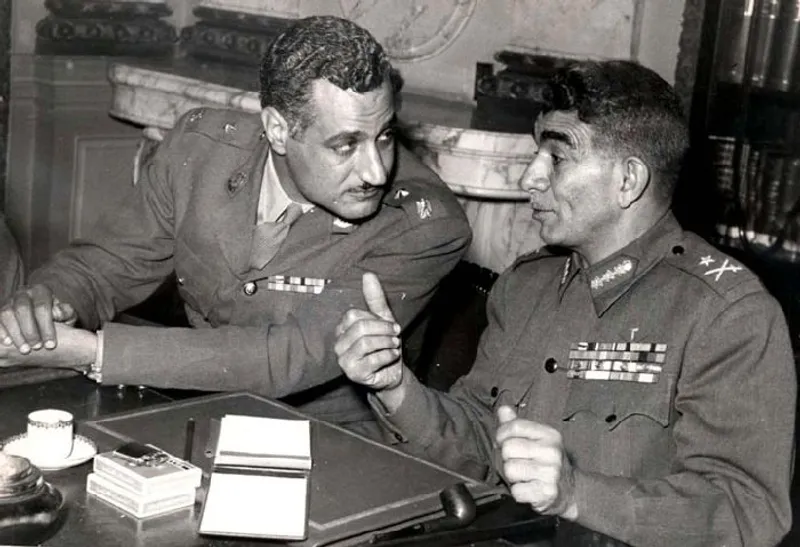
Before dawn on July 23, 1952, units loyal to a secret military organization called the Free Officers Movement seized Egypt’s army general headquarters, blocked the roads into Cairo, and took control of the radio station. By evening, Anwar Sadat announced over the airwaves that the army had taken charge of the country. Within days, King Farouk I, whose family had ruled Egypt since 1805 and who had reigned since 1936, signed an abdication document in favor of his infant son and sailed into exile from Alexandria. The monarchy that had presided over Egypt’s uneasy semi-independence from Britain was finished.
The Free Officers had formed years earlier as a clandestine network of mid-ranking army officers, many of them veterans of Egypt’s poor showing in the 1948 war against the newly declared state of Israel, a defeat they blamed on royal corruption and incompetent leadership. The group’s driving organizer was Lieutenant Colonel Gamal Abdel Nasser, who by 1950 chaired its coordinating committee. But the Free Officers needed a senior, respected figure to give the movement legitimacy and shield its junior conspirators, so in 1949 they drew in Major General Muhammad Naguib, a decorated and popular officer considerably older than Nasser’s core group. Naguib became the movement’s public face and, after the coup succeeded, its most visible leader: he was named commander in chief of the armed forces, then prime minister, and in June 1953, when Egypt formally became a republic and the monarchy was abolished outright, its first president.
For a time it appeared Naguib genuinely led the new order. He was widely popular, and some accounts suggest he saw himself as more than a figurehead, a legitimate head of the revolution rather than a placeholder for the younger officers. Nasser and his closest allies on the Revolutionary Command Council saw it differently, treating Naguib as a useful public symbol whose authority was ultimately theirs to grant or withdraw. This tension broke into the open in February 1954. When Naguib resigned in protest at the concentration of power in Nasser’s hands, huge crowds demonstrated in his support, backed by the Muslim Brotherhood and elements of the old political class, and the Revolutionary Command Council was forced to reinstate him within days. Nasser, however, used the following weeks to outmaneuver his rival, drawing on support from the police, the military rank and file, and organized labor. By April 18, 1954, Nasser had taken over as prime minister, leaving Naguib as president in name only.
The final break came after an assassination attempt against Nasser in Alexandria on October 26, 1954, carried out by a Muslim Brotherhood member and used as the pretext for a sweeping crackdown on the Brotherhood and on Naguib’s remaining allies. Naguib was accused of complicity, stripped of the presidency, and placed under house arrest, where he would remain for years. Nasser assumed the country’s executive authority immediately, though he did not formally become president until June 1956, when he ran unopposed in a national referendum under a new constitution. Historians continue to debate exactly how much genuine power Naguib held at his peak, whether he was ever a true rival center of authority or simply the last obstacle Nasser needed to remove, but there is little dispute that by the end of 1954 the contest was over and Nasser controlled the state the Free Officers had created.
Sources
Books & Further Reading
Joel Gordon, Nasser's Blessed Movement: Egypt's Free Officers and the July Revolution (American University in Cairo Press, new ed. 2016, ISBN 9789774167782; orig. Oxford University Press, 1992)