By Princewill Ubani · Published · Updated
Research ID: PA-ART-maasai-engai-supreme-god-dual-nature
Engai: The Maasai Supreme God With Two Opposing Faces
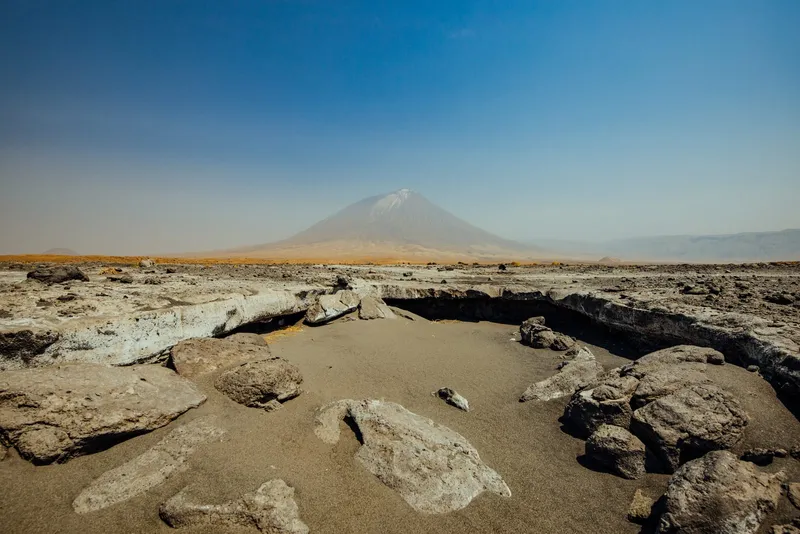
The Maasai people of Kenya and Tanzania hold Engai, also rendered Ngai, as their supreme deity, a single all-powerful being traditionally associated with the sky and, in Maasai oral tradition, with Ol Doinyo Lengai, an active volcano in northern Tanzania whose Maa name translates directly to “Mountain of God” and which Maasai belief holds as the place Engai withdrew to and now dwells. Engai occupies a position in Maasai cosmology comparable to the supreme creator figures found in many other African religious traditions: the ultimate source of life, rain, and cattle, the latter holding particular spiritual as well as material significance for a historically pastoralist society whose wellbeing has long been tied directly to its herds.
What distinguishes Engai from a simpler single-aspect creator figure is a dual nature woven into Maasai religious understanding: Engai Narok, sometimes translated as the Black God, represents Engai’s benevolent aspect, associated with rain, fertility, and the sustaining of life, while Engai Nanyokie, the Red God, represents a harsher, more punishing aspect associated with drought, lightning, and calamity. Maasai religious tradition, as documented in reference works on African religion including the Encyclopedia of African Religion, treats these not as two separate competing deities but as two faces of one supreme being, a theological structure that allows a single god to account for both the sustaining and the destructive forces the Maasai historically experienced in their environment, from life-giving rain to devastating drought, without needing to introduce a wholly separate evil or destructive deity into the cosmology.
Anthropologist Paul Spencer’s ethnographic study of the Matapato Maasai, an in-depth study of ritual life among one Maasai community, documented how this cosmology sits alongside a broader Maasai ritual and social structure organized around age-sets, cattle, and a set of rites tied closely to the community’s understanding of its relationship with Engai. Spencer’s work, along with subsequent academic treatments of Maasai religion, situates Engai’s dual nature as part of a coherent religious system rather than an isolated theological curiosity, one where blessing and ritual language regularly invoke Engai directly, particularly around cattle, rain, and major life events.
Engai’s name places Maasai religious vocabulary in conversation with the beliefs of neighboring Kenyan communities, notably the Kikuyu, whose own supreme deity, Ngai, carries a name closely related linguistically to the Maasai Engai, reflecting a broader pattern across multiple East African ethnic groups of naming a singular sky-based creator god with closely related terms. The two traditions diverge, however, on sacred geography: where the Maasai hold Ol Doinyo Lengai as Engai’s dwelling place, the Kikuyu regard a separate peak, Mount Kenya (Kirinyaga), as their own god Ngai’s holy mountain, each community’s specific religious tradition and ritual practice around its shared linguistic root having developed along its own distinct lines.
Sources
- “"Maasai," Encyclopedia of African Religion (SAGE Reference)”.
- Naomi Kipury. “Oral Literature of the Maasai (ISBN 9966461736)”, Heinemann Educational Books, 1983.
- Paul Spencer. “The Maasai of Matapato: A Study of Rituals of Rebellion (ISBN 9780253336255)”, Indiana University Press, for the International African Institute, 1988.
Books & Further Reading
Paul Spencer, The Maasai of Matapato: A Study of Rituals of Rebellion (Manchester University Press, 1988)