
By Princewill Ubani · Published
Research ID: PA-ART-1026837777164521472
Five German Warships and the Making of German East Africa, 1885
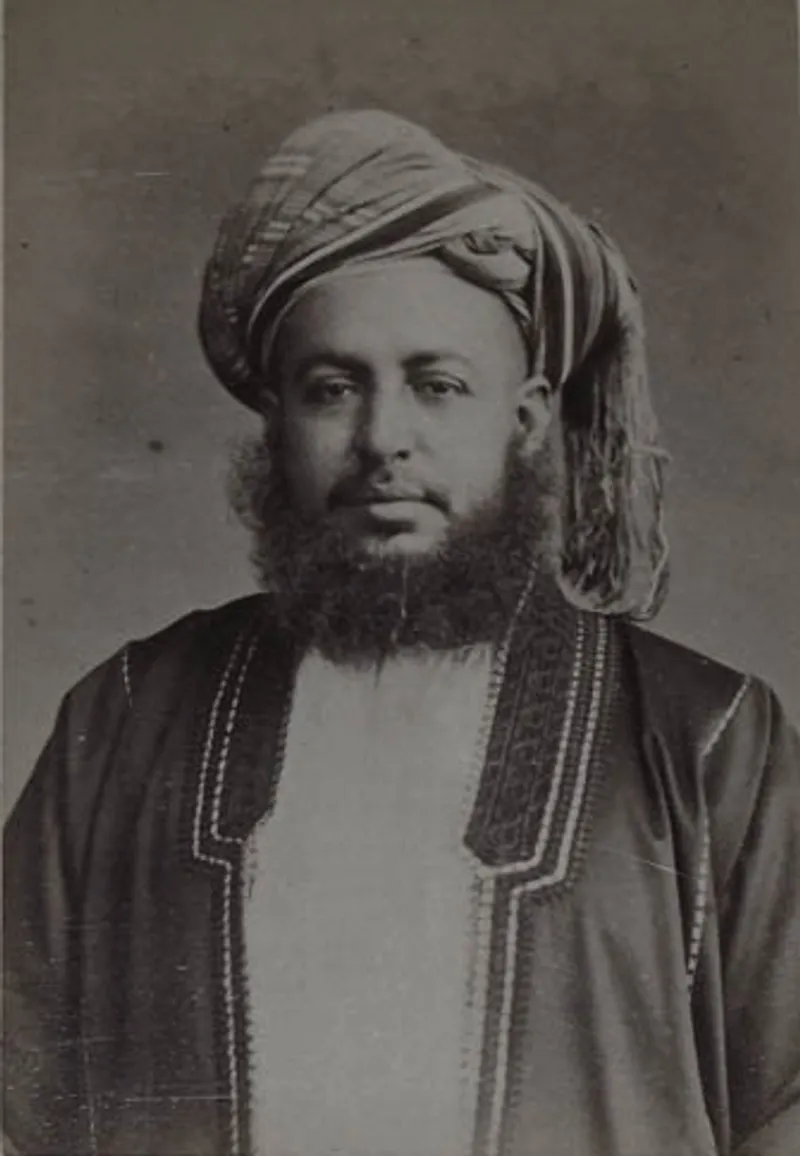
On the morning of August 7, 1885, five German warships steamed into the lagoon off Zanzibar’s Stone Town and trained their guns on the sultan’s palace. They carried an ultimatum, on Chancellor Otto von Bismarck’s orders, demanding that Sultan Barghash bin Said recognize German claims over a vast stretch of the East African mainland he considered his own.
Barghash had reason to feel secure until that morning. Zanzibar’s sultans had spent half a century cultivating treaty relationships with the era’s major powers: the United States signed a commerce treaty with the sultanate in 1833, Britain followed in 1839, and France in 1844, each granting most-favored-nation trading status and each, in its way, suggesting Zanzibar had a seat at the table of nations. Britain’s involvement ran deeper still. Consul John Kirk, a former companion of David Livingstone, had spent more than a decade in Zanzibar, negotiating the 1873 treaty that closed the island’s slave market and quietly steering Barghash toward legitimate exports like ivory and rubber from the interior.
None of it stopped Germany. Through 1884 and into early 1885, an adventurer named Carl Peters had been touring the caravan routes toward the Great Lakes, signing treaties with local chiefs who had, in most cases, only a loose sense of what they were putting their names to. In March 1885, Berlin startled the sultan by formally claiming a protectorate over this inland territory, land Barghash’s own agents had been administering from trading posts at Tabora and Ujiji. Kirk, the one man positioned to intervene, proved powerless against Berlin’s diplomacy.
The August ultimatum settled the matter. According to historian Emile de Groot’s account in the Journal of Modern History, the squadron under Commodore Paschen delivered its demand for recognition “under threat of bombardment of Zanzibar.” By the age of the telegraph, gunboat diplomacy in the Indian Ocean was no longer a local affair; the crisis reached the British Foreign Office within days. London, unwilling to jeopardize relations with Berlin over a client sultan’s mainland claims, pushed a compromise instead: Britain and Germany would simply divide the interior between themselves into spheres of influence. The plan was accepted before the month was out, and Kirk found himself under instructions from his own government to persuade Barghash to sign away the bulk of his mainland territory.
A joint Anglo-German boundary commission spent more than a year working out the details, finishing in November 1886 with an agreement that also brought France on board. Barghash kept a ten-mile-wide strip of coastline; everything behind it was split by a line running from the coast to Mount Kilimanjaro and on to Lake Victoria, Britain’s sphere to the north, Germany’s to the south. That line still marks the border between Kenya and Tanzania today. Germany’s share became German East Africa, administered first by Peters’ chartered company and then, from 1891, directly by the German state; Zanzibar itself became a British protectorate in 1890, with Barghash’s dynasty retained as figureheads until the 1964 revolution finally ended it.
Sources
- “History of Zanzibar”, Historyworld.
- “German Demands Recognition”, The Bluejackets.
Books & Further Reading
Alastair Hazell, The Last Slave Market: Dr John Kirk and the Struggle to End the East African Slave Trade (Little, Brown Book Group, 2012, ISBN 9781780336572)