
By Princewill Ubani · Published
Research ID: PA-ART-1289229778206089216
The Maji Maji Rebellion and Germany's Scorched-Earth Reprisal, 1905-07
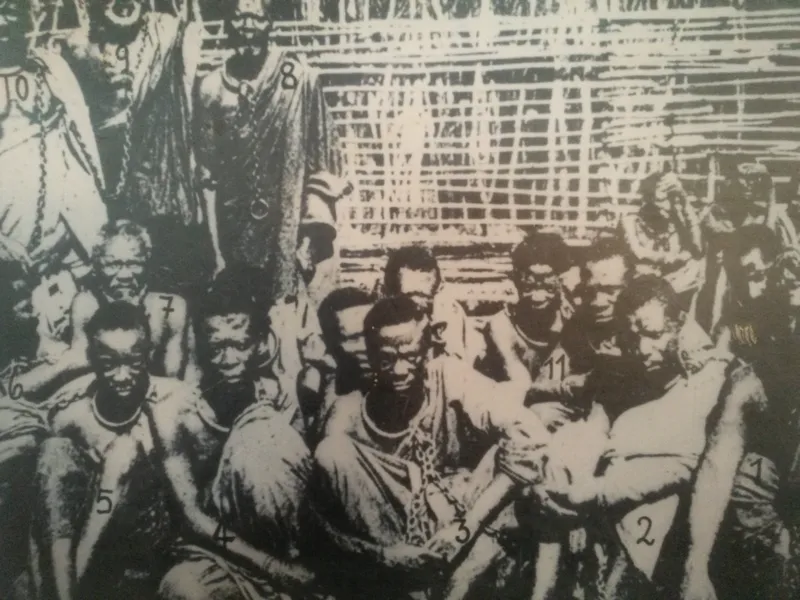
Between 1905 and 1907, roughly twenty different ethnic groups across southeastern German East Africa put aside old rivalries to fight together against German colonial rule, in what became known as the Maji Maji Rebellion. Germany’s response, a deliberate famine campaign layered on top of battlefield defeats, killed vastly more people than the fighting itself.
The uprising grew out of two grievances the German administration had imposed across the colony: a head tax that replaced the older household tax and hit families harder, and a system of forced labor on communal cotton plantations that pulled workers away from their own farms to grow a crop that enriched the colonial treasury rather than local communities. Resentment first boiled over in the Matumbi Hills near the southeastern coast, where insurgents began by uprooting cotton plants before moving on to raid the farmhouses and offices of Arab traders and plantation overseers. A spiritual movement, associated with the prophet Kinjikitile Ngwale and centered on a “maji” (water) medicine believers thought would turn German bullets to water, helped weld disparate local fighting groups into a shared cause, even though the tribal organization behind it remained loose.
The violence spread quickly into the interior, and its scale is remembered as unusual for the period: German forces, overwhelmingly reliant on African Askari troops, fought a coalition spanning some twenty ethnic groups over more than 10,000 square miles of territory, according to BlackPast.org’s account of the rebellion. Fighting was brutal on both sides. Insurgents killed missionaries, traders and colonial officials, including the bishop of Kilwa; German forces and their Askari auxiliaries executed captured fighters after summary courts-martial, destroyed villages, and in at least one documented case paid a bounty for the severed heads of insurgents, according to a 2021 analysis in the journal Holocaust and Genocide Studies by legal scholars Klaus Bachmann and Gerhard Kemp.
It was the German response after the major battles that caused the overwhelming majority of deaths. To starve the rebellion’s remaining support, German forces and their allies systematically destroyed crops and food stores across the rebel-affected south, triggering three years of mass starvation. Bachmann and Kemp’s analysis of German colonial records found the human toll was severe enough that southern Usagara was left entirely depopulated by 1906, and a quarter of women in the Ulanga district had become unable to bear children, likely due to malnutrition. German forces themselves suffered comparatively few losses: about fifteen white soldiers, 389 Askari troops and sixty-six porters killed across the entire conflict.
The death toll among the African population remains disputed precisely because Germany’s own wartime figures were so much lower than later research. Official German colonial records put the number of Maji Maji dead at 75,000. Tanzanian historian G.C.K. Gwassa, drawing on archival and oral evidence, concluded the real figure was between 250,000 and 300,000; historian Tanja Bührer separately arrived at roughly 250,000, counting deaths from disease and starvation alongside combat. Bachmann and Kemp’s 2021 legal analysis argues the documented pattern, deliberate starvation of a civilian population following military defeat, meets the elements of genocide under the modern Genocide Convention, while noting that any compensation claim against Germany today would face the legal obstacle of state immunity for actions taken by a sovereign government. Germany’s colonial administration did respond to international criticism of the war by introducing modest reforms in its African colonies, though it retained control of German East Africa until losing the territory after the First World War.
Sources
- “Maji Maji Uprising (1905-1907)”, BlackPast.org.
- “Was Quashing the Maji-Maji Uprising Genocide? An Evaluation of Germany's Conduct through the Lens of International Criminal Law”, Holocaust and Genocide Studies (Oxford Academic).
Books & Further Reading
Klaus Bachmann and Gerhard Kemp, "Was Quashing the Maji-Maji Uprising Genocide? An Evaluation of Germany's Conduct through the Lens of International Criminal Law," Holocaust and Genocide Studies, vol. 35, no. 2 (2021), pp. 235-249, DOI 10.1093/hgs/dcab032