By Princewill Ubani · Published
Research ID: PA-ART-swahili-most-widely-spoken-bantu-language
How Swahili Became Africa's Most Widely Spoken Bantu Language
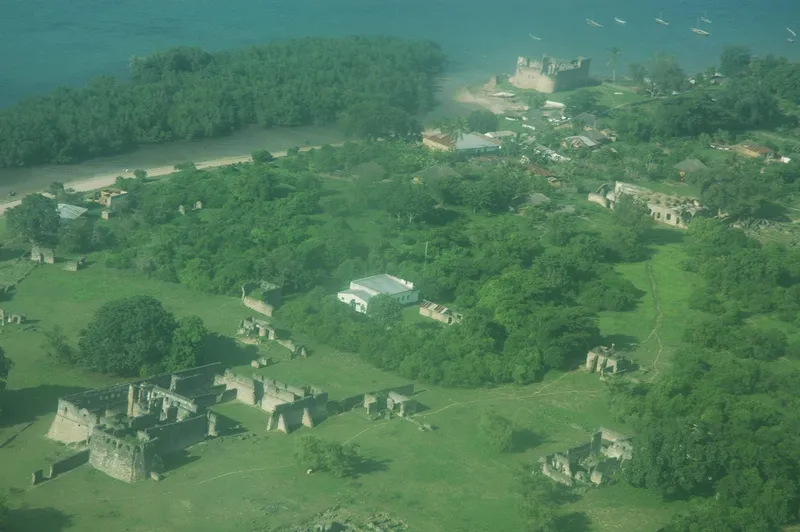
Swahili is a Bantu language, part of a family of roughly 500 related languages spoken across sub-Saharan Africa, and by most counts it is the most widely spoken of them. Linguists Derek Nurse and Thomas Hinnebusch, in their 1993 study “Swahili and Sabaki: A Linguistic History,” trace its roots to Sabaki, a branch of the Northeast Coast Bantu languages that split off roughly 1,500 years ago among communities settled along what is now the coast of Kenya and Tanzania. From that base, speakers of early Swahili built a language shaped, over centuries, by trade.
That coast sat on one of the busiest maritime trade routes in the pre-modern world, linking the African interior to the Arabian Peninsula, Persia and, eventually, India. Arab and Persian merchants had been sailing to East African ports for centuries by the time Swahili-speaking city-states such as Kilwa, Mombasa and Zanzibar rose to prominence between roughly the 10th and 15th centuries, and that sustained contact left a heavy mark on the language: a substantial share of Swahili’s vocabulary, and its very name, drawn from the Arabic “sawahil,” meaning coasts, reflects centuries of exchange between Bantu-speaking Africans and Arab and Persian traders and settlers. Swahili nonetheless remained structurally a Bantu language throughout, keeping its Bantu grammar, noun-class system and core vocabulary while absorbing loanwords the way English absorbed French and Latin without ceasing to be Germanic.
The language’s spread beyond its coastal homeland accelerated in the 19th century, as Swahili became the working language of caravan routes that carried ivory, and later enslaved people, from the East African interior to the coast, spreading it as far inland as what is now DR Congo. Colonial administrations in German East Africa and later British Tanganyika reinforced that spread by adopting Swahili as an administrative and educational language, cementing it as a regional lingua franca well beyond its original speaker base.
Today, Swahili is an official language of Tanzania, Kenya, Uganda and the East African Community, and it functions as a working language across much of the African Great Lakes region, understood in parts of Rwanda, Burundi, DR Congo, Mozambique and beyond. Because so many of its speakers use it as a second or third language for trade, education and government rather than as a mother tongue, exact speaker counts vary by source and methodology, with widely cited estimates ranging from around 100 million to more than 150 million people. By any of those counts, Swahili stands as the most widely spoken language to have grown out of the Bantu family, a coastal trading tongue that became one of Africa’s great connective languages.
Sources
- “Swahili language”, Encyclopaedia Britannica.
- “World Swahili Language Day”, UNESCO.
Books & Further Reading
Derek Nurse and Thomas J. Hinnebusch, Swahili and Sabaki: A Linguistic History (University of California Press, 1993, ISBN 9780520097759)