By Princewill Ubani · Published
Research ID: PA-ART-idriss-deby-death-chad-2021
Idriss Deby's Death and the Dynastic Succession That Followed
On This Day: April 20
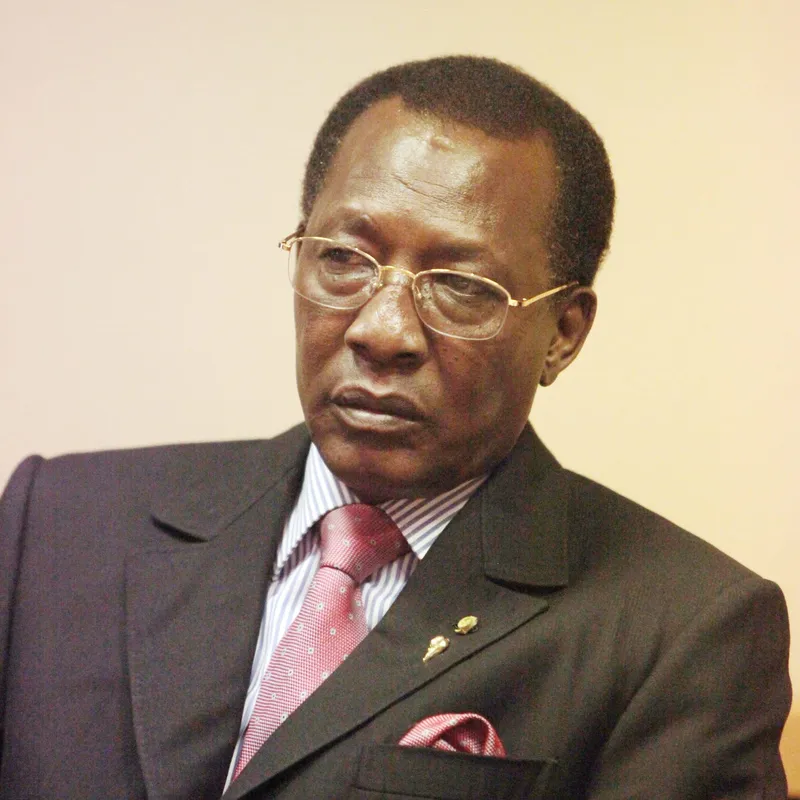
Idriss Deby Itno, president of Chad for more than three decades, died on April 20, 2021, according to the Chadian army, from injuries sustained while visiting soldiers fighting rebels from the Front for Change and Concord in Chad (FACT) in the country’s northern Kanem region. The announcement came just days after electoral authorities had declared Deby the winner of an April 11 presidential election, extending his rule into a sixth term at age 68.
Deby had held power since 1990, when he seized the presidency in an armed rebellion that overthrew Hissene Habre, and he built one of the longest-running governments in modern Chadian history around a mix of military strength, French backing and Chad’s role as a security partner against jihadist groups in the Lake Chad basin and the wider Sahel. His death arrived while FACT fighters, who had crossed into Chad from bases in southern Libya, were advancing on the capital, N’Djamena, and the timing, days after a contested election and amid active fighting, left the government’s succession plans largely improvised.
Constitutionally, the president of Chad’s National Assembly should have assumed the presidency on an interim basis. Instead, a newly formed military council announced that Deby’s 37-year-old son, four-star general Mahamat Idriss Deby, who had commanded the presidential guard and served as deputy commander of Chadian forces deployed in Mali, would lead the country as head of a transitional military authority for an 18-month period, with the constitution suspended and the National Assembly dissolved. International observers, including opposition figures inside Chad, characterized the arrangement as a de facto military coup dressed in the language of managed transition, even as France and other Western governments largely accepted it as a stabilizing arrangement given Chad’s security role in the region. Writing in Third World Quarterly in 2024, scholar Darrin Patrick McDonald describes the transition period that followed as one that preserved the core of the Deby family’s power structure while repeatedly postponing the democratic transition it had promised.
Mahamat Deby’s transitional mandate was extended beyond its original 18 months amid delayed elections and a violent crackdown on protesters in October 2022 that killed dozens, before he ultimately won a presidential election in May 2024 that international monitors and much of Chad’s opposition dismissed as tightly controlled. The succession that began with his father’s battlefield death in 2021 has thus carried the Deby family’s hold on Chad’s presidency into a second generation, an outcome few of the constitutional mechanisms in place at the elder Deby’s death were designed to produce.
Sources
Books & Further Reading
Darrin Patrick McDonald, "Transition Meets Instability: Chad After Idriss Déby Itno," Third World Quarterly, Vol. 45, No. 11 (2024), pp. 1758-1776