
By Princewill Ubani · Published
Research ID: PA-ART-idi-amin-1972-expulsion-ugandan-asians
Idi Amin's 1972 Expulsion of Uganda's Asian Population
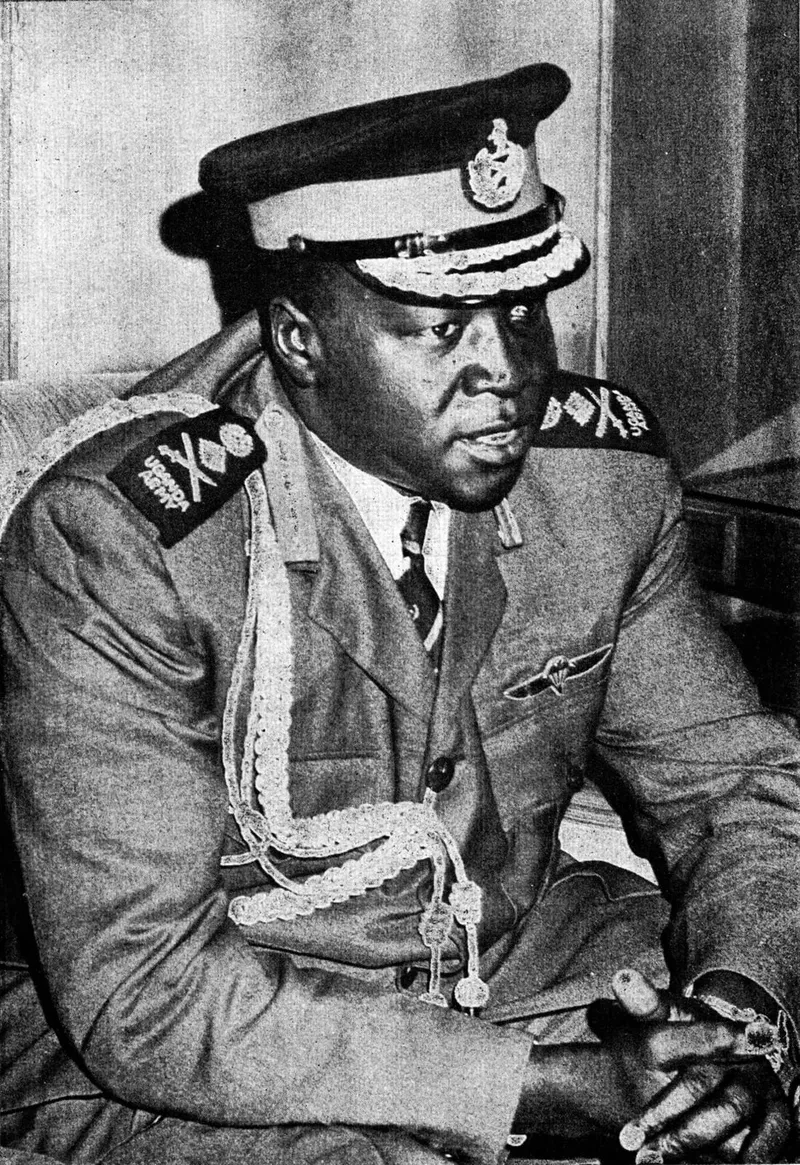
On August 4, 1972, Ugandan president Idi Amin, roughly a year after seizing power in a military coup, ordered the country’s entire Asian population, some 80,000 people, most of South Asian descent whose families had settled in Uganda over generations, mostly during British colonial rule, to leave the country within 90 days. Amin framed the order as an “economic war” to return control of Uganda’s economy to Black Ugandans, accusing the Asian community of sabotaging economic progress, encouraging corruption, and refusing to integrate. He described the community in terms that dehumanized them as an exploitative class living off the country, and warned that anyone remaining after the November 8 deadline risked being held in camps.
The economic role Amin cited was real, if the removal of it proved ruinous rather than redistributive. Ugandan Asians, though a small fraction of the population, owned an estimated 90 percent of the country’s businesses and were responsible for a comparable share of its tax revenue, having built substantial commercial and manufacturing interests since arriving under British administration from the late nineteenth century onward. Only about 23,000 of the roughly 80,000 expelled had Ugandan citizenship formally approved at the time; most others held British Overseas citizenship, Indian or Pakistani nationality, or were effectively stateless. The exodus was economically catastrophic for Uganda itself: gross domestic product fell 5 percent between 1972 and 1975, and manufacturing output collapsed from 740 million Ugandan shillings in 1972 to just 254 million by 1979, a decline from which the economy took decades to recover.
Britain’s response to its own passport holders was far less welcoming than the “mother country” framing might suggest. According to New Lines Magazine’s account of the crisis, the British government “hesitated when it came to accepting any obligation to its passport holders,” and officials actively lobbied other countries, including proposals to resettle refugees in the Solomon Islands and the Falkland Islands, to avoid large-scale settlement in Britain itself. Conservative MP Enoch Powell, who had delivered his inflammatory “Rivers of Blood” speech four years earlier, argued publicly against admission, saying people were “rightly shocked at the prospect of 50,000 Asians from Uganda being added to our population.” Some local authorities went further: Leicester City Council took out newspaper advertisements in Uganda itself warning prospective arrivals not to come, citing a lack of jobs and housing. Only after reports of destitution and violence against Asians stranded in transit did Britain establish the Uganda Resettlement Board on August 30, 1972, to organize reception centers and coordinate resettlement. In the end, close to 28,000 Ugandan Asians arrived in the UK between September 1972 and early 1973. Many built successful businesses and professional careers there, a turnaround that contrasted sharply with the economic damage their departure inflicted on Uganda.
Amin’s own public defense of the expulsion, including a claimed dream in which he said God ordered it, is covered in full in a companion piece, “Idi Amin’s Own Justification for Expelling Uganda’s Asians”.
Sources
- “"Expulsion as Decolonization: Idi Amin's Ghost, Asian 'Repossession,' and Redomination of Uganda's Economy," Public Culture, Vol. 36, No. 3 (Duke University Press)”.
- “When Uganda Expelled Its Asian Population in 1972, Britain Tried to Exclude Them”, New Lines Magazine.
- “Idi Amin's expulsion of Asians in 1972 devastated Uganda's economy”, Aliran.
- “Why Ugandan Asians were expelled by Idi Amin and how they ended up in UK”, ITV News.
Books & Further Reading
Mahmood Mamdani, From Citizen to Refugee: Uganda Asians Come to Britain (Pambazuka Press, 2011, ISBN 9781906387570)