By Princewill Ubani · Published
Research ID: PA-ART-chinua-achebe-things-fall-apart
Chinua Achebe's Things Fall Apart: The Novel That Launched African Literature in English
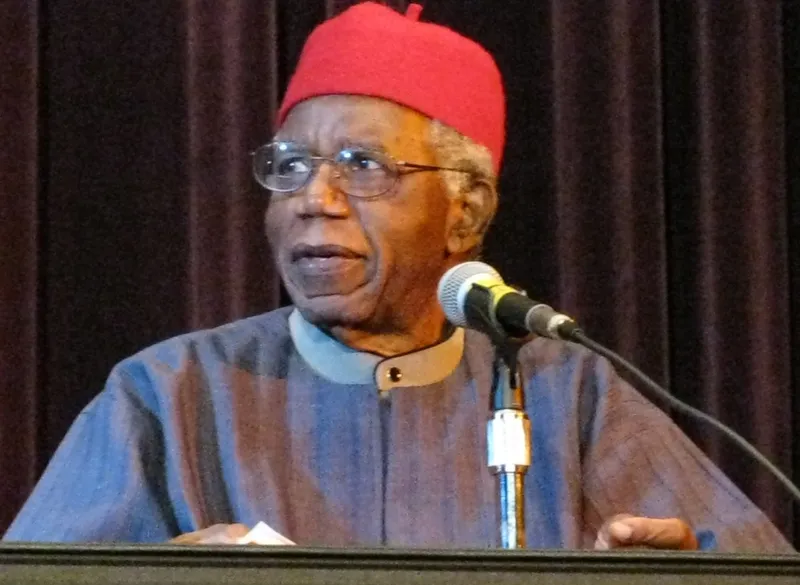
Chinua Achebe was born in 1930 in Ogidi, a town in what is now Anambra State in southeastern Nigeria, the son of a teacher for the Church Missionary Society. He grew up straddling two worlds explicitly, raised in a Christian household while surrounded by Igbo traditional religion and custom still very much alive in the surrounding community, an upbringing that gave him the material for the novel that would make him, by most accounts, the most widely read African writer in history.
Things Fall Apart, published in 1958 by the British publisher Heinemann, tells the story of Okonkwo, a proud Igbo farmer and wrestler in the fictional village of Umuofia, whose life and community are upended by the arrival of British colonial administrators and Christian missionaries in the late 19th century. Achebe wrote it deliberately in English rather than Igbo, a choice he defended for decades against critics who argued African writers should reject the colonizer’s language entirely; Achebe’s counter-argument, made most fully in later essays, was that English could be remade to carry African realities; as he put it, “I feel that the English language will be able to carry the weight of my African experience,” bringing African stories to readers who would otherwise never encounter them, while Igbo proverbs, speech rhythms, and worldview remained embedded throughout the novel’s prose itself.
The book’s reach has been extraordinary by any measure. It has been translated into more than 50 languages, and sales estimates from Achebe’s own literary estate put lifetime sales between 15 and 20 million copies, figures that make it one of the best-selling literary novels by any author, African or otherwise. In 1962, Heinemann launched its African Writers Series, a publishing initiative that would eventually bring more than 350 titles by African authors to a global English-language audience over the following decades, with Things Fall Apart as its first numbered volume, a placement that made Achebe’s novel not just individually successful but structurally foundational to how African literature reached international publishing markets for a generation.
Achebe went on to write four more novels and a substantial body of essays and poetry, but his broader influence rested as much on criticism as fiction. His 1975 lecture “An Image of Africa,” a direct challenge to the racial politics of Joseph Conrad’s canonical novel Heart of Darkness, reshaped how the book is taught in university literature departments worldwide and remains a frequently cited work of postcolonial literary criticism. Achebe declined Nigeria’s national honor, the Commander of the Federal Republic, twice, in 2004 and again in 2011, citing the government’s mismanagement and the deteriorating condition of his home state as his reasons. He died in 2013 in the United States, where he had lived and taught, most recently at Brown University, since a 1990 car accident in Nigeria left him partially paralyzed.
Sources
Books & Further Reading
C. L. Innes, Chinua Achebe (Cambridge University Press, Cambridge Studies in African and Caribbean Literature, 1992, ISBN 9780521428972)