By Princewill Ubani · Published
Research ID: PA-ART-cheikh-anta-diop-ancient-egypt-thesis
Cheikh Anta Diop and the Contested Question of Ancient Egypt's Race
On This Day: December 29 · February 7
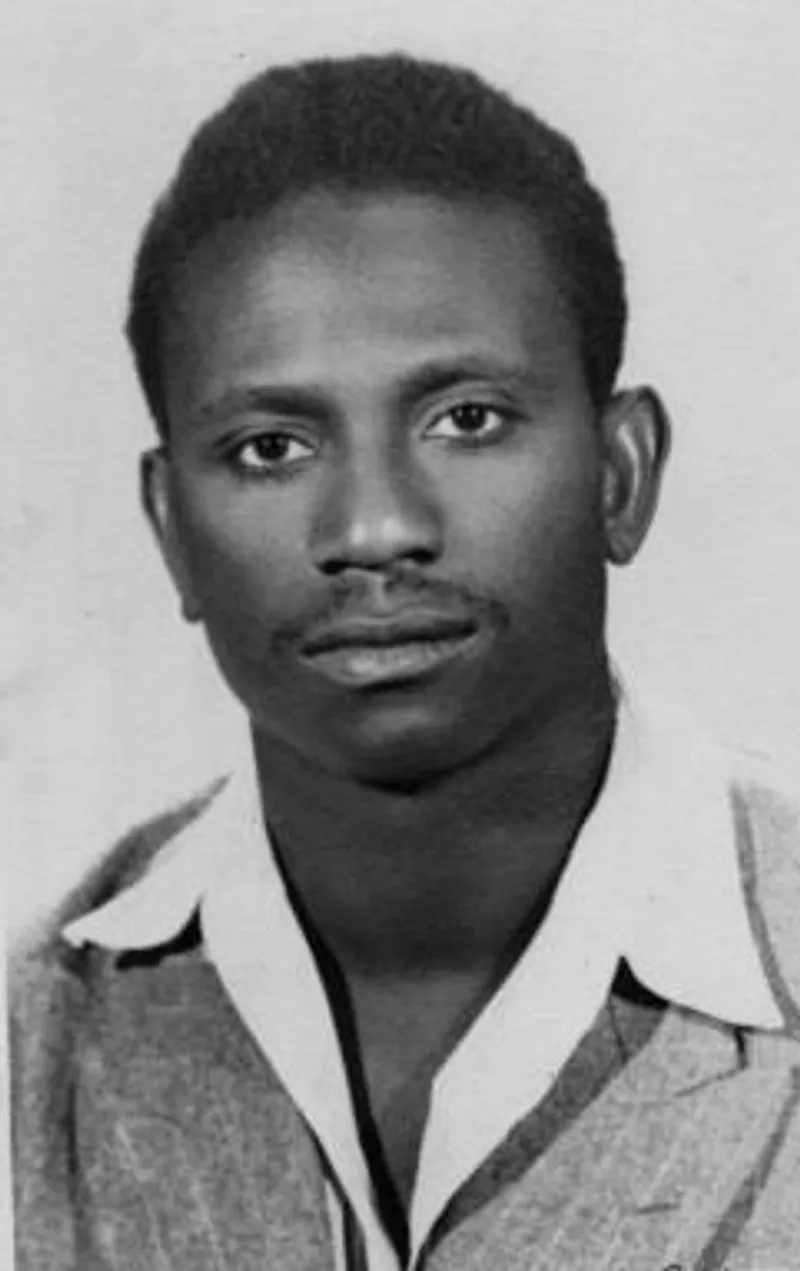
Cheikh Anta Diop was, by training, a nuclear physicist, not a historian by conventional career path. Born in Diourbel, Senegal, on December 29, 1923, he moved to Paris in 1946 to study at the Sorbonne, earning a doctorate in nuclear physics while simultaneously immersing himself in Egyptology and philosophy and becoming active in the African anticolonial student movement. Out of that unusual combination came the thesis that would define his career: that ancient Egyptian civilization was fundamentally Black African, culturally, linguistically, and biologically continuous with the rest of sub-Saharan Africa, rather than the Mediterranean or Middle Eastern civilization it was conventionally taught to be.
His 1951 doctoral thesis advancing this argument was rejected by his Sorbonne examiners. Diop published the case anyway in 1955 as Nations nègres et culture, a book that drew wide attention and placed him among a broader movement of African and diaspora scholars challenging colonial-era historiography’s treatment of the continent’s past. He backed the argument with an unusual scientific tool for a historian to wield: a melanin dosimetry test, a technique of his own devising intended to measure pigmentation levels in the skin and tissue of Egyptian mummies to establish ancestry.
The claim reached its most public forum at a UNESCO-convened symposium in Cairo in early 1974, where roughly twenty of the world’s leading Egyptologists gathered specifically to debate the question of ancient Egyptian population origins. Diop and fellow scholar Théophile Obenga presented their case for a Black African Egypt directly to that assembled expert body. The response was not agreement: most other participants held different positions, and UNESCO’s own published proceedings from the General History of Africa project, where Diop’s chapter appeared, carried an unusual editorial disclaimer noting that “the arguments put forward in this chapter have not been accepted by all the experts interested in the problem.” Critics of the melanin dosimetry method specifically have argued it cannot reliably determine ancestry from mummified remains altered by millennia of embalming, chemical treatment, and decay, a methodological objection that remains unresolved rather than one either side has conclusively answered.
What is not contested is Diop’s lasting influence. He returned to newly independent Senegal to work at the Fundamental Institute of Black Africa in Dakar, continuing to publish and to press for African-centered approaches to the continent’s own history until his death on February 7, 1986. Senegal’s flagship university, the former University of Dakar, was renamed Université Cheikh Anta Diop in his honor.
Sources
Books & Further Reading
Troy D. Allen, "Cheikh Anta Diop's Two Cradle Theory: Revisited," Journal of Black Studies, Vol. 38, No. 6 (2008), pp. 813-829