
By Princewill Ubani · Published
Research ID: PA-ART-1112341495133208576
Ndate Yalla Mbodj, the Last Great Queen of Waalo
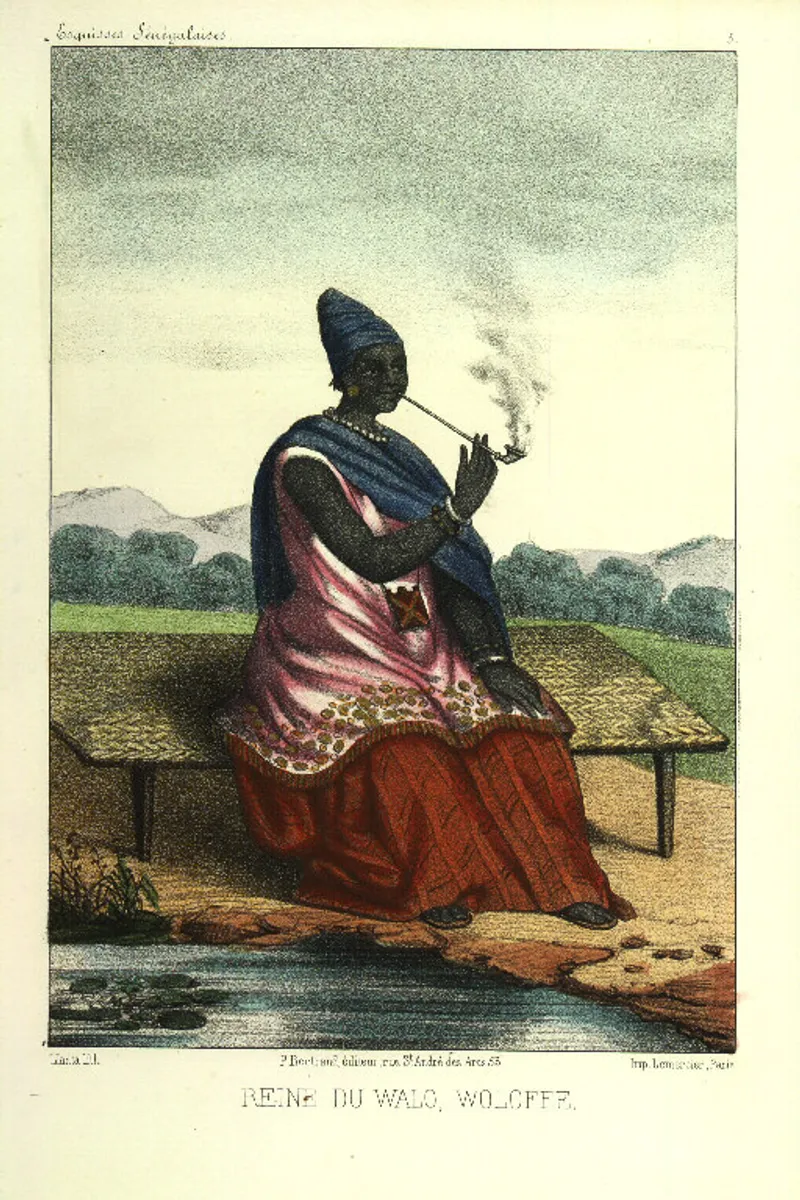
Ndate Yalla Mbodj was crowned Lingeer, the title given to a reigning queen, of Waalo on October 1, 1846, at the kingdom’s capital, Nder, in the lower Senegal River valley. She succeeded her older sister, Ndjeumbeut Mbodj, who had ruled before her, and inherited a small Wolof state already under growing pressure from French traders and soldiers pushing inland from Saint-Louis.
Ndate Yalla answered that pressure by building up Waalo’s military strength, including an army in which women fought alongside men. For nearly a decade she held off both French incursions and raids from Moorish groups to the north, defending Waalo’s independence at a time when France’s colonial governor in Senegal, Louis Faidherbe, was steadily extending French control along the river.
That resistance ended at the Battle of Dioubouldy on February 25, 1855, when Faidherbe’s forces defeated the combined armies of Waalo and its ally Trarza. The defeat broke Waalo’s capacity to resist further French expansion, and Ndate Yalla went into exile rather than accept French rule outright. She died in 1860 in Dagana, a town on the Senegal River, where a statue erected in her honor still stands today.
Her reign is often framed against a comparison that gives it extra resonance outside Senegal: French women themselves did not win the right to vote until 1944, nearly a century after Ndate Yalla was already commanding an army and governing a kingdom in her own right. Historians of the region, including Boubacar Barry in his study of Senegambia’s confrontation with Atlantic and colonial power, treat Waalo’s fall in the 1850s as a pivotal moment in the French conquest of the Senegal River valley, and Ndate Yalla as the last ruler to lead the kingdom as a genuinely independent state.
Sources
- “The last queen of Senegal who fought off the French, Arabs and Moors”, Face2Face Africa.
- “Queen Ndate Yalla Mbodj: Senegalese Queen Leading the Resistance Against French Colonization”, African Heritage (Neo-Griot).
- “Ndaté Yalla Mbodj: the Senegalese Queen Who Led the Resistance Against French Colonial Forces in 1855”, TalkAfricana.
Books & Further Reading
Boubacar Barry, Senegambia and the Atlantic Slave Trade, trans. Ayi Kwei Armah (Cambridge University Press, 1998, ISBN 9780521592260)