
Mali, the Empire of the Mansas
By Princewill Ubani · Published · Updated
Research ID: PA-POL-mali
The West African empire built from the Mande heartland on the upper Niger, known to its own people through the Sunjata epic and to the outside world through Mansa Musa's gold.

In July 1324 a king from West Africa arrived at Cairo on his way to Mecca, with so much gold that its price in Egypt was still depressed a dozen years later.1 He was Musa, mansa of Mali, and the empire he ruled stretched from the Atlantic coast of Senegambia to Gao on the middle Niger.2
Mali’s own people remember a different founder. The Sunjata epic, still performed by hereditary bards called jeliw, tells how Sunjata Keita freed the Mande towns of the upper Niger from the king of the Susu and became their mansa, or ruler.3 The empire that followed lasted about 350 years.4
Manden and its neighbors
Mali grew out of Manden, the Mande heartland in what is now northeastern Guinea and southern Mali. “Mali” is a Pulaar form of the name. The people called themselves Maninka.5
Arabic writers knew the region early. In the 11th century the geographer al-Bakri described a kingdom called Malal, whose king converted to Islam after a Muslim guest prayed through a drought and the rain came.6 For centuries the dominant power of the western Sahel was Ghana, or Wagadu, on the desert edge to the north.7
By the early 13th century, the Susu had taken Ghana’s place. Ibn Khaldun, writing in the late 14th century from informants who knew the region, named them as Ghana’s eastern neighbors and the people who overcame it.8 In the epic their king, Sumaoro Kante, held Manden in subjection.9
Sunjata in the epic and in the record
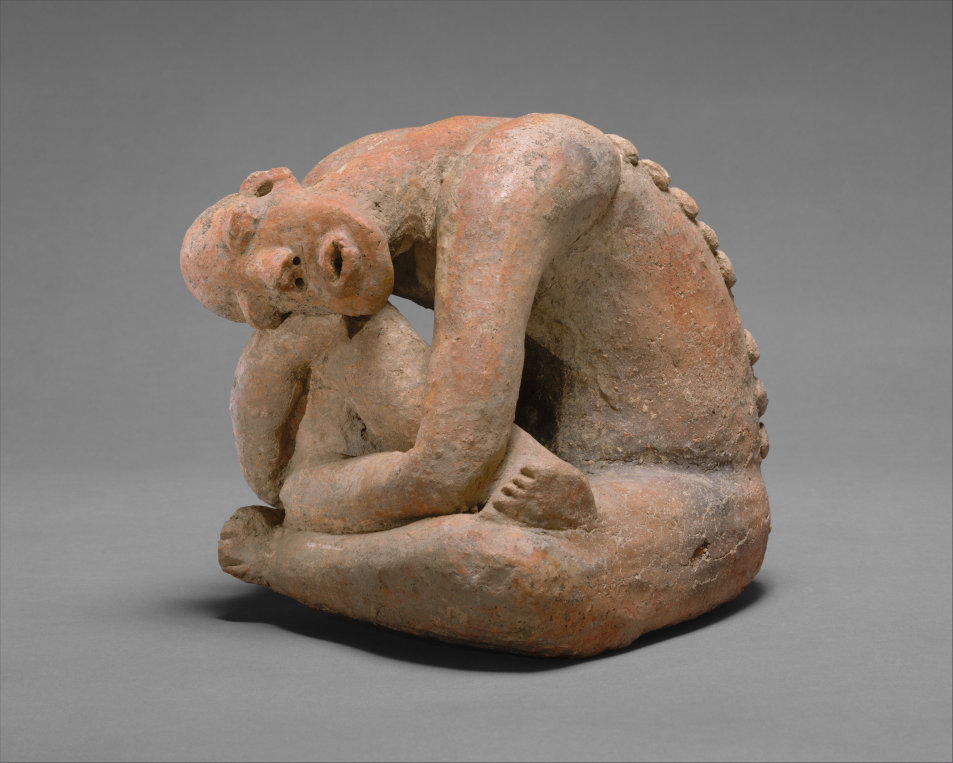
The epic tells Sunjata’s life at length. His mother, Sogolon, was a woman of great power and, in nearly every version, great ugliness. As a child he could not walk until smiths forged him an iron bar strong enough to pull himself up on. His half-brother’s mother drove him into exile, and he found refuge in the kingdom of Mema. Envoys from Manden found him there, and he returned to lead the Mande towns and their allies against Sumaoro. The decisive battle was fought at Krina, near the Niger, and Sumaoro was defeated and fled.10
How much of this is history is disputed. The bards served ruling families and shaped their stories accordingly, and some foreign scholars have doubted Sunjata existed at all. David Conrad, who translated a full performance by the Guinean bard Djanka Tassey Condé, writes that it is hard to know for sure which historical facts, if any, survive in it.11 Conrad has also argued that the tradition, “as deceptive as any corpus of oral sources can be,” still deserves to be consulted, since for 13th-century Mali there is little else.12 No version of the epic was written down before the late 19th century.13
The written record does confirm the core. In 1394 a scholar from Ghana named Shaykh Uthman, passing through Egypt on pilgrimage, told the historian Ibn Khaldun that Mali’s “greatest king,” the one who overcame the Susu, was Mari Jata. Mari meant “ruler of the blood royal,” Uthman said, and jata meant “lion.”14 Historian Michael Gomez counts the rise of the Susu, the war, Sunjata’s conquest and the role of hunters’ associations in early Mali as matters on which the epic and the Arabic sources agree.15
Ibn Khaldun’s informants said Mari Jata ruled for 25 years.16 His son Wali made the pilgrimage to Mecca during the reign of the Egyptian sultan Baybars, between 1260 and 1277. Counting back from that, Gomez puts the battle of Krina around 1233 and Sunjata’s death around 1258.17
Mansas, councils and a freed slave king
Tradition places the founding of the empire at an assembly on the plain of Kurukan Fuga, near Kangaba. There, the story goes, the allied chiefs proclaimed Sunjata mansa, confirmed each in his own province and settled the rights and duties of the Mande clans.18 Gomez treats such accounts as a charter for later imperial order, whatever happened in Sunjata’s own lifetime.19
Succession after Sunjata was violent. Ibn Khaldun lists three of his sons in turn: Wali, Wati and Khalifa. Khalifa, he writes, was insane and so fond of archery that he shot at his own people, who rose and killed him. A grandson through Sunjata’s daughter, Abu Bakr, followed.20 Then a freed slave of the royal house, Sakura, took the throne. Under Sakura, Ibn Khaldun says, Mali conquered Gao, and its rule reached from the ocean and Ghana in the west across the peoples of the Sudan. Sakura made the pilgrimage and was killed on the way home.21
The throne then went back to Sunjata’s descendants, Qu and his son Muhammad, before passing to the line of Sunjata’s brother, Abu Bakr, in the person of Musa.22
The fleet that never came back
Musa himself explained how he became king. In Cairo he told the city’s governor that his predecessor refused to believe the Atlantic had no end. That king fitted out 200 ships with men and 200 more with gold, water and provisions. Only one returned; its captain said the others had been carried off by what looked like a river with a powerful current in the open sea. The king then set out himself with 2,000 ships, leaving Musa as his deputy, and was never seen again. “And so I became king in my own right,” Musa said.23
The story survives only in the encyclopedia of al-Umari, a Mamluk official who collected it from the governor years later.24 Nothing else records the voyage.25 The historian Raymond Mauny argued that it was impossible with the paddled canoes West Africans used at the time, and François-Xavier Fauvelle reads the tale mainly as Musa’s account of an irregular succession, since he came from a collateral branch of the royal family.26 The predecessor’s name, often given as Abu Bakr, was Muhammad. Abu Bakr was Musa’s father.27
Musa’s pilgrimage
Musa came to power around 1312 and made the pilgrimage in 1324.28 When he died is less certain. Charles Monteil, followed by Levtzion, put it no earlier than 1337, but Nawal Morcos Bell noted in 1972 that al-Umari and Ibn Khaldun both imply an earlier death, and that the question “is still by no means resolved.”29 He crossed the Sahara by way of Walata and Tuwat, where, the Timbuktu chronicle says, many of his followers fell ill with a foot ailment and stayed behind.30 He reached Cairo on July 18, 1324, and camped near the pyramids before entering the city.31
Egyptian writers remembered his gold and his youth. Ibn Kathir described him as “a handsome young man.”32 The Mamluk sultan al-Nasir expected him to kiss the ground at their audience. Musa refused at first, then said he would bow to God who created him, and prostrated himself that way; the sultan seated him at his side.33 Ibn Khaldun heard that his gift to the sultan included 50,000 dinars.34 He spent and gave so freely that, according to al-Umari, the gold dinar, which had never fallen below 25 silver dirhams, did not rise above 22 for about 12 years afterward.35
The size of his party is uncertain. The Timbuktu chronicle gives 60,000 soldiers and 500 slaves each carrying a staff of gold; Egyptian writers give 20,000, or more than 10,000.36 John Hunwick, who translated the chronicle, called all such figures grossly inflated, since the Sahara could not have fed or watered numbers on that scale.37 Reports of the gold vary in the same way, from al-Umari’s 100 loads to the 80 loads, each of three qintars, reported by Musa’s interpreter in Cairo.38
His journey through Arabia and stay in Mecca are the least known part of the pilgrimage. In 2019 the historian Hadrien Collet brought new Arabic sources to bear on them. One is by al-Yafi’i, a Yemeni-born Sufi who lived in Mecca, whom Collet calls the only writer to record a scene with Musa that he saw himself. Swords were drawn in the Sacred Mosque in a brawl between Musa’s men and the “Turks,” the Mamluk escort of the pilgrim caravan, and Musa, watching from a latticed window above, ordered his men to stop.39
The journey drained him. On the way back from Mecca his party lost the caravan and wandered until it reached Suez.40 In Cairo he had to borrow from merchants at a steep rate: they made 700 dinars on every 300 they lent, al-Umari was told. One lender, Siraj al-Din b. al-Kuwayk, later set out for Mali to collect and died at Timbuktu.41 Egyptian merchants boasted of selling Malians a shirt worth one dinar for five, and al-Umari wrote that the Malians came away with the lowest possible opinion of Egyptians.42
Gao, Timbuktu and the road north
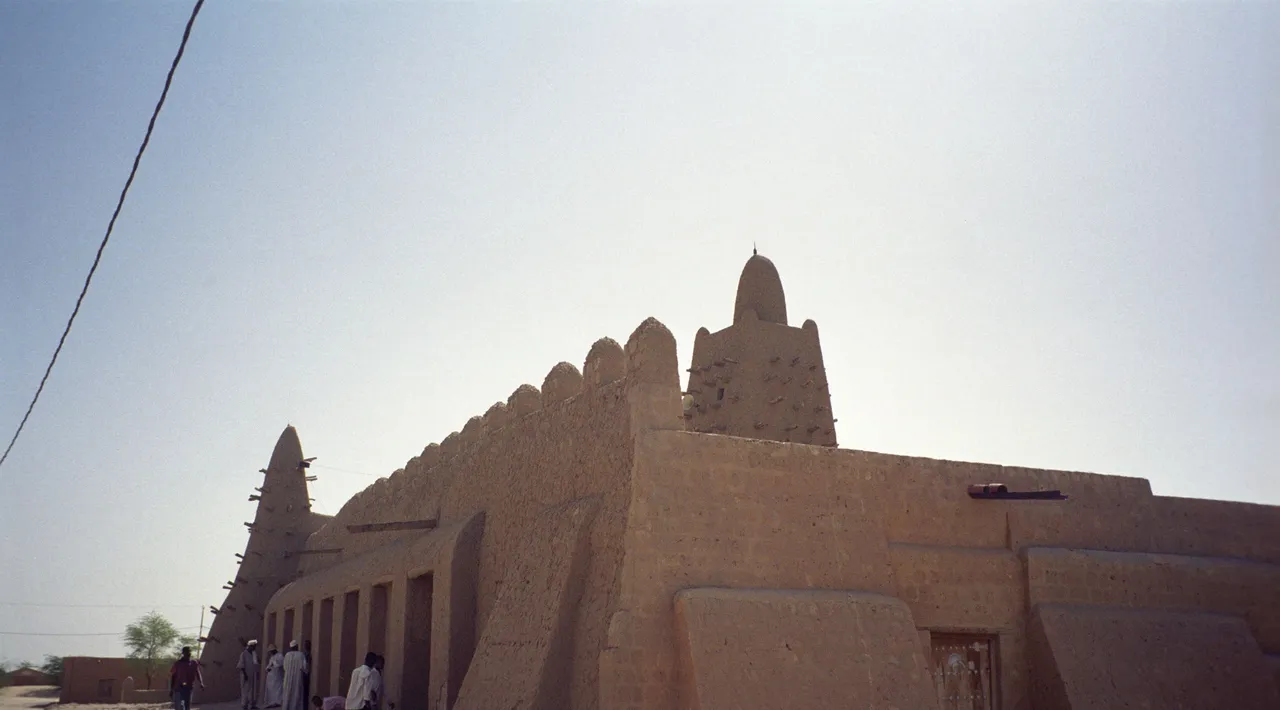
Musa came home with Maliki law books, jurists and the Andalusian poet Abu Ishaq al-Sahili, whom he rewarded with 12,000 mithqals of gold dust for building him a plastered, domed house to serve as the seat of his authority.43 On the way, according to the Timbuktu chronicle, the people of Gao submitted to him, and he built a mosque outside the town. He then took possession of Timbuktu, the first ruler to do so, and left a governor there.44 The chronicle also credits him, with an “it is said,” with the tower-minaret of Timbuktu’s Great Mosque. A separate tradition names al-Sahili as the mosque’s builder; Fauvelle doubts it has any genuine basis.45
Mali did not control the goldfields that made it famous. Musa told Egyptian officials that the gold came from lands of non-Muslims under his authority, who paid it as tribute; when kings had tried to conquer them, the gold dwindled.46 The fields at Bure, west of Kangaba, and Bambuk lay in this zone.47 Musa told one visitor that the only duty in his kingdom was on copper, which Mali sold south for gold.48
At its height Mali had about 14 provinces, al-Umari wrote, from Ghana and Takrur in the west to Gao in the east, with Berber tribes of the desert edge under its authority.49 Walata was its northern gateway.50 Jenne, the great market of the inner Niger delta, was a different case: the Timbuktu chronicle says Mali attacked it 99 times and lost every time.51
In 1375, two Jewish mapmakers in Majorca, if the usual attribution is right, painted a black king on a throne in the West African interior, holding a golden orb. The caption named him “Musse Melly” and called him the richest and noblest lord in the region.52 The map is the Catalan Atlas. An earlier Majorcan chart, from 1339, already named the “rex Melly.”53
How the mansas governed
Outside the Mande core, Gomez finds a system of dual authority. Governors chosen by local custom kept their posts, and officials who answered only to the Malian center served alongside them.54 Al-Umari was told that the ruler of Ghana was the only one of the mansa’s subjects allowed the title of king, and that he ruled as the mansa’s deputy.55 At Walata, Ibn Battuta met the mansa’s deputy, a farba, who received visiting merchants on a carpet with armed attendants and spoke to them only through an interpreter.56 Subject rulers sent their sons to serve at the royal court. The Timbuktu chronicle says the brothers who later founded the Sunni dynasty of Gao were placed with the mansa this way.57
The mansa judged complaints against his own officials. Al-Umari heard that he delivered those judgments himself and gave his commands by word of mouth.58 Ibn Battuta saw the system work. At Friday prayers a merchant named Abu Hafs stood up and called Mansa Sulayman to judgment, because the commercial supervisor of Walata had paid him 100 mithqals for goods worth 600. The case went to the qadi, the merchant got his due, and the supervisor lost his post.59
Two commanders led the army, one for the south and one for the north, according to the Timbuktu chronicle.60 Al-Umari put its strength at about 100,000 men, of whom about 10,000 were cavalry, though Gomez suspects the round figure was a stock expression.61 The king imported Arab horses at high prices; Ibn Battuta found horses worth 100 mithqals of gold.62 Brave horsemen wore gold bracelets, then necklaces, then anklets, and each new deed earned a wider pair of trousers from the king.63 Al-Umari heard that some chiefs drew 50,000 mithqals of gold a year from the king, whose ambition was “to make his towns into cities.”64
Al-Umari reported that the mansa waged a permanent war on the non-Muslim peoples on his borders. About 30 slaves stood behind the king at audiences, Turks and others bought for him in Egypt, and Gomez concludes that a significant share of the army was enslaved.65
Ibn Battuta at Sulayman’s court
Ibn Battuta, the traveler from Tangier, is the only author in Levtzion and Spaulding’s collection of Arabic sources who crossed the Sahara and saw Mali for himself. He spent about seven months in the capital, from July 1352 to February 1353, during the reign of Musa’s brother Sulayman.66 Fauvelle notes that his account is oddly thin on daily life and that parts of his other travels are doubted, though he treats the visit as real.67
Ibn Battuta did not like Sulayman. He called him a miserly king from whom no great gift could be expected, and he laughed when the royal welcome gift turned out to be three loaves of bread, a piece of fried beef and a gourd of yoghurt.68 But he admired what he saw of the state. He praised the security of the roads, where a traveler needed only a guide, and the people’s “lack of oppression.”69
He described the court in detail. The mansa sat in a domed pavilion whose windows were covered in gold and silver, behind curtains, guarded by about 300 armed slaves.70 No one spoke to him directly. A petitioner addressed Dugha, the royal interpreter, who spoke to an official standing below the window, who spoke to the mansa.71 People who were addressed by the king stripped to rags and threw dust on their heads. Ibn Battuta wondered that their eyes were not blinded.72 On feast days Dugha sang the ruler’s praise and his campaigns, and bards in bird masks recited the good deeds of earlier kings who had sat on the same throne.73
He also watched a political crisis. Sulayman’s chief wife, Qasa, whose name had been read with his in the Friday prayers, was demoted and accused of urging the king’s cousin to overthrow him, offering him the army. She took sanctuary in the house of the preacher, and Ibn Battuta does not say what became of her.74
Islam and the older gods
Islam came to Mali’s court gradually. Gomez sees little of it in Sunjata’s own time; the epic mixes sorcery and sacrifice with a royal lineage traced to Bilal, the Prophet’s first muezzin.75 Conrad traced that Bilali to Arabic literature: the bards, he found, set him at the head of the royal genealogy, displacing older ancestors who went back to pre-Islamic times.76 Ibn Battuta was told that Musa’s grandfather, whom he calls Sariq Jata, embraced Islam at the hands of the grandfather of a jurist he met in Mali.77 Wali and Sakura made the pilgrimage before Musa did, and Musa built mosques and minarets, established Friday prayer and brought Maliki jurists home with him.78
He also sent students north. The Timbuktu chronicle says one of them, Katib Musa, studied in Fez by the mansa’s order and then served as imam of the Great Mosque for 40 years. A later scholar who moved to Timbuktu found it so full of Sudanese jurists who knew more law than he did that he went to Fez to study himself.79 By Ibn Battuta’s time, the qadi, or judge, of the capital was himself a West African. The traveler found the Friday mosque so crowded that men sent servants ahead with their prayer mats, and he saw children kept in fetters until they had memorized the Qur’an.80
Older practices persisted alongside. Ibn Battuta disapproved of the dust-throwing at court and of slave women, and the king’s own daughters, who went naked in his presence. He was told that the bards’ bird-masked recital was older than Islam.81 Al-Umari heard that when the Cairo governor told Musa that taking concubines without marriage was not allowed to Muslims, even kings, Musa said he had not known and would give it up.82 In Casamance, on the western edge of the empire, Ly-Tall writes that the Muslim mansa still had the imam consult soothsayers before a war and poured libations to the dead.83
From the Niger to the Gambia
After Sulayman died around 1360 the succession broke down again. Ibn Khaldun lists a son who ruled nine months, a king who “ruined their empire, squandered their treasure” and even sold a famous boulder of gold from the treasury, and a son of his whose vizier seized real power. Three more rulers followed between 1387 and 1390.84
The empire’s northern cities went first. Tuareg raiders under a chief named Akil harried Timbuktu until the Malians withdrew. “The sultan who does not defend his territory has no right to rule it,” the Tuareg said, according to the Timbuktu chronicle, and Akil held the city for 40 years.85 The capture is usually dated to about 1433.86 Then the Songhay kings of Gao, beginning with Sunni Ali, took the middle Niger valley.87 In 1544 or 1545 a Songhay army entered Mali’s capital, and its commander had his men foul the royal palace for seven days as a mark of contempt.88
Mali’s weight shifted west, toward the Gambia, where Portuguese ships now traded. Venetian and Portuguese visitors in the 1450s met officials on the Gambia who answered to the “Emperor of Melli.”89 John II of Portugal sent two embassies to the mansa between 1481 and 1495, and in 1594 a Portuguese trader born in the Cape Verde islands still counted the Gambia a province of Mali.90 The Denianke Fulani of Koly Tengella cut into its western lands in the same decades.91
Mali’s last attempt to recover its old position came in 1599. After Morocco’s conquest of Songhay, Mansa Mahmud IV marched on Jenne with Bambara and Fulani allies. One of the local chiefs went over to the Moroccans, whose bombardment broke the Malian army. The victors still saluted the mansa as sultan and bared their heads to him.92 His remaining provinces broke away, the Bambara kingdoms of Segu and Kaarta rose in the 17th century, and Mali became the small kingdom of Manding.93
How we know
Almost everything written about Mali in its own time was written by outsiders. The Arabic geographers and historians, from al-Bakri in the 11th century to Ibn Khaldun and al-Maqrizi in the 15th, wrote from North Africa or Egypt, relying on merchants, pilgrims and diplomats.94 Of these, only Ibn Battuta went there. Al-Umari, whose account of the court is the fullest, never met Musa; he was in Damascus during the pilgrimage and questioned the officials who had.95 Ibn Khaldun’s list of kings, which no other source matches for Mali’s early period, carries most of the reign dates on this page. Ralph Austen and Jan Jansen argue that it was shaped in part by his own theory of how dynasties rise and decay, and should be read “with a certain degree of reserve.”96 Mali’s own court rarely wrote anything down. Al-Umari was told that the king gave his orders by word of mouth, though he kept judges and scribes.97
Three other bodies of evidence fill in the rest. The Ta’rikh al-Sudan and Ta’rikh al-fattash, chronicles written in Timbuktu in the 17th century, describe Mali from the viewpoint of the Songhay and Timbuktu scholars who came after it.98 Portuguese and Venetian travelers describe its western provinces from the 1450s onward.99 And the Sunjata epic preserves what Mande people themselves remember, filtered through centuries of performance. Gomez notes that the bards say almost nothing about Musa.100
Numbers are the weakest part of the record. Army sizes, retinues and loads of gold passed through several hands before anyone wrote them down, and the chroniclers of Timbuktu wrote three centuries after the events.101 The capital itself has never been securely identified. Niani, in today’s Guinea, was long accepted and was excavated by a Polish-Guinean team, but Fauvelle rejects the identification: the site shows a gap in occupation across the 14th century, and the building its excavator called the audience hall of Musa’s time went up after the mid-15th century.102 John Hunwick argued in 1973 that Ibn Battuta’s route never crossed the Niger and so could not have reached Niani, and looked instead to the river’s left bank between Bamako and Niamina. David Conrad, drawing on the oral traditions as well, concluded that the seat of government moved more than once.103 Nothing found on the ground has yet confirmed any alternative.
Notes
-
Gomez 2018, pp. 104, 113; Levtzion and Spaulding 2003, p. 63. ↩
-
Levtzion and Spaulding 2003, pp. 53, 94; Gomez 2018, pp. 123, 126. ↩
-
Conrad 2016, pp. xi-xii, xvii. ↩
-
Gomez 2018, p. 61. ↩
-
Conrad 2016, p. xi; Gomez 2018, p. 68. ↩
-
Gomez 2018, pp. 66-67. ↩
-
Levtzion and Spaulding 2003, p. 92. ↩
-
Levtzion and Spaulding 2003, pp. 92-93; Gomez 2018, p. 67. ↩
-
Gomez 2018, p. 68. ↩
-
Gomez 2018, pp. 72-84; Niane 1984, pp. 131-132. ↩
-
Conrad 2016, pp. xii, xvi-xvii. ↩
-
Conrad 1992, p. 147. ↩
-
Gomez 2018, pp. 65-66. ↩
-
Levtzion and Spaulding 2003, pp. 92-93; Gomez 2018, p. 69. ↩
-
Gomez 2018, pp. 63, 66. ↩
-
Levtzion and Spaulding 2003, p. 93. ↩
-
Levtzion and Spaulding 2003, pp. 90-91; Gomez 2018, p. 88. ↩
-
Niane 1984, p. 134; Gomez 2018, pp. 86-87. ↩
-
Gomez 2018, pp. 90-91. ↩
-
Levtzion and Spaulding 2003, p. 93. ↩
-
Levtzion and Spaulding 2003, pp. 90-91, 93-94. ↩
-
Levtzion and Spaulding 2003, p. 94. ↩
-
Levtzion and Spaulding 2003, p. 60. ↩
-
Levtzion and Spaulding 2003, pp. 50, 60; Fauvelle 2018, p. 162. ↩
-
Gomez 2018, p. 101. ↩
-
Fauvelle 2018, pp. 163, 165-167. ↩
-
Fauvelle 2018, p. 165; Levtzion and Spaulding 2003, p. 94. ↩
-
Levtzion and Spaulding 2003, pp. 90, 95; Gomez 2018, pp. 104, 113. ↩
-
Bell 1972, pp. 224-227. ↩
-
Hunwick 2003, pp. 9-10. ↩
-
Gomez 2018, pp. 104, 113-114; Levtzion and Spaulding 2003, p. 91. ↩
-
Gomez 2018, p. 104. ↩
-
Levtzion and Spaulding 2003, pp. 61-62; Gomez 2018, p. 116. ↩
-
Levtzion and Spaulding 2003, p. 91. ↩
-
Levtzion and Spaulding 2003, p. 63; Fauvelle 2018, p. 196. ↩
-
Hunwick 2003, p. 9; Gomez 2018, p. 105; Fauvelle 2018, p. 195. ↩
-
Hunwick 2003, p. 9 n. 3. ↩
-
Levtzion and Spaulding 2003, pp. 60, 95. ↩
-
Collet 2019, pp. 105, 115-118. ↩
-
Levtzion and Spaulding 2003, p. 91; Gomez 2018, p. 118. ↩
-
Levtzion and Spaulding 2003, pp. 61, 91-92; Hunwick 2003, p. 11. ↩
-
Levtzion and Spaulding 2003, p. 63. ↩
-
Levtzion and Spaulding 2003, pp. 53, 94-95; Gomez 2018, p. 121. ↩
-
Hunwick 2003, p. 10; Gomez 2018, pp. 123-124. ↩
-
Hunwick 2003, p. 11; Fauvelle 2018, p. 194. ↩
-
Levtzion and Spaulding 2003, pp. 54, 58; Gomez 2018, pp. 107-108. ↩
-
Gomez 2018, pp. 89, 108; Ly-Tall 1984, p. 174. ↩
-
Levtzion and Spaulding 2003, p. 64. ↩
-
Levtzion and Spaulding 2003, pp. 53-54; Gomez 2018, p. 126. ↩
-
Levtzion and Spaulding 2003, p. 68; Hunwick 2003, p. 9 n. 5. ↩
-
Hunwick 2003, p. 16; Gomez 2018, p. 136. ↩
-
Fauvelle 2018, pp. 191-192. ↩
-
Fauvelle 2018, p. 192. ↩
-
Gomez 2018, pp. 128, 131. ↩
-
Levtzion and Spaulding 2003, p. 54; Niane 1984, p. 135 n. 44. ↩
-
Levtzion and Spaulding 2003, p. 68; Gomez 2018, p. 125. ↩
-
Gomez 2018, p. 141. ↩
-
Levtzion and Spaulding 2003, p. 57. ↩
-
Levtzion and Spaulding 2003, p. 79; Gomez 2018, p. 140. ↩
-
Hunwick 2003, p. 15. ↩
-
Levtzion and Spaulding 2003, p. 56; Gomez 2018, p. 132. ↩
-
Levtzion and Spaulding 2003, pp. 56, 83. ↩
-
Levtzion and Spaulding 2003, p. 56. ↩
-
Levtzion and Spaulding 2003, p. 56. ↩
-
Levtzion and Spaulding 2003, pp. 55, 64; Gomez 2018, p. 132. ↩
-
Levtzion and Spaulding 2003, pp. 66, 83. ↩
-
Fauvelle 2018, pp. 201-202. ↩
-
Levtzion and Spaulding 2003, p. 72. ↩
-
Levtzion and Spaulding 2003, pp. 69, 81. ↩
-
Levtzion and Spaulding 2003, pp. 73-74. ↩
-
Levtzion and Spaulding 2003, p. 74; Fauvelle 2018, pp. 206-207. ↩
-
Levtzion and Spaulding 2003, pp. 75-76. ↩
-
Levtzion and Spaulding 2003, pp. 77-78. ↩
-
Levtzion and Spaulding 2003, pp. 79-80; Gomez 2018, pp. 148-149. ↩
-
Gomez 2018, pp. 70, 91. ↩
-
Conrad 1985, pp. 48-49. ↩
-
Levtzion and Spaulding 2003, p. 81. ↩
-
Levtzion and Spaulding 2003, pp. 53, 90-91. ↩
-
Gomez 2018, p. 156. ↩
-
Levtzion and Spaulding 2003, pp. 71, 82. ↩
-
Levtzion and Spaulding 2003, pp. 78, 82. ↩
-
Levtzion and Spaulding 2003, p. 59. ↩
-
Ly-Tall 1984, p. 178. ↩
-
Levtzion and Spaulding 2003, pp. 96-97. ↩
-
Hunwick 2003, p. 12. ↩
-
Ly-Tall 1984, p. 174. ↩
-
Gomez 2018, p. 218. ↩
-
Gomez 2018, p. 331. ↩
-
Gomez 2018, pp. 152-153; Ly-Tall 1984, p. 172. ↩
-
Ly-Tall 1984, pp. 173, 177, 182-183. ↩
-
Ly-Tall 1984, pp. 180-182. ↩
-
Ly-Tall 1984, p. 184. ↩
-
Ly-Tall 1984, p. 184; Hunwick 2003, pp. 15-16. ↩
-
Gomez 2018, p. 92; Ly-Tall 1984, p. 172. ↩
-
Levtzion and Spaulding 2003, p. 50. ↩
-
Austen and Jansen 1996, pp. 17, 26. ↩
-
Levtzion and Spaulding 2003, p. 57. ↩
-
Gomez 2018, p. 92; Ly-Tall 1984, p. 173. ↩
-
Ly-Tall 1984, p. 172; Gomez 2018, pp. 151-153. ↩
-
Gomez 2018, p. 92. ↩
-
Hunwick 2003, p. 9 n. 3; Gomez 2018, p. 132. ↩
-
Fauvelle 2018, pp. 202-203, 207; Fauvelle-Aymar 2012, pp. 239, 245, 248-249. ↩
-
Hunwick 1973, pp. 203-204; Conrad 1994, pp. 355, 377. ↩
Where the estimates differ
| Estimate | Who holds it | Source |
|---|---|---|
| Niani, on the Sankarani River near today's Guinea-Mali border | Maurice Delafosse; D. T. Niane; the Polish-Guinean excavators of Niani | Niane 1984, p. 136; Fauvelle 2018, p. 207 |
| Not Niani: the site shows a gap in occupation across the 14th century, and its "audience hall of the time of Mansa Musa" was built after the mid-15th century | François-Xavier Fauvelle-Aymar (2012) | Fauvelle-Aymar 2012, pp. 245, 248-249 |
| On the left bank of the Niger between Bamako and Niamina, in today's Mali | John O. Hunwick (1973), the view Fauvelle calls the most accepted | Hunwick 1973, pp. 203-204; Fauvelle 2018, p. 207 |
| A village named Mali on the upper Gambia, in today's Senegal | Other readings of Ibn Battuta's route | Fauvelle 2018, p. 202 |
| Several capitals over time, with Dakajalan an early center | Michael A. Gomez | Gomez 2018, p. 135 |
| Dakajalan in Sunjata's time, then moved northeast down the Niger; Niani a capital, if ever, only in the 16th century | David C. Conrad (1994) | Conrad 1994, p. 377 |
| Estimate | Who holds it | Source |
|---|---|---|
| Muhammad b. Qu, from Mari Jata's line | Ibn Khaldun; François-Xavier Fauvelle | Levtzion and Spaulding 2003, p. 94; Fauvelle 2018, p. 165 |
| Abu Bakr ("Abubakari II") | A common modern reading, repeated in the UNESCO history; Fauvelle calls it a misreading | Ly-Tall 1984, p. 174; Fauvelle 2018, p. 165 |
| Estimate | Who holds it | Source |
|---|---|---|
| About 1312 to 1337 (25 years, ending just after 1337) | Ibn Khaldun and Ibn Hajar, as read by Levtzion and Gomez | Levtzion and Spaulding 2003, p. 90; Gomez 2018, pp. 104, 145 |
| About 1307 to 1332 | D. T. Niane, following an older count back from Sulayman's death | Niane 1984, p. 147; Bell 1972, p. 224 |
| Death in 1337 or perhaps as early as 1332; the sources can be read either way | Nawal Morcos Bell (1972) | Bell 1972, pp. 224-227 |
| Estimate | Who holds it | Source |
|---|---|---|
| 60,000 soldiers and 500 slaves carrying gold staffs | Ta'rikh al-Sudan (17th century) | Hunwick 2003, p. 9 |
| 20,000 | Ibn Kathir (14th century) | Gomez 2018, p. 105 |
| More than 15,000 | Al-Fasi, historian of Mecca (15th century) | Collet 2019, p. 119 n. 47 |
| More than 10,000 | Badr al-Din al-Halabi (14th century) | Fauvelle 2018, p. 195 |
| 8,000 | Ta'rikh al-fattash (17th century) | Gomez 2018, p. 106 |
| All such figures grossly inflated | John O. Hunwick | Hunwick 2003, p. 9 n. 3 |
Rulers of Mali
| Ruler | Reign | Note |
|---|---|---|
| Mari Jata (Sunjata) | Mid-13th century | Defeated the Susu; ruled 25 years, according to Ibn Khaldun's informants. |
| Wali (Yerelinkon) | Pilgrimage between 1260 and 1277 | Son of Mari Jata. |
| Wati and Khalifa | Late 13th century | Brothers of Wali; Khalifa was killed by his own people. |
| Abu Bakr | Late 13th century | Grandson of Mari Jata through a daughter. |
| Sakura | Pilgrimage between 1299 and 1309 | A freed slave of the royal house who took the throne; killed returning from Mecca. |
| Qu and Muhammad b. Qu | Until 1312 | Muhammad was Musa's immediate predecessor, the king of the Atlantic story. |
| Musa (Kankan Musa) | c. 1312 to c. 1337 | Pilgrimage to Mecca, 1324. |
| Magha | c. 1337 to unknown | Musa's son; a short reign. |
| Sulayman | c. 1341 to c. 1360 | Musa's brother; host to Ibn Battuta, 1352-53. |
| Qasa | 1360 to 1360 | Ruled nine months. |
| Mari Jata II | c. 1360 to c. 1374 | Sold the royal boulder of gold, according to Ibn Khaldun's informant. |
| Musa II | c. 1374 to c. 1387 | Power passed to his vizier. |
| Mahmud (Magha) | 1390 to unknown | Last ruler named by Ibn Khaldun. |
| Mahmud II | Late 15th century | Received two Portuguese embassies. |
| Mahmud III | 1530s | Received a Portuguese mission in 1534. |
| Mahmud IV | Late 16th century | Defeated at Jenne in 1599. |
Timeline
- c. 1230 Mali emerges
- c. 1312 Musa (Kankan Musa) begins to rule
- c. 1337 Magha begins to rule
- c. 1341 Sulayman begins to rule
- 1360 Qasa begins to rule
- c. 1360 Mari Jata II begins to rule
- c. 1374 Musa II begins to rule
- 1390 Mahmud (Magha) begins to rule
- 1599 Mansa Mahmud's attack on Jenne fails; the remaining provinces break away and Mali shrinks to the small kingdom of Manding
Correction
Our Mali Empire overview has moved into the new Mali page, and three of its claims were wrong.The overview at /history/articles/mali-empire-sundiata-keita-mansa-musa/ now redirects to the new state page. It dated the founding of the empire to 1235, a conventional date that no source gives; Gomez works from Ibn Khaldun to about 1233 for the battle of Krina (Gomez 2018, p. 88). It said Musa's fame put West Africa on European maps "for the first time" in the 1375 Catalan Atlas, but a 1339 chart by Angelino Dulcert already named the king of Mali (Fauvelle 2018, p. 192). And it listed Jenne among the cities Mali lost to Songhay, though the Ta'rikh al-Sudan says Mali attacked Jenne 99 times and never took it (Hunwick 2003, p. 16).Corrected in September 2026. See the log entry.
Sources
- Michael A. Gomez. “African Dominion: A New History of Empire in Early and Medieval West Africa”, Princeton University Press, 2018.
- Nehemia Levtzion and Jay Spaulding (eds.). “Medieval West Africa: Views from Arab Scholars and Merchants”, Markus Wiener, 2003.
- François-Xavier Fauvelle. “The Golden Rhinoceros: Histories of the African Middle Ages”, Princeton University Press, 2018.
- John O. Hunwick (trans. and ed.). “Timbuktu and the Songhay Empire: Al-Sa'di's Ta'rikh al-Sudan down to 1613 and Other Contemporary Documents”, Brill, 2003.
- David C. Conrad (ed. and trans.). “Sunjata: A New Prose Version”, Hackett, 2016.
- D. T. Niane. “Mali and the second Mandingo expansion”, in D. T. Niane, ed., General History of Africa, vol. IV, UNESCO, Heinemann and University of California Press, 1984.
- M. Ly-Tall. “The decline of the Mali empire”, in D. T. Niane, ed., General History of Africa, vol. IV, UNESCO, Heinemann and University of California Press, 1984.
- François-Xavier Fauvelle-Aymar. “Niani Redux: A Final Rejection of the Identification of the Site of Niani (Republic of Guinea) with the Capital of the Kingdom of Mali”, Palethnologie 4, pp. 235-252, 2012.
- John O. Hunwick. “The Mid-Fourteenth Century Capital of Mali”, Journal of African History 14, no. 2, pp. 195-206, 1973.
- David C. Conrad. “A Town Called Dakajalan: The Sunjata Tradition and the Question of Ancient Mali's Capital”, Journal of African History 35, no. 3, pp. 355-377, 1994.
- David C. Conrad. “Islam in the Oral Traditions of Mali: Bilali and Surakata”, Journal of African History 26, no. 1, pp. 33-49, 1985.
- David C. Conrad. “Searching for History in the Sunjata Epic: The Case of Fakoli”, History in Africa 19, pp. 147-200, 1992.
- Nawal Morcos Bell. “The Age of Mansa Musa of Mali: Problems in Succession and Chronology”, International Journal of African Historical Studies 5, no. 2, pp. 221-234, 1972.
- Ralph A. Austen and Jan Jansen. “History, Oral Transmission and Structure in Ibn Khaldun's Chronology of Mali Rulers”, History in Africa 23, pp. 17-28, 1996.
- Hadrien Collet. “Échos d'Arabie. Le pèlerinage à La Mecque de Mansa Musa (724-725/1324-1325) d'après des nouvelles sources”, History in Africa 46, pp. 105-135, 2019.
Further Reading
The sources above support the specific claims on this page. The works below are the scholarship behind them. Citations are given in full so readers can find them through a library or database; some are paywalled.
Peer-reviewed articles
- Levtzion, Nehemia (1963). "The Thirteenth- and Fourteenth-Century Kings of Mali." Journal of African History 4(3): 341-353. DOI: 10.1017/S002185370000428X.abstract free
- Hunwick, John O. (1973). "The Mid-Fourteenth Century Capital of Mali." Journal of African History 14(2): 195-206. DOI: 10.1017/S0021853700012512.abstract free
- Conrad, David C. (1985). "Islam in the Oral Traditions of Mali: Bilali and Surakata." Journal of African History 26(1): 33-49. DOI: 10.1017/S0021853700023070.abstract free
- Conrad, David C. (1994). "A Town Called Dakajalan: The Sunjata Tradition and the Question of Ancient Mali's Capital." Journal of African History 35(3): 355-377. DOI: 10.1017/S002185370002675X.abstract free
- Fauvelle-Aymar, François-Xavier (2012). "Niani Redux: A Final Rejection of the Identification of the Site of Niani (Republic of Guinea) with the Capital of the Kingdom of Mali." Palethnologie 4. DOI: 10.4000/palethnologie.6320.
- Conrad, David C. (1992). "Searching for History in the Sunjata Epic: The Case of Fakoli." History in Africa 19: 147-200. DOI: 10.2307/3171998.
- Bell, Nawal Morcos (1972). "The Age of Mansa Musa of Mali: Problems in Succession and Chronology." International Journal of African Historical Studies 5(2): 221-234. DOI: 10.2307/217515.
- Austen, Ralph A.; Jansen, Jan (1996). "History, Oral Transmission and Structure in Ibn Khaldun's Chronology of Mali Rulers." History in Africa 23: 17-28. DOI: 10.2307/3171932.
- Collet, Hadrien (2019). "Échos d'Arabie. Le pèlerinage à La Mecque de Mansa Musa (724-725/1324-1325) d'après des nouvelles sources." History in Africa 46: 105-135. DOI: 10.1017/hia.2019.12.
Books
- Levtzion, Nehemia (1980). Ancient Ghana and Mali. Africana Publishing.
- Levtzion, Nehemia; Hopkins, J. F. P. (1981). Corpus of Early Arabic Sources for West African History. Cambridge University Press.
- Fauvelle, François-Xavier (2022). Les masques et la mosquée: L'empire du Mâli (XIIIe-XIVe siècle). CNRS Éditions.
More on Mali
Mali: c. 1230 to 1599.