By Princewill Ubani · Published
Research ID: PA-ART-virunga-national-park-history
Virunga, Africa's Oldest National Park, Born as a Colonial Science Reserve
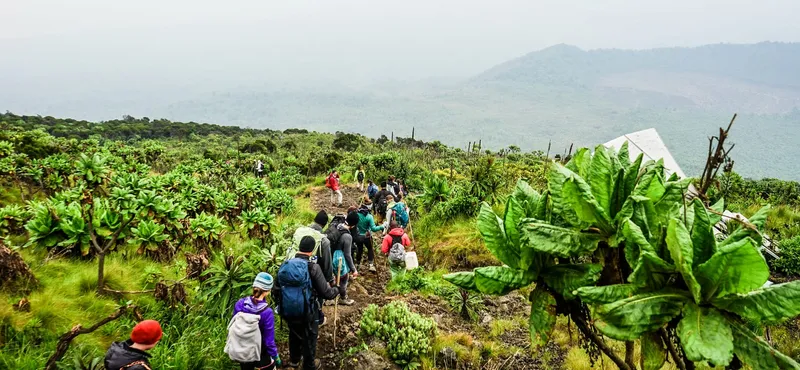
Africa’s first national park was not created by an African government, and it was not created primarily to protect the people living on the land. On April 21, 1925, Belgium’s King Albert I signed a royal decree establishing Albert National Park in the eastern reaches of the Belgian Congo, a reserve carved out of the Virunga Massif’s volcanic highlands along what is now the border with Rwanda and Uganda.
The park’s founders, among them the naturalist Victor van Straelen and the botanist Jean Massart, pitched it to Belgian authorities as a scientific project rather than a tourist destination, a place where researchers could study the region’s mountain gorillas and volcanic ecosystems largely undisturbed. That framing, as historian Raf De Bont notes in an essay for the Rachel Carson Center’s Arcadia journal, cast the park as an internationalist scientific undertaking even as it functioned, in practice, as a colonial land grab: creating the reserve meant restricting or removing the hunting, farming and grazing rights of the Indigenous communities, including Batwa hunter-gatherers, who had used that land for generations. The original 1925 boundaries covered roughly 10,000 hectares, but Belgian administrators expanded the park dramatically over the following decade, and by the early 1930s it spanned more than 856,000 hectares, one of the largest protected areas on the continent.
When DR Congo gained independence from Belgium in 1960, the park initially kept its colonial name before being renamed Virunga National Park in 1969, a change that aligned it with the volcanic mountain range at its core rather than with the Belgian monarch who had authorized its creation. The reserve’s boundaries and mission have remained largely intact since, protecting an unusually wide range of habitat, from savanna and swamp to active volcanoes and Afromontane forest, that supports an estimated 3,000 recorded plant and animal species combined (roughly 2,077 plant species and about 1,111 vertebrate animal species), more than any other protected area in Africa, including a population of critically endangered mountain gorillas that draws researchers and tourists alike.
Virunga’s history since independence has been shaped as much by conflict as by conservation. Decades of civil war, cross-border militia activity tied to the Rwandan genocide’s aftermath, and armed groups operating inside the park’s borders have killed well over 200 park staff in the line of duty since the 1990s, by most tallies. UNESCO added the park to its list of World Heritage Sites in danger in 1994, a designation it has held for three decades, a reflection of how a reserve founded to keep a landscape undisturbed has instead spent much of its history at the center of a persistent Central African conflict zone.
Sources
- “Virunga National Park”, UNESCO World Heritage Centre.
- “Through colonization, conflicts and conservation: 100 years of Virunga National Park”, Mongabay.
Books & Further Reading
Raf De Bont, "Internationalism in the Heart of Africa? The Albert National Park / Virunga National Park," Arcadia, Environment & Society Portal, Rachel Carson Center (2018)