
By Princewill Ubani · Published
Research ID: PA-ART-rwanda-genocide-1994-death-toll
The 1994 Rwandan Genocide: 100 Days, and a Death Toll That's Still Debated
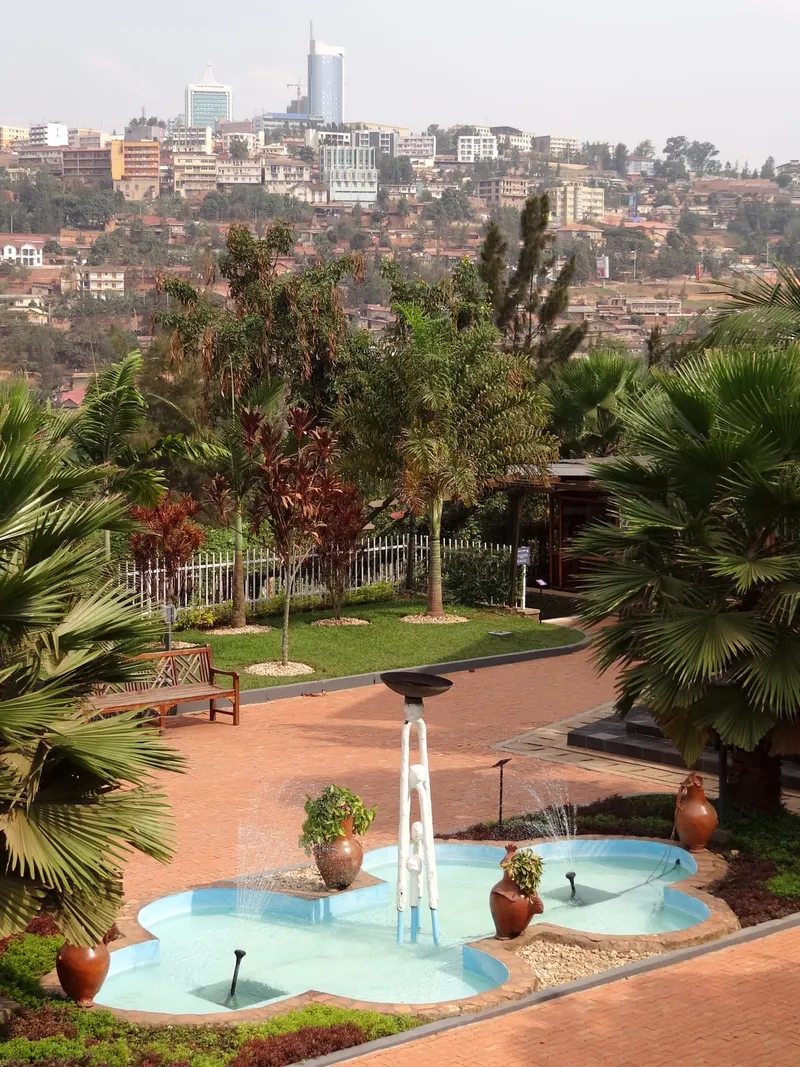
For roughly 100 days between April and July 1994, members of Rwanda’s Hutu majority, organized by the military, government-aligned militias known as the Interahamwe, and ordinary civilians mobilized through local administration, killed the country’s Tutsi minority and moderate Hutu who tried to protect them. It remains one of the fastest mass killings of the 20th century, and more than three decades later, historians and human rights researchers still don’t agree on exactly how many people died.
The immediate trigger came on the night of April 6, when a plane carrying President Juvénal Habyarimana, a Hutu, was shot down as it approached Kigali airport, killing everyone aboard. Who ordered the attack has never been conclusively established and remains disputed between Hutu extremist and Rwandan Patriotic Front theories. Within hours, roadblocks went up across the capital and the killing began, following lists of targets that Hutu Power organizers had reportedly compiled well in advance. The speed and coordination of what followed, radio broadcasts naming targets, government officials directing local killings, ordinary Rwandans turning on neighbors, led investigators to conclude the violence was planned rather than a spontaneous eruption of ethnic hatred.
Death toll estimates vary by who is counting and what they’re counting. Human Rights Watch’s landmark 1999 report “Leave None to Tell the Story” put the figure at a minimum of 500,000 Tutsi killed, roughly 77 percent of Rwanda’s 1991 Tutsi population, while noting that thousands of Hutu who opposed the killings or were mistaken for Tutsi died as well. The Rwandan government’s official count, compiled after the genocide, lists more than 1 million victims. United Nations bodies have generally cited figures above 800,000. The variation reflects real difficulty: mass graves that were never fully exhumed, a population registry disrupted by the killings themselves, and disputes over how to count Hutu deaths from the same period, including a smaller number of Hutu killed in RPF reprisal violence.
The genocide ended only when the Rwandan Patriotic Front, a Tutsi-led rebel force that had been fighting a civil war against the government since 1990, defeated the interim government’s forces and took Kigali in mid-July 1994. An estimated 2 million people, mostly Hutu, fled into neighboring Zaire (now the Democratic Republic of Congo), Tanzania, and Burundi in the aftermath, a displacement crisis that destabilized the eastern Congo for years afterward and helped trigger two subsequent regional wars.
The United Nations Security Council later established the International Criminal Tribunal for Rwanda, which convicted dozens of organizers, including former government ministers and media figures who had used radio broadcasts to direct killers to targets, of genocide. Rwanda’s domestic gacaca courts, a community-based justice system adapted from traditional dispute resolution, processed roughly 1.9 million additional cases between 2005 and 2012. Rwanda formally marks April 7 as Genocide Memorial Day each year, and the government has continued pressing, with mixed international cooperation, for the prosecution of genocide suspects who fled abroad.
Sources
- “Paul J. Magnarella, "The Background and Causes of the Genocide in Rwanda," Journal of International Criminal Justice, Vol. 3, Issue 4 (Oxford Academic)”.
- “Leave None to Tell the Story: Genocide in Rwanda”, Human Rights Watch.
- “Outreach Programme on the 1994 Genocide against the Tutsi in Rwanda”, United Nations.
Books & Further Reading
Gérard Prunier, The Rwanda Crisis: History of a Genocide (Columbia University Press, 1995, ISBN 9780231104098)