By Princewill Ubani · Published
Research ID: PA-ART-george-washington-williams-1890-letter-leopold
George Washington Williams' 1890 Letter That Named Leopold's Crimes
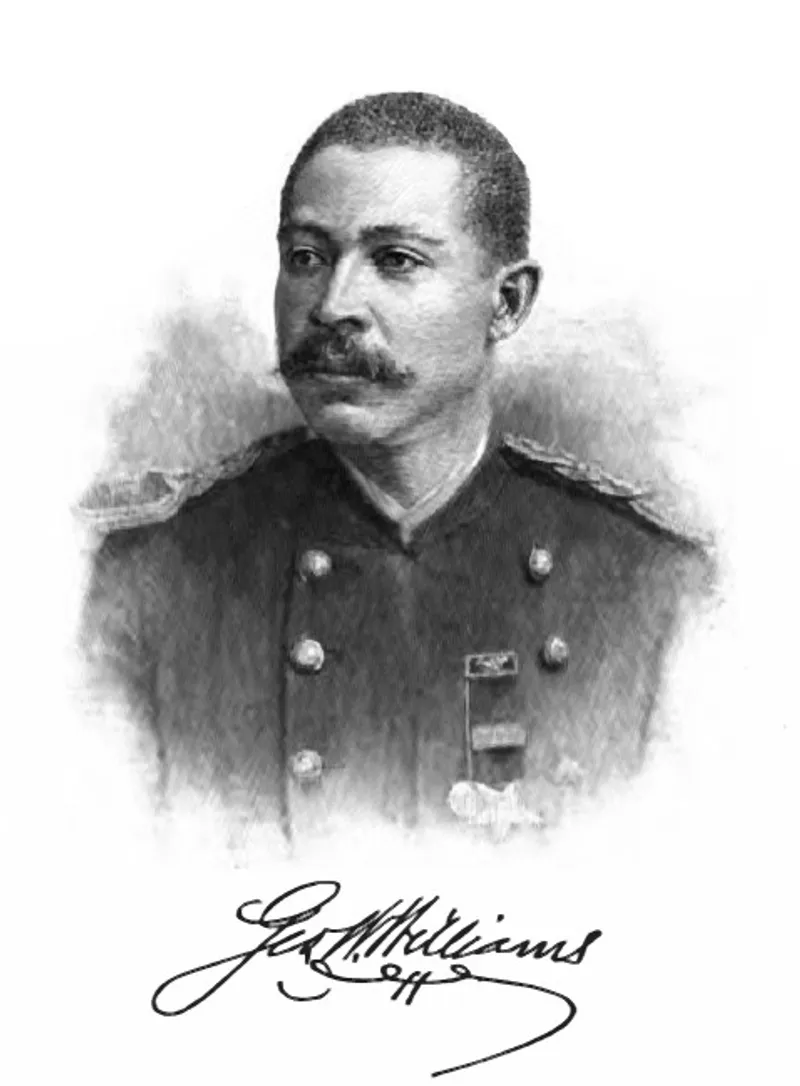
Fourteen years before Roger Casement’s British government report made the Congo Free State’s atrocities an international scandal, an African-American writer named George Washington Williams had already traveled there, documented the same abuses firsthand, and addressed them directly to the man responsible. Williams was an unlikely candidate for the assignment on paper alone: a Civil War veteran who had served in both the Union Army and, briefly, the Mexican Army, followed by careers as a Baptist minister, a lawyer, an Ohio state legislator, and a historian who published History of the Negro Race in America in 1882. In 1889 and 1890, backed by a combination of patrons, publisher S.S. McClure, railroad magnate Collis Huntington, and a research commission from President Benjamin Harrison, Williams traveled to the Congo Free State to report on conditions there, having initially been favorably impressed by Leopold II’s stated humanitarian aims for the territory.
What he found on the ground changed his assessment completely. On July 18, 1890, Williams published “An Open Letter to His Serene Majesty Leopold II, King of the Belgians and Sovereign of the Independent State of Congo,” a document organized around twelve specific, numbered charges against the administration Leopold had built: deceit, fraud, robbery, arson, murder, and slave-raiding among them. Williams called on European governments and philanthropic organizations to intervene and “hasten the close of the tragedy” he had witnessed. The letter is now credited with an early, historically significant use of the exact phrase “crimes against humanity” to describe what was happening in the Congo, years before that language became the vocabulary international law would eventually adopt for describing atrocities of this kind.
The letter did not immediately achieve what Williams had hoped. According to accounts of its reception, it drew little sustained response in the United States, and Williams himself did not live to press the case further: he traveled on to England intending to write a fuller book on Africa, and died there in 1891 at age 41, before the international campaign against Leopold’s Congo built any real momentum. That momentum came later in the decade under different figures, journalist Edmund Dene Morel and British diplomat Roger Casement, whose own 1904 report is far better remembered today, a sequence that has left Williams’ earlier, in some ways more direct, indictment comparatively obscure despite arguably being first, covered in full alongside the broader death toll and atrocities of Leopold’s rule in “The Congo Free State: Leopold II’s Personal Colony and Its Death Toll”.
Sources
- “John Hope Franklin, "George Washington Williams, Historian," The Journal of Negro History, Vol. 31, No. 1 (JSTOR)”.
- “George Washington Williams' Open Letter to King Leopold II about the Crimes Against Humanity in Congo”, African Heritage (afrolegends.com).
- “An Open Letter to His Serene Majesty Leopold II, King of the Belgians and Sovereign of the Independent State of Congo, 1890”, Black Agenda Report.
Books & Further Reading
John Hope Franklin, George Washington Williams: A Biography (University of Chicago Press, 1985, ISBN 9780226260839)