
By Princewill Ubani · Published · Updated
Research ID: PA-ART-thomas-sankara-1987-interview-final-months
Thomas Sankara's Final Months, Isolation, and October 15, 1987
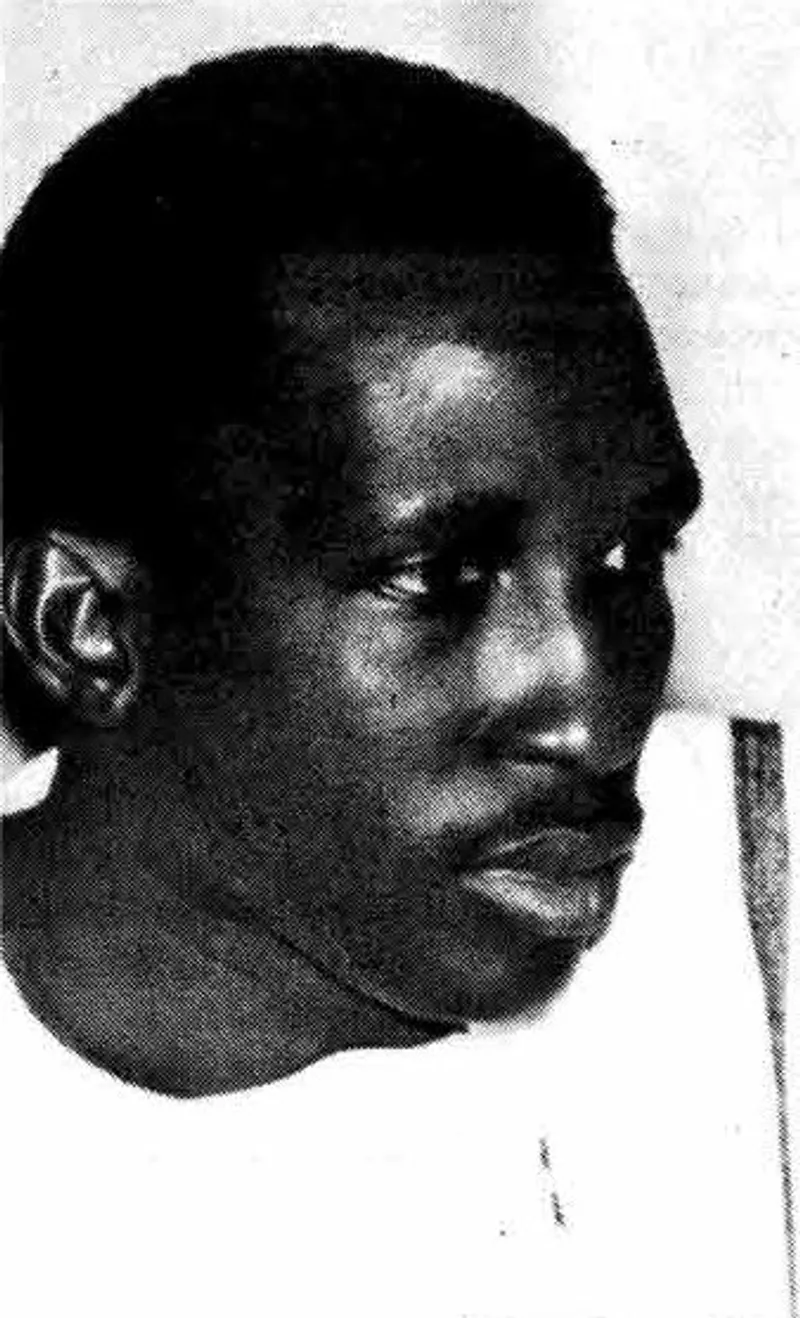
By the second half of 1987, Thomas Sankara’s position had grown precarious in ways that were visible well before the coup that killed him. Four years into the revolutionary government he had led since 1983, he had accumulated powerful enemies on multiple fronts: French officials still smarting from his public needling of president François Mitterrand (see “Sankara Confronts Mitterrand Over Apartheid, Ouagadougou 1986”), regional heads of state like Ivory Coast’s long-serving Félix Houphouët-Boigny who had little patience for a young neighboring leader positioning himself as a moral critic of the old order, and, domestically, elements of the very revolutionary coalition that had brought him to power, as Sankara’s increasingly centralized decision-making cut him off from trade unions, parties and civic groups that might otherwise have rallied to defend his government under pressure. That isolation, more than any single external threat, is what left him exposed when the moment came.
The words most associated with Sankara’s final period are ones about the durability of ideas over individuals, a sentiment consistent with a governing style built around personal austerity, radical land and gender policy, and open confrontation with wealthier and more powerful governments rather than quiet accommodation; a representative expression of that outlook from earlier in his presidency was his remark that “you cannot carry out fundamental change without a certain amount of madness,” a line that captures the same combative self-conception that defined him through to the end.
On the afternoon of October 15, 1987, Sankara arrived for a meeting at the presidential compound in Ouagadougou. Alouna Traoré, the sole survivor of that meeting who later gave a detailed public account, described the moment gunfire broke out outside and a voice ordered everyone to leave: “the comrade president got up, adjusted his clothing and went out that way, with his hands up.” Sankara was shot at point-blank range at the entrance to the room, along with twelve aides and bodyguards. The coup was led by Blaise Compaoré, his second-in-command and, until shortly before, his closest political ally, a betrayal and its aftermath covered in full elsewhere on this site in “The CIA’s 1986 Warning and the Coup That Killed Thomas Sankara” and “Sankara’s Debt Speech to the OAU and His Assassination Three Months Later”.
A specific interview with Sankara from May 1987 has circulated widely online in recent years, but this site could not independently verify its content, exact date, or original broadcaster against an accessible written source, and has not treated any specific quotes from it as verified fact here. The broader picture of Sankara’s final months is well documented and reflected above: a leader whose confrontational style had made him formidable and widely admired but had also left him with fewer and fewer powerful allies by the time his own former friend turned against him.
Correction
The Sankara assassination survivor's name was misspelled.The article named the sole survivor of the meeting where Thomas Sankara was killed as "Halouné Traoré." His name is Alouna Traoré, confirmed against two independent Africa Report accounts of his testimony. Fixed in the fact card and body text.Corrected in September 2026. See the log entry.
Sources
- “Brian J. Peterson, *Thomas Sankara: A Revolutionary in Cold War Africa* (Indiana University Press, JSTOR)”.
- “The Upright Man, Thomas Sankara”, Africa Is a Country.
- “October 15, 1987: The Murder of Thomas Sankara”, Africa Is a Country.
- “Only survivor of 1987 Burkina coup relives Thomas Sankara's assassination”, Africanews.
Books & Further Reading
Brian J. Peterson, Thomas Sankara: A Revolutionary in Cold War Africa (Indiana University Press, 2021, ISBN 9780253053763)