
By Princewill Ubani · Published · Updated
Research ID: PA-ART-omo-kibish-fossils-ethiopia-oldest-human
The Omo Fossils: Discovered in 1967, Still Getting Older
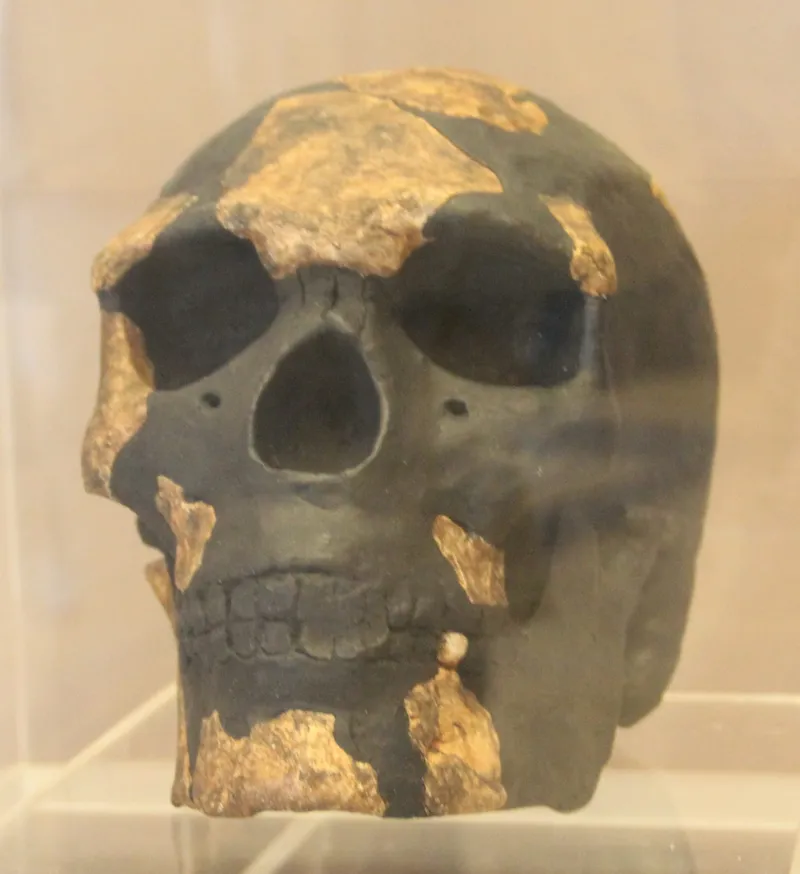
In 1967, a team of paleoanthropologists working in the Omo Kibish region of southern Ethiopia, including a young Richard Leakey, uncovered a set of hominin remains that would become known as Omo I and Omo II: skull and skeletal fragments representing some of the earliest physical evidence anywhere for anatomically modern Homo sapiens. What the fossils couldn’t offer, at the time, was a precise age. The surrounding volcanic sediment was difficult to date with the technology available, and early estimates put Omo I at roughly 130,000 years old, a figure treated as provisional from the start.
That figure has moved twice since, each revision pushing the fossils’ age further back rather than closer to the surface. A 2005 reanalysis, using improved argon-argon dating techniques on volcanic ash layers associated with the find, revised the minimum age upward to at least 195,000 years, a number that circulated widely for close to two decades as one of the standard reference points for the earliest known modern humans. Then, in a 2022 study published in Nature, a team led by Cambridge volcanologist Céline Vidal applied newer geochemical techniques to a specific ash layer, the Kamoya’s Hominid Site Tuff, that sits above the sediment containing the Omo I remains. By precisely matching the ash’s chemical signature to a documented eruption of the Shala volcano in Ethiopia’s Main Ethiopian Rift, Vidal’s team established a new minimum age of roughly 233,000 years, plus or minus 22,000 years, a full 38,000 years older than the widely cited 2005 figure.
The technique itself is part of what makes the finding notable. Rather than attempting to date the fossils or their immediate sediment directly, which had proven difficult for decades, Vidal’s team dated the volcanic ash deposited on top of the fossil-bearing layer, establishing a reliable minimum age: the fossils must be at least as old as the ash that later buried them. That indirect approach, anchoring a notoriously hard-to-date fossil find to a precisely datable volcanic event, has become an increasingly important method for African paleoanthropology generally, where fossils often sit in sediment too disturbed or chemically unsuitable for direct dating.
Omo I’s exact standing relative to other early Homo sapiens finds remains actively debated rather than settled. Morocco’s Jebel Irhoud fossils, redated in 2017 to roughly 300,000 years, are older still, though they retain more archaic anatomical features than the more fully modern-looking Omo remains, complicating any simple ranking of “oldest” versus “most modern.” What both cases share is a pattern that’s become common in this field: fossils discovered decades ago, filed away with a provisional age, later reassigned a substantially older date once dating technology caught up to the questions researchers were actually asking.
Correction
The 2022 Omo I redating: the gap was 38,000 years, not 36,000.The article gave its own two figures, 233,000 and 195,000 years, and then said they were "36,000 years" apart. The actual difference is 38,000. Fixed.Corrected in September 2026. See the log entry.