By Princewill Ubani · Published
Research ID: PA-ART-1018872869613432832
My Great-Grandfather, the Nigerian Slave Trader: A Family's Reckoning
In July 2018, Nigerian novelist and journalist Adaobi Tricia Nwaubani published a personal essay in The New Yorker that did something few African writers have done in a major Western outlet: named her own family’s role in supplying the transatlantic slave trade, in granular, specific detail.
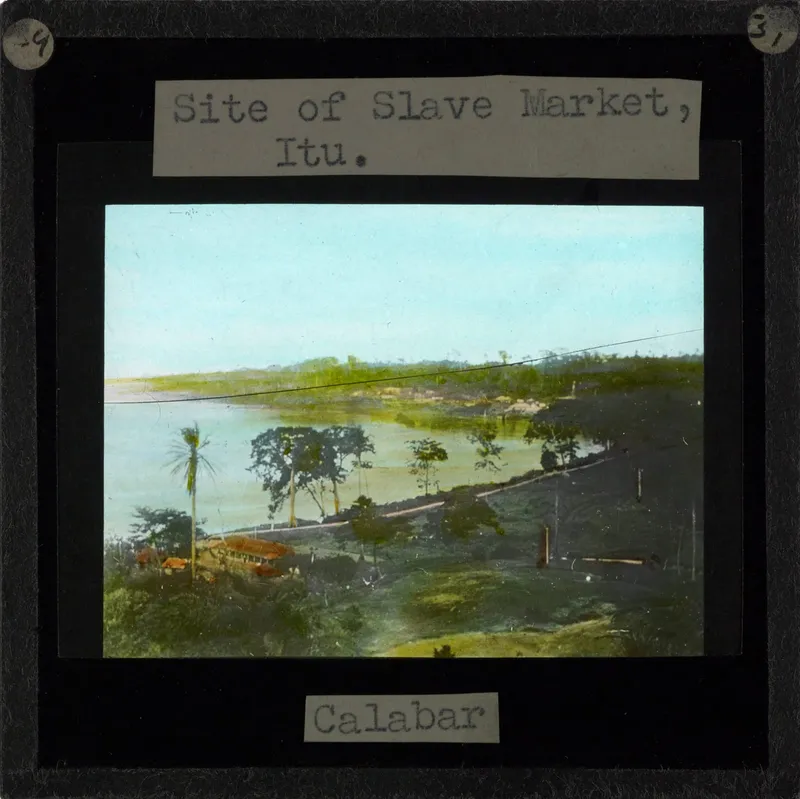
Her great-grandfather, Nwaubani Ogogo Oriaku, traded out of Umujieze, a settlement in what is now Abia State in southeastern Nigeria. In the late nineteenth century he held a slave-trading license from the Royal Niger Company, the British corporation that then governed the region, and his agents captured people from surrounding villages and passed them to middlemen who marched them to the coastal ports of Bonny and Calabar. From there, Nwaubani writes, they were shipped to Cuba and Brazil, destinations that still permitted slavery even after Britain and the United States had formally abolished the trade. Local families sometimes sold off relatives directly, a practice a University of Nigeria historian, Ijoma Okoro, compared in the essay to Britain’s transportation of convicts to Australia. Nwaubani Ogogo’s nickname, meaning “from the Bonny port region,” became the family’s surname.
The wealth and status the trade generated were, by the family’s own account, considerable. Local leaders gave him their daughters in marriage, and colonial officials appointed him chief of Umujieze and neighboring towns, a position from which he presided over court cases and helped establish churches and schools on land his family still occupies. When he died, according to Igbo funeral custom for a man of his standing, a leopard was killed and, Nwaubani writes, six of his slaves were buried alive with him.
The essay’s second half turns from the trader himself to the caste-like stigma his trade left behind. Descendants of people freed from slavery in Igbo communities are known as ohu, and Nwaubani describes how her own family instructed freed slaves to drop the Nwaubani surname, and how ohu descendants are still informally barred from marrying freeborn family members or holding certain traditional titles. A related, harsher category, the osu, are descendants of people once dedicated to a deity’s shrine rather than sold outright, and Nwaubani reports they face even sharper exclusion in Igbo communities to this day.
Grappling with a mounting number of unexplained deaths in the extended family, which relatives had begun attributing to an ancestral curse tied to Nwaubani Ogogo’s slave trading and to a broken spiritual pact, the family organized a multi-day fasting and prayer campaign in early 2018. Relatives gathered in person in Umujieze and joined by phone from London, Atlanta and Johannesburg to pray for forgiveness and mark, in Nwaubani’s words, “a new beginning for the Nwaubani family.” The essay closes with the family discussing making the ritual an annual one, though Nwaubani notes that the ohu descendants of the family’s former slaves were not invited to take part.
The essay drew wide attention and some pointed criticism. Nwaubani revisited the subject two years later in a BBC News piece published July 27, 2020, seven weeks after the police killing of George Floyd in Minneapolis had renewed global debate over slavery’s legacy; in it, she argued her great-grandfather’s actions should be understood in the context of his own era rather than judged purely by today’s standards. The Nigerian outlet TheCable published a response arguing the framing risked reading as an attempt to excuse the trade rather than reckon with it, calling instead for a focus on redress and reconciliation over historical context. The exchange became a rare public argument, conducted mostly among Nigerian writers, over how African families with direct ties to the slave trade should tell that history.
Sources
- “My Great-Grandfather, the Nigerian Slave-Trader”, The New Yorker.
- “'My Nigerian great-grandfather sold slaves'”, BBC News.
- “A response to Adaobi Tricia Nwaubani's 'My Nigerian great-grandfather sold slaves'”, TheCable.