
By Princewill Ubani · Published
Research ID: PA-ART-1997-phantom-coup-abacha-diya-nigeria
The 1997 'Phantom Coup': Abacha's Arrest of His Own Deputy, Oladipo Diya
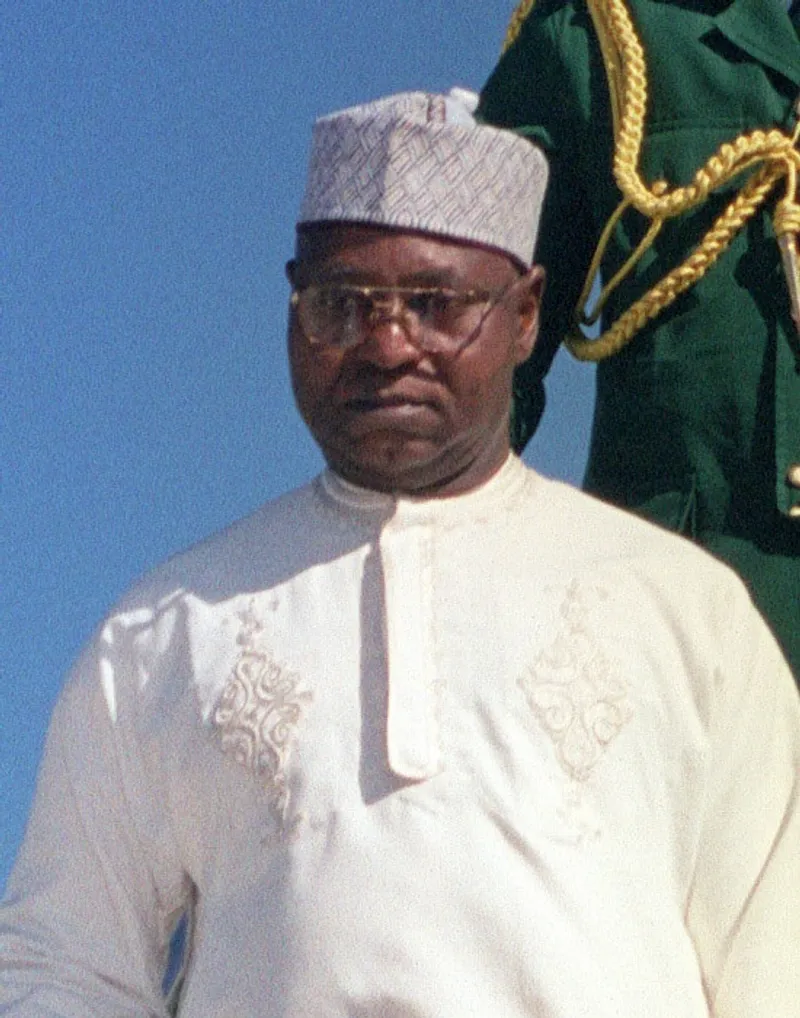
On December 21, 1997, Nigeria’s military government announced it had uncovered a plot to overthrow General Sani Abacha, and arrested 26 people in connection with it. The most senior among them was Lieutenant General Oladipo Diya, who as Chief of the General Staff had served as Abacha’s de facto vice president since 1994, alongside Major General Abdulkarim Adisa and Major General Tajudeen Olanrewaju. According to accounts from people who claimed involvement, the alleged plan was to abduct Abacha during a planned trip to Enugu and force his resignation. Diya, for his part, never accepted the official version of events, later describing the affair simply as a “phantom coup” and declining, even years afterward, to say directly whether the accusations against him had been true.
Whether the plot was real or a pretext has never been settled. Many observers at the time believed Abacha manufactured the charges to eliminate Diya, who had grown popular with Nigeria’s political elite and was seen by some as a moderating rival just as Abacha was maneuvering to have himself installed as a civilian president through a stage-managed election. How the case was handled is well documented: Diya and his co-accused were tried before a Special Military Tribunal that convened in February 1998, whose proceedings were held largely in camera, whose defendants were represented by junior military lawyers whose objections were routinely overruled, and whose verdicts were not subject to any judicial appeal, only confirmation by a body made up exclusively of fellow military officers. The tribunal sentenced Diya and five others to death in April 1998. Years later, the African Commission on Human and Peoples’ Rights formally reviewed the case and found Nigeria in violation of the African Charter’s fair-trial guarantees, ordering compensation for the defendants.
None of the death sentences were carried out. Abacha died suddenly on June 8, 1998, before the executions could proceed, and his successor, General Abdulsalami Abubakar, moved quickly to commute the sentences and ultimately pardon Diya and the other convicted officers entirely, stripping them of military rank but freeing them outright. The reversal was total: men the state had condemned to death for treason months earlier walked free within the same year, a whiplash that became one of the clearest illustrations of how personalized and improvised justice was under Abacha’s rule, a period covered in fuller detail elsewhere on this site in “Sani Abacha: Nigeria’s Strongman and His Sudden Death in 1998”.
Sources
- “Civil Liberties Organisation, Legal Defence Centre and Others v. Nigeria, African Commission on Human and Peoples' Rights”, University of Minnesota Human Rights Library.
- “Oladipo Diya: Life and time of general accused of coup plot by Abacha”, Vanguard.
- “June 12, 1997 'phantom' Coup, Abacha years: Everybody has his own blame - Diya”, Vanguard.
Books & Further Reading
'Kunle Amuwo, Daniel C. Bach, and Yann Lebeau (eds.), Nigeria During the Abacha Years (1993-1998) (IFRA-Nigeria/CEAN Bordeaux, 2001)