By Princewill Ubani · Published
Research ID: PA-ART-king-shaka-international-airport-name
Why Durban's Airport Carries the Zulu King's Name
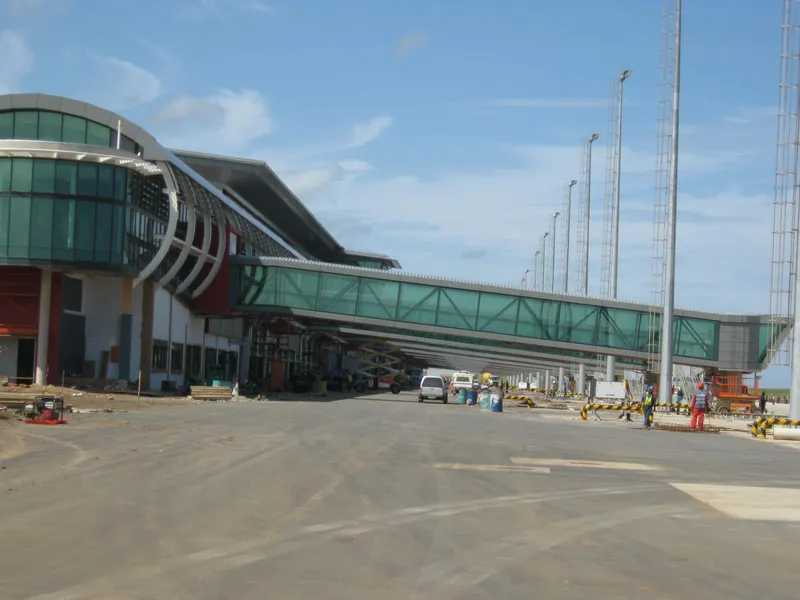
King Shaka International Airport opened outside Durban on May 1, 2010, roughly six weeks before South Africa hosted the FIFA World Cup, and its name went to the founding king of the Zulu Kingdom rather than to the city it serves. That choice replaced Durban International Airport, the facility that had handled the region’s air traffic since 1951 but whose 2,400-meter runway had become too short to accommodate wide-body jets like the Boeing 747, ruling out direct intercontinental flights into what was already South Africa’s third-busiest metropolitan area.
Building a replacement large enough for Airbus A380s and 747s came at considerable cost: the finished airport, sited at La Mercy roughly 35 kilometers north of central Durban, cost approximately R6.8 billion, well above the original R2 billion estimate, making it the country’s second most expensive transport infrastructure project after the Gautrain rail system linking Johannesburg and Pretoria. The name chosen for that investment tied it directly to KwaZulu-Natal’s precolonial history rather than to the colonial-era Durban name, itself derived from a 19th-century British governor.
Shaka kaSenzangakhona ruled the Zulu Kingdom from roughly 1816 until his assassination in 1828, and historian John Laband’s account “Rope of Sand: The Rise and Fall of the Zulu Kingdom in the Nineteenth Century” describes how Shaka built the Zulu, a relatively minor chiefdom at his accession, into the dominant military and political power of southeastern Africa within little more than a decade, through a combination of reorganized regimental military structures, centralized political control and the incorporation, often by conquest, of neighboring chiefdoms into a unified kingdom. That kingdom’s rise reshaped the political map of the entire region, triggering a period of large-scale conflict and displacement historians call the Mfecane, and the Zulu state Shaka founded remained a major regional power for decades after his death, eventually clashing directly with British colonial forces in the Anglo-Zulu War of 1879.
Naming a modern billion-dollar airport after a 19th-century king was, in that sense, less an act of nostalgia than a statement about whose history the post-apartheid South African state chose to elevate in a province where Zulu heritage and identity remain central to public life. The airport now handles more than 5 million passengers a year, a gateway into KwaZulu-Natal that carries the name of the leader most closely identified with the province’s precolonial political history.
Sources
- “King Shaka International Airport, La Mercy-Durban”, South African History Online.
- “Durban International Gives Way to King Shaka”, Aviation Week.
Books & Further Reading
John Laband, Rope of Sand: The Rise and Fall of the Zulu Kingdom in the Nineteenth Century (Jonathan Ball Publishers, 1995, ISBN 9781868420230)