By Princewill Ubani · Published · Updated
Research ID: PA-ART-indlamu-zulu-war-dance-history
Indlamu: The Zulu War Dance's Real, More Complicated History
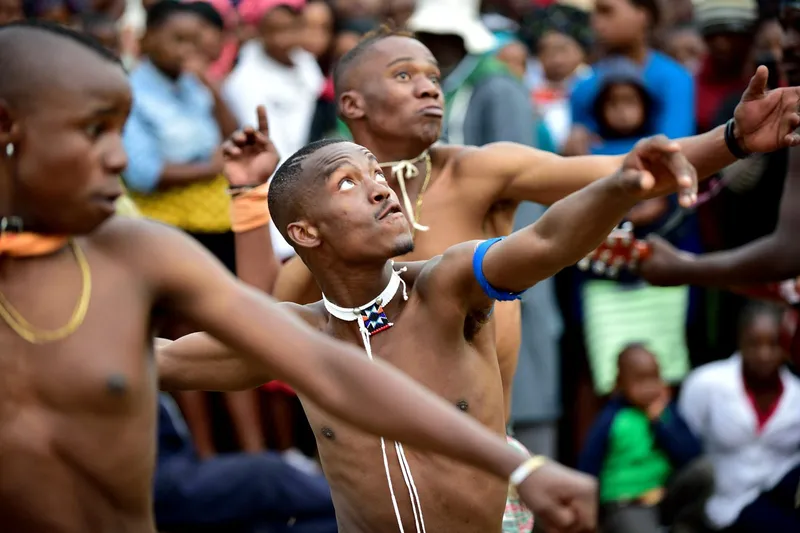
Indlamu, the foot-stamping dance most associated with the Zulu today, takes its name from the Zulu word “dlamu,” to stomp or stamp the feet, and traces its roots to the war dances performed by amabutho, King Shaka’s regimented warrior units, in the early nineteenth century. Warriors danced it before battle to build unity and after to celebrate victory, and it was performed on both sides of the Anglo-Zulu War of 1879. The dance’s signature movement, a dancer lifting one leg sharply above the head before stamping it down in unison with the group, along with its full traditional dress of amabheshu (loin skins), ankle rattles, shields and knobkerries, has been captured on film since the early twentieth century and is still performed today at weddings, initiations, harvest festivals and the inauguration of Zulu kings.
An older label sometimes attached to filmed dance footage from this era, “Umgidi,” is worth correcting: it is not a Zulu dance style but a Xhosa term, referring to the feast and celebration held when young initiates return from traditional circumcision school, an event that includes song and dance but names the occasion rather than the choreography itself. Applying it to Zulu dance footage conflates two distinct cultural traditions.
The more interesting complication is what serious historical scholarship has found about the dance tradition actually documented on film from the 1920s onward, most closely studied under the related term Ingoma. Research published in the South African journal HTS Theological Studies, examining Ingoma’s development from the 1930s to the present, concludes that the performance style captured in that era’s footage “represented less continuity of precolonial… performance traditions” than something genuinely new: a product, in the researchers’ framing, of “the complex interaction of dance traditions, labour migration and missionisation” as Zulu men moved into South Africa’s industrializing cities and mission stations after the fall of the independent Zulu kingdom. Migrant workers, described in the research as amagxagxa, blended older warrior choreography with Christian hymn structures and Western performance conventions to create forms suited to their new urban, migrant lives, rather than simply preserving an unbroken precolonial original. That doesn’t make the 1920s footage, or the dance performed today, any less authentically Zulu; it means the honest history is one of adaptation and reinvention under colonial pressure, not an unchanged line running straight back to Shaka’s warriors.
Correction
A citation named the wrong journal for a Zulu Ingoma study.The article attributed a study on the Ingoma dance tradition to a journal called "SASH." The article is hosted on SciELO South Africa, but the journal itself, per its own masthead at that URL, is HTS Theological Studies. Corrected.Corrected in September 2026. See the log entry.
Sources
- “Examining the autonomy of Zulu Ingoma from the 1930s to present: Image or authentic experience?”, SciELO South Africa.
- “A look at Indlamu, the famous Zulu war dance”, Face2Face Africa.
- “'Umgidi' time to celebrate new life”, The Herald (South Africa).
Books & Further Reading
Veit Erlmann, "'Horses in the Race Course': The Domestication of Ingoma Dancing in South Africa, 1929-39," Popular Music, Vol. 8, No. 3 (1989), pp. 259-273