
By Princewill Ubani · Published
Research ID: PA-ART-france-slavery-abolition-1794-1802-1848
France Abolished Slavery Three Times Before It Actually Stuck
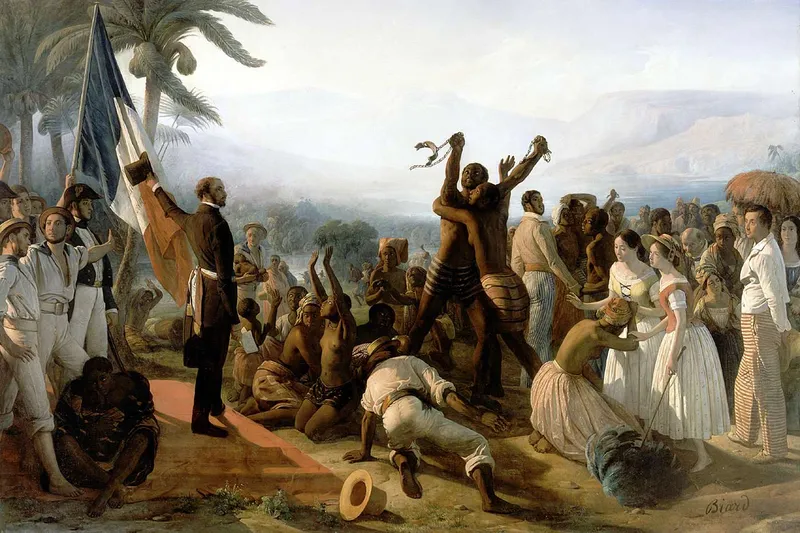
France’s relationship with abolishing slavery took more than half a century to settle, and it didn’t settle on the first, second, or even a clean third attempt. The National Convention, at the height of the French Revolution, formally abolished slavery throughout French territory in February 1794, a decree that applied in principle to France’s Caribbean colonies, where the enslaved population vastly outnumbered free colonists on plantations that generated enormous wealth for French merchants and the state alike.
That abolition lasted less than a decade. Napoleon Bonaparte, having seized power and moving to reassert French control over its most profitable colonies, particularly Saint-Domingue, ordered slavery reinstated in France’s remaining Caribbean territories in 1802, a reversal that triggered years of brutal warfare in Saint-Domingue as formerly enslaved people, unwilling to accept re-enslavement, fought a war that ultimately produced Haiti’s 1804 independence, the one French colony where Napoleon’s reversal never actually took hold. Elsewhere in the French Caribbean, slavery resumed under Napoleonic law and continued for another 46 years.
The decree that finally made abolition permanent came from a Second Republic government that lasted barely three months, formed after France’s February 1848 revolution overthrew the July Monarchy. Victor Schoelcher, appointed under-secretary of state for the navy and colonies and placed in charge of an emancipation commission, drafted and pushed through the decree issued on April 27, 1848, abolishing slavery across all French territories and granting citizenship to those it freed, an estimated 251,019 people. The 1848 decree included one provision that later generations of historians have treated as its most uncomfortable legacy: financial compensation paid by the French state, but directed to former slaveholders for their lost “property,” not to the people who had actually been enslaved.
Schoelcher’s role in 1848 built directly on decades of earlier French abolitionist organizing that had failed to reverse Napoleon’s 1802 decision, work historian Lawrence C. Jennings traces in detail across the movement’s frustrating, decades-long path from the Revolution’s initial abolition through Napoleonic reversal to the eventual 1848 success. France’s repeated back-and-forth on slavery, formally ending it, reinstating it under a different government, then ending it again under yet another government entirely, illustrates how contingent early abolitionist victories could be on the specific political leadership in power at any given moment, a pattern very different from a single, linear march toward emancipation.
Sources
- “Review of Lawrence Jennings's French Anti-Slavery, The Journal of Modern History, Vol. 74, No. 3 (University of Chicago Press)”.
- “The Abolition of Slavery, 1848”, Bibliothèque nationale de France.
Books & Further Reading
Lawrence C. Jennings, French Anti-Slavery: The Movement for the Abolition of Slavery in France, 1802-1848 (Cambridge University Press, 2000, ISBN 9780521772495)