
By Princewill Ubani · Published
Research ID: PA-ART-denmark-slave-trade-apology-refusal
Denmark Ran a Slave Trade Too, and It Still Won't Say Sorry
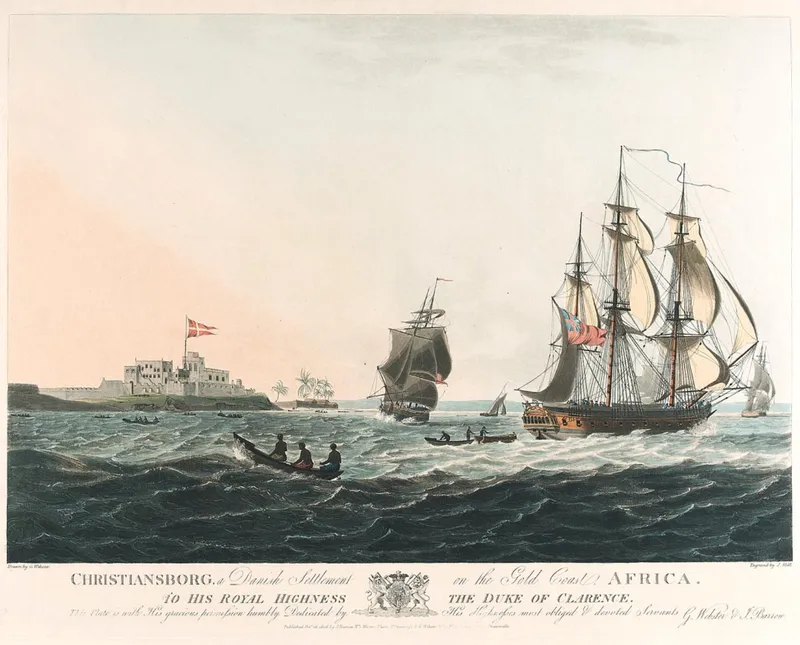
Denmark is rarely mentioned in the same breath as Britain, Portugal or the Netherlands when the transatlantic slave trade comes up, but Danish ships and Danish forts were part of the same system. From bases including Christiansborg, later renamed Osu Castle, on what is now Ghana’s coast, Danish traders shipped an estimated 120,000 enslaved Africans across the Atlantic, with roughly 50,000 of them taken to the Danish West Indies, the islands known today as Saint Croix, Saint John and Saint Thomas. Conditions on the crossing were as lethal as on any other nation’s ships; roughly one in ten of the enslaved people forced aboard died during the voyage.
Denmark held onto those Caribbean islands until 1917, when it sold them to the United States for $25 million, a transaction that became the US Virgin Islands. What Denmark has not done, in the years since, is formally apologize for the trade that built the wealth extracted from them. Danish Prime Minister Lars Løkke Rasmussen acknowledged in comments reported in early 2017 that the slave trade was “a gruesome chapter” and called it “shameful,” noting that Copenhagen’s own grand architecture had been built “with money earned off the toil of slaves.” He stopped short of an apology. Denmark’s culture minister at the time, Mette Bock, was more explicit in rejecting the idea outright, arguing that “an apology, if it is to have meaning, should be given by the one who carried out the offence” and that “one cannot apologize on behalf of others.”
Denmark’s small far-left Enhedslisten party pushed the government to apologize and address reparations claims raised by descendants in the US Virgin Islands, and the government rejected the proposal. Officials involved in the debate have also pointed to the practical complication that the Virgin Islands are now US territory, meaning any formal diplomatic overture from Copenhagen would need Washington’s involvement, a complication Denmark has cited as a reason to hold back.
The contrast with the United States sharpened the debate. On June 18, 2009, the US Senate passed a resolution formally apologizing to African Americans for slavery and the subsequent era of Jim Crow segregation, adopted by unanimous voice vote, though the resolution included language explicitly disclaiming any basis for reparations claims against the federal government. Denmark, whose slave trade predates the founding of the American republic and whose Caribbean colonies were built and sustained by it for more than two centuries, has yet to take even that symbolic, non-binding step.
Sources
- “Denmark struggles to come to grips with its slave past”, The Local Denmark.
- “Denmark cannot apologise for slave trade”, ScienceNordic.