By Princewill Ubani · Published
Research ID: PA-ART-angola-name-origin-ngola
How a Royal Title Became the Name 'Angola'
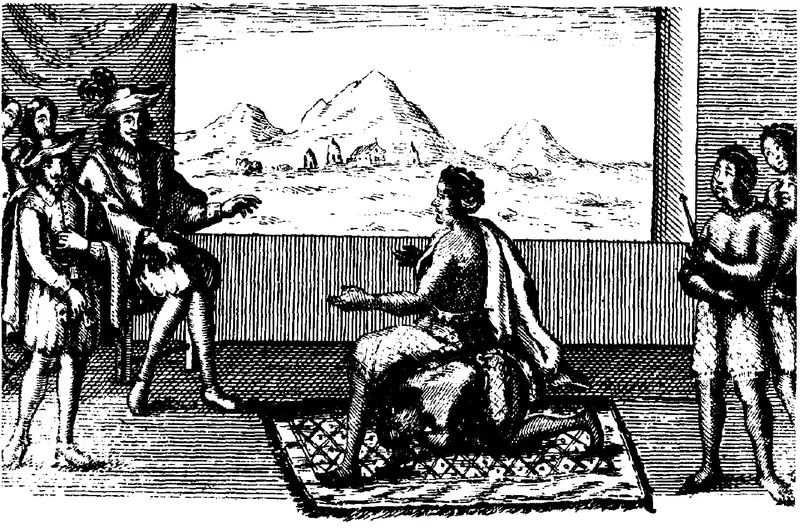
Angola’s name did not begin as a place name at all. It began as ngola, a royal title held by the rulers of Ndongo, a Kimbundu-speaking kingdom of the Mbundu people that had emerged in what is now northwestern Angola by around 1500, likely as an offshoot of the older and more powerful Kingdom of Kongo to its north. When Portuguese explorers and traders reached the region in the 16th century, they encountered a state ruled by a king who held the title ngola, and, according to the standard account of the name’s origin, they mistook that title for the name of the country itself.
Historian Joseph Miller’s 1976 study “Kings and Kinsmen: Early Mbundu States in Angola,” still the standard academic reconstruction of Ndongo’s precolonial political history, traces the ngola title to a Kimbundu root, ngolo, meaning strength, tied to the ceremonial iron implements that symbolized kingship among Mbundu political traditions. That linguistic root gave the position of ngola both a practical and a spiritual authority: Ndongo’s kings drew legitimacy partly from control over iron production, a source of both agricultural tools and weapons that, in the political landscape Miller describes, made control of blacksmithing traditions and the symbols associated with it central to Mbundu statecraft.
Portugal’s relationship with Ndongo did not start out hostile. After Paulo Dias de Novais established a Portuguese foothold in the region in 1575, the two sides initially struck a trade and military alliance, signed in 1576. That arrangement collapsed within a few years, and from 1579 onward, Portuguese forces fought a series of wars against Ndongo aimed at securing control over the kingdom’s territory and its access to captives for the trans-Atlantic slave trade, a conflict that stretched on intermittently for decades and that Ndongo, under rulers including the later Queen Nzinga, resisted with mixed success well into the 17th century. Portugal formally named its colonial holding in the region Reino de Angola, Kingdom of Angola, cementing the mistaken royal title as a territorial name even as Portuguese forces worked to dismantle the actual kingdom of Ndongo that had given rise to it.
That colonial-era name endured through nearly four centuries of Portuguese rule and outlasted colonialism itself, carried over unchanged when Angola won independence in 1975 after a prolonged liberation war. Today the country’s name preserves, almost by linguistic accident, the memory of the precolonial Mbundu kingdom whose royal title a set of 16th-century Portuguese visitors happened to misread as a place.
Books & Further Reading
Joseph C. Miller, Kings and Kinsmen: Early Mbundu States in Angola (Clarendon Press, 1976, ISBN 9780198227045)