
By Princewill Ubani · Published
Research ID: PA-ART-1356108292070768640
The Cafunfo Killings: Angola's Crackdown on the Lunda-Tchokwe Protest Movement
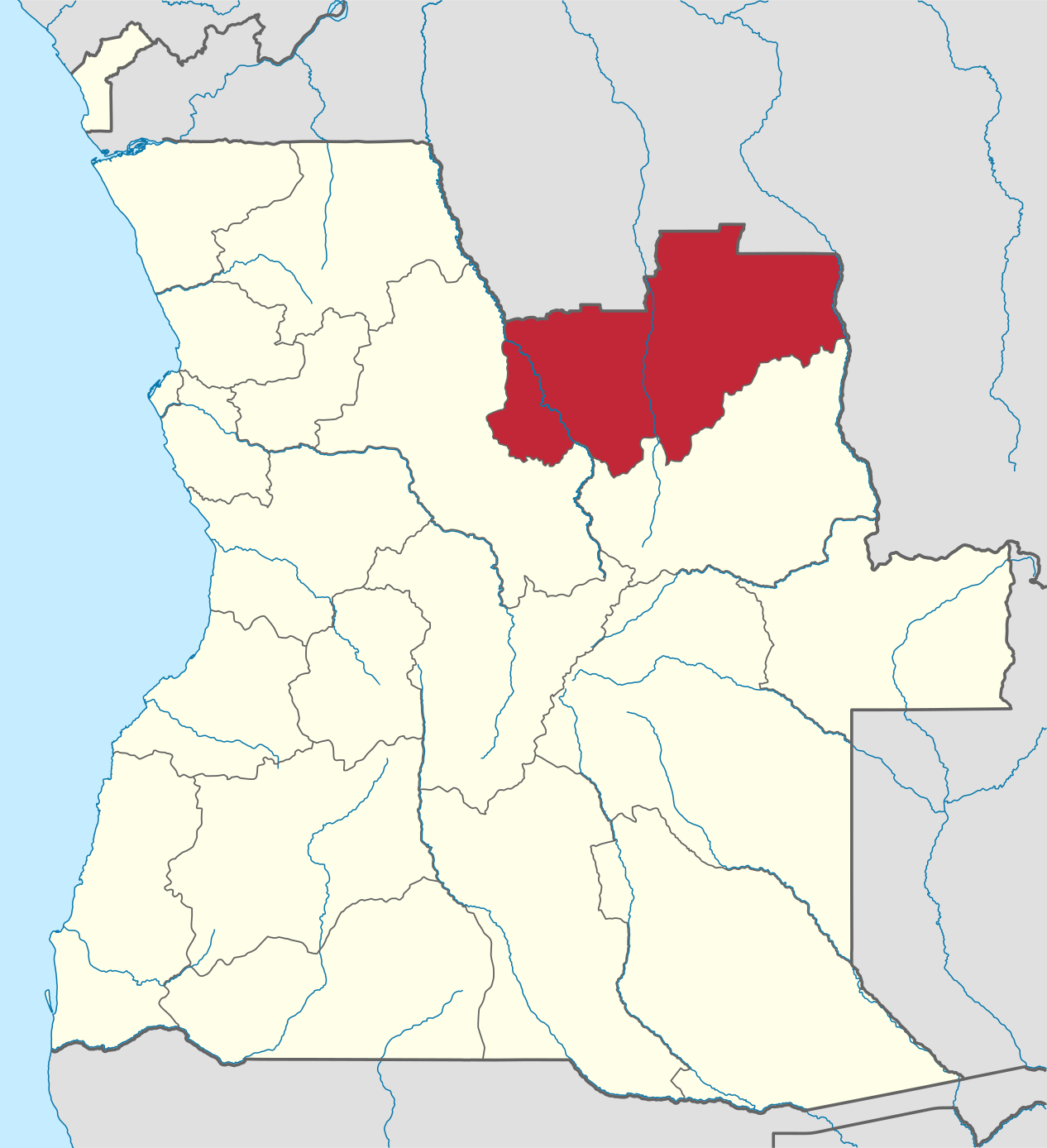
Angolan police opened fire on unarmed demonstrators in the diamond-mining town of Cafunfo on January 30, 2021, killing at least 10 people in a crackdown that drew condemnation from international human rights groups.
About 100 people had gathered that morning to march toward the local headquarters of the ruling MPLA party, according to witness accounts gathered by Human Rights Watch. They were singing as they walked, protesters told the rights group, when they passed a police station and officers began shooting into the crowd. Amnesty International, which separately investigated the shooting, said security forces killed at least 10 people and that bodies were later found dumped in the nearby Cuango River. The march had been organized by the Lunda Tchokwe Protectorate Movement, known by its Portuguese initials MPPLT, which had called people out to demand better water and electricity service in a region that produces a large share of Angola’s diamond wealth but has long complained of being shut out of it.
Angolan police gave a starkly different account. The national police said roughly 300 people armed with sticks, machetes and firearms had tried to force their way into the Cafunfo police station, and that officers responded to what they called an attempted armed rebellion, leaving six people dead, more than 20 injured and dozens arrested. Provincial police chief Paulo de Almeida rejected calls for an independent investigation into the killings and said his force would meet any threat to Angola’s sovereignty with force. Human Rights Watch said police provided no evidence to support the armed-rebellion claim, and the movement’s own leadership put the death toll far higher than either official account, alleging as many as 25 killed along with people who disappeared in the crackdown’s aftermath. Jose Mateus Zecamutchima, the movement’s leader, was later sentenced to four years and six months in prison on charges of instigating the unrest that led to the killings.
The Lunda Tchokwe Protectorate Movement traces its claim to a distinct political status back to a set of treaties signed between local Lunda-Tchokwe authorities and Portuguese colonial officials, chiefly the explorer and administrator Henrique de Carvalho, between 1885 and 1894, in the years immediately following the Berlin Conference’s carve-up of African territory among European powers. The movement argues that those protectorate agreements, rather than full colonial annexation, mean the mineral-rich Lunda provinces were never legitimately absorbed into the Angolan state that emerged at independence in 1975, a claim Angola’s government rejects. Cafunfo was not an isolated episode: Amnesty International’s broader review of protest policing in Angola between November 2020 and June 2023 documented security forces killing at least 17 people across eleven separate demonstrations, part of a pattern the organization said left victims without justice years after the fact.
Sources
- “Angola: Security Forces Kill Protesters in Lunda Norte Province”, Human Rights Watch.
- “Angola: Shooting Spree by Security Forces Kills at Least 10 Protesters”, Amnesty International.
- “Broken Promises: Protesters Caught Between Tear Gas, Bullets and Batons in Angola”, Amnesty International.