
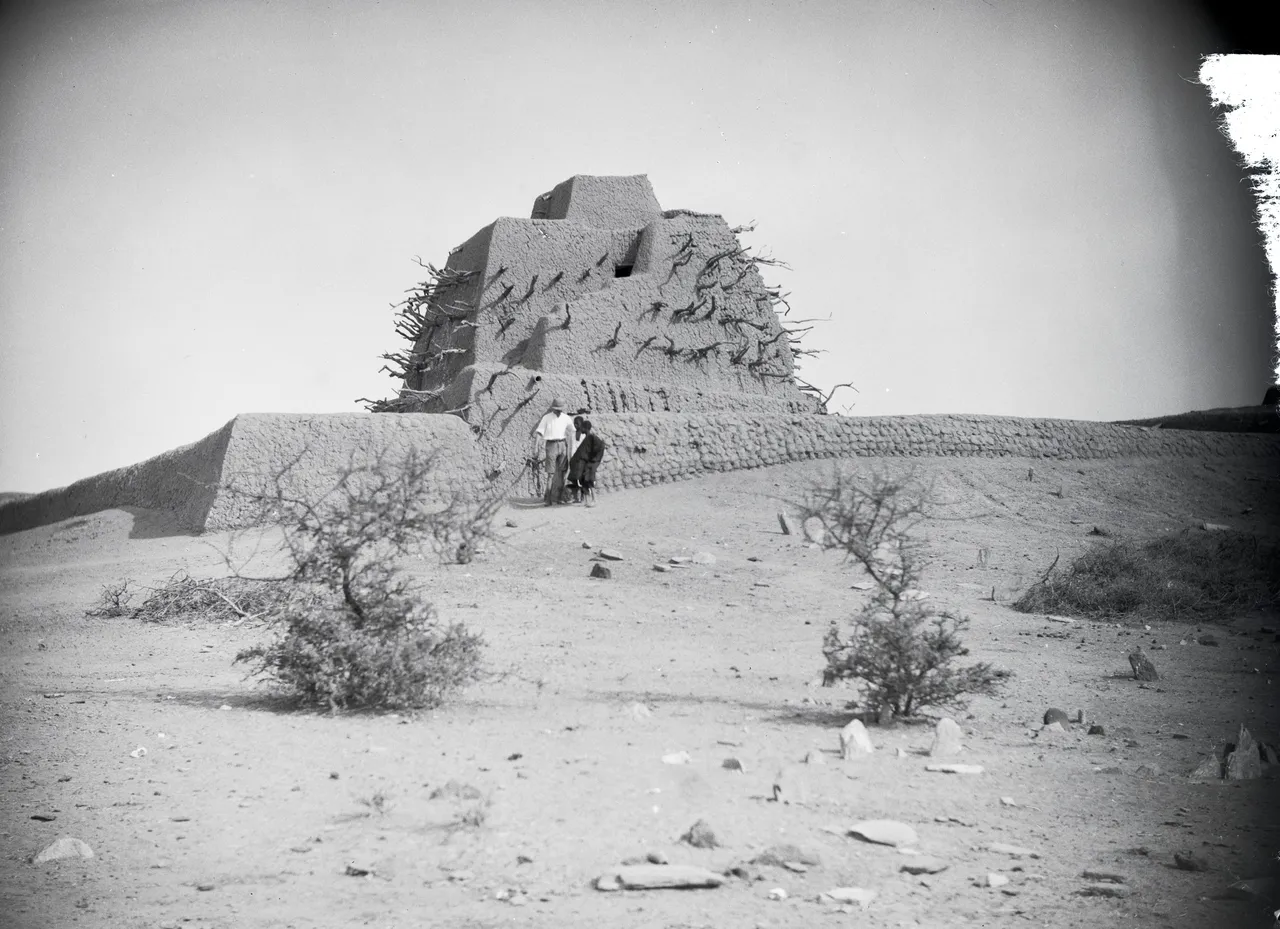
Songhai, the Empire Ruled From Gao on the Niger
By Princewill Ubani · Published
Research ID: PA-POL-songhai
The state centered on Gao that Sunni Ali turned into an empire across the Niger bend in the 1460s, that the askiyas ruled for a century, and that a Moroccan army broke at Tondibi in 1591.
Early in 1469, as the army of Sunni Ali, ruler of Songhai, approached Timbuktu from Gao, the Tuareg chief who held the city gathered a thousand camels and carried its scholars away to Biru, the desert town now called Walata. The chronicler al-Sa’di, writing in Timbuktu almost two centuries later, remembered the scene: “On the day they left Timbuktu you could see grown men with beards anxious to mount a camel, but trembling in fear before it.”1
One of the families that fled was that of the scholar Umar b. Muhammad Aqit. His youngest son, Mahmud, then 5 years old, was carried on the shoulders of a family slave. Mahmud came back as a young man and later became Timbuktu’s chief judge, and al-Sa’di’s history reflects the view of the city’s scholarly families.2 In that history Sunni Ali is “the great oppressor and notorious evil-doer.” His successors, the askiyas, are patrons of learning.3
Between them, those two dynasties built an empire ruled from Gao on the Niger. It held the river from Dendi, in what is now Niger, upstream past Timbuktu to Jenne, and at its height claimed tribute from the Senegal River to the Air mountains. In 1591 a Moroccan army armed with muskets crossed the Sahara and broke the askiya’s army at Tondibi, in a battle that one account says lasted two hours. Songhai’s rulers fought on for years from the south.4
Kawkaw
Gao is much older than the empire. Arabic geographers knew it as Kawkaw. Writing in the ninth century, al-Ya’qubi called it “the greatest of the realms of the Sudan, the most important and powerful,” and wrote that “All the kingdoms obey its king.”5 In the tenth century al-Muhallabi described a king with two towns, one of markets on the east bank of the river and one on the west where he lived, and wrote that the king’s treasure consisted “principally of salt.” He also said the king pretended before his subjects to be a Muslim.6
By the 1060s the king was a Muslim in earnest. Al-Bakri, writing in Cordoba from merchants’ reports, said the people of Kawkaw entrusted the kingship “only to Muslims,” though most of them worshipped idols, and that they traded with salt as their currency.7 When Ibn Battuta traveled down the Niger in 1353, he found Kawkaw “one of the finest, biggest, and most fertile cities of the Sudan.”8
The best evidence for Gao’s early kings is carved in stone. In 1939 the French district officer at Gao found a group of royal gravestones at Gao-Saney, just outside the town, carrying dates from the 12th and 13th centuries.9 The oldest are marble. By Dierk Lange’s reading, two commemorate kings who died in 1100 and 1110, and a schist stone marks a king who died in 1120. The orientalist Jean Sauvaget compared them with gravestones from Almeria, in Muslim Spain, and concluded they had been made there to order and carried across the Sahara to the Niger.10
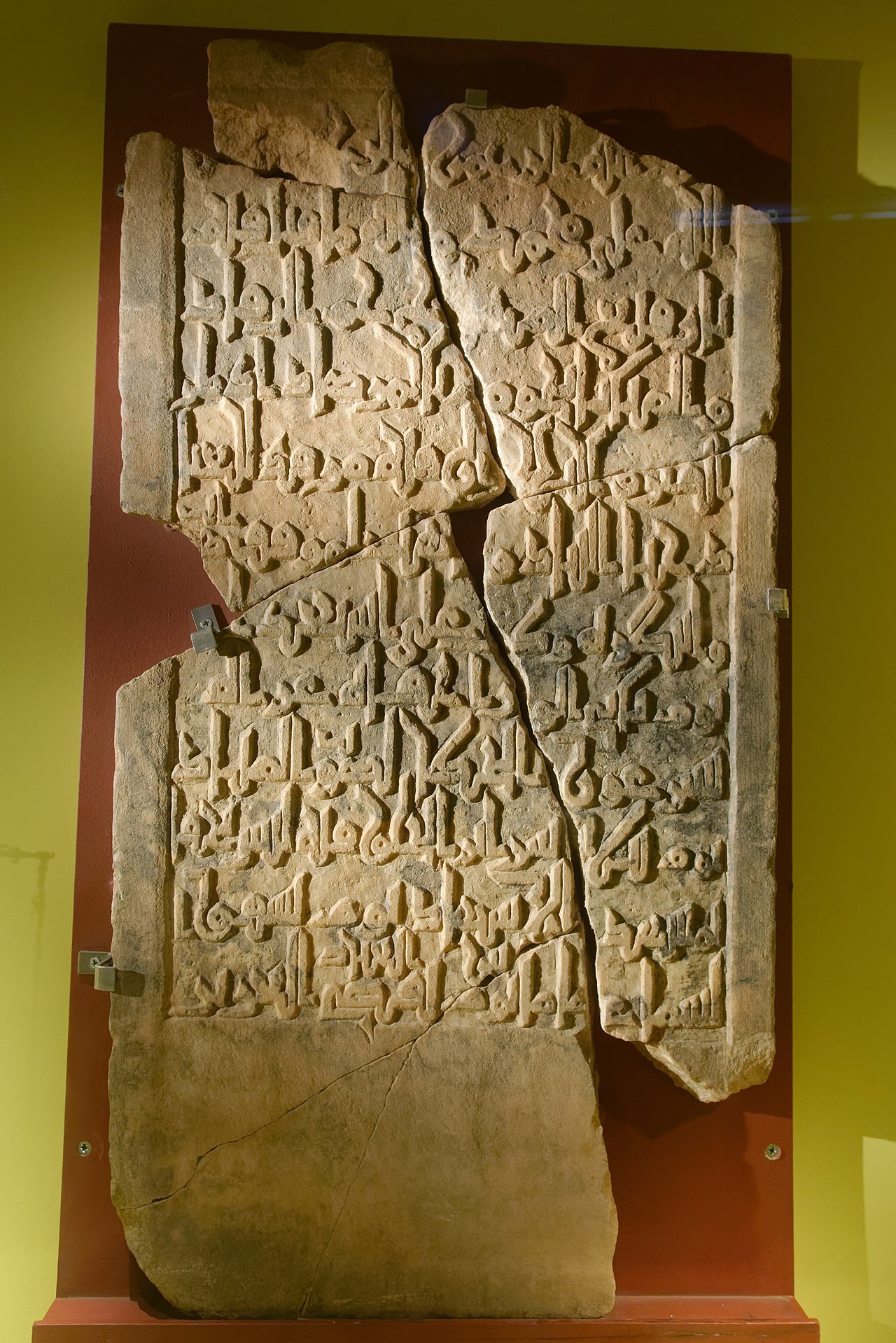
The kings on the stones took Arabic names: Muhammad son of Abd Allah, Abu Bakr son of Abi Quhafa, Umar son of al-Khattab, the names of the Prophet and his first two successors.11 What the stones mean is argued over. Lange reads them as the graves of a new dynasty of Berber origin that seized power around 1080, in the Almoravid period. Michael Gomez reads the borrowed names as a claim to a reformed Islam, not a first conversion.12
The chronicles give Gao two lines of kings, the Za and then the Sunni, with 31 Za and 19 Sunni rulers. Historians do not trust the early lists. Gomez warns that they fold every ruler of Gao into a single dynasty, and Lange writes that it is “very uncertain” who founded the Sunni line “and when he lived.”13
From the late 13th century Gao owed allegiance to Mali. The Mali kings Sakura and Mansa Musa are both credited with taking it, which Nehemia Levtzion reads as a sign that they had to reassert their rule over “a remote and rebellious tributary.”14 Levtzion dates Songhai’s independence to the end of the 14th century. Mali lost Timbuktu to the Tuareg in 1433 or 1434, and by then Sunni Sulayman Dandi had begun taking Sahel provinces west of the river bend.15
Sunni Ali
Sunni Ali took power in 1464. Al-Sa’di gives two accession dates in two chapters, 1464-65 and 1468-69, and three reign lengths, 24, 27 and 28 years.16 Whatever the date, his reign was one campaign after another. By Gomez’s count he was at war without a break from the seizure of Timbuktu in 1469 to his return to Gao in 1477.17
Timbuktu fell to him because of a quarrel among its rulers. The Tuareg chief Akil held the city through a local governor, and when Akil took away the governor’s customary third of the taxes, the governor, Umar, secretly offered the city to Sunni Ali and sent boats to carry his army across the river.18 Al-Sa’di gives the date of his entry as Jan. 18 or 19, 1469, and says that “He perpetrated terrible wickedness in the city, putting it to flame, sacking it, and killing large numbers of people.”19
Jenne took longer. Al-Sa’di says Sunni Ali besieged it “for seven years, seven months and seven days,” then gives a second version of four years, and a third of a year and a month that he admits may not refer to the siege at all. The Ta’rikh al-fattash, the other Timbuktu chronicle, says six months. Levtzion dates the fall to about 1473, or probably 1475, and writes that Sunni Ali brought 400 boats and starved the town out. The peace was sealed when Sunni Ali married the mother of Jenne’s young ruler.20
Al-Sa’di describes the persecution of Timbuktu’s scholars in waves and names the victims: two brothers of Mahmud’s mother were executed, and 30 young women from scholarly families were ordered brought to him on foot and, when they could walk no farther, killed.21 He also records, and cannot quite explain, that Sunni Ali respected learning. The king used to say, “Were it not for the scholars, life would not be pleasant or agreeable,” and one scholar refused to speak ill of him after his death because Sunni Ali “treated me well.”22
Modern historians read the persecution as politics. Levtzion writes that Sunni Ali treated the Sankore scholars “as collaborators of his enemies rather than simply as Muslims and scholars,” since they were allied with the Tuareg he was fighting. Sunni Ali appointed a new judge from an older scholarly family.23 Gomez argues that the chronicles’ portrait of an irreligious tyrant served later political purposes, and notes that al-Sa’di was himself of Fulani descent, through a woman captured in one of Sunni Ali’s raids.24 Sunni Ali died in November 1492, on his way home from a campaign in Gurma.25
The askiya takes power
Sunni Ali’s son Abu Bakr Dao succeeded him and was immediately challenged by one of his father’s senior commanders, Muhammad Ture, governor of the Bandiagara uplands.26 Muhammad attacked him at Danagha in February 1493 and again in April. Al-Sa’di wrote that the armies “almost annihilated one another” before Muhammad won. The defeated Sunni fled, and the sources disagree on whether he died in exile or in the battle.27
Levtzion reads the war as a contest between the western provinces and Songhai proper. Muhammad’s closest ally was the chief of Bara, north of Lake Debo, while the commander of the eastern frontier backed the Sunni.28 Al-Sa’di explains the new ruler’s title, askiya, with a story that Sunni Ali’s daughters cried out in Songhay that he would never be king. Hunwick calls this a folk etymology; the other chronicle points out the title was older than Muhammad.29
The new askiya released the Timbuktu governor Sunni Ali had imprisoned, or tried to, and brought the exiled scholars home. Al-Sa’di credits him with separating soldiers from civilians, where under Sunni Ali “everyone had been a soldier.”30 Gomez argues that exiled Timbuktu scholars were among the plotters and that their restoration was their reward.31
Pilgrim and caliph
In late 1496 Askiya Muhammad left Gao for Mecca with notables from every group in the empire, and he returned in the summer of 1498.32 On the way, al-Sa’di writes, he asked an Abbasid sharif to make him his deputy, or khalifa, for the land of Songhai. The sharif told him to give up power for three days and come back on the fourth, then placed a cap and turban on his head, “Thus he became a true khalifa in Islam.”33
The other chronicle credits the sharif of Mecca instead. Hunwick has argued that the grant came from the Abbasid caliph in Cairo, who then lived under the rule of the Mamluk sultans. He calls the title “an empty formality in real terms,” but one that “legitimized him as an Islamic authority in the eyes of the Timbuktu scholars.”34 Levtzion sees it as a replacement for the power Sunni Ali had claimed through traditional Songhay religion: “The ‘pilgrim-king’ replaced the ‘magician-king’.”35
Governing the empire
Askiya Muhammad expanded the state Sunni Ali had built. Hunwick writes that by about 1520 it “controlled the Middle Niger very firmly, and somewhat more tenuously a large swathe of territory stretching from the river Senegal in the west to the Air massif in the east,” and north to the salt pans of Taghaza. He puts its area at about 1.4 million square kilometers, roughly the size of modern Mali. The Tuareg sultanate of Agadez paid tribute. Kebbi, to the east, broke away in 1517, and campaigns against Borgu failed.36
The empire was split into two great commands. The Kurmina-fari, based at Tendirma, governed the western half and ranked second only to the askiya; Gomez calls the creation of that office “the most important political innovation in imperial Songhay’s history.” The Dendi-fari guarded the southeast.37 In many places local rulers stayed in charge beside a Songhai official. At Jenne the Jenne-koi kept his seat while a Jenne-mondyo looked after Songhai’s interests, and the governors of tributary lands sent tribute to Gao.38
How far Askiya Muhammad made the state Islamic is disputed. He appointed judges, took advice from scholars and declared a jihad. But Leo Africanus, who went to Songhai as a young man some time between 1506 and 1510, reported country people taxed until they were “scarcely left with enough to subsist on,” and Levtzion finds the court kept its old Songhay forms.39
Brothers and sons
The empire’s weakness, Levtzion writes, was its royal family: “Only three out of nine askiyas died a natural death in office; all the others were deposed or murdered by their own brothers.”40 It began at the top. By then blind, Askiya Muhammad was deposed in 1528 or 1529 by his son Musa, who declared himself askiya at the prayer of the Feast of Sacrifice. Musa was killed by his brothers in 1531, and his successor, Muhammad Bonkana, was overthrown in 1537.41
Askiya Dawud ruled from 1549 to 1582. As Kurmina-fari in the mid-1540s he led an army into Mali’s capital; the king fled, and Songhai troops occupied the town for seven days. Al-Sa’di says Dawud had his men relieve themselves in the royal palace until it was full. Gomez reads it as a claim that Songhai, not Mali, was now the region’s leading power.42 Dawud died in 1582 at his estate at Tondibi. Within six years, his sons had fought a civil war in which the western army marched on Gao, and Levtzion concludes that three years before the Moroccan invasion the empire “had lost about half of its army.”43
Salt, gold and the river
The empire lived off the Niger. Royal estates along the river, from Dendi to Lake Debo, grew rice with enslaved labor; one plantation in Dendi, worked by 200 people, owed the askiya 1,000 sacks of rice a year.44 Slavery grew with the empire, and Gomez finds that under Dawud domestic slavery expanded so much that the period marks a new stage in its development.45 The boatmen of the river formed a fleet; Cissoko counts nearly 2,000 canoes, and one of the highest offices of state was the Hi-koi, commander of the boats.46
Trade ran on salt and gold. Salt came in slabs from Taghaza, in the middle of the Sahara, under a Songhai official. Gold came from the south through Jenne, which al-Sa’di called the meeting place of salt merchants from Taghaza and gold merchants from Bitu, near the Akan goldfields.47 Hunwick writes that the empire’s strategy was to control “the axes of north-south trade by establishing dominance over the gold-salt trade.”48 None of the sources used for this page gives a total for the gold that passed through.
Gao itself was large. A count of its houses late in the 16th century, recorded in the Ta’rikh al-fattash, found 7,626 compounds, not counting straw huts. How many people that means depends on how many lived in each house, and the estimates run from 38,000 to 100,000.49
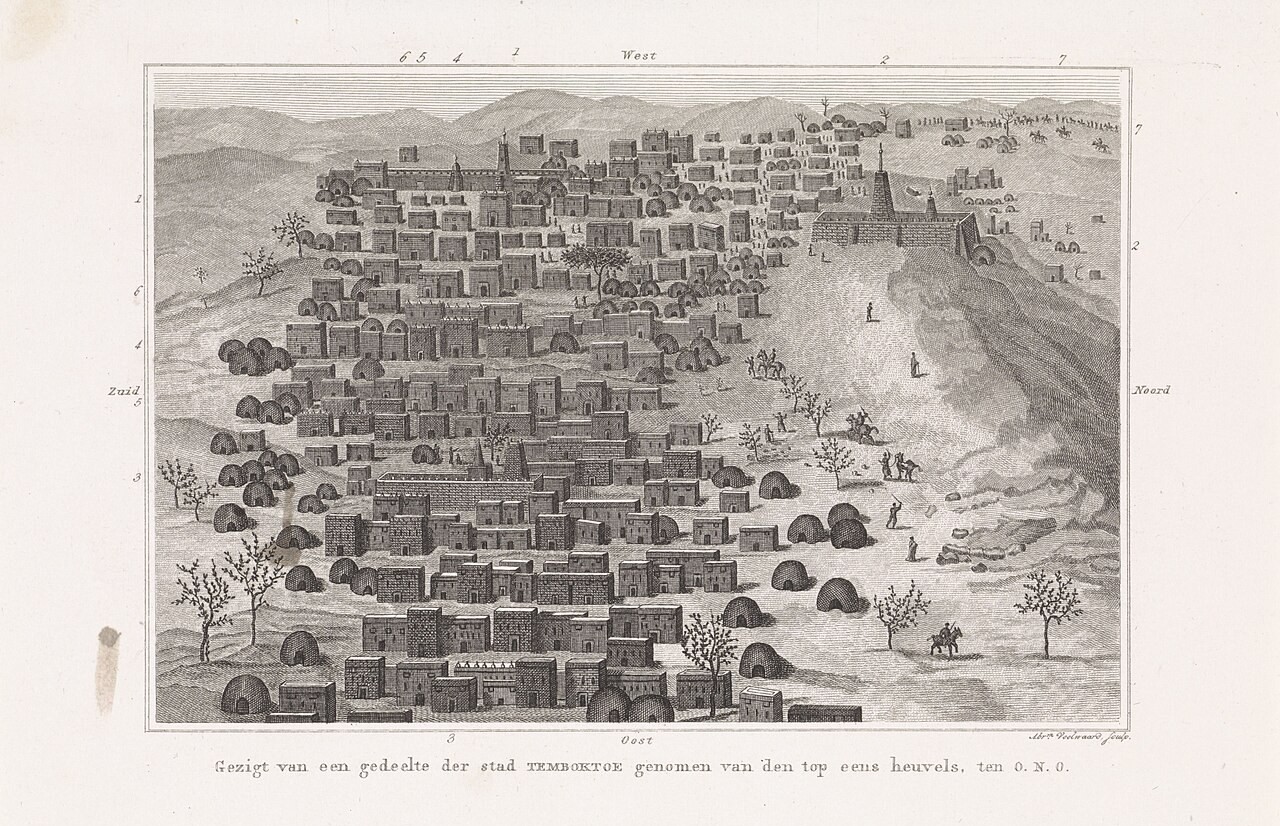
Timbuktu and Jenne
Timbuktu was not the capital, but its scholars carried weight at Gao. Al-Sa’di’s history spends five chapters on the city, its scholars and its imams before it reaches the politics of the empire.50 Askiya Muhammad’s chief judge there, from 1498 to 1548, was Mahmud b. Umar Aqit, the boy carried out of the city in 1469.51
The city’s size is uncertain. Elias Saad, the historian of its scholarly families, puts the 16th-century population between 30,000 and 50,000 and thinks it never passed 50,000. The Ta’rikh al-fattash reports 150 to 180 Quranic schools. Saad accepts the number of teachers, but from it he estimates only 4,000 to 5,000 pupils at the elementary level.52 Jenne’s own story, as al-Sa’di tells it, was of a town never conquered before Sunni Ali, set in a land of 7,077 villages.53
Tondibi
The Moroccan sultan Ahmad al-Mansur came to the throne after the battle of Alcazar in 1578, where Moroccan forces captured Portuguese weapons. Lansiné Kaba argues that those guns, and the army of renegades and Andalusian exiles he built, encouraged him to attack Songhai. Religion, Kaba writes, “served mostly as a pretext. The quest for gold supplied the motive.”54 Al-Mansur demanded the tax on the salt mines. Askiya Ishaq II refused and, al-Sa’di reports, sent back “a spear and two iron shoes,” an old way of threatening war.55
The expedition left Morocco in October 1590 under Jawdar, a Spanish-born convert whom al-Sa’di calls “a short, blue-eyed (azraq) eunuch.” By al-Sa’di’s count it had 3,000 musketeers and twice that number of support staff. An anonymous Spanish account counts 4,070 fighting men, including 70 Christian captives with blunderbusses.56 The army reached the Niger at the end of February 1591, after crossing the desert. Levtzion writes that half of it died on the way.57
The armies met near Tondibi, about 30 miles north of Gao, on March 13, 1591. Al-Sa’di gives the askiya 12,500 cavalry and 30,000 infantry; other sources give more, up to 104,000 men in all.58 Jawdar’s troops, al-Sa’di wrote, “broke the army of the askiya in the twinkling of an eye.” The Spanish account says the battle lasted two hours. Songhai soldiers who would not flee sat on their shields until they were killed.59
Accounts of the battle differ in their details. The Spanish account says the Songhai drove cattle at the Moroccan lines and Jawdar opened his ranks to let them pass. Levtzion reports that version and another, in which the first volley turned the herd back into the Songhai army. Al-Sa’di’s account mentions no cattle at all.60
Ishaq II withdrew across the river and told Gao and Timbuktu to evacuate. Jawdar entered an almost empty Gao and wrote home that the house of the chief of the donkey drivers in Morocco was better than the askiya’s palace.61 Ishaq offered 100,000 mithqals of gold and 1,000 slaves if the army would go home. Jawdar was willing; al-Mansur dismissed him and sent a harder commander, Mahmud b. Zarqun.62 Mahmud arrested Timbuktu’s scholars in October 1593 and sent them in chains to Marrakesh. Among them was the celebrated scholar Ahmad Baba, who returned more than a decade later.63
Dendi
Songhai did not end at Tondibi. After Ishaq II was killed in 1592 by people he had fled to, and his brother Muhammad Gao was trapped and killed by the Moroccans, the Songhai who refused to submit chose another son of Dawud, Nuh, as askiya in Dendi, the old heartland downriver.64 Al-Sa’di wrote that Nuh “and his small band was more successful against them than Askiya Ishaq had been with a force a hundred times larger.” Kaba calls Nuh “the first African leader to practise guerrilla warfare.”65
Kaba’s title names the invaders’ other enemy: “Mosquitoes.” The Moroccan troops in the southern swamps died of disease; al-Sa’di wrote that the water gave them diarrhea “which many died from, in addition to combat fatalities.”66 Al-Mansur’s son later complained to Ahmad Baba that his father had sent 23,000 of his best soldiers to the Sudan, “All this was done for naught.”67
The war in Dendi faded after 1612, when a Moroccan commander bribed the Songhai general not to fight and then made himself pasha.68 The Moroccan garrisons, later known as the Arma, ruled the river towns from Timbuktu and stopped taking orders from Marrakesh after 1618. They held power around Timbuktu into the 19th century.69 The Songhai of Dendi split into small states in the 17th century and, in Michel Abitbol’s account, kept their freedom until the beginning of the 19th.70
How we know
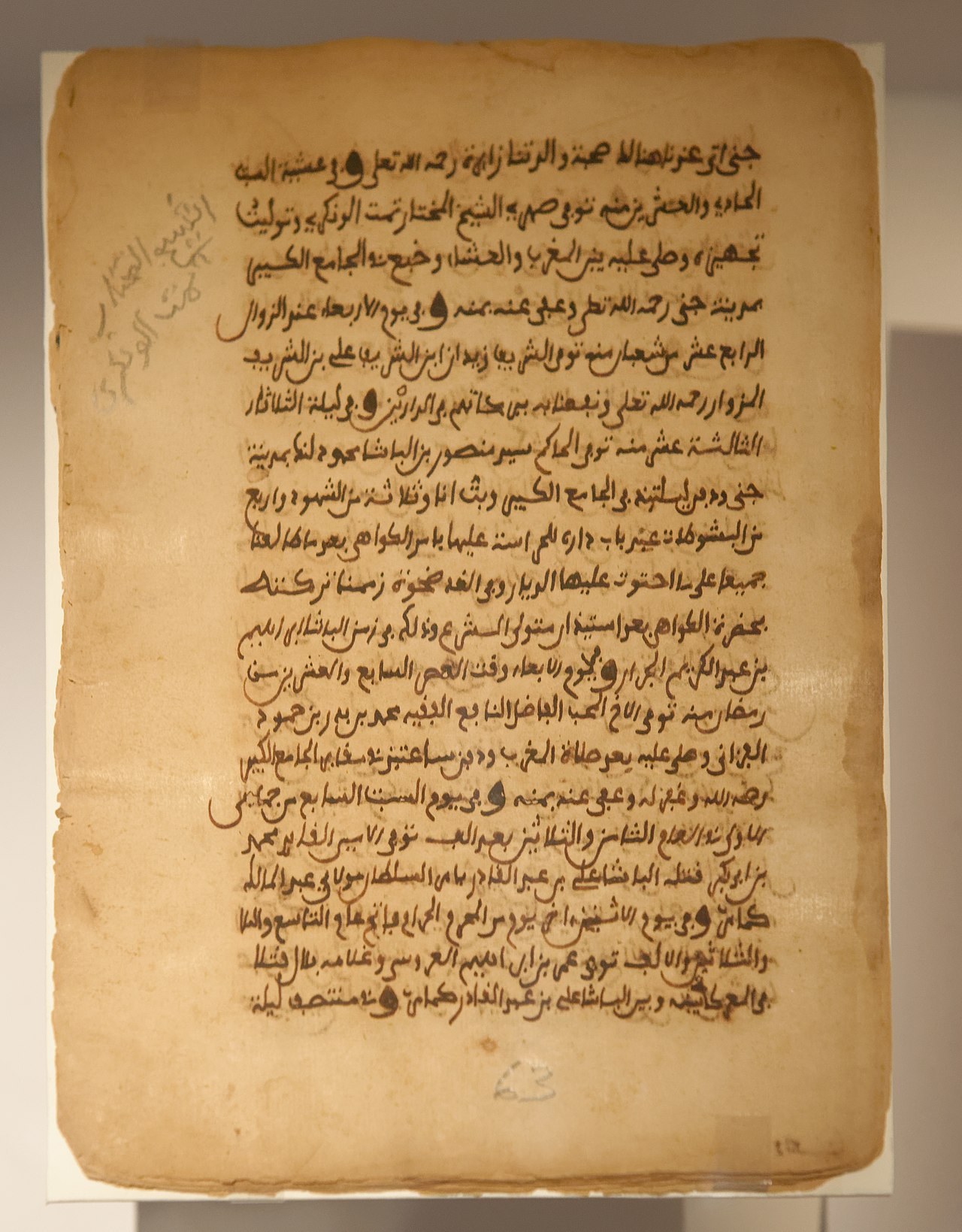
Most of what is known comes from two chronicles written in Timbuktu under Moroccan rule. Al-Sa’di, born in 1596, was chief secretary to the pashas and finished his Ta’rikh al-Sudan in the mid-17th century. Hale calls it, by historians’ consensus, the most detailed and accurate account of the empire.71 It also contradicts itself: it dates Sunni Ali’s accession twice and Tondibi twice.72
The other chronicle is harder to use. The text published in 1913 as the Ta’rikh al-fattash, and long credited to a scholar of Askiya Muhammad’s court, is by the account of Mauro Nobili and Mohamed Shahid Mathee a combination of two works: a 17th-century chronicle by Ibn al-Mukhtar and a forgery written in the 1820s to support the Fulani state of Masina. The chapters that present Askiya Muhammad as the 11th caliph, and predict a 12th, belong to the forgery.73
Outside Timbuktu there is less. Arabic geographers described Kawkaw from the ninth century on, and the gravestones of Gao-Saney give the names of kings. Leo Africanus left an account of a visit in the early 1500s, and a Moroccan chronicle and an anonymous Spanish report describe the conquest.74 In a letter written before 1511, the Portuguese commander Afonso de Albuquerque passed on what two Jewish informants told him about caravans arriving in Cairo from West Africa with gold, sometimes accompanied by “a great lord called azquya.” Hunwick takes this for news of Askiya Muhammad’s pilgrimage.75
Songhai griots tell the story differently. The scholar Thomas Hale recorded a 1,602-line epic of Askia Mohammed from the bard Nouhou Malio at Saga, near Niamey, in 1980 and 1981. Hale writes that griots pass over the fall of Gao and dwell instead on “the valor of those Songhay who mounted a stiff resistance to the invaders after 1591.”76
Notes
-
Hunwick 2003, p. 93; Gomez 2018, p. 195. ↩
-
Hunwick 2003, pp. 93, 218 n. 4; Gomez 2018, pp. 174, 197. ↩
-
Hunwick 2003, pp. 91, 103. ↩
-
Hunwick 2003, pp. xli, 190, 323; Gomez 2018, p. 245; Kaba 1981, pp. 457, 468. ↩
-
Levtzion and Spaulding 2003, p. 2; Gomez 2018, p. 21. ↩
-
Levtzion and Spaulding 2003, p. 8. ↩
-
Levtzion and Spaulding 2003, pp. 9, 21-22. ↩
-
Levtzion and Spaulding 2003, p. 87. ↩
-
Lange 1994, p. 275; Lange 1991, p. 252. ↩
-
Lange 1991, pp. 252, 260-261; Lange 1994, p. 275. ↩
-
Lange 1991, p. 260; Lange 1994, p. 280. ↩
-
Lange 1991, p. 275; Lange 1994, p. 283; Gomez 2018, p. 27. ↩
-
Lange 1994, pp. 280, 293; Gomez 2018, p. 24. ↩
-
Levtzion 1973, p. 75; Levtzion 1977, pp. 380-381. ↩
-
Levtzion 1973, pp. 81, 84; Levtzion 1977, pp. 384, 420. ↩
-
Hunwick 2003, pp. 31, 91; Levtzion 1977, p. 421. ↩
-
Gomez 2018, p. 189. ↩
-
Levtzion 1977, p. 421; Gomez 2018, p. 186. ↩
-
Hunwick 2003, p. 93. ↩
-
Hunwick 2003, pp. 20-22, liv; Gomez 2018, p. 187; Levtzion 1977, pp. 422, 425-426. ↩
-
Hunwick 2003, p. 94. ↩
-
Hunwick 2003, pp. 94-95. ↩
-
Levtzion 1977, p. 422. ↩
-
Gomez 2018, pp. 172-174, 189, 199. ↩
-
Levtzion 1977, p. 427; Hunwick 2003, p. 100. ↩
-
Hunwick 2003, pp. xxxix, 102. ↩
-
Hunwick 2003, p. 102 and nn. 6-7; Levtzion 1977, p. 427. ↩
-
Levtzion 1977, p. 427. ↩
-
Hunwick 2003, p. 103 and n. 8. ↩
-
Hunwick 2003, p. 103. ↩
-
Gomez 2018, p. 224. ↩
-
Hunwick 2003, pp. 103, 105; Levtzion 1977, p. 428. ↩
-
Hunwick 2003, p. 105. ↩
-
Hunwick 2003, pp. lv, 105 n. 22; Gomez 2018, p. 235. ↩
-
Levtzion 1977, p. 428. ↩
-
Hunwick 2003, pp. xli, xlix. ↩
-
Gomez 2018, p. 225; Levtzion 1977, pp. 443-444; Cissoko 1984, pp. 198-199. ↩
-
Hunwick 2003, p. xlii; Gomez 2018, p. 245. ↩
-
Levtzion 1977, p. 428; Hunwick 2003, pp. li, 272. ↩
-
Levtzion 1977, p. 443. ↩
-
Levtzion 1977, pp. 434-435; Hunwick 2003, p. 336. ↩
-
Hunwick 2003, p. 140; Gomez 2018, p. 331; Levtzion 1977, p. 455. ↩
-
Hunwick 2003, pp. 171, 337; Levtzion 1977, p. 441. ↩
-
Gomez 2018, pp. 340-342; Hunwick 2003, p. l. ↩
-
Gomez 2018, p. 334. ↩
-
Cissoko 1984, p. 201; Hunwick 2003, p. xliii. ↩
-
Hunwick 2003, p. xli; Saad 1983, p. 31. ↩
-
Hunwick 2003, p. xlii. ↩
-
Hunwick 2003, p. xlix; Saad 1983, p. 90; Cissoko 1996, p. 159. ↩
-
Hunwick 2003, table of contents. ↩
-
Hunwick 2003, p. 218 n. 4. ↩
-
Saad 1983, pp. 27, 88-91. ↩
-
Hunwick 2003, pp. 19-20. ↩
-
Kaba 1981, pp. 460-461; Abitbol 1992, p. 301. ↩
-
Hunwick 2003, p. 187 and n. 11; Kaba 1981, p. 461. ↩
-
Hunwick 2003, pp. 186, 188 and n. 13, 319; Abitbol 1992, p. 302. ↩
-
Hunwick 2003, p. 189; Levtzion 1977, p. 414. ↩
-
Hunwick 2003, pp. 189-190 and nn. 24-25. ↩
-
Hunwick 2003, pp. 190, 323. ↩
-
Hunwick 2003, p. 323; Levtzion 1977, p. 442. ↩
-
Hunwick 2003, pp. 190-191. ↩
-
Hunwick 2003, pp. 191, 195; Kaba 1981, p. 466. ↩
-
Hunwick 2003, pp. 219, 224-225; Kaba 1981, p. 470. ↩
-
Hunwick 2003, pp. 199-202, 337. ↩
-
Hunwick 2003, p. 204; Kaba 1981, p. 469. ↩
-
Kaba 1981, pp. 469, 474; Hunwick 2003, p. 205. ↩
-
Kaba 1981, p. 474. ↩
-
Kaba 1981, pp. 472-473; Saad 1983, p. 190. ↩
-
Abitbol 1992, pp. 304, 307-308; Hunwick 2003, p. 197 n. 67. ↩
-
Abitbol 1992, pp. 310, 312. ↩
-
Hale 1990, p. 48. ↩
-
Hunwick 2003, pp. 31, 91, 190. ↩
-
Nobili and Mathee 2015, pp. 40, 45-46, 70. ↩
-
Levtzion and Spaulding 2003, pp. 2-35; Lange 1991, p. 260; Hunwick 2003, pp. 188 n. 13, 272, 318-331. ↩
-
Hunwick 2003, p. 335 n. 4. ↩
-
Hale 1990, pp. 10-11, 54-55, 178. ↩
Where the estimates differ
| Estimate | Who holds it | Source |
|---|---|---|
| 869 AH (1464-65), for 27 or 28 years | Al-Sa'di, in his chapter on the reign, quoting an earlier commentary | Hunwick 2003, p. 91 |
| 873 AH (1468-69), for 24 years | Al-Sa'di, in his chapter on Timbuktu | Hunwick 2003, p. 31 |
| 1464, for 28 years | Nehemia Levtzion | Levtzion 1977, pp. 421, 427 |
| Estimate | Who holds it | Source |
|---|---|---|
| Tuesday, March 13, 1591 | Al-Sa'di, in his account of the battle; Lansiné Kaba; John Hunwick | Hunwick 2003, pp. 190, 337; Kaba 1981, p. 457 |
| April 12, 1591 | Al-Sa'di, in his chapter on Timbuktu, as the date Songhay rule ended | Hunwick 2003, p. 31 |
| March 12, 1591 | Michel Abitbol | Abitbol 1992, p. 303 |
| Estimate | Who holds it | Source |
|---|---|---|
| 12,500 cavalry and 30,000 infantry | Al-Sa'di | Hunwick 2003, p. 189 |
| 18,000 cavalry and 9,700 infantry | The Ta'rikh al-fattash, citing an eyewitness | Hunwick 2003, p. 189 n. 25 |
| 80,000 men, 8,000 of them mounted | An anonymous Spanish account written for the Moroccan side | Hunwick 2003, p. 189 n. 25 |
| 104,000 | Al-Fishtali, the Moroccan court historian | Hunwick 2003, p. 190 n. 25 |
| Estimate | Who holds it | Source |
|---|---|---|
| Gao: 7,626 houses counted, so perhaps 38,000 to 76,000 people | John Hunwick, from a house count in the Ta'rikh al-fattash, at five to 10 people a house | Hunwick 2003, p. xlix |
| Gao: 76,268 from the same count at 10 a house, up to 100,000 with the suburbs | Sékéné Mody Cissoko | Cissoko 1996, p. 159 |
| Timbuktu: 30,000 to 50,000, never more than 50,000 | Elias Saad, from indirect evidence | Saad 1983, pp. 27, 90-91 |
| Timbuktu: about 80,000 under Askiya Dawud | Sékéné Mody Cissoko, calling it very approximate | Cissoko 1984, p. 206 |
Rulers of Songhai
| Ruler | Reign | Note |
|---|---|---|
| Sunni Ali | 1464 to 1492 | Al-Sa'di gives two different accession years; see the estimates below. |
| Askiya Muhammad | 1493 to 1529 | Hunwick's dates; Levtzion and Cissoko end the reign in 1528. |
| Musa | 1529 to 1531 | |
| Muhammad Bonkana | 1531 to 1537 | |
| Isma'il | 1537 to 1539 | |
| Ishaq I | 1539 to 1549 | |
| Dawud | 1549 to 1582 | Hunwick gives 1582; the Ta'rikh al-fattash gives 1583. |
| Muhammad al-Hajj | 1582 to 1586 | |
| Muhammad Bani | 1586 to 1588 | |
| Ishaq II | 1588 to 1592 | Defeated at Tondibi in 1591 and deposed the next year. |
Timeline
- 1464 Songhai emerges
- 1464 Capital at Gao
- 1464 Sunni Ali begins to rule
- 1493 Askiya Muhammad begins to rule
- 1529 Musa begins to rule
- 1531 Muhammad Bonkana begins to rule
- 1537 Isma'il begins to rule
- 1539 Ishaq I begins to rule
- 1549 Dawud begins to rule
- 1582 Muhammad al-Hajj begins to rule
- 1586 Muhammad Bani begins to rule
- 1588 Ishaq II begins to rule
- 1591 A Moroccan army defeats the askiya at Tondibi; Songhay rulers fight on from Dendi
Correction
Our Songhai overview has moved into the new Songhai page, and it had the end of the story wrong.The overview at /history/articles/songhai-empire-askia-muhammad-tondibi/ now redirects to the new state page. It said the Askiya dynasty ruled a reduced kingdom in Dendi for another three centuries until France conquered it in 1901. None of the scholarly sources we used supports that; Michel Abitbol writes that the Songhay of Dendi broke up into small political units in the 17th century and kept their freedom until the beginning of the 19th (Abitbol 1992, pp. 310, 312). It said the Moroccan army went north across the Sahara; it marched south from Marrakesh to the Niger (Abitbol 1992, p. 302). It gave the Songhay army at Tondibi as around 30,000 infantry and 10,000 cavalry, a pairing no source gives; al-Sa'di counts 12,500 cavalry and 30,000 infantry, and other sources give other figures (Hunwick 2003, p. 189 and n. 25). It also presented one version of the cattle story at Tondibi as the account; there are two versions, and al-Sa'di mentions no cattle (Hunwick 2003, p. 323; Levtzion 1977, p. 442). The new page sets out the competing figures side by side.Corrected in September 2026. See the log entry.
Sources
- John O. Hunwick (trans. and ed.). “Timbuktu and the Songhay Empire: Al-Sa'di's Ta'rikh al-Sudan down to 1613 and Other Contemporary Documents”, Brill, 2003.
- Michael A. Gomez. “African Dominion: A New History of Empire in Early and Medieval West Africa”, Princeton University Press, 2018.
- Nehemia Levtzion. “The western Maghrib and Sudan, in The Cambridge History of Africa, vol. 3”, Cambridge University Press, 1977.
- Lansiné Kaba. “Archers, Musketeers, and Mosquitoes: The Moroccan Invasion of the Sudan and the Songhay Resistance (1591-1612)”, Journal of African History 22, no. 4, 1981.
Further Reading
The sources above support the specific claims on this page. The works below are the scholarship behind them. Citations are given in full so readers can find them through a library or database; some are paywalled.
Peer-reviewed articles
- Lange, Dierk (1994). "From Mande to Songhay: Towards a Political and Ethnic History of Medieval Gao." The Journal of African History 35(2): 275-301. DOI: 10.1017/S0021853700026438.
- Lange, Dierk (1991). "Les Rois de Gao-Sane et les Almoravides." The Journal of African History 32(2): 251-275. DOI: 10.1017/S002185370002572X.
- Leube, Georg (2016). "Sacred Topography: A Spatial Approach to the stelae of Gao-Saney." Islamic Africa 7(1): 44-59. DOI: 10.1163/21540993-00701005.abstract free
- de Moraes Farias, Paulo F. (1990). "The Oldest extant writing of West Africa: Medieval epigraphs from Issuk, Saney and Egef-n-Tawaqqast." Journal des africanistes 60(2): 65-113. DOI: 10.3406/jafr.1990.2452.abstract free
- Gomez, Michael A. (2019). "Sunni 'Ali and the Reinvention of Songhay." African Dominion: A New History of Empire in Early and Medieval West Africa (Princeton University Press), pp. 168-192 null: 168-192. DOI: 10.23943/princeton/9780691196824.003.0009.
- Gomez, Michael A. (2019). "Of Fitnas and Fratricide: The Nadir of Imperial Songhay." African Dominion: A New History of Empire in Early and Medieval West Africa (Princeton University Press), pp. 315-333 null: 315-333. DOI: 10.23943/princeton/9780691196824.003.0013.
- Hunwick, John O. (2000). "Translator's Introduction. Songhay: an Interpretive Essay." Timbuktu and the Songhay Empire (Brill), pp. xxii-lxv null: xxii-lxv. DOI: 10.1163/9789004491137_005.
- Kaba, Lansine (1986). "Power and Democracy in African Tradition: The Case of Songhay, 1464-1591." Democracy and Pluralism in Africa (Lynne Rienner), pp. 95-102 null: 95-102. DOI: 10.1515/9781685859053-012.abstract free
- Montpetit, Mathilde (2023). "Eunuchs and the Practice of Power in the Early Songhay Empire." Journal of West African History 9(2): 21-40. DOI: 10.14321/jwestafrihist.9.2.0021.abstract free
- Hall, Bruce S. (2021). "The Mali and Songhay Empires." The Oxford World History of Empire (Oxford University Press), pp. 648-664 null: 648-664. DOI: 10.1093/oso/9780197532768.003.0023.abstract free
- Hall, Bruce S. (2013). "Arguing sovereignty in Songhay." Afriques: debats, methodes et terrains d'histoire 04. DOI: 10.4000/afriques.1121.abstract free
- Nixon, Sam; Rehren, Thilo; Guerra, Maria Filomena (2011). "New light on the early Islamic West African gold trade: coin moulds from Tadmekka, Mali." Antiquity 85(330): 1353-1368. DOI: 10.1017/S0003598X00062104.abstract free
- Cisse, Mamadou (2017). "The Trans-Saharan Trade Connection with Gao (Mali) during the First Millennium AD." Trade in the Ancient Sahara and Beyond (Cambridge University Press), pp. 101-130 null: 101-130. DOI: 10.1017/9781108161091.005.abstract free
- Stewart, Charles C. (2021). "What's In the Manuscripts of Timbuktu? A Survey of the Contents of 31 Private Libraries." History in Africa 48: 279-308. DOI: 10.1017/hia.2020.18.abstract free
- McIntosh, Roderick J.; McIntosh, Susan Keech (1981). "The Inland Niger Delta before the Empire of Mali: Evidence from Jenne-Jeno." The Journal of African History 22(1): 1-22. DOI: 10.1017/S0021853700018983.abstract free
- Bourgeois, Jean-Louis (1987). "The History of the Great Mosques of Djenné." African Arts 20(3): 54. DOI: 10.2307/3336477.abstract free
- Kaba, Lansine (1981). "Archers, Musketeers, and Mosquitoes: The Moroccan Invasion of the Sudan and the Songhay Resistance (1591-1612)." The Journal of African History 22(4): 457-475. DOI: 10.1017/S0021853700019861.
- Abitbol, Michel (1977). "Une Elite soudanaise des XVIIe-XVIIIe siecles: les Arma de Tombouctou." Revue francaise d'histoire d'outre-mer 64(237): 445-455. DOI: 10.3406/outre.1977.2051.abstract free
- Hunwick, John O. (2000). "The Sa'dian Conquest of Songhay: (1) The Arrival of Pasha Jawdar." Timbuktu and the Songhay Empire (Brill), pp. 186-199 null: 186-199. DOI: 10.1163/9789004491137_027.
- Hunwick, John O. (2000). "The Sa'dian Conquest of Songhay: (2) Songhay Resistance." Timbuktu and the Songhay Empire (Brill), pp. 200-212 null: 200-212. DOI: 10.1163/9789004491137_028.
- Hunwick, John O. (2000). "Obituaries and Events of the Years 1591-1613." Timbuktu and the Songhay Empire (Brill), pp. 259-270 null: 259-270. DOI: 10.1163/9789004491137_036.
- Gosselain, Olivier P.; Smolderen, Lucie (2018). "Crossing Archaeology and Oral Tradition: Approaching Dendi History from Sites of Memory." Two Thousand Years in Dendi, Northern Benin: Archaeology, History and Memory (Brill), pp. 6-19 null: 6-19. DOI: 10.1163/9789004376694_003.abstract free
- Nobili, Mauro; Mathee, Mohamed Shahid (2015). "Towards a New Study of the So-Called Tarikh al-fattash." History in Africa 42: 37-73. DOI: 10.1017/hia.2015.18.
- Nobili, Mauro (2016). "Letter on the appearance of the twelfth caliph (Risala fi zuhur al-khalifa al-thani 'ashar). Edition, translation and historical analysis." Afriques: debats, methodes et terrains d'histoire 07. DOI: 10.4000/afriques.1958.abstract free
- Levtzion, Nehemia (2000). "SONGHAY HISTORY (review essay of Hunwick, Timbuktu and the Songhay Empire)." The Journal of African History 41(3): 487-526. DOI: 10.1017/S0021853700237833.abstract free
- Lange, Dierk (2004). "Not yet Songhay (review)." Orientalistische Literaturzeitung 99(2). DOI: 10.1524/olzg.2004.99.2.141.abstract free
- van Dyke, Kristina (2005). "Beyond Monument Lies Empire: Mapping Songhay Space in Tenth- to Sixteenth-Century West Africa." Res: Anthropology and Aesthetics 48: 33-44. DOI: 10.1086/resv48n1ms20167675.
- Levtzion, Nehemia (1979). "Ancient Ghana: a Reassessment of some Arabic Sources." Revue francaise d'histoire d'outre-mer 66(242): 139-147. DOI: 10.3406/outre.1979.2183.abstract free
- Abitbol, Michel (1984). "The Religious Elite of Timbuktu (review of Saad, Social History of Timbuktu)." The Journal of African History 25(4): 469-472. DOI: 10.1017/S0021853700028528.abstract free
Books
- Hunwick, John O. (trans. and ed.) (1999). Timbuktu and the Songhay Empire: Al-Sa'di's Ta'rikh al-Sudan down to 1613 and Other Contemporary Documents. Leiden: Brill.
- Gomez, Michael A. (2018). African Dominion: A New History of Empire in Early and Medieval West Africa. Princeton University Press.
- Saad, Elias N. (1983). Social History of Timbuktu: The Role of Muslim Scholars and Notables, 1400-1900. Cambridge University Press.
- Cissoko, Sekene Mody (1996). Tombouctou et l'empire Songhay. Paris: L'Harmattan (1975 original: Dakar, Nouvelles Editions africaines).
- Levtzion, Nehemia (1973). Ancient Ghana and Mali. London: Methuen.
- Fauvelle, Francois-Xavier (2018). The Golden Rhinoceros: Histories of the African Middle Ages. Princeton University Press.
- Jeppie, Shamil; Diagne, Souleymane Bachir (eds.) (2008). The Meanings of Timbuktu. Cape Town: HSRC Press in association with CODESRIA.
- Hale, Thomas A. (1990). Scribe, Griot, and Novelist: Narrative Interpreters of the Songhay Empire, followed by the Epic of Askia Mohammed. University of Florida Press (Center for African Studies).
- Hunwick, John O. (ed. and trans.) (1985). Shari'a in Songhay: The Replies of al-Maghili to the Questions of Askia al-Hajj Muhammad. Oxford University Press for the British Academy (Fontes Historiae Africanae, Series Arabica V).
- Nobili, Mauro (2020). Sultan, Caliph, and the Renewer of the Faith: Ahmad Lobbo, the Tarikh al-fattash and the Making of an Islamic State in West Africa. Cambridge University Press.
- Nobili, Mauro; Wright, Zachary V.; Diakite, Ali (2025). The Chronicles of Two West African Kingdoms: The Tarikh Ibn al-Mukhtar of the Songhay Empire and the Tarikh al-Fattash of the Caliphate of Hamdallahi. Liverpool University Press.
- Haour, Anne (ed.) (2019). Two Thousand Years in Dendi, Northern Benin: Archaeology, History and Memory. Leiden: Brill.
- Moraes Farias, Paulo F. de (2003). Arabic Medieval Inscriptions from the Republic of Mali: Epigraphy, Chronicles and Songhay-Tuareg History. Oxford University Press for the British Academy.
More on Songhai
Songhai: 1464 to 1591.