
By Princewill Ubani · Published
Research ID: PA-ART-1313188285016141827
How Timbuktu's Manuscripts Survived the 2012 Jihadist Occupation
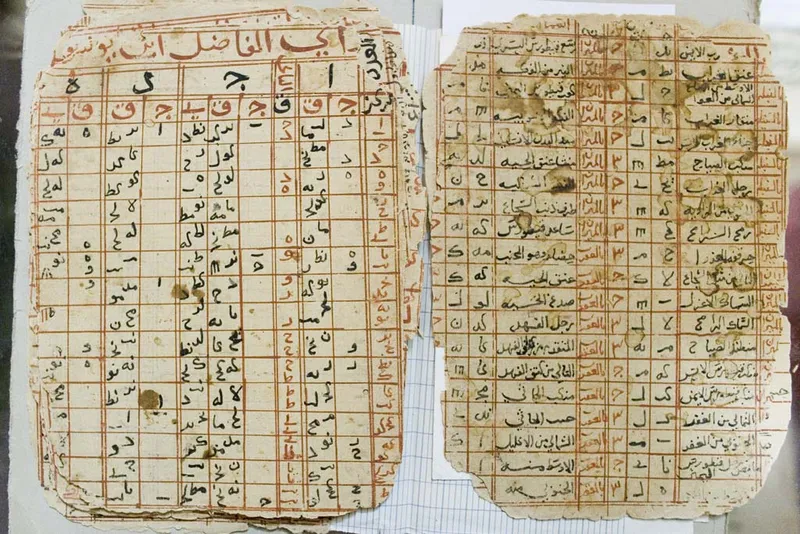
Tuareg separatists and jihadist fighters, including the al-Qaeda-linked group Ansar Dine, seized control of northern Mali in the spring of 2012 and occupied Timbuktu, a city that had spent roughly six centuries, from the late 1200s into the early 1900s, accumulating one of West Africa’s great archives of handwritten scholarship. The manuscripts in the city’s libraries and private family collections covered astronomy, medicine, mathematics, philosophy, poetry, history and Islamic law, including debates on polygamy, moneylending and slavery, and one 16th-century chronicler’s notebook even recorded a meteor shower observed in August 1583. With the occupation underway, Timbuktu’s librarians moved to keep that record out of the occupiers’ hands.
The effort was led by Abdel Kader Haidara, a manuscript collector and curator who organized a network of couriers, boat operators and safe-house keepers to move the collections south. Over months, an estimated 350,000 manuscripts were packed into trunks and metal boxes and smuggled out of the city, many carried down the Niger River by pinasse, the flat-bottomed boats used for traditional West African fishing and transport, on a route to Bamako, roughly a 15-hour drive from Timbuktu under normal conditions. The couriers moved through territory Ansar Dine partly controlled, alongside armed criminal bands who kidnapped travelers for ransom and robbed vehicles fleeing the fighting, making each shipment a real risk to the people carrying it.
Not everything made it out in time. When French and Malian forces advanced on Timbuktu in January 2013 and Ansar Dine’s fighters retreated, they set fire to part of the Ahmed Baba Institute, one of the city’s main manuscript repositories, destroying or damaging an estimated 4,203 manuscripts. The loss was real but limited: the vast majority of the institute’s holdings, along with the collections Haidara’s network had already evacuated, survived, and much of what had been lost or damaged had already been digitized in earlier preservation projects, giving researchers a record even where the physical pages did not survive.
The manuscripts that survived did more than preserve individual texts. Scholars who study the collection point to it as direct, physical evidence against the old claim that sub-Saharan Africa’s history was purely oral and undocumented before European colonization, a body of West African intellectual work written by West African scholars centuries before any European library arrived on the continent. UNESCO launched a conservation and digitization appeal for the manuscripts in 2014, and by 2022 roughly 300,000 of the evacuated manuscripts remained held in Bamako, still waiting, in many cases, to be properly cataloged and returned to a Timbuktu stable enough to house them again.
Sources
- “Timbuktu Librarians Duped Al Qaeda to Save Books”, The New Republic.
- “Mali: The Brazen Bibliophiles of Timbuktu”, Pulitzer Center.
Books & Further Reading
Shamil Jeppie and Souleymane Bachir Diagne, eds., The Meanings of Timbuktu (HSRC Press, 2008, ISBN 9780796922045)