By Princewill Ubani · Published
Research ID: PA-ART-1014050355615813632
The Yekatit 12 Massacre: Italy's Reprisal in Addis Ababa
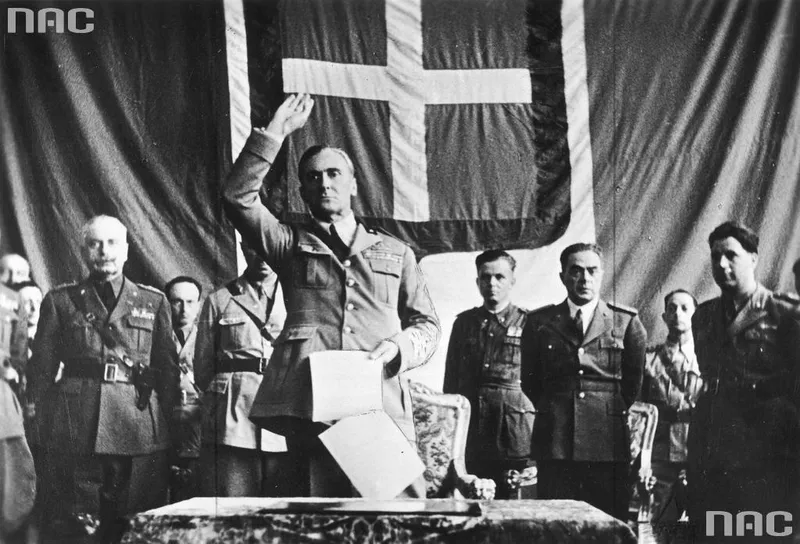
On February 19, 1937, two young men of Eritrean origin, Abraha Deboch and Mogus Asgedom, hurled roughly ten grenades into a crowd gathered at the Genete Leul Palace in Addis Ababa, where Marshal Rodolfo Graziani, viceroy of Italian East Africa, was distributing alms to mark the birth of an Italian prince. Graziani was wounded but survived. Over the three days that followed, Italian occupation forces and armed civilian squads carried out one of the deadliest reprisal massacres of the fascist era in Africa, an event Ethiopians mark each year as Yekatit 12, named for the date on the Ethiopian calendar.
Fascist Blackshirts, soldiers and settlers swept through the capital, burning homes, shooting residents in the street and dragging others from churches and markets. The killing was indiscriminate: contemporaries described victims chosen simply for being Ethiopian and present in the wrong part of the city at the wrong hour. Graziani, once he recovered enough to resume command, ordered further executions of prominent Ethiopians, including young men rounded up from schools, in a parallel campaign to eliminate the country’s educated class.
Exactly how many people died is still disputed, and the range among sources is wide. Ethiopian accounts have long put the toll at 30,000. Contemporary French and American newspaper reports at the time cited figures between 1,400 and 6,000. Historians Angelo Del Boca and Anthony Mockler each estimated roughly 3,000 killed. The most detailed recent reconstruction, a 2017 study by historian Ian Campbell that drew on Italian military records and eyewitness testimony, concluded that approximately 19,200 people were killed over the three days, close to a fifth of Addis Ababa’s population at the time.
The massacre came roughly four decades after Ethiopian forces had defeated an earlier Italian invasion at the Battle of Adwa in 1896, a victory credited with helping Ethiopia stay outside formal European colonial rule through the late nineteenth-century scramble for the continent. Italy’s second invasion, launched in 1935 under Benito Mussolini, overturned that outcome and installed the occupation government Graziani served as viceroy. Ethiopia has held annual commemorations for the Yekatit 12 martyrs since 1941, the year Italian rule in Ethiopia collapsed, with wreath-laying ceremonies at a memorial built near the site of the killings in Addis Ababa.
Sources
- “Remembering Yekatit 12 The Martyrs — A Towering Symbol Of Sacrifice”, The Reporter (Ethiopia).
- “The martyrdom of Yekatit 12 (February 19)”, Ethiopian News Agency.
- “The Saved 700”, U.S. Department of State, State Magazine.
Books & Further Reading
Ian Campbell, The Addis Ababa Massacre: Italy's National Shame, 2nd ed. (Hurst Publishers, 2019, ISBN 978-1-84904-692-3)