By Princewill Ubani · Published
Research ID: PA-ART-victoria-seychelles-worlds-smallest-capital
Victoria, Seychelles: One of the World's Smallest National Capitals
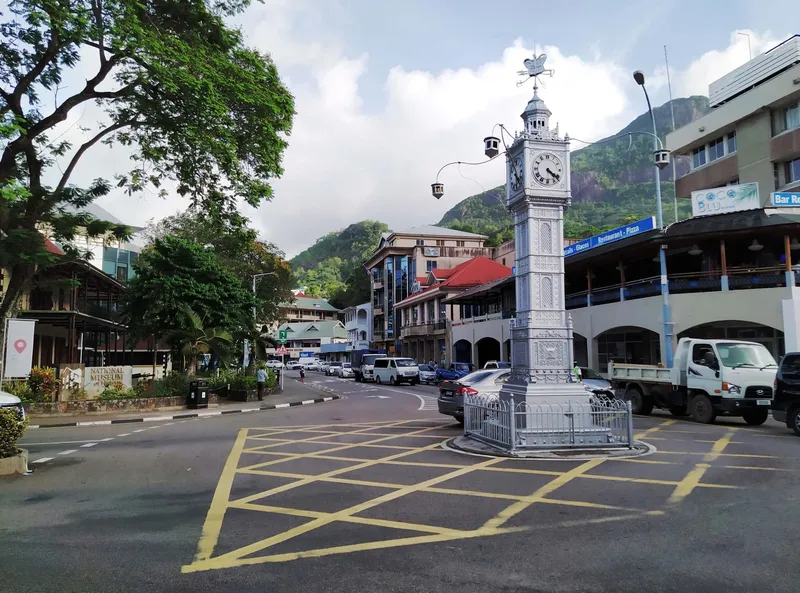
Victoria packs Seychelles’ seat of government, its only real port and roughly a third of the entire country’s population onto 20.1 square kilometers on the northeastern coast of Mahé island. Guidebooks and travel writers routinely describe it as one of the smallest national capitals on Earth, a title it shares with a short list of similarly tiny capitals, among them West Africa’s Banjul, in the Gambia.
French colonists founded the settlement in 1778, four years after their first Seychelles outpost went up on nearby Sainte Anne Island in 1770. They called it L’Établissement du Roi, “the King’s settlement.” Britain took control of the islands in 1811 during the Napoleonic Wars, an occupation later formalized by the 1814 Treaty of Paris, and administered Seychelles for decades as a dependency governed from Mauritius. In 1841, British officials renamed the town Victoria, after the reigning queen.
Seychelles became its own crown colony, separate from Mauritius, in 1903. It stayed under British rule until June 29, 1976, when independence made Victoria the capital of a sovereign nation for the first time.
The city’s footprint has stayed small even as the country grew around it. Seychelles’ 2022 census counted about 30,145 people in the central district that includes Victoria, out of a national population of roughly 102,600. Port Victoria remains the archipelago’s only deep-water port, anchoring a tuna fishing and canning industry that has been central to the economy since the mid-20th century. Nearly everything Seychelles imports or exports still moves through it.
Sources
- “History”, Seychelles National Museums.
- “What Is the Capital of Seychelles?”, WorldAtlas.
Books & Further Reading
Roman Adrian Cybriwsky, Capital Cities around the World: An Encyclopedia of Geography, History, and Culture (ABC-CLIO, 2013, ISBN 9781610692472)