
By Princewill Ubani · Published
Research ID: PA-ART-504356152030011393
Tanzania's Trade in Albino Body Parts, and the Superstition Behind It
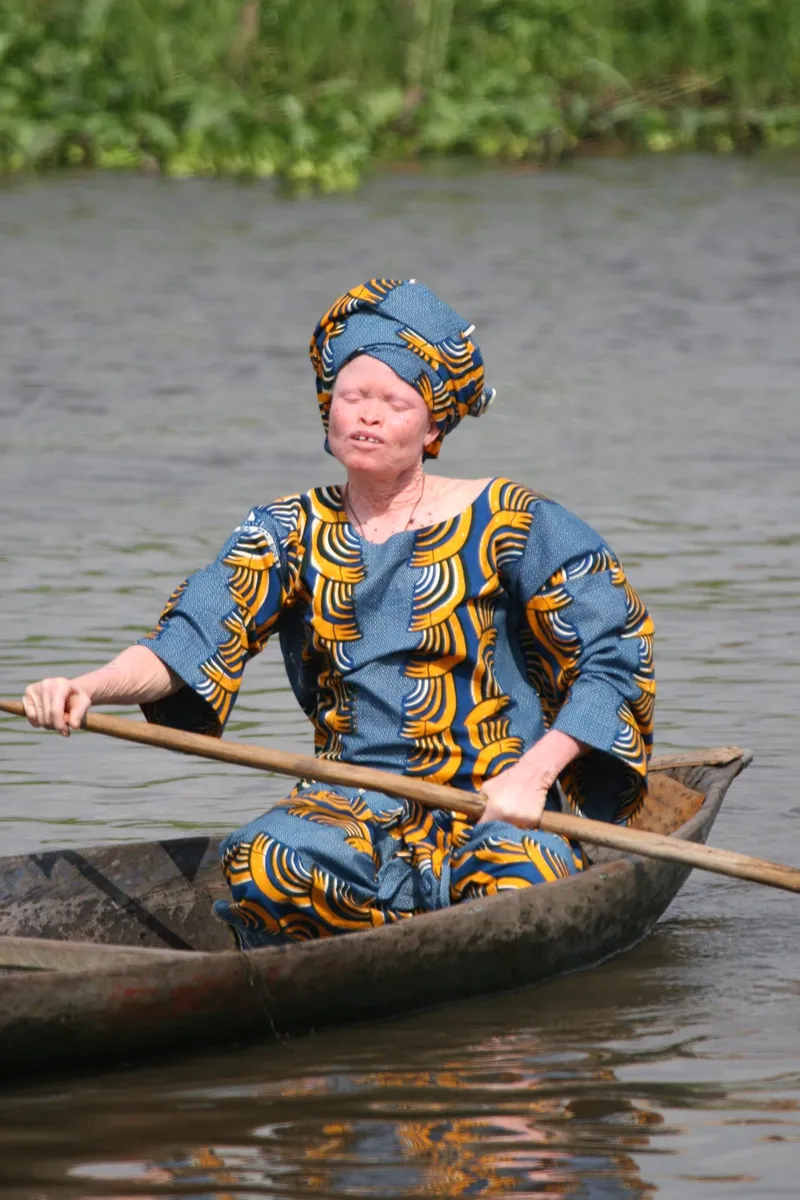
People with albinism in Tanzania live with a risk that has little to do with the genetic condition itself and everything to do with what others believe it means. A market in their body parts, driven by witchcraft beliefs that albino limbs, skin, bones and organs can be turned into charms bringing luck, wealth or supernatural power, has made albinism there a source of danger rather than simply a medical trait. The United Nations tracked the toll as a distinct human rights crisis after a wave of killings: by March 2015, UN experts had documented at least 76 people with albinism murdered in Tanzania since 2000, alongside 34 who survived having body parts hacked off while alive and 15 more whose graves were later robbed for limbs and remains. UN human rights chief Zeid Ra’ad al-Hussein called the attacks “stunningly vicious” as reports of a fresh surge came in from Tanzania and neighboring Malawi that year. UN experts at the time put the black-market price of dismembered body parts at around $600 and a whole body at $75,000, figures that reflect a trade run by networks of witch doctors, kidnappers and traffickers rather than isolated attacks.
The trade did not end with that reporting. Mohamed Daghar, regional coordinator for the ENACT organized-crime project at the Institute for Security Studies, wrote in 2022 that a complete set of organs could by then fetch roughly $75,000, while Tanzanian investigative journalist Vicky Ntetema has put the price of a living person with albinism as high as $340,000. Daghar’s report cited specific 2021 cases, including a six-year-old boy killed in Kigoma and two desecrated graves found in Tanga and Arusha with the bodies’ left legs missing, evidence that grave robbery and killings tied to the belief in albino body parts as charms have continued well past the mid-2010s spike that first drew UN attention.
Part of what makes Tanzania a global center of this trade is demographic. The country has the highest documented rate of albinism in the world, roughly one in every 1,400 people, compared with about one in 15,000 across the rest of Africa, giving traffickers a larger population to target than almost anywhere else. Daghar’s reporting also points to a structural failure behind the persistence of the trade: in the rural areas where attacks are concentrated, government services meant to protect vulnerable citizens are, in his words, “often absent or ineffective,” leaving organizations like Tanzania’s Legal and Human Rights Centre and the advocacy group Under the Same Sun to fill gaps that state institutions have not closed.
Sources
- “Tanzania arrests witchdoctors over attacks on albinos”, Al Jazeera.
- “Tanzanians hard hit by trafficking in people with albinism”, Institute for Security Studies (ENACT Africa).
- “Buried alive: Tanzania's albinos pay the price for superstition”, ENACT Africa Observer.
- “Francis Semwaza, "Albinism in Tanzania: A Ritual Politics of Silence, Fear, and Subservience" (2025, DOI 10.3390/rel16070846)”, Religions (MDPI), Vol. 16, Issue 7, Article 846.