By Princewill Ubani · Published
Research ID: PA-ART-rwanda-1933-belgian-identity-cards
How Belgium's 1933 ID Cards Hardened Rwanda's Ethnic Divide
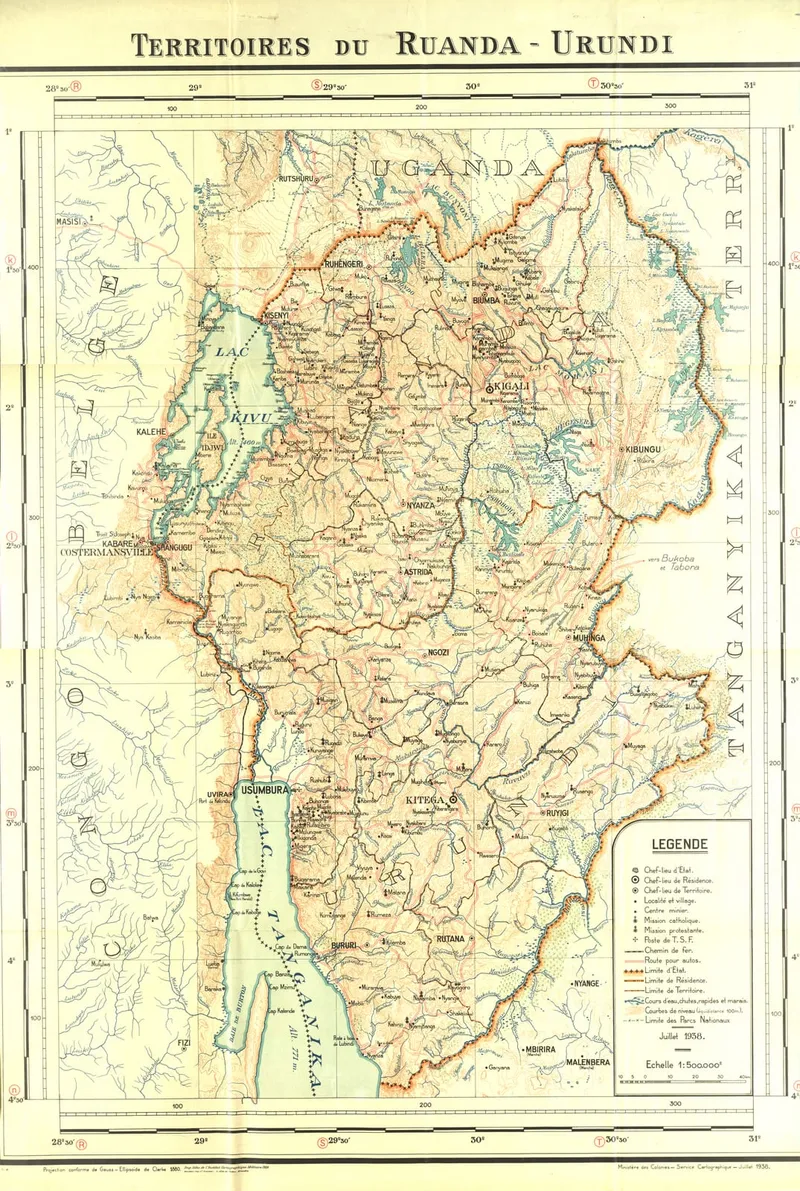
Belgian administrators in Rwanda carried out a colony-wide census in 1933 and 1934 that assigned every resident one of four labels: Hutu, Tutsi, Twa or naturalized/foreign. The classification relied on crude, inconsistent criteria. Cattle ownership was one marker; anyone with ten or more head of cattle tended to be recorded as Tutsi, fewer as Hutu. Colonial officials also used physical measurements, including nose length, eye shape and height, treating them as markers of race in line with the era’s pseudoscientific thinking. The results were printed on identity cards or booklets that residents were required to carry.
Before this system, Hutu, Tutsi and Twa functioned more as social and economic categories than fixed ethnic groups. A Hutu who acquired enough cattle and status could become recognized as Tutsi, and intermarriage moved people between categories over generations. The 1933 cards eliminated that mobility. Once a label was recorded, it became hereditary and largely unchangeable, passed from parent to child on paper regardless of a family’s actual wealth, occupation or social standing.
Belgium’s administration built on an existing colonial preference, inherited from earlier German rule, for treating Tutsi as a ruling class better suited to administer the territory on Europe’s behalf. Fixing that hierarchy on identity documents gave the distinction bureaucratic permanence: cards were checked for access to schooling, civil service jobs and other opportunities, embedding a racial hierarchy into everyday colonial administration in a way that oral tradition and social custom alone never had.
Rwanda kept versions of the ethnic identity card system for decades after independence in 1962. When extremist Hutu militias organized the 1994 genocide, in which an estimated 800,000 people were killed over roughly 100 days, those cards became a tool for identifying victims at checkpoints. Scholars of the genocide, including Mahmood Mamdani in his study “When Victims Become Killers,” point to the 1933 classification system as one of the conditions that made the killing possible at the speed and scale it reached, turning a colonial paperwork exercise into a mechanism of mass violence six decades later.
Sources
- “Kwibuka 30, Panel 3: Colonial Roots of the Rwandan Genocide”, Center for Holocaust and Genocide Studies, Ramapo College.
- “30 Years Since the Rwandan Genocide”, LSE International History Blog.
Books & Further Reading
Mahmood Mamdani, When Victims Become Killers: Colonialism, Nativism, and the Genocide in Rwanda (Princeton University Press, 2001, ISBN 9780691192345)