
By Princewill Ubani · Published
Research ID: PA-ART-operation-savannah-south-africa-angola-1975
Operation Savannah: South Africa's 1975 Push Toward Luanda, and Cuba's Response
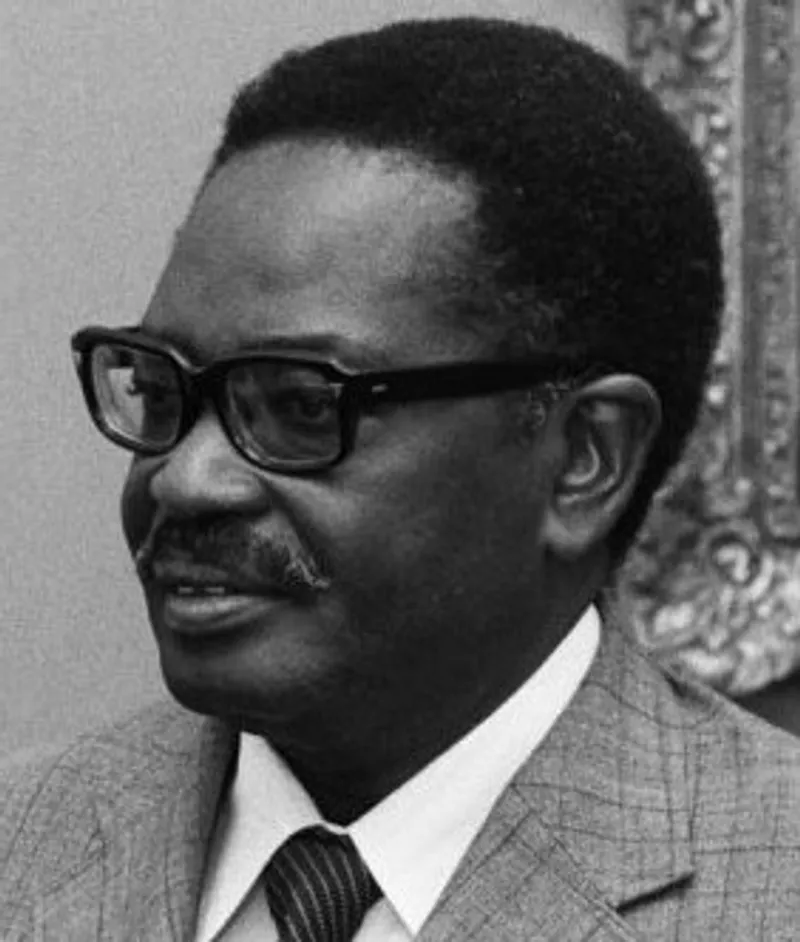
Angola’s transition to independence in 1975 collapsed almost immediately into a three-way civil war between the rival liberation movements that had fought Portugal: the MPLA, led by Agostinho Neto and based in Luanda; the FNLA, led by Holden Roberto; and UNITA, led by Jonas Savimbi. As the MPLA gained the upper hand in the capital ahead of the scheduled November 11, 1975 independence date, apartheid South Africa moved to prevent it from taking power. On October 14, 1975, South African Defence Force units, organized as Task Force Zulu, crossed from Namibia (then South African-administered South West Africa) into southern Angola in an operation code-named Savannah, officially in support of UNITA and FNLA but pursued, according to the US State Department’s Office of the Historian, with the additional aim of denying Angola as a base for Namibian independence fighters operating against South African rule.
The advance was rapid. SADF-backed forces pushed north with limited resistance, reaching to within roughly 250 kilometers of Luanda by some accounts, while FNLA forces separately advanced on the capital from the east and reached Kifangondo, on Luanda’s outskirts, by early November. The push was quietly reinforced by Washington: the Ford administration, at the urging of Secretary of State Henry Kissinger, had authorized a covert CIA program, later given the internal designation Operation IA Feature, that funneled roughly $31.7 million in arms and support to FNLA and UNITA over 1975, on top of South Africa’s own separate $14 million arms authorization for the same groups approved by Prime Minister B.J. Vorster that July. The US Congress moved to cut off the funding that December, and the connection between Washington’s covert support and an apartheid government’s ground invasion became a serious liability once it became public: as the State Department’s own historical account puts it, Castro was able to point out that the United States had provided support to a group that now accepted assistance from an apartheid government.
Fidel Castro’s government responded by sending Cuban forces to Angola beginning in November 1975, an intervention Cuba would sustain in various forms for more than a decade and which this site covers in full elsewhere (see “Operation Carlota” and “Cuba’s Military Intervention in Angola, 1975-1988”). With growing numbers of Cuban troops and Soviet-supplied weaponry reinforcing MPLA positions through December, South Africa’s advance stalled and reversed. Facing mounting battlefield losses, strained logistics, and international condemnation after years of publicly denying its involvement, South Africa withdrew all SADF personnel from Angola by the end of March 1976, having failed to prevent the MPLA from consolidating power in Luanda.
Historians differ on exactly what triggered the scale of Soviet and Cuban involvement that followed. Former CIA officer John Stockwell, who ran Angola operations for the agency and later testified critically about the program, argued that Washington’s own covert funding provoked the Soviet-Cuban response. Others quoted in contemporary coverage argued the opposite: that it was South Africa’s direct ground invasion, not the more limited and largely deniable American aid program, that convinced Havana and Moscow a decisive military response was necessary. Both the CIA’s covert role and South Africa’s invasion were real and running in parallel, but which one did more to internationalize the war remains a matter of historical interpretation rather than settled fact.
Sources
- “"Reflections 50 Years after the Initial South African Invasion of Angola," South African Historical Journal, Vol. 77, No. 1 (Taylor & Francis)”.
- “The Angola Crisis, 1974-75”, US Department of State, Office of the Historian.
- “Fidel Castro's Greatest Legacy in Africa Is in Angola”, Chatham House.
- “Operation Savannah”, African Wars.
Books & Further Reading
Piero Gleijeses, Conflicting Missions: Havana, Washington, and Africa, 1959-1976 (University of North Carolina Press, 2003, ISBN 9780807854648)