
By Princewill Ubani · Published
Research ID: PA-ART-ngwenya-mine-oldest-mine-world-hematite
Ngwenya Mine: The World's Oldest Known Mine, Worked 40,000+ Years Ago
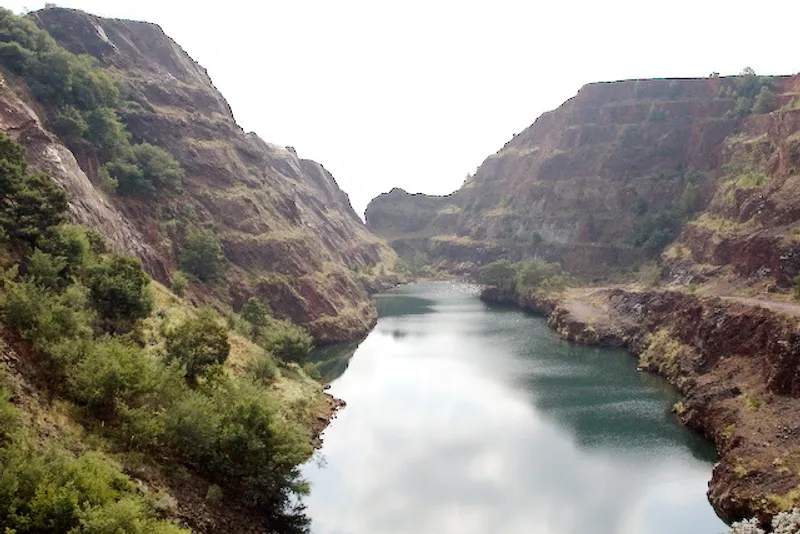
On Bomvu Ridge in the Ngwenya mountain range of Eswatini, the small country formerly known as Swaziland, sits a cave known as Lion Cavern, identified by archaeologists as the oldest known mine on Earth. Researcher Adrian Boshier began excavating the site in 1964, working alongside archaeologist Peter Beaumont, and the pair uncovered an extensive network of ancient workings along with roughly 300,000 stone-age tools and artifacts, evidence of intensive, sustained extraction rather than a single opportunistic dig. What early miners were after was not metal in the modern industrial sense but hematite and specularite, iron-oxide minerals that produce a deep red or glittering pigment when ground down, valued for body decoration, ritual use, and likely trade across a wide region of the ancient Stone Age landscape.
Radiocarbon dating conducted by Boshier and Beaumont and published in the early 1970s placed the earliest mining activity at roughly 43,000 to 43,200 years ago, a figure that made Ngwenya’s claim to being the world’s oldest mine widely cited in archaeological literature for the following five decades. That estimate has since moved, not backward in credibility but further back in time: a 2024 study published in Nature Communications, using optically stimulated luminescence dating, a technique that measures when mineral grains were last exposed to sunlight rather than relying on organic material for radiocarbon dating, analyzed samples across fifteen Stone Age sites in the region and concluded that intensive ochre mining at Lion Cavern began at least 48,000 years ago, extending the site’s known history by roughly five additional millennia and reinforcing rather than undermining its status as the oldest documented mining activity anywhere in the world.
The site’s working life did not end in prehistory. Mining resumed at Ngwenya in the 20th century on an industrial scale, this time for iron ore rather than pigment, with commercial hematite extraction continuing at Bomvu Ridge into the 1970s before operations wound down, leaving a single mountainside that carries evidence of organized human resource extraction spanning tens of thousands of years, from Middle Stone Age ochre miners to 20th-century industrial machinery.
Sources
- “Lion Cavern in Eswatini is World's Oldest Ochre Mine, Archaeologists Say”, Sci.News.
- “MacDonald et al., 2024 (full study on Lion Cavern ochre mining dates)”, Nature Communications.
- “The trail of red rust that leads to the beginning of human culture”, Daily Maverick.
Books & Further Reading
B. L. MacDonald et al., "Ochre Communities of Practice in Stone Age Eswatini," Nature Communications, Vol. 15, Article 9201 (2024)