
By Princewill Ubani · Published
Research ID: PA-ART-814889136855416832
Incwala: The Sacred Tree and the Bull That Renew Eswatini's Kingship
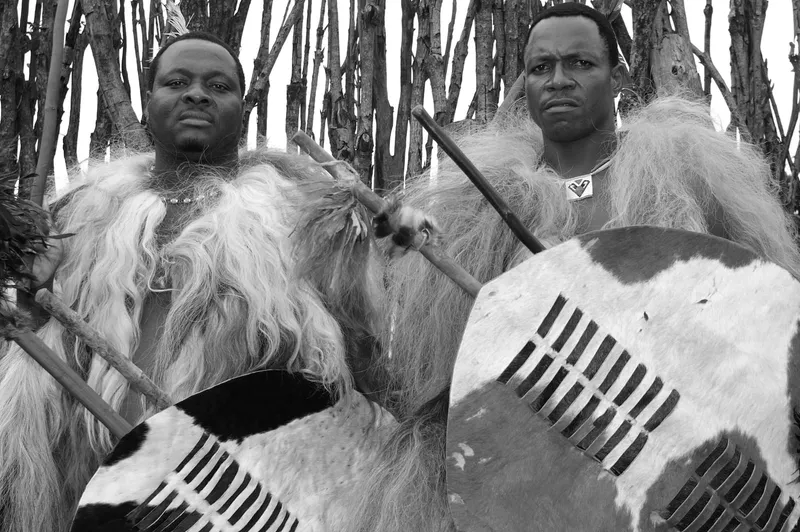
Every December, groups of unmarried young men set out from the royal capital of Eswatini on foot for a journey of roughly 50 kilometers, walking through the night under moonlight to reach a stand of sacred lusekwane, a variety of acacia that grows sparsely in only a few parts of the country. They cut branches and carry them back before dawn. According to the Eswatini National Trust Commission, the custodial body for the country’s cultural heritage, only youths considered ritually pure are meant to complete the errand, and Swazi tradition holds that the shrub itself exists in part to separate the pure from the impure among those sent to fetch it. The branches are woven into the walls of the inhlambelo, a private sanctuary built inside the royal cattle enclosure, where the ceremony’s central rites take place out of public view.
This is the opening act of Incwala, the ritual that Eswatini’s monarchy treats as inseparable from kingship itself. “When there is no king, there is no Incwala,” the national trust commission’s own description states. Incwala unfolds over roughly a month, building from a smaller preliminary rite toward the Big Incwala, which culminates around the turn of the year. It is at once a first-fruits ceremony, marking the point when the king ritually permits the country’s new harvest to be eaten, and a renewal of the bond between the king, his ancestors and his people, built around themes of purification that the anthropologist Hilda Kuper documented in detail during the fieldwork behind her 1947 study “An African Aristocracy.”
The second defining rite of the Big Incwala involves a bull known as umdvutjulwa. Royal councillors drive the animal, along with others from the herd, through a narrow gate into the inhlambelo enclosure. The same young men who fetched the lusekwane branches wait to seize it as it emerges, wrestling it down with their bare hands in a contest the Kingdom of Eswatini’s own tourism authority describes as both a trial of physical strength and a second test of the youths’ ritual purity. The bull’s remains are burned days later as part of the ceremony’s final purification rites, alongside other ritual materials no longer needed once the king has been symbolically renewed for the year ahead.
Incwala has drawn outside attention for close to a century. The British Film Institute holds a 1935 sound film in its Colonial Film collection documenting scenes from Swazi life, including portions of the kingship and first-fruits ceremony, among the earliest surviving moving-image records of the ritual. That film captured a ceremony that, unlike many practices colonial administrations tried to suppress or reshape elsewhere on the continent, has continued largely unbroken into the present, still performed each December under the country’s reigning king.
Sources
- “Incwala Ceremony”, Eswatini National Trust Commission.
- “Incwala Festival”, The Kingdom of Eswatini (official tourism authority).
- “Swazi People”, British Film Institute, Colonial Film Database.
Books & Further Reading
Hilda Kuper, An African Aristocracy: Rank Among the Swazi (Oxford University Press for the International African Institute, 1947, ISBN 9780197241431)