By Princewill Ubani · Published
Research ID: PA-ART-malcolm-x-1964-mau-mau-kenya-speech
Malcolm X's 1964 Praise for Kenya's Mau Mau Freedom Fighters
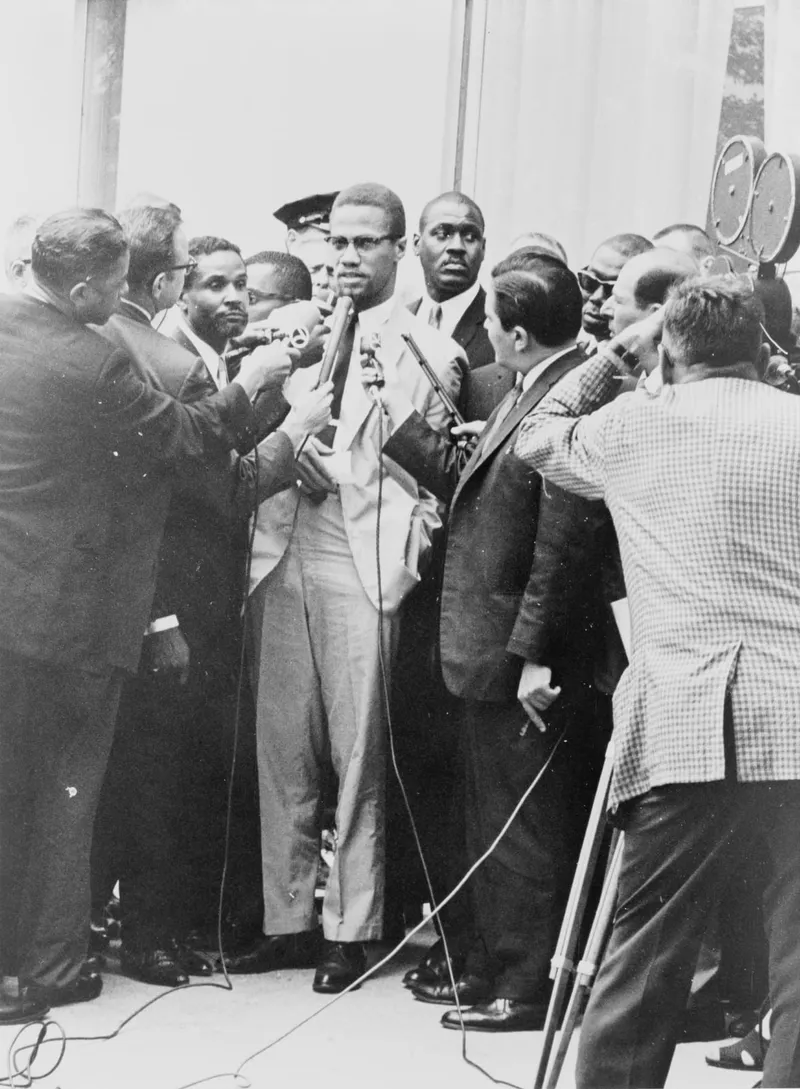
On December 20, 1964, Malcolm X spoke at Williams Institutional CME Church in Harlem at a rally in support of the Mississippi Freedom Democratic Party, sharing the platform with civil rights organizer Fannie Lou Hamer. In his remarks, he turned explicitly to Kenya’s Mau Mau uprising against British colonial rule as a model for the movement in the United States, telling the crowd that “you and I can best learn how to get real freedom by studying how Kenyatta brought it to his people in Kenya, and how Odinga helped him,” a reference to Kenya’s first president, Jomo Kenyatta, and his independence-era ally Oginga Odinga, whom Malcolm X called “one of the foremost freedom fighters on the African continent.” He predicted that “the historians will give… Kenyatta and the Mau Mau their rightful role in African history,” and made the comparison to the American context explicit and direct: “In Mississippi we need a Mau Mau. In Alabama we need a Mau Mau. In Georgia we need a Mau Mau. Right here in Harlem, in New York City, we need a Mau Mau.”
The uprising Malcolm X was invoking had been one of the twentieth century’s most violently suppressed anti-colonial movements. Beginning in 1952, the Mau Mau, drawn primarily from Kenya’s Kikuyu, Embu and Meru communities, waged an armed insurgency against British rule and the colonial land-alienation system that had displaced them from their most productive farmland. Britain declared a state of emergency that lasted until 1960 and responded with mass detention rather than conventional counterinsurgency alone: an estimated 160,000 Kenyans were held in a network of detention camps, where systematic torture, including beatings, sexual violence and forced labor, was documented and, for decades afterward, denied or minimized by British authorities, the repression itself covered in full in “British Colonial Atrocities During Kenya’s Mau Mau Uprising (1952-1960)”. That denial held until 2011, when a cache of colonial-era files, later known as the Hanslope Disclosure, surfaced in a Foreign Office archive and provided documentary evidence of the abuse and of officials’ knowledge of it at the time. The disclosure led directly to a 2013 settlement in which Britain paid compensation to more than 5,000 elderly Kenyan claimants and, through the Foreign Office, formally acknowledged “that each of the claimants in this case suffered torture and other ill-treatment at the hands of the colonial administration.”
Malcolm X’s praise for the Mau Mau was consistent with the broader argument he made throughout 1964, following his split from the Nation of Islam and his travels across newly independent African states: that Black Americans should understand their own struggle as part of the same global anti-colonial movement reshaping Africa, and that armed self-defense, framed by the uprising’s example, was a legitimate response to violent oppression rather than something to be apologized for.
Sources
- “Mickie Mwanzia Koster, "Malcolm X, The Mau Mau, and Kenya's New Revolutionaries: A Legacy of Transnationalism," The Journal of African American History, Vol. 100, No. 2 (University of Chicago Press)”.
- “Fannie Lou Hamer And Malcolm X Speak In Harlem, NY, 1964”, Harlem World Magazine.
- “UK and Kenyan torture victims discuss payouts”, Al Jazeera.
- “The Pursuit of Justice against Colonial Repression by the Mau Mau in Kenya”, Society for Cultural Anthropology.
Books & Further Reading
Mickie Mwanzia Koster, "Malcolm X, The Mau Mau, and Kenya's New Revolutionaries: A Legacy of Transnationalism," The Journal of African American History, Vol. 100, No. 2 (2015), pp. 250-271